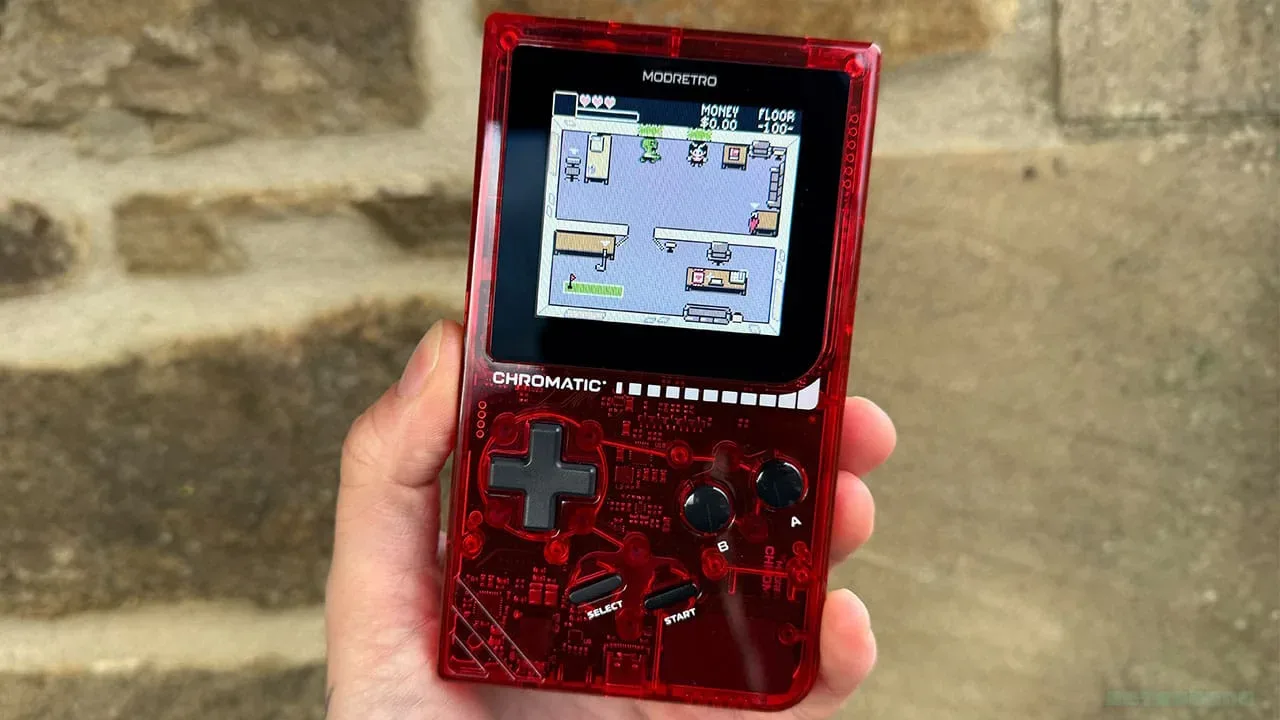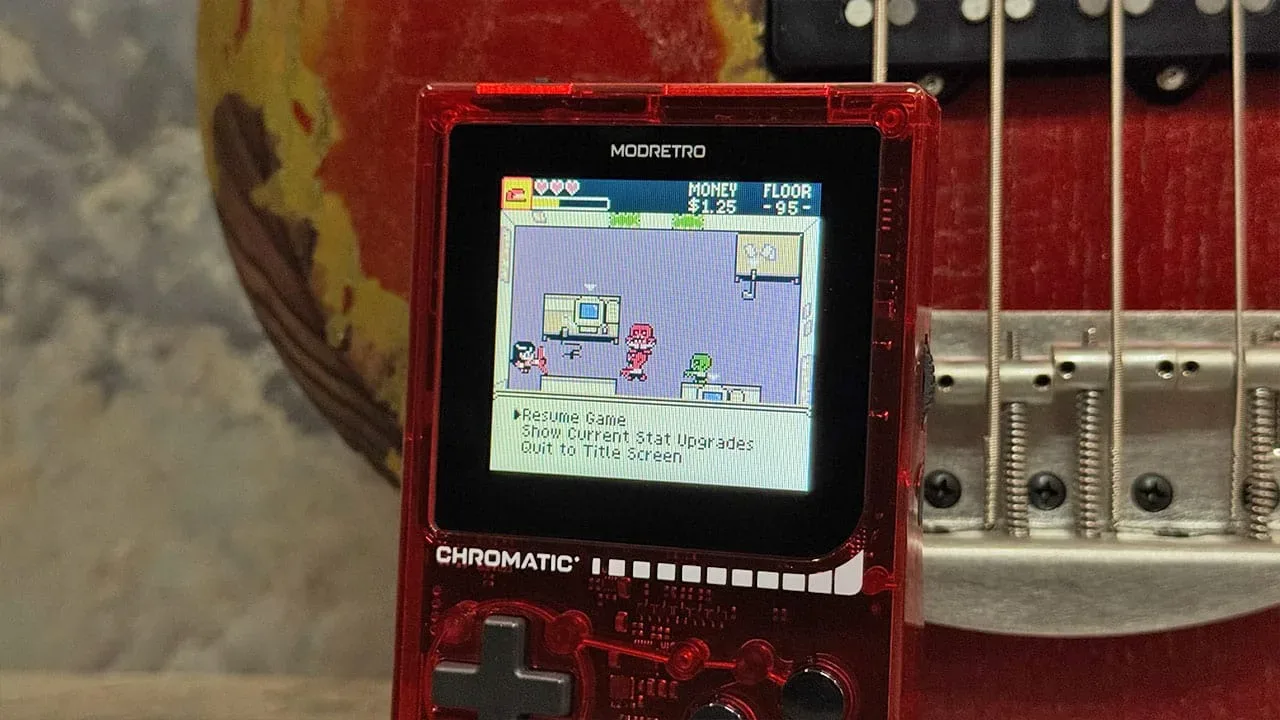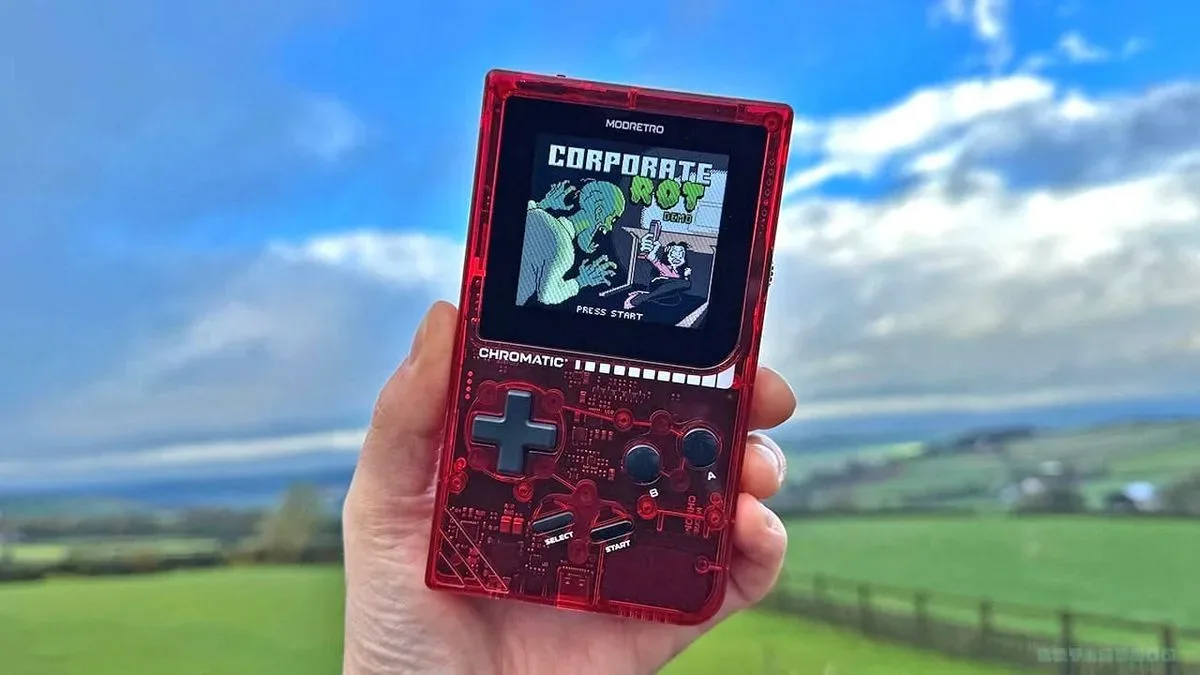
Corporate Rot turns the office into a survival arena on Game Boy Color. Developed by Mike Bedsole, the game places an office worker against zombie-filled rooms, with everyday workplace clutter serving as the available arsenal. Computer monitors, lamps, chairs, golf clubs and even a stapler are among the improvised tools players can use while trying to push through a reported 100 floors.
The premise is immediately understandable, but the structure gives it sharper stakes than a simple arcade zombie game. Corporate Rot uses a three-life permadeath system: once those lives are gone, the run ends and the player returns to the beginning. There are no saves, passwords or checkpoints described for the game. Progress, then, is not simply a matter of reaching the next room. It is about making an entire run last.
That format makes Corporate Rot a notably tough proposition for a Game Boy Color game, while also matching the hardware’s strengths. Short rooms, readable threats and immediate decisions can make a portable session feel complete even when a run ends early. The difference is that every weapon choice, vending-machine purchase and health opportunity may determine whether an attempt survives long enough to see the next floor.
An office full of weapons, but none built to last
Corporate Rot’s central loop is room clearing. Players move through office spaces, locate usable objects and fight the zombies occupying each area. Its workplace setting is more than visual dressing because the equipment scattered around the rooms appears to drive moment-to-moment combat decisions. Instead of arriving with a permanent weapon set, the player has to work with what the office provides.
The known weapon examples suggest a deliberately broad interpretation of office supplies. Screens, lamps and office chairs sit alongside golf clubs and staplers. The campaign materials list dozens of makeshift office-supply weapon types as a planned feature if the funding target is met. That matters because weapon variety only becomes meaningful when players are required to switch tools rather than settle on one preferred option.
Durability is the key pressure point. Weapons can wear down, forcing a player to find another item while the undead are still closing in. In practical terms, durability converts a successful fight into a resource-management problem. A powerful object may be valuable in an immediate emergency, but using it recklessly could leave the player exposed in a later room. Conversely, holding onto a weapon too long could become dangerous if it breaks at the wrong moment.
That tension is a natural fit for the game’s office theme. A stapler is funny as a zombie weapon, but the joke is also mechanical: the player is making do with a limited workplace object rather than relying on a conventional survival-horror loadout. The items are not merely props. They are temporary answers to a constantly changing problem.
What permadeath means for a Corporate Rot run
Permadeath means a defeat has lasting consequences within the game’s progression structure. In Corporate Rot’s case, losing all three lives sends the player back to the start. Without checkpoints, passwords or save functionality, there is no stated way to resume from a later floor after a failed attempt.
This is the element that gives the advertised 100-floor climb its weight. A player is not only learning how to handle one enemy or one room. They are learning how to sustain a run across many escalating encounters. Reaching a new room can provide knowledge for a future attempt, but it does not guarantee the next run will unfold in the same way.
The game has been described as roguelike in difficulty and structure. That label is best understood here as a shorthand for repeatable runs shaped by loss, resource choices and changing conditions. Corporate Rot’s available details point to those ideas: a full restart after defeat, variable room resources, purchasable upgrades and consumables, and enemy variety that changes the demands of combat. It should not be read as a promise that every convention associated with the broader roguelike genre is present.
The absence of a mid-run safety net is likely to make preparation essential. Players who spend all available cash on smaller immediate improvements may have less capacity to recover from a later mistake. Players who preserve cash may have fewer advantages in the short term, but more options when a run becomes unstable. That is the sort of decision permadeath systems are designed to amplify.
Zombie colours signal different threats
Corporate Rot does not rely on a single zombie behavior. The currently described enemy set includes green zombies characterized as basic grunts, yellow zombies identified as faster foes, and red zombies described as the toughest to defeat. There are also zombies that spew bile, encountered after roughly 20 cleared rooms, as well as enemies that hide inside computer monitors.
The monitor-hiding zombies are particularly in keeping with the game’s premise. A monitor can function as an office object, a potential weapon and, in some cases, protection for an enemy. These zombies receive an extra layer of defense from their hiding place, adding a wrinkle to fights that might otherwise be solved by repeatedly attacking the nearest target.
The colour-coded enemies also offer a clear way to communicate priority during fast play. If green, yellow and red enemies correspond broadly to basic, fast and durable roles, players can quickly identify the kind of risk entering a room. Speedy enemies may demand quicker reactions and positioning, while tougher enemies may consume more weapon durability or force the use of a better item. Bile-spewing zombies introduce another potentially hazardous behavior, though the specific effects of that bile have not been detailed.
More enemy types are anticipated, but the full roster has not been specified. The campaign lists a large selection of unique enemies among its intended features, so players should treat the named zombies as examples rather than a complete guide to everything in the finished game.
Cash, vending machines and survival planning
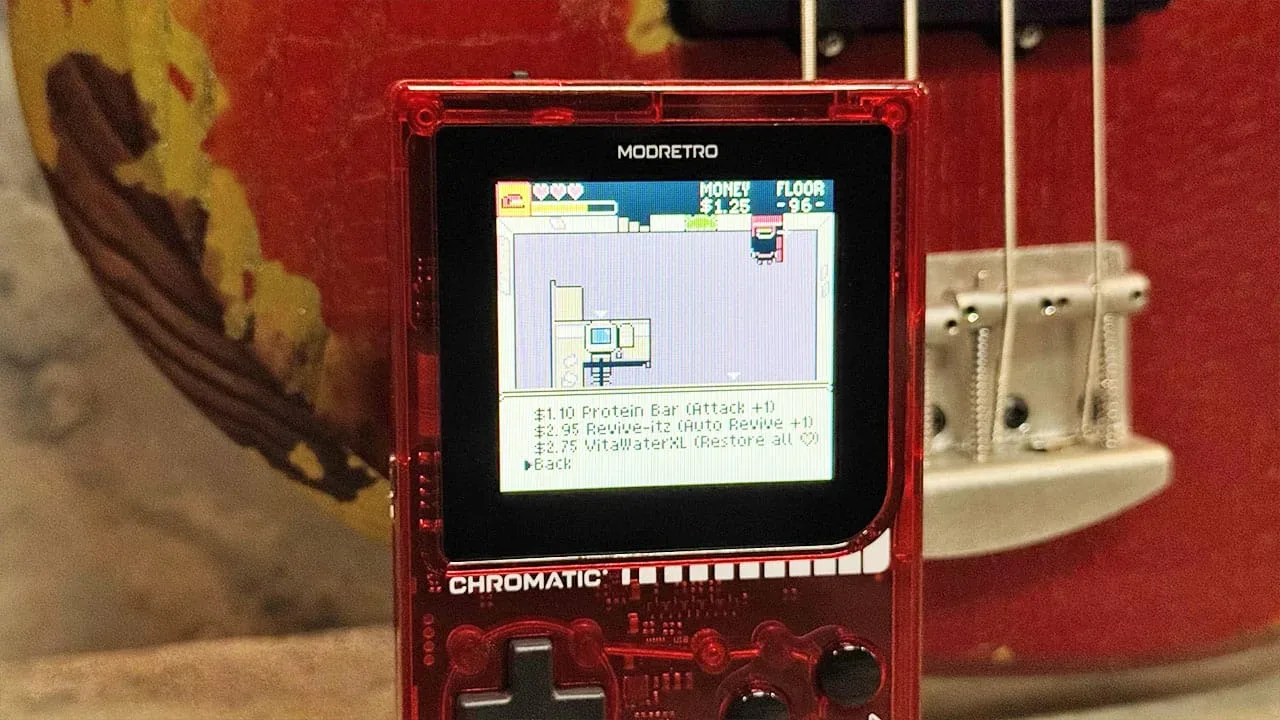
Defeated zombies provide cash, which can be spent at vending machines. The available purchases include upgrades affecting attack, defense or speed, alongside items that restore health and items that can automatically revive the player after death. The stated campaign feature list includes 10 unique upgrade or consumable types.
Consumables are one-use items or benefits, as distinct from a permanent rule change. In Corporate Rot, health recovery and automatic revival are the clearest examples of effects that can alter the immediate survival outlook of a run. An auto-revive is especially significant in a game with only three lives: it effectively offers protection against a fatal mistake, assuming the player has acquired it before the danger arrives.
This makes money a survival resource rather than a simple score counter. Attack, defense and speed upgrades could each offer a direct advantage, but they compete with health and revival purchases. The best option may depend on the player’s remaining lives, current condition, weapon situation and the risks likely to appear later in the run. There is no universally confirmed optimal purchase order from the available information, and that uncertainty is part of the intended tension.
Runs can also vary through the condition and contents of the office itself. Water coolers may be full on one attempt and empty on another, affecting whether they can provide health. The boss’s table may begin with cola or candy, with each supplying a different stat boost. Fridges may contain food as well. These changing provisions mean players cannot safely assume that a useful recovery item will always appear in the same place or in the same form.
For players, the practical takeaway is simple: treat every useful object as conditional. A familiar room may not offer the same health source on the next attempt. A starting boost may differ. Waiting for a preferred recovery route could therefore be riskier than taking an available alternative when the situation calls for it.
A Game Boy Color challenge built around repeat play
Corporate Rot is part of a continuing body of work from Bedsole, whose earlier game Kero Kero Cowboy featured a cowboy frog able to use its tongue against enemies and wield a pistol for stronger targets. The new project shifts from that character-led setup to office horror and repeated-run survival, but both concepts lean into immediately recognizable action-game hooks.
The Game Boy Color setting is also important to the appeal. The platform invites games that communicate clearly in a small play space, and Corporate Rot’s design appears focused on legibility: compact rooms, enemy types with identifiable roles, readily understood office objects and direct stakes when lives run out. Its high-pressure structure is a contrast to the more forgiving design often expected from quick portable play, but it may suit players who want compact sessions that still demand concentration.
For broader context on how dedicated game-input design has changed across platforms, Joking Joystick has also explored the history of PlayStation controllers from the original pad to DualSense. Corporate Rot takes the opposite route in spirit: rather than relying on feature-rich modern hardware, it places emphasis on concise, repeatable action and difficult decisions within a classic handheld framework.
Campaign status and the stated feature target
Corporate Rot is currently live on Kickstarter, with a playable demo also available through Itch.io. The campaign’s stated target feature set, contingent on meeting its funding goal, includes:
- 100 total levels
- Dozens of makeshift office-supply weapons
- 10 unique upgrades or consumables
- A wide range of unique enemy types
- Five boss battles
Those features should be viewed as campaign plans rather than guarantees until the project’s funding outcome and development are complete. Still, the described systems already establish a clear identity: Corporate Rot is not just about killing zombies in an office. It is about surviving a long, variable ascent where tools fail, supplies differ between attempts and defeat means beginning again.