Sonic Adventure and Sonic Adventure 2 share characters, settings and a Dreamcast home, but they do not organize their single-player content in the same way. Sonic Adventure is an exploratory collection of six character stories connected by open Adventure Fields. Sonic Adventure 2 is more deliberate: its Hero and Dark campaigns move between assigned action stages with three recurring gameplay roles.
That difference matters more than a simple question of which game has faster Sonic stages. Choose Sonic Adventure if you want to wander between events, discover entrances and switch among sharply different character abilities. Choose Sonic Adventure 2 if you want a clearer stage sequence, repeatable mission goals and a campaign that stays focused on speed, treasure hunting and shooting.
The choice in one sentence: exploration or a focused campaign
Sonic Adventure is the better fit for a player who likes a game world to sit between its levels. Its Adventure Fields connect story events, upgrades, Chao Gardens and Action Stages. Progress often involves understanding where the next event or entrance is located rather than selecting the next stage from a simple menu.
Sonic Adventure 2 reduces that connective wandering. Its story usually sends the player from an introduction into an action stage, with Chao World available when a Chao key is found, before continuing to the next assignment. This makes the sequel easier to approach when the preferred rhythm is stage, result, next stage.
Neither structure is automatically superior. The first game offers more variety around its central action, while the sequel makes its campaign easier to read. A player who enjoys detours may find Adventure 2 too controlled; someone who wants momentum without searching for the next objective may find Adventure’s hubs less convenient.
- Pick Sonic Adventure for hubs, discoveries and a broad set of character campaigns.
- Pick Sonic Adventure 2 for a more direct route through assigned stages and missions.

What Sonic Adventure’s Adventure Fields actually do
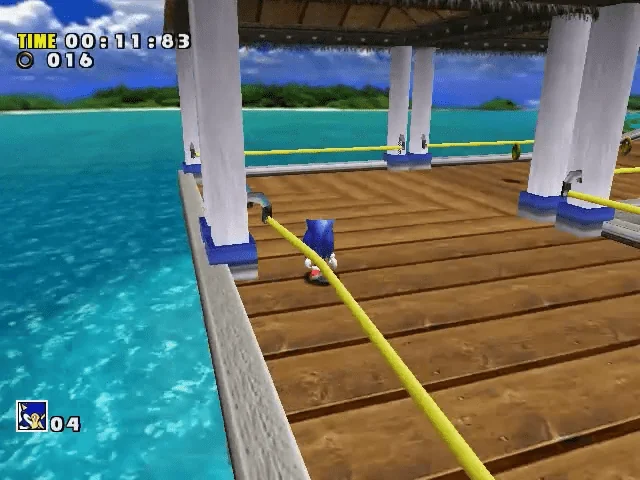
Adventure Fields are not merely decorative loading areas or ordinary level-select screens. Sonic Adventure has three of them, and each contains a Chao Garden. They provide room for events, power-ups, character encounters and entrances to the Action Stages. The player moves through these spaces as part of the story rather than returning only to a static menu.
That arrangement gives the original game a sense of place. A stage entrance belongs to a larger location, and a newly acquired ability can change how a character interacts with the surrounding adventure. The cost is clarity: the next objective may depend on noticing an event, locating a route or remembering which area connects to a particular stage.
This is the central tradeoff for exploration-focused players. Adventure Fields reward attention to the game’s spaces, but they can interrupt the clean action-stage rhythm that defines the sequel. They also make Sonic Adventure feel like an assortment of connected episodes instead of one uninterrupted run of levels.
If you prefer games that explain progression through a visible sequence of stage icons, Sonic Adventure 2 is the safer choice. If you like finding your way through a hub and seeing side systems embedded into the world, Sonic Adventure has the stronger match.
- Treat Adventure Fields as part of progression, not optional scenery.
- Expect the original game to ask more location-based questions than its sequel.
Why the six Sonic Adventure stories feel so different
Sonic Adventure has six playable story characters: Sonic, Tails, Knuckles, Amy, E-102 Gamma and Big. Sonic is available at the start, while the other five become available as the adventure progresses. These are not six cosmetic versions of one campaign. Their abilities and objectives change what the same broad world is asking the player to do.
Sonic’s stages emphasize speed and platforming. Tails brings racing-oriented objectives, while Knuckles searches for pieces of the Master Emerald. Amy’s scenarios place more emphasis on escaping danger and handling character-specific situations. Gamma uses ranged attacks, and Big’s campaign is built around fishing. Those categories create a much wider mechanical spread than the title’s Sonic branding might suggest.
The result is deliberate variety, but it also produces uneven transitions in pace and purpose. A player seeking only fast running may regard fishing, searching or slower character scenarios as interruptions. Another player may appreciate that the game keeps changing its demands instead of asking for the same type of movement throughout.
Sonic Adventure also contains separate minigame-style activities, including racing, pinball, rail shooting and sandboarding. These should be understood as additional activities rather than a description of every main story stage. The six character campaigns remain the core reason to choose the original for variety.
- Choose Adventure when distinct character abilities are more important than consistent pacing.
- Do not expect every character to use every gameplay style.
- Treat the separate minigames as extras, not as the structure of all six campaigns.
Momentum in Sonic Adventure: speed beside variety
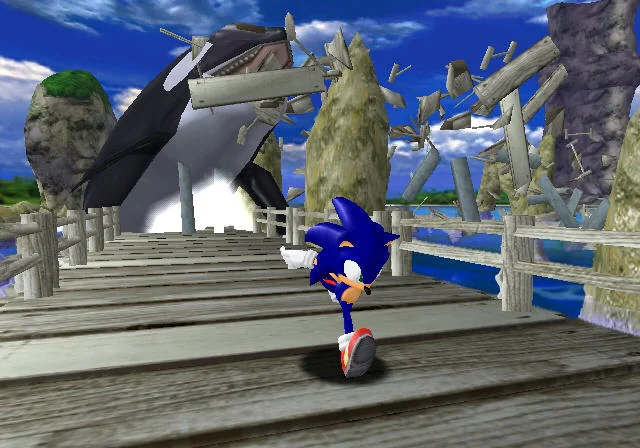
Sonic Adventure can deliver familiar high-speed platforming, but its overall rhythm is not built around speed alone. The player may move from a fast Sonic objective to a race, a treasure search, a shooting sequence or a fishing scenario. The surrounding Adventure Fields add another layer by placing events and entrances between those activities.
That variety can make the game feel like a broad character adventure rather than a pure stage sprint. It gives the original Dreamcast release a distinctive identity, especially for players who want Sonic’s world to support several kinds of interaction. It also means that choosing the game solely for uninterrupted momentum may lead to disappointment.
Sonic Adventure 2 concentrates its speed identity more effectively. Sonic and Shadow receive dedicated speed stages, and the campaign repeatedly returns to that role. The sequel still changes perspective through its other characters, but its major categories are easier to anticipate.
The practical decision is simple: if a fast stage is most enjoyable when it sits inside a larger, unpredictable adventure, choose Sonic Adventure. If you want speed stages to be the dependable center of the experience, Sonic Adventure 2 gives that preference more room.
- Use Adventure for a mixed-character adventure with abrupt changes of activity.
- Use Adventure 2 when speed stages should remain a regular anchor.
How Sonic Adventure 2 changes story selection
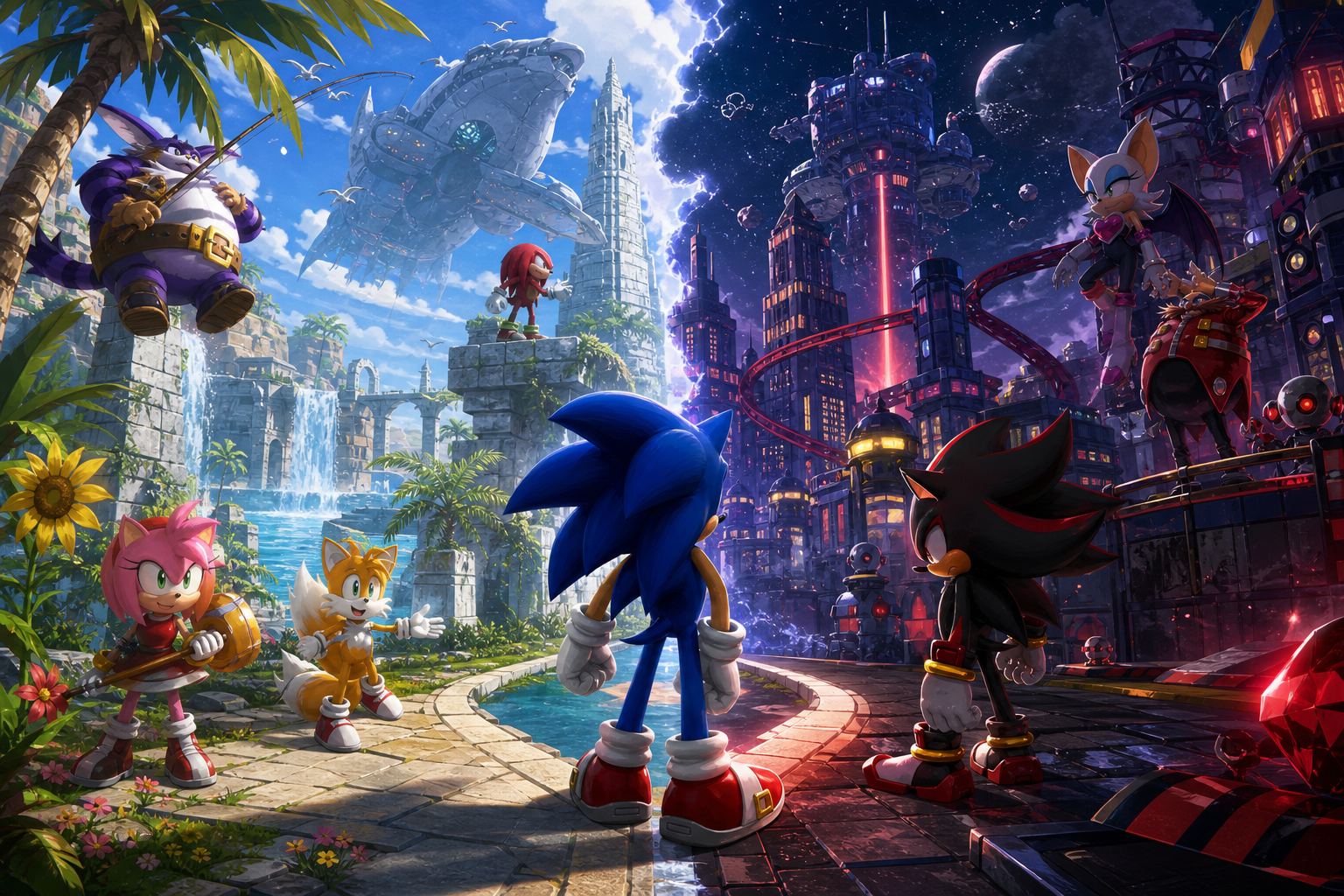
Sonic Adventure 2 divides its main story into Hero Story and Dark Story. The Hero side uses Sonic, Tails and Knuckles. The Dark side uses Shadow, Eggman and Rouge. These campaigns present opposing perspectives on one central conflict, rather than functioning as six separate character episodes equivalent to the first game.
That distinction changes how the player thinks about selection. Sonic Adventure gradually opens six individual stories, each with its own character emphasis. Sonic Adventure 2 asks the player to move through two linked campaign perspectives, with the playable role changing according to the assigned stage.
The structure is more controlled because the game determines who is used for each stage. There is less opportunity to treat the campaign as a free-form character tour, but the tradeoff is a stronger sense of forward direction. The Hero and Dark labels also make the broad story organization immediately visible.
Players looking for a large cast should not assume that six named characters means six equivalent campaigns. In Adventure 2, each side rotates among three roles. The appeal lies in the contrast between the two perspectives and in how their stages fit into a more deliberate sequence.
- Choose Adventure 2 if two opposing campaign paths sound more appealing than six independent stories.
- Remember that its six playable characters are distributed across Hero and Dark rather than given separate full campaigns.
The three recurring action-stage roles in Sonic Adventure 2
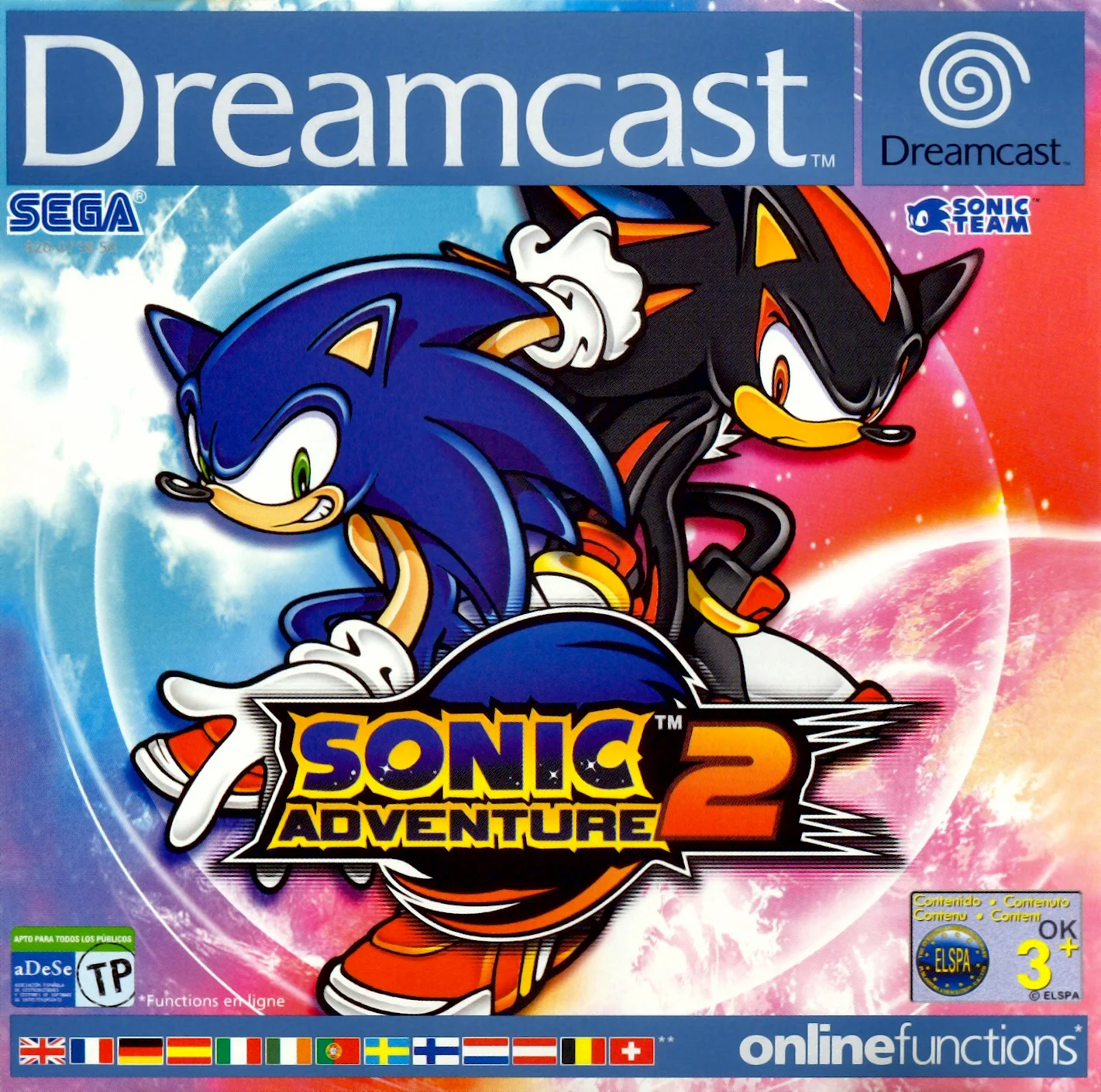
Sonic Adventure 2’s main action stages fall into three broad roles. Sonic and Shadow handle speed stages, Knuckles and Rouge handle treasure hunting, and Tails and Eggman operate mechs with ranged weapons. The roles are distinct enough that the sequel feels like a rotation among three game types rather than one character’s campaign with occasional costume changes.
The speed stages generally present a more direct forward route than the broader assortment of objectives in Sonic Adventure. They are the clearest choice for players who want running, jumping and momentum to remain central. Their repetition is also part of the appeal: the player knows what kind of activity the next Sonic or Shadow assignment represents.
Treasure stages use a radar and clues to locate emerald pieces or other targets in larger spaces. They are not simply a repeated single level with a different character. Knuckles and Rouge occupy the same broad role, but their campaigns use different stages and contexts. Players who enjoy searching through a space rather than following one route may find this role more rewarding than the speed stages.
Tails and Eggman provide the third category. Their mechs use ranged attacks, lock-on targeting and slower movement, making these stages combat-and-navigation exercises rather than speed stages with weapons added. This is a meaningful change in rhythm, not a minor variation on Sonic’s controls.
- Choose Adventure 2 for a predictable rotation of speed, treasure and mech stages.
- Choose Adventure if you want additional main-story categories such as fishing and escape-focused scenarios.
- Expect treasure hunting and mech play to demand a different pace from running stages.
Treasure radar, shooting and replay missions
The treasure-hunting role in Sonic Adventure 2 asks for patience with search spaces. The radar helps indicate proximity, while clues guide the player toward emerald pieces or other targets. This is a different kind of momentum from a speed stage: progress comes from reading the environment and narrowing the search rather than simply reaching the next platform.
The mech stages create a similar contrast through combat. Tails and Eggman use ranged attacks and lock-on targeting while navigating their stages. Their movement and objectives are not interchangeable with Sonic or Shadow’s, so a player who chooses Adventure 2 for speed alone should account for the required shifts in pace.
Adventure 2 makes replay more visible through additional missions attached to its stages. The first mission advances the story, while later objectives can involve ring collection, finding a lost Chao, harder versions or time-oriented challenges. That design gives players a clear reason to revisit a completed stage instead of treating the campaign as finished after one pass.
This structure favors completion-minded players who enjoy turning one stage into several challenges. Sonic Adventure also offers replay and optional activities, but its six-story and hub structure does not frame the entire game around the same mission-by-mission ladder.
- Choose Adventure 2 if explicit replay objectives are a major part of the appeal.
- Do not mistake radar-based treasure hunts for linear platforming.
- Expect mech stages to reward targeting and navigation more than raw speed.
Chao and Dreamcast extras: integrated gardens versus Chao World
Chao play is optional to ordinary story progression in both games, but the surrounding structure differs. Sonic Adventure places three Chao Gardens inside its Adventure Fields. Players can hatch and raise Chao, use animals collected during Action Stages to influence their development and enter Chao Races. Because the gardens are embedded in the hubs, they feel like one of the original game’s connected side systems.
Sonic Adventure 2 moves Chao activity into Chao World, a separate destination. A Chao key found during a stage can provide access, but Chao World is not the same thing as the Adventure Fields in the first game. The sequel therefore makes its story flow more focused while preserving a substantial optional raising and racing system for players who want it.
Both original Dreamcast games support transferring Chao-related data to the VMU for a Chao Adventure minigame. Sonic Adventure uses Chao Adventure, while Sonic Adventure 2 uses Chao Adventure 2. These features depend on compatible Dreamcast hardware, a VMU and available storage. They should not be silently generalized to Sonic Adventure DX, Sonic Adventure 2: Battle or later versions.
Choose based on how you want side play to relate to the campaign. Adventure integrates Chao into its connected world. Adventure 2 keeps Chao available as a separate activity that can sit beside the more direct Hero and Dark structure.
- Choose Adventure for Chao Gardens embedded in Adventure Fields.
- Choose Adventure 2 for a separate Chao World alongside a more direct campaign.
- Treat VMU transfer as a Dreamcast-specific consideration, not a universal port feature.
Which Dreamcast Sonic adventure fits your play pattern?
Choose Sonic Adventure if you want the larger spread of main-story ideas. Its six character stories make room for speed, racing, treasure searching, shooting, escape-focused scenarios and fishing. Its Adventure Fields add events, upgrades, entrances and Chao Gardens between stages. The tradeoff is a less uniform pace and progression that can require more attention to the surrounding spaces.
Choose Sonic Adventure 2 if you want a cleaner campaign framework. Hero and Dark stories organize the cast into two perspectives, while the action stages repeatedly return to speed, treasure hunting and mech shooting. The sequel is a stronger match for players who like assigned roles, visible mission replay and a quick transition from one stage to the next.
For Sonic-focused momentum, Adventure 2 is the more consistent choice, though its treasure and mech stages remain part of the campaign. For mechanical variety, Adventure has the broader answer, though not every activity is equally fast or platform-focused. For Chao, decide whether integrated gardens or a separate Chao World better suits your preferred flow.
Collectors and emulation users should keep the edition boundary clear: this comparison concerns the original Sega Dreamcast releases only. Sonic Adventure DX, Sonic Adventure 2: Battle and later downloadable versions may change presentation, content or features, so they should not be used as silent substitutes when identifying the game you want.
- Pick Sonic Adventure for exploration, six distinct stories and unusual character activities.
- Pick Sonic Adventure 2 for direct progression, three recurring stage roles and mission replay.
- Verify that a Dreamcast listing is the original release rather than DX, Battle or a later port.
The practical verdict
Sonic Adventure is the better choice for a reader who wants a Dreamcast Sonic game to feel like a connected adventure world. Its hubs and six stories create more variety, but they also ask the player to accept detours and shifts in pace. It is the game to choose when discovery matters as much as reaching the next goal.
Sonic Adventure 2 is the better choice for a reader who wants a structured campaign with recognizable recurring roles. Its Hero and Dark organization, direct stage flow and additional mission objectives make the game easier to approach as a sequence of challenges. It narrows the main activity range, but that focus is exactly why it suits players who prefer consistency.
The choice comes down to what you want surrounding the speed. Sonic Adventure surrounds it with hubs, six character stories and a wide collection of objectives. Sonic Adventure 2 surrounds it with a more controlled Hero and Dark campaign, treasure hunts, mech stages and replay missions.
For the original Dreamcast experience, choose Adventure for exploration and variety, or Adventure 2 for structure and repeatable stage-focused play. Neither game contains the other’s format in disguise, so matching the organization to your preferred rhythm is more useful than treating the sequel as a simple replacement.