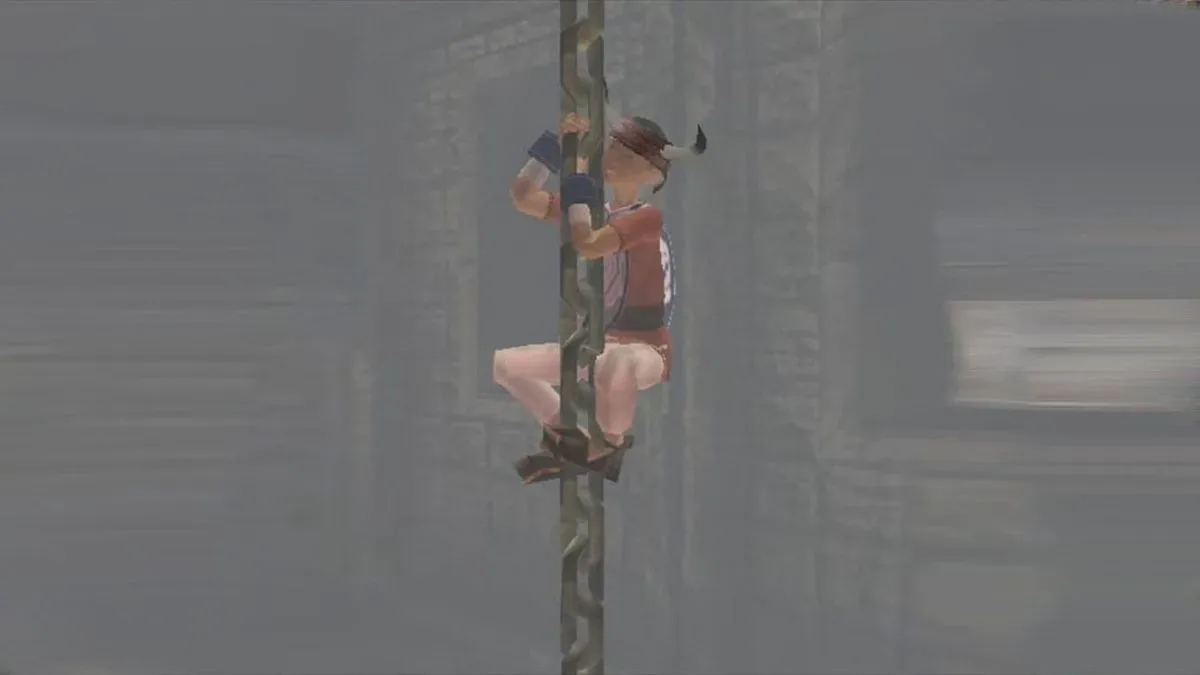
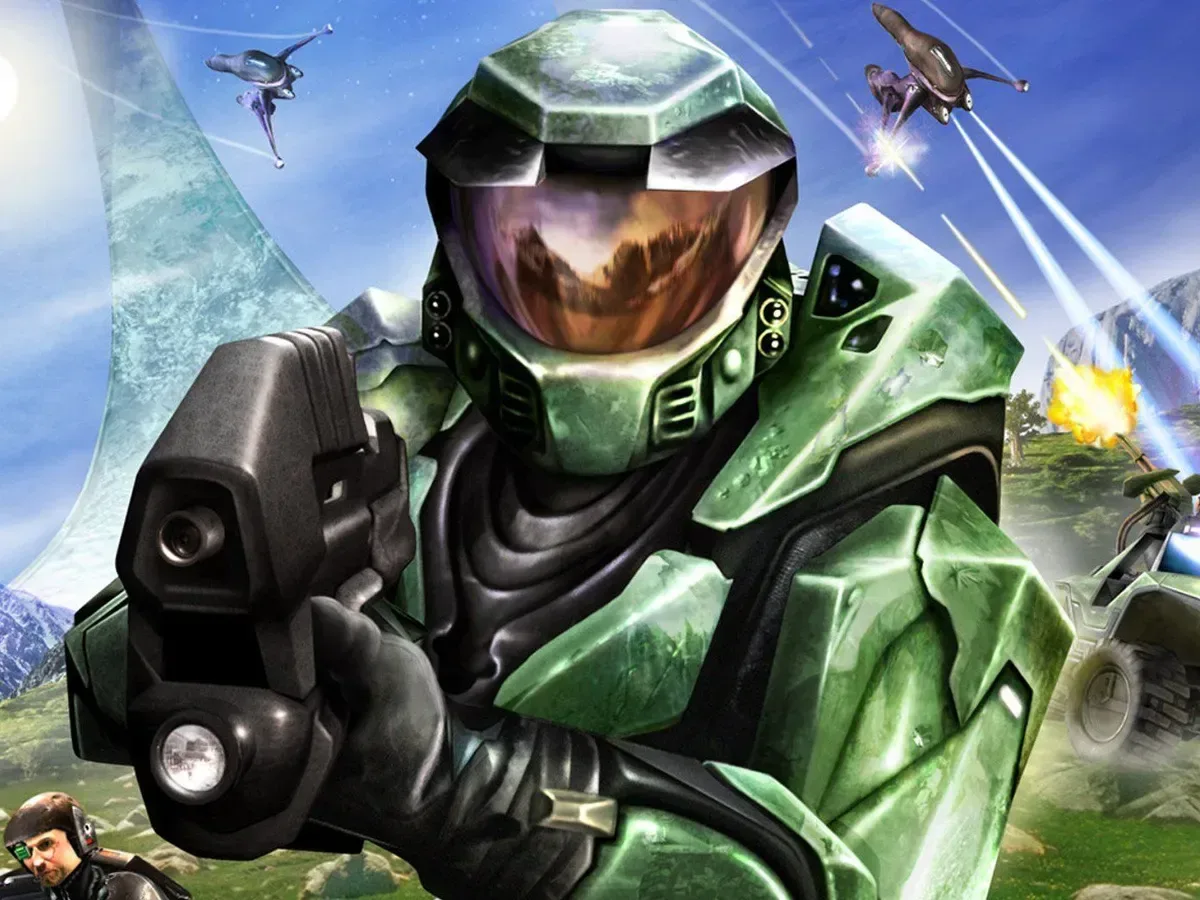
One of gaming’s great alternate-history questions has briefly become a piece of moving footage: Halo: Combat Evolved is running on a Sega Dreamcast.
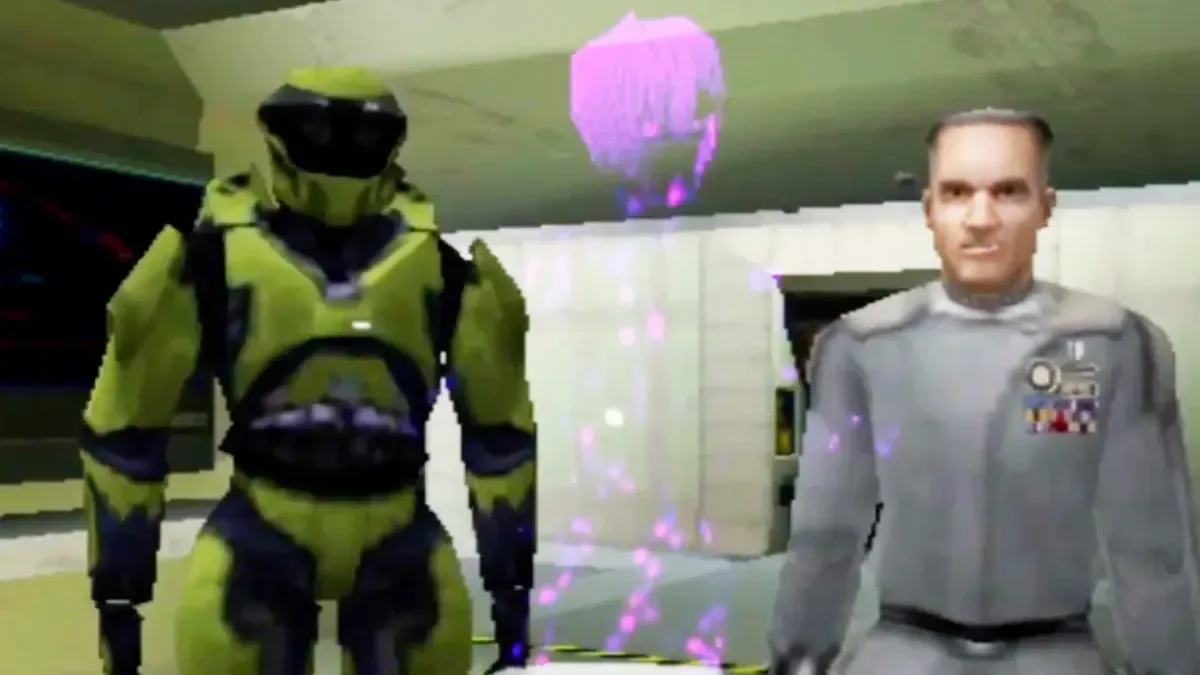
Developer Jilted Valkyrie has shared 28 minutes of footage for a fan-made project titled Halo: Dreamcast Evolved. The video includes material from the opening campaign mission as well as multiplayer matches across several maps, including the larger Sidewinder. The port is not presented as a finished product, but seeing the Xbox launch classic operating on Sega hardware from an earlier console generation is a genuinely startling retro-development achievement.
Jilted Valkyrie says the campaign portion is currently 77% complete and expects the project to release in 2026. That is a target rather than a firm release date, and plenty remains unknown: no detailed feature list, distribution plan, or specifics for an additional mode mentioned by the developer have been provided.
A very different route for Halo
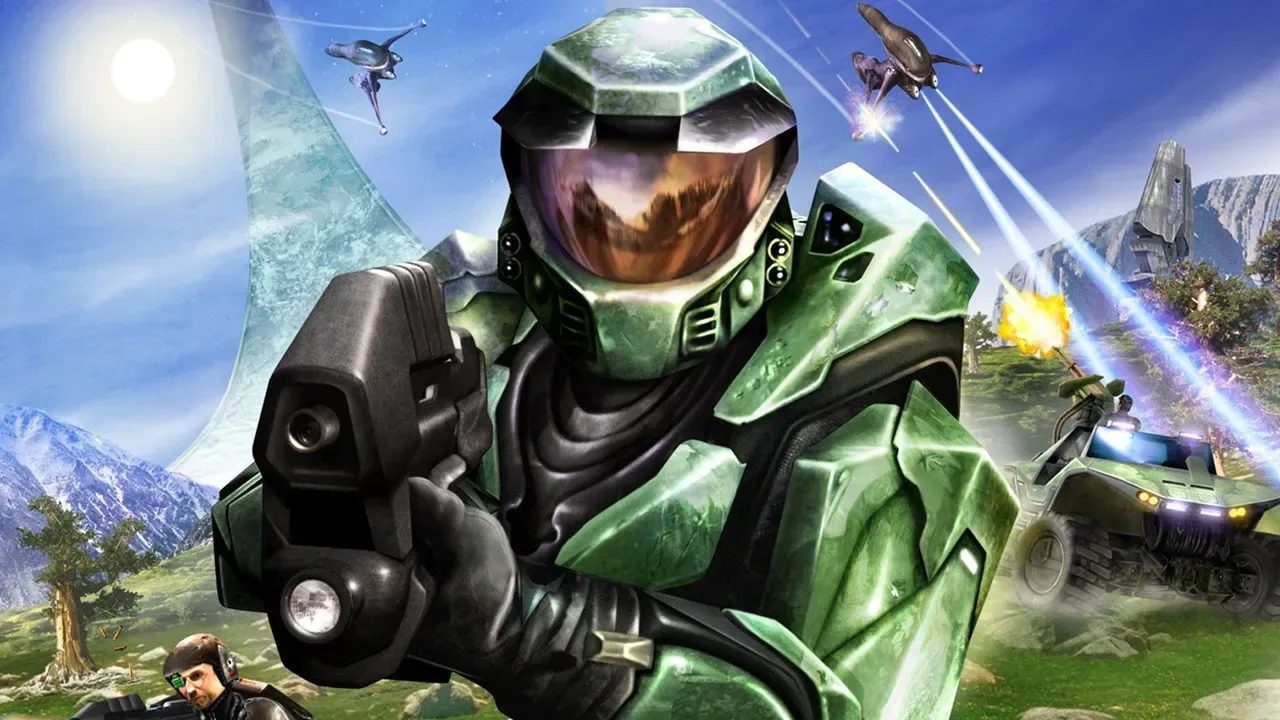
The original Halo: Combat Evolved arrived as a day-one title for the first Xbox in 2001. The Dreamcast came first, launching in Japan in late 1998 before its wider release in late 1999. In ordinary circumstances, that chronology makes the idea of playing the Xbox game on Dreamcast feel backward: this is not a conventional contemporary release designed for Sega’s system, but a ground-up effort to bring the experience to it.
The footage leans into that unlikely premise with a revised title screen reading Halo: Dreamcast Evolved, accompanied by the familiar Halo theme. More importantly, it demonstrates two pillars of the original game rather than only a short technical demo. Campaign footage appears from the game’s first mission, while the multiplayer section shows more than one arena and includes Sidewinder, a map whose scale makes it an especially notable inclusion.
There are visible performance compromises. The frame rate appears to fall below 30 frames per second at points in the footage. Frame rate, usually shortened to fps, measures how many individual images a game displays every second; dips can make movement and aiming look less fluid. That limitation is important context, but it does not erase what the demonstration establishes: the project is playing Halo content, in both solo and multiplayer contexts, on a Dreamcast.
What “not a 1:1 port” means
Jilted Valkyrie has been clear that this is not intended as a 1:1 port. In game-development language, a port is an adaptation of software from one platform to another. A 1:1 port would seek to reproduce the original version as closely as possible, with matching content and behavior wherever practical. This project instead includes changes and additions that distinguish it from other Halo versions.
The developer has said there is an entirely new mode, though no explanation of its rules, scope, or relationship to campaign and multiplayer has been revealed. That restraint matters. It would be easy to turn a teaser into a list of assumed features, but the only supported conclusion for now is that a new mode exists in the project’s plans and has not been detailed publicly.
Related coverage includes Halo: Combat Evolved Is Running on Dreamcast in a Remarkable Fan Port.
The altered goal may also be the most interesting thing about Halo: Dreamcast Evolved. A fan port does not have to compete with the original Xbox edition on exact fidelity to be worthwhile. Its appeal can be in the adaptation itself: what survives the journey, what has to be reworked, and which new ideas emerge while bringing a game to hardware it was never officially made for. This makes the project less like a replacement for the 2001 release and more like a distinct Dreamcast interpretation.
That perspective is especially relevant to the multiplayer showing. Jilted Valkyrie has raised the possibility of playing Halo online on Dreamcast. The footage confirms multiplayer is part of the project’s current presentation, but it does not establish the final form, setup, or public availability of online play. For now, it is best read as an ambition tied to the port rather than a finished service promise.
Collaboration behind the port
Jilted Valkyrie credited Dreamcast developer Falco Girgis as crucial to the effort, specifically pointing to work in KOS and SH4ZAM. The developer also cited Girgis’ technical posts about getting Grand Theft Auto III running on Dreamcast as inspiration to pursue the long-standing question of Halo on Sega’s machine.
That acknowledgement is useful context because projects like this do not emerge from a vacuum. Porting depends on a body of platform knowledge, tools, technical experimentation, and earlier work by people who have continued to investigate systems long after their original commercial life. It is a reminder that retro gaming is not only about preserving old discs and consoles; it also includes active development that tests what those machines can still be made to do.
That work is often judged through a different lens than a modern retail release. A commercial game is generally expected to arrive feature-complete, stable, and polished. A public work-in-progress video, by contrast, is evidence of a project’s direction and current state. Here, the key evidence is substantial: a modified Halo build runs on Dreamcast, campaign gameplay is visible, multiplayer gameplay is visible, and the developer has offered a progress estimate for the campaign. The performance dips and unfinished status are part of the story, not a reason to pretend the achievement has already reached its final form.
Why the footage matters to Dreamcast and Xbox fans
The timing gives the project an extra layer of resonance. The footage surfaced near the 25th anniversary of both Halo and the original Xbox, two names closely linked by the game’s role as a launch title. Bringing it to Dreamcast creates the sort of cross-console curiosity that the original hardware era never officially delivered.
It also gives Dreamcast enthusiasts a new kind of milestone to follow. The system’s legacy is frequently tied to the games it received during its retail life, but a project such as this shows why its community remains creatively active. The fascination is not merely that a recognizable game can display on old hardware. It is that a developer is attempting a full campaign experience, several multiplayer maps, an unspecified original mode, and potentially online play.
For Halo fans, the port offers a chance to think about the original game outside the usual Xbox lineage. The central question is no longer whether the Dreamcast version can be perfectly identical to the Xbox release; its developer has already said that it cannot and will not be. The question is what this different version becomes as it moves toward completion.
The contrast is notable at a time when current Halo development is also in transition. Development of the next mainline entry has moved away from Halo Studios, formerly 343 Industries, to Activision, which is forming a team for the project. Details about that next game remain limited, but the shift underscores how differently Halo exists in 2026: as a major franchise being reorganized at the corporate level, and as a 25-year-old game inspiring a personal, technically demanding Dreamcast adaptation.
Modern platform conversations still frequently circle back to performance targets and the trade-offs behind them. The debate around 30fps targets and Xbox access may concern a very different game and delivery method, but it illustrates why the visible frame-rate dips in this Dreamcast footage are worth acknowledging rather than glossing over. Performance affects how a game feels; context affects how impressive a result is. In this case, both can be true: the port is visibly unfinished and technically remarkable.
What to watch next
- Campaign completion: The stated 77% figure applies to the campaign, leaving an unfinished portion before the project can be considered complete.
- The new mode: Its existence has been teased, but its design and content remain unknown.
- Multiplayer and online details: The footage shows multiplayer, while online Dreamcast Halo remains an expressed goal without confirmed implementation details.
- Performance progress: The current video shows moments below 30fps, making optimization one of the clearest technical areas to follow.
- The 2026 release aim: It is the developer’s expectation, not a confirmed launch date.
Halo: Dreamcast Evolved is still a work in progress, and it should be viewed on those terms. But 28 minutes of campaign and multiplayer footage makes the underlying achievement difficult to dismiss. The Dreamcast did not receive Halo in its original era. A quarter-century later, a developer is attempting to give it a version with its own identity.