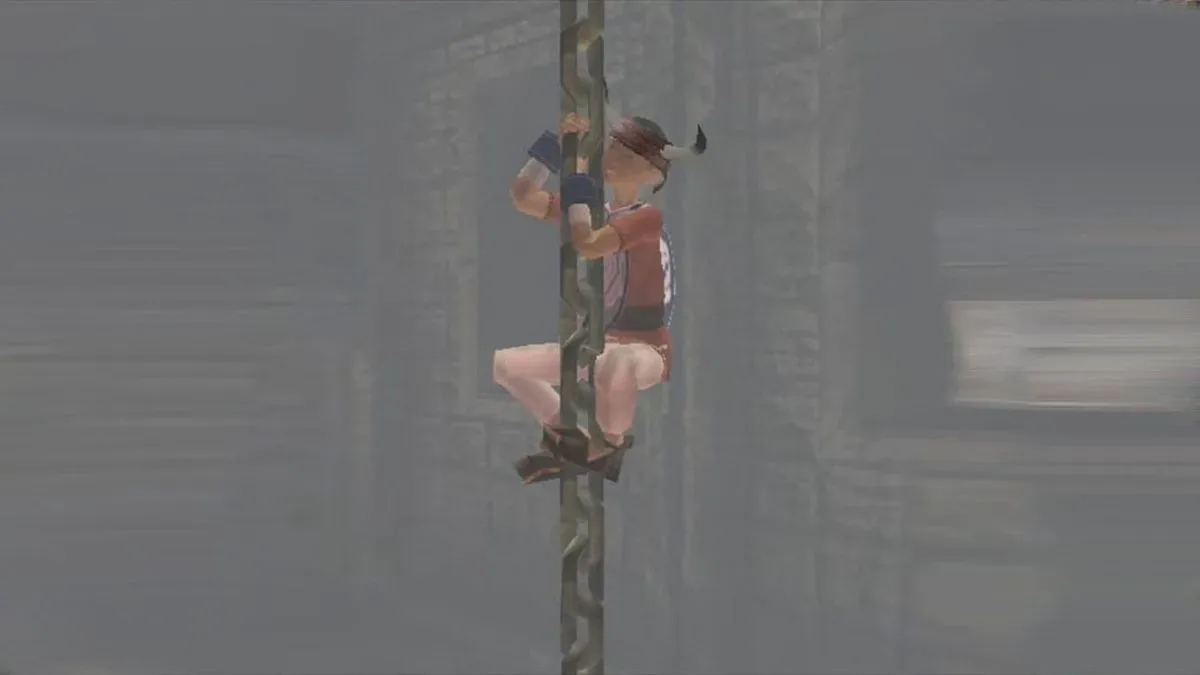
ICO may be heading to an unexpected console. A fan-led porting project from Esppiral V is bringing the Team ICO adventure to Sega’s Dreamcast. The work is still at an early stage, so this is not a finished release or a confirmed retail product—but the project is already a notable meeting point for two defining machines of the early 2000s.
Originally released on PlayStation 2 in 2001/2002, ICO arrived around the same period the Dreamcast was discontinued. That timing makes the project especially intriguing: the game is closely associated with Sony’s second console, while the Dreamcast is Sega’s final home console and one of retro gaming’s most active platforms for enthusiast development.
What the Dreamcast project is attempting
Esppiral V is undertaking the port. In practical terms, a port is an effort to make software built for one hardware platform run on another. That is different from simply playing an existing disc through compatibility hardware, and it should not be confused with a remake, which generally rebuilds a game with broader visual, mechanical, or design changes.
At this point, the important qualifier is that the ICO Dreamcast port remains unfinished. Early progress can demonstrate that a game is running and establish a technical direction, but it does not by itself guarantee that every scene, system, performance target, or ending will make the transition intact. Until the work is complete, expectations should stay grounded in that uncertainty.
Even so, the project challenges an easy assumption about the Dreamcast: that it cannot host an experience strongly linked to PlayStation 2. Console generations are often discussed as simple ladders of power, but the actual work of adapting software depends on how a game was made, what its individual demands are, and how much work is required to translate them to different hardware. The existence of an early porting effort does not settle every comparison between the machines, yet it does show why blanket judgments are rarely the whole story.
For those interested in the broader technical culture around game development, this kind of platform-specific adaptation sits within a wider world of complex coding work, a subject also reflected in recent discussion of tools for complex coding and research work. The Dreamcast project itself should be judged only on what it eventually demonstrates, rather than on assumptions about what a port ought to be able to do.
Why ICO still matters
ICO was designed by Fumito Ueda and produced by Kenji Kaido. Its premise centers on a boy with horns, regarded as a bad omen, who is taken to a castle to be sacrificed. He escapes and encounters a girl with magical abilities that can open areas of the fortress. Their attempt to find freedom forms the basis of the game’s fantasy journey.
That setup makes cooperation central to the game’s identity. Rather than presenting the castle merely as a collection of obstacles, ICO frames it as a shared space the two characters must navigate together. The girl’s magic is not a detached bit of lore: it is directly tied to access through the castle. The boy’s escape, the pair’s changing circumstances, and the route out of the stronghold all belong to the same narrative and gameplay premise.
The game is also comparatively concise. A completion time of roughly six to 10 hours gives it a focused shape rather than an enormous one. That scale is useful context for a porting project. A shorter adventure is not automatically simple to adapt—length is only one aspect of a game—but ICO is remembered as a concentrated, self-contained experience rather than a sprawling release built around dozens of separate destinations.
A game that itself crossed a hardware divide
There is a fitting historical symmetry to the Dreamcast effort. ICO was initially planned for PlayStation in 1997 before moving to PlayStation 2 and releasing in 2001. The reason given for that shift was the original PlayStation’s limitations. In other words, the game’s own development history already includes a major platform change driven by what the team needed the hardware to achieve.
That does not mean the current work is simply reversing an old decision. A modern fan port is a different undertaking from an original development team moving its in-progress game to a newer system. But the history reinforces why the project has drawn attention: a title whose original path was shaped by hardware constraints is now being adapted to a console that was commercially short-lived but continues to inspire technical experimentation.
Dreamcast interest goes beyond its commercial lifespan
The Dreamcast shared an era with PlayStation 2, GameCube, and Xbox, though it is often treated as less capable in casual comparisons. Its shorter lifespan and lower commercial success have helped feed that perception. Yet long after its discontinuation, the machine remains meaningful to players and developers precisely because its story did not end with Sega’s exit from the console hardware business.
Fan projects matter in that context because they keep attention on what older systems can still be used to explore. They are not replacements for the original versions of games, and an in-progress adaptation should not be treated as a guaranteed preservation solution. Still, projects like this can invite fresh appreciation for both sides of the equation: the game being adapted and the hardware receiving it.
For ICO, the appeal is obvious. It is an important PlayStation 2 game, designed around an atmospheric castle escape and the relationship between its two central characters. For Dreamcast enthusiasts, the appeal is the possibility of seeing an acclaimed game associated with a competing console operating on Sega hardware. That combination makes the port interesting even before it reaches a finished state.
What to watch as development continues
The most meaningful updates will be the ones that clarify the project’s scope. Does the work aim for the complete game? How closely does it preserve the original experience? Are there particular areas or systems that remain difficult? Those are the questions that matter more than a single early proof of concept.
It is also worth avoiding claims that the project establishes a universal rule about the Dreamcast or PlayStation 2. One adaptation cannot measure every capability of either console, and the supplied information does not detail how the port is being built or which compromises, if any, may be necessary. The responsible read is simpler: Esppiral V has begun an ambitious effort to bring ICO to Dreamcast, and the early work reportedly looks promising.
For now, that is enough to make this a retro gaming project worth following. ICO began as a PlayStation idea, became a PlayStation 2 classic, and may yet gain a new afterlife on Sega’s Swan Song console. Whether the finished port arrives and how it ultimately performs remain open questions—but the attempt alone is a compelling reminder that discontinued hardware can still have unfinished stories to tell.