Virtual R&B act Xania Monet took the three biggest honors at the AI Music Awards on November 13, winning artist, song and album of the year. The ceremony, held at The Mayan, positioned Monet at the center of an increasingly visible debate over what authorship, performance and achievement mean when a digital artist is built with generative tools.
Monet is not presented as a case of music appearing without human input. Her creator, Mississippi songwriter Telisha “Nikki” Jones, writes the lyrics, while Suno generates the music and vocals used for the digital performer. That division of work matters to the discussion around Monet: the project combines a human writer’s creative direction with AI-generated sonic material and a virtual artist identity.
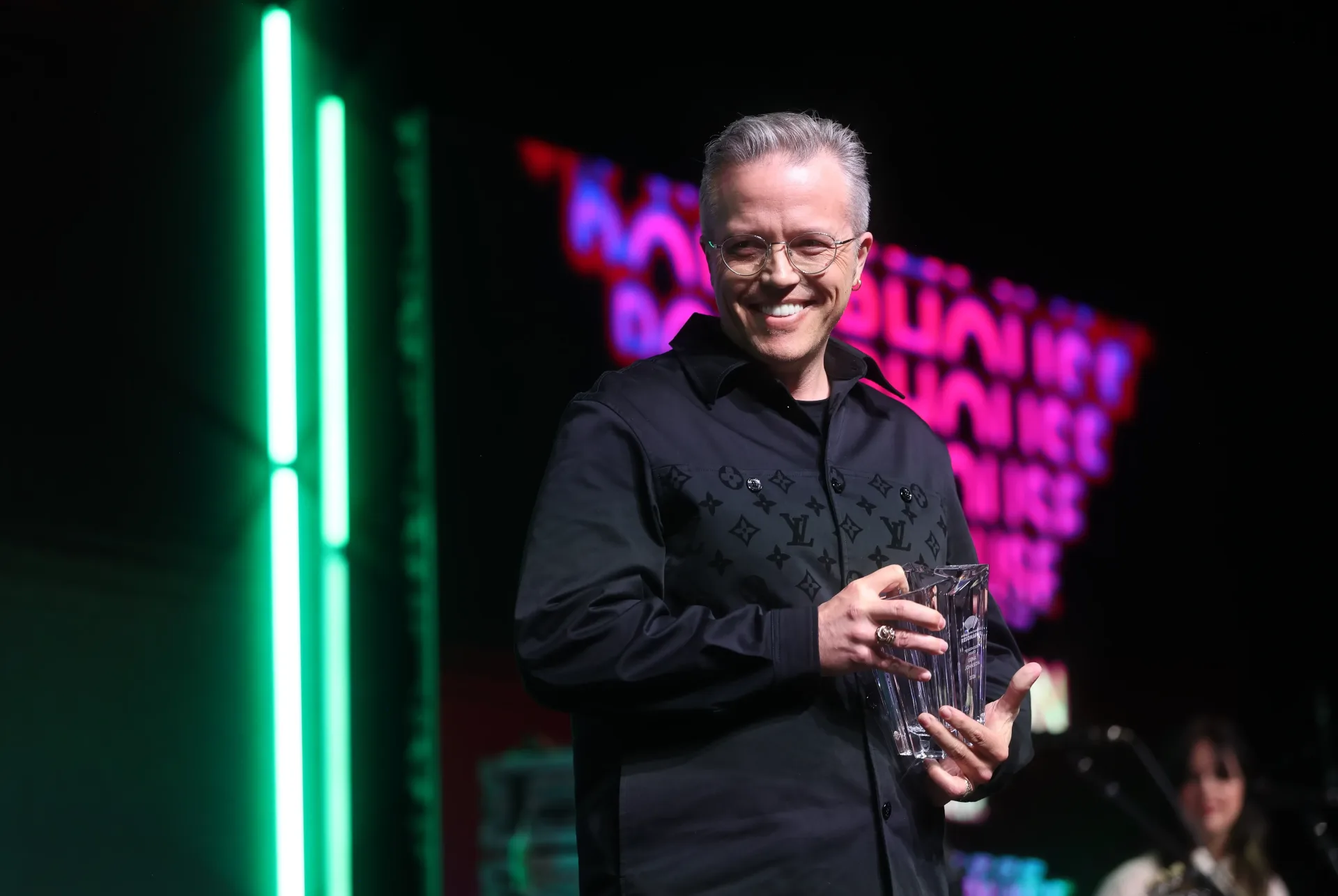
The wins also arrive after tangible commercial milestones. Monet signed with Neil Jacobson’s Hallwood Media, and “How Was I Supposed To Know” entered the Adult R&B Airplay chart at No. 30 in fall 2025. The track was being played by 15 reporting stations following a 28 percent increase in weekly airplay between October 17 and 23. Earlier, it reached No. 1 on R&B Digital Song Sales and No. 20 on Hot R&B Songs. Monet also appeared on Hot Gospel Songs with “Let Go, Let God.”
Those results do not settle the argument around AI music, but they do show why the question is no longer confined to a technology demonstration. Monet has moved through the usual public-facing markers that can shape an artist’s profile: a label relationship, digital sales, format-specific radio exposure, chart placements and now awards recognition.
How the awards voting worked
The AI Music Awards are organized by the Sonic Intelligence Academy. Its voting pool is made up of verified artists in the academy’s registry, with members choosing both nominees and winners in their respective categories. The rules bar members from voting for their own work.
That restriction is a basic conflict-of-interest protection. It does not mean every concern about voting systems disappears, but it is intended to prevent a creator from directly using a ballot to advance their own entry. In this case, Monet’s awards were decided through the artist-member vote rather than by academy staff.
The distinction is important because the program also includes an Off the Charts Spotlight Award chosen by the academy’s staff. The awards therefore use two different selection approaches: member voting for the competitive categories and staff selection for that spotlight honor.
The program spans 25 categories and does not treat every AI-made recording as the same kind of work. It includes separate honors for AI-assisted songs and for human-and-AI collaborations, while genre fields cover R&B, hip-hop, gospel, country, pop and jazz. In plain terms, AI-assisted refers to work in which artificial-intelligence tools are part of the creative process, while human-and-AI collaboration emphasizes a hybrid process involving human contributors and AI systems. The supplied category structure signals an attempt to recognize different approaches rather than force every entry into one umbrella label.
Related coverage includes Xania Monet Takes Artist, Song and Album Honors at AI Music Awards.
Monet’s song award came from a ballot that also included Nova Solé, Waking Up Christopher, Millionaire Muses and Aria Blu. The result gives Monet a clean three-award sweep, but it also places the project inside a field of competing AI-music creators rather than treating it as the format’s sole representative.
A creator, a character and a generated voice
Monet’s setup is useful for understanding why phrases such as “AI artist” can obscure as much as they explain. Jones is the songwriter supplying lyrics. Suno provides generated music and vocals. Xania Monet is the digital performer identity through which the finished recordings reach the public.
Those are connected roles, but they are not interchangeable. A songwriter creates words; a music-generation system produces audio from prompts or other inputs; a virtual act gives a release campaign and public persona a recognizable focal point. In a conventional recording context, listeners may be accustomed to separating songwriters, producers and singers. AI music adds another layer because the singing voice and instrumental recording can be generated rather than performed by a human vocalist or instrumentalist.
Jones defended that emerging format before the ceremony, saying, “I just feel like AI music is a new thing that people just have to get used to.” Her position frames the technology as a new form that audiences and the wider music business will need to learn to evaluate on its own terms.
That is not the only view in circulation. Monet’s advance has prompted criticism from musicians worried that artificial performers could displace human creative labor. The pushback was visible in September 2025, when Kehlani challenged industry investment in an artificial R&B act. The concern focused on the work behind singing, production and songwriting, including the years that working artists spend building those skills.
At the heart of that disagreement is a question broader than whether a finished song can attract listeners. Monet’s radio and chart performance shows that audiences can encounter and respond to recordings released by a virtual act. The harder issue is how the industry should value the people whose labor is involved in writing, producing, performing and developing the systems used to make those recordings.
Why the radio result matters
“How Was I Supposed To Know” reaching Adult R&B Airplay at No. 30 is especially notable because it measures radio exposure within a specific format. Adult R&B is a radio category, and an airplay chart reflects how often a recording is played by the reporting stations measured for that chart. It is different from a digital sales ranking, which tracks purchases, and different again from a broader genre chart that can combine multiple forms of consumption.
The reported 15 stations and 28 percent weekly increase offer a more precise picture than a general claim that the song “went viral” or “was everywhere.” They show format-level adoption by participating radio stations during that period. That is meaningful visibility, while still being a specific measurement rather than proof of universal acceptance across radio or R&B as a whole.
Its earlier No. 1 placement on R&B Digital Song Sales and No. 20 position on Hot R&B Songs show activity across different chart measures. Meanwhile, “Let Go, Let God” appearing on Hot Gospel Songs suggests that the project’s releases have reached beyond a single R&B lane. None of those data points answers the creative or ethical objections surrounding generative music, but they explain why Monet’s project has become a serious talking point.
What the sweep does—and does not—establish
The three awards establish that Monet won broad recognition within this particular AI-music awards structure. They do not establish a universal industry consensus on AI-generated vocals, virtual performers or the proper division of credit in generative music. The presence of categories for both AI-assisted work and human-AI collaborations itself reflects a field still trying to name and sort its own creative methods.
For listeners, the practical takeaway is to look beyond the label “AI.” Asking who wrote the lyrics, who shaped the musical direction, what system generated the sound and how the project is presented can clarify the nature of a release. Monet’s case has unusually clear supplied answers: Jones writes the lyrics, Suno generates music and vocals, and Monet is the virtual R&B act attached to the recordings.
For artists and the business around them, the awards add another public milestone to a project already connected to a record deal and measurable chart activity. That does not erase the concerns raised by musicians about human creative work. Instead, it makes the debate more immediate: AI music is being assessed not only as an experiment, but through the same visible currencies of contemporary music culture—airplay, sales, partnerships, public attention and trophies.
Monet’s sweep therefore reads less like a final verdict on AI music than a clear sign of its current momentum. The format is producing dedicated categories, a verified-artist voting pool and performers capable of reaching radio and sales charts. At the same time, the criticism surrounding the project remains inseparable from the achievement, because the questions about labor and artistry are precisely what make an AI-generated R&B act so consequential. For more coverage of music’s place in public culture, see Wu-Tang Clan’s Rock Hall induction update.