WWE is taking one of its most familiar strengths—big personalities, cliffhangers and heightened conflict—and putting it into a different-sized screen. “Agent of Shadows,” WWE’s first collaboration with mobile-focused microdrama platform ReelShort, is set to premiere October 23 on ReelShort and social media.
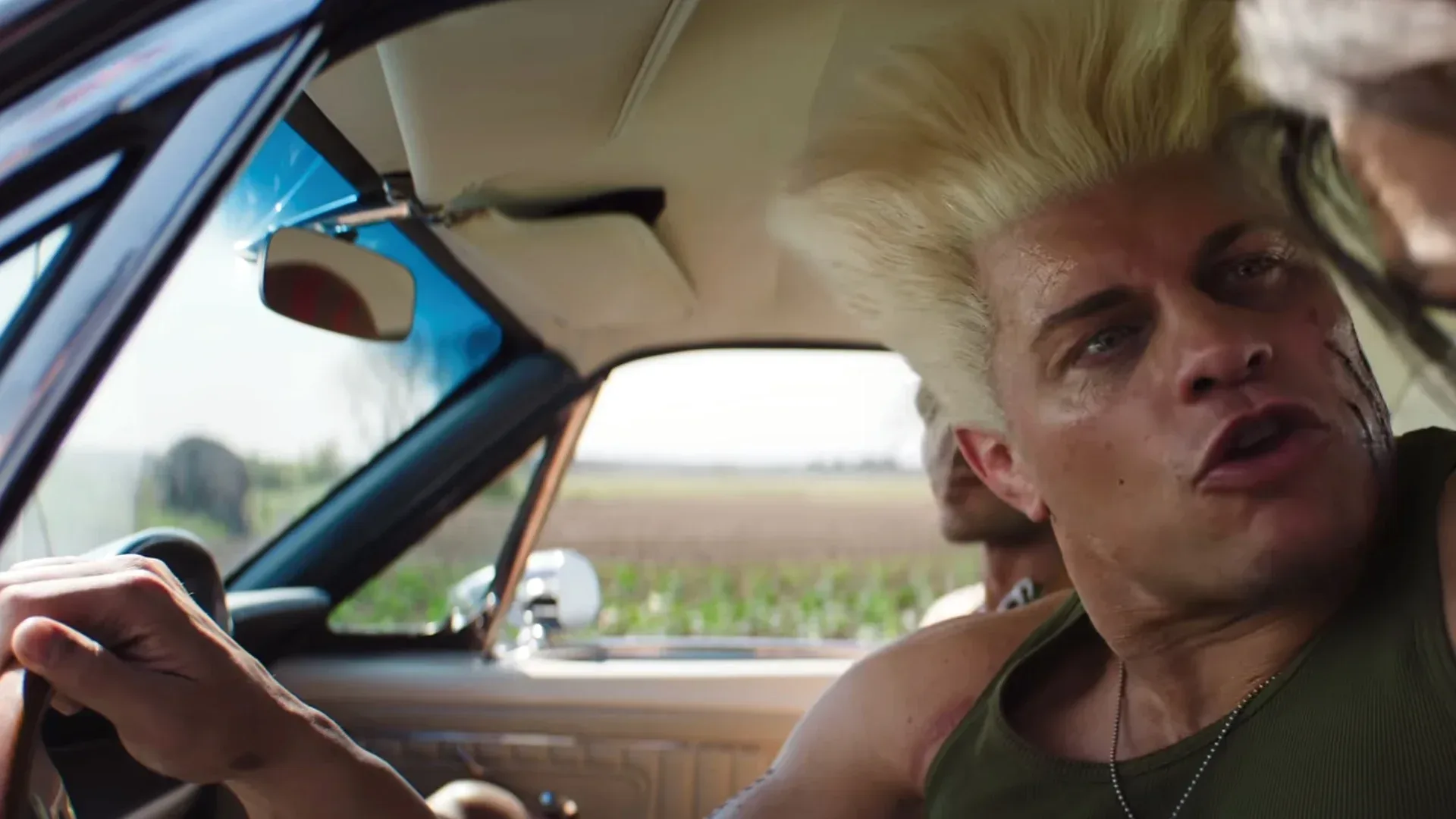
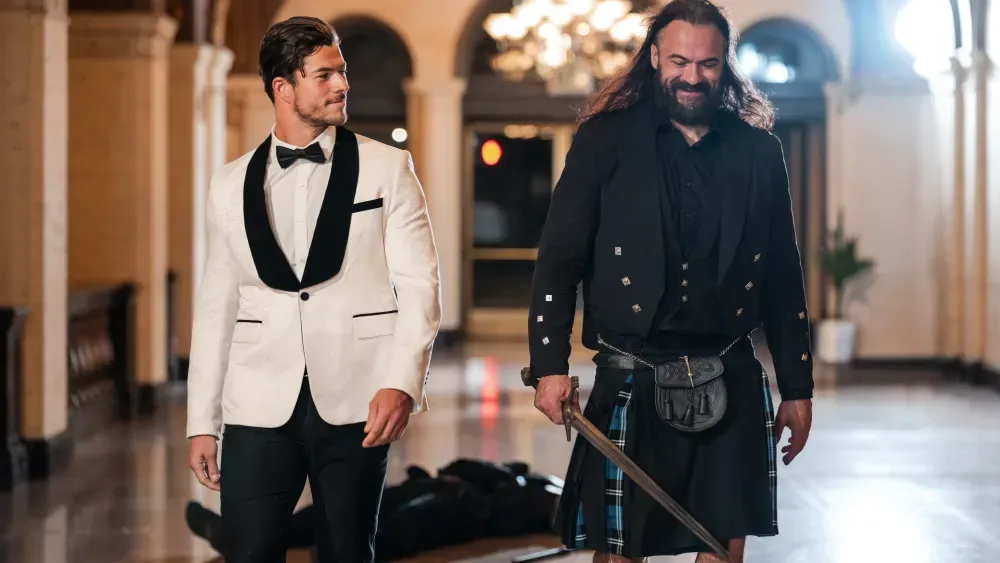
The series centers on secret agent Adam Hawke, played by Chase Mattson, whose mission becomes personal after he discovers he has a daughter he never knew existed. He must then protect her from a criminal organization. Drew McIntyre has a central supporting role as Roscoe, Hawke’s right-hand man and technical expert.
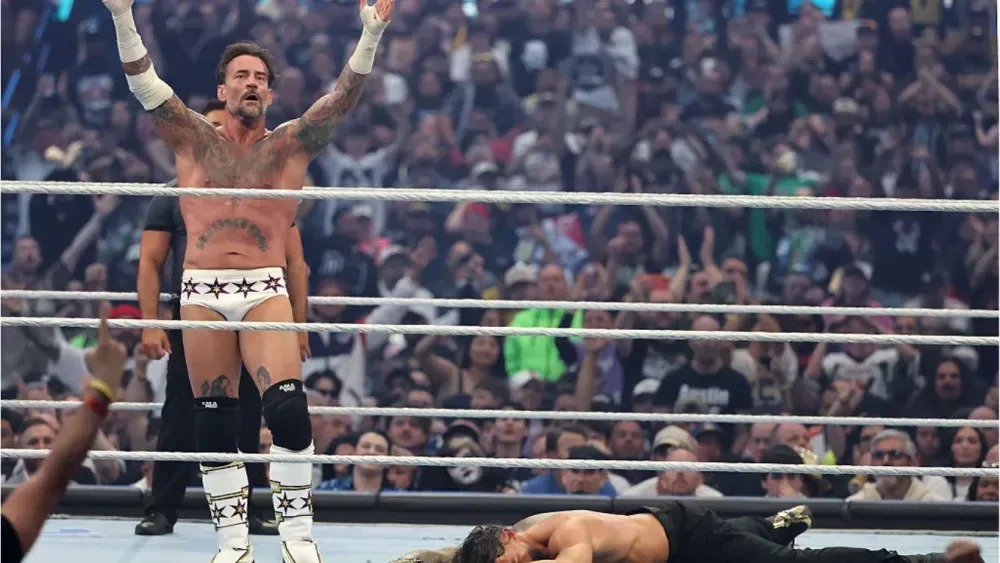
It is the first project to emerge from the WWE-ReelShort partnership announced in July. The production also includes ReelShort performers Marc Herrmann and Katherine Gibson, alongside WWE names Jacob Fatu, Joe Hendry, Nikkita Lyons, Michael Hayes and Booker T, among others.
What “microdrama” means in this case
Microdrama refers to serialized scripted storytelling built for quick, mobile-first viewing. Rather than asking an audience to reserve a conventional feature-length block of time, the format delivers an ongoing plot in short installments. The key word is serialized: each small chapter contributes to a longer narrative, often with a revelation, escalation or unanswered question designed to make the next chapter feel immediately necessary.
That makes the format a natural experiment for WWE. Wrestling has long depended on serial storytelling: alliances fracture, grudges build, returning figures change the stakes and weekly segments end with viewers anticipating what happens next. “Agent of Shadows” does not turn WWE programming into a wrestling show on a phone. Its story is an action-thriller about a secret agent and a criminal threat. But the underlying mechanics—larger-than-life characters and momentum-driven plot turns—are recognizably compatible.
WWE development executive Ben Houser framed the move as an effort to reach viewers where they already watch, particularly on mobile phones. He described ReelShort’s appeal as its ability to tell a long-running story through bite-sized pieces. That distinction matters: a brief runtime does not mean a one-off sketch. The ambition is a continuing narrative consumed in increments.
Mobile entertainment is not automatically interchangeable with mobile gaming, but the audience habit is familiar to players: phones are the device people keep within reach, and content designed around that reality has to be direct and easy to resume. The premise behind a microdrama is similar in practical terms. An installment needs to establish its purpose quickly, create a clear pull forward and remain understandable amid interrupted viewing.
For another look at how established entertainment experiences are adapting to phones and tablets, see No Man’s Sky’s move to iPhone and iPad.
Related coverage includes WWE and ReelShort Launch ‘Agent of Shadows’ With Drew McIntyre.
Drew McIntyre’s Roscoe is more than a cameo
McIntyre is not merely listed among the WWE guest names. He plays Roscoe, the trusted partner and technology specialist to Mattson’s Adam Hawke. In a story involving a secret agent, a newly discovered daughter and a criminal organization, the right-hand-man role potentially puts Roscoe near both the action and the plot’s information flow. The supplied details do not establish how many episodes he appears in or exactly where his character’s loyalties land, so those specifics will have to wait for the series itself. What is clear is that the part is positioned as a substantive acting role.
McIntyre has been deliberately pursuing roles that require something beyond the most obvious casting lane. He appeared in the 2024 action film The Killer’s Game and has filmed roles in the forthcoming Highlander reboot with Henry Cavill and The Last Druid, which stars Russell Crowe. McIntyre was filming The Last Druid in Barcelona when Houser contacted him about joining “Agent of Shadows.”
He has said he still sees many years ahead in WWE, while also viewing outside acting work as a chance to develop range. That is a meaningful framing for Roscoe. McIntyre’s scale and wrestling presence make physical roles an easy assumption, but he has expressed no interest in simply filling a generic heavy role. A technical-expert character gives the production an opportunity to use a different kind of competence: not just intimidation, but problem-solving, timing and character interaction.
Live performance and camera acting are not identical skills
Wrestling experience is valuable preparation for screen work, but it is not a shortcut around the differences between the forms. WWE performers work in front of large arenas and live television cameras, where body language needs to read clearly and reactions often need to land instantly for an audience. A filmed drama permits multiple takes, closer framing and a more controlled relationship between the performer, lens and edit.
McIntyre has acknowledged that his first film still made him nervous despite years of regular live television. He recalled advice from Dave Bautista: wait for the camera’s red light, then trust that performance instinct. McIntyre said that once filming began, he relaxed into the work.
That anecdote gets at the useful overlap. Both wrestling and filmed drama require a performer to commit to a character’s immediate objective. The differences are in calibration. A live crowd may reward an expansive gesture; a close camera can register smaller changes in expression and voice. A microdrama adds another consideration: the production must create a steady rhythm of meaningful moments across many compact scenes.
A fast production rhythm behind the short episodes
Mattson’s experience in the format includes “Married to the Don” and “My Poor Husband Is a Billionaire.” He described the production of “Agent of Shadows” as operating at a rapid pace, with 12-to-14-hour shooting days that may cover around 20 scenes. That volume helps explain why microdrama should not be mistaken for casually made vertical video. Short installments can demand a great deal of production organization because the story still requires locations, coverage, performances, transitions and a dependable rate of narrative advancement.
Mattson also pointed to a technical evolution in the space, saying earlier shoots used iPhones while current work can involve ARRI and RED cameras. Those are professional digital cinema camera systems. Their mention does not, by itself, tell us the exact camera package used on “Agent of Shadows,” but it does reflect a broader production aspiration described by people involved: microdrama can be made with a more conventional film-and-television production mindset while remaining tailored for mobile delivery.
McIntyre made a strong impression on Mattson, who praised both his demeanor on set and his acting ability. Mattson joked that he had heard McIntyre was tall and imposing before seeing him in person, then compared the wrestler’s physical presence to the Iron Giant. The observation is lighthearted, but it also captures an immediate visual asset for an action serial: McIntyre arrives with a silhouette that reads quickly on screen.
Why WWE and ReelShort see a fit
ReelShort head of talent and business development Sammie Hao described the companies as having shared storytelling DNA. In practical terms, that means dramatic stakes, outsized characters and plot developments that create a desire to know what comes next. Those are broad storytelling principles, but they become especially important when episodes are intentionally brief.
For WWE, a scripted mobile series can serve several purposes at once. It creates a new showcase for talent outside the ring, gives established WWE personalities a different fictional framework and provides an entry point for viewers who may not start with a full wrestling broadcast. It also lets WWE test how its performers and brand associations travel in a genre with different expectations.
For ReelShort, the partnership brings a company with recognizable performers and a built-in fluency in episodic spectacle. Hao called the collaboration a milestone and suggested that branded storytelling can function as an alternative campaign format, potentially tied to a season, a product push or a broader brand objective. She referenced an upcoming Crocs show aimed at Valentine’s Day as another example of that approach.
That does not mean “Agent of Shadows” should be reduced to an advertisement. Its supplied premise is a straightforward narrative setup: Adam Hawke discovers he is a father and must protect his daughter. The commercial significance is in the partnership around it. WWE talent is participating in a story designed specifically for a platform and audience behavior that differs from the company’s usual live-event ecosystem.
What viewers can reasonably expect on October 23
Based on the announced setup, viewers can expect a mobile-first action story led by Mattson’s Adam Hawke, with McIntyre’s Roscoe operating as his technologically skilled ally. The criminal organization and Hawke’s daughter supply the stakes; the WWE cast supplies several familiar faces within an ensemble that also includes established microdrama actors.
There are still limits to what has been revealed. No episode count, installment length, release cadence or detailed character breakdown for the broader WWE lineup has been provided here. It would be premature to assume how much screen time each personality receives or whether the series will lead to additional WWE-ReelShort projects.
Still, the move itself is clear. WWE is not simply licensing a name into a mobile space. It is placing performers, including McIntyre in a key role, inside an original serialized drama built around the viewing habits ReelShort is targeting. “Agent of Shadows” will be the first measure of how well that combination of wrestling-scale presence and compact, phone-centered storytelling works when the series premieres October 23.