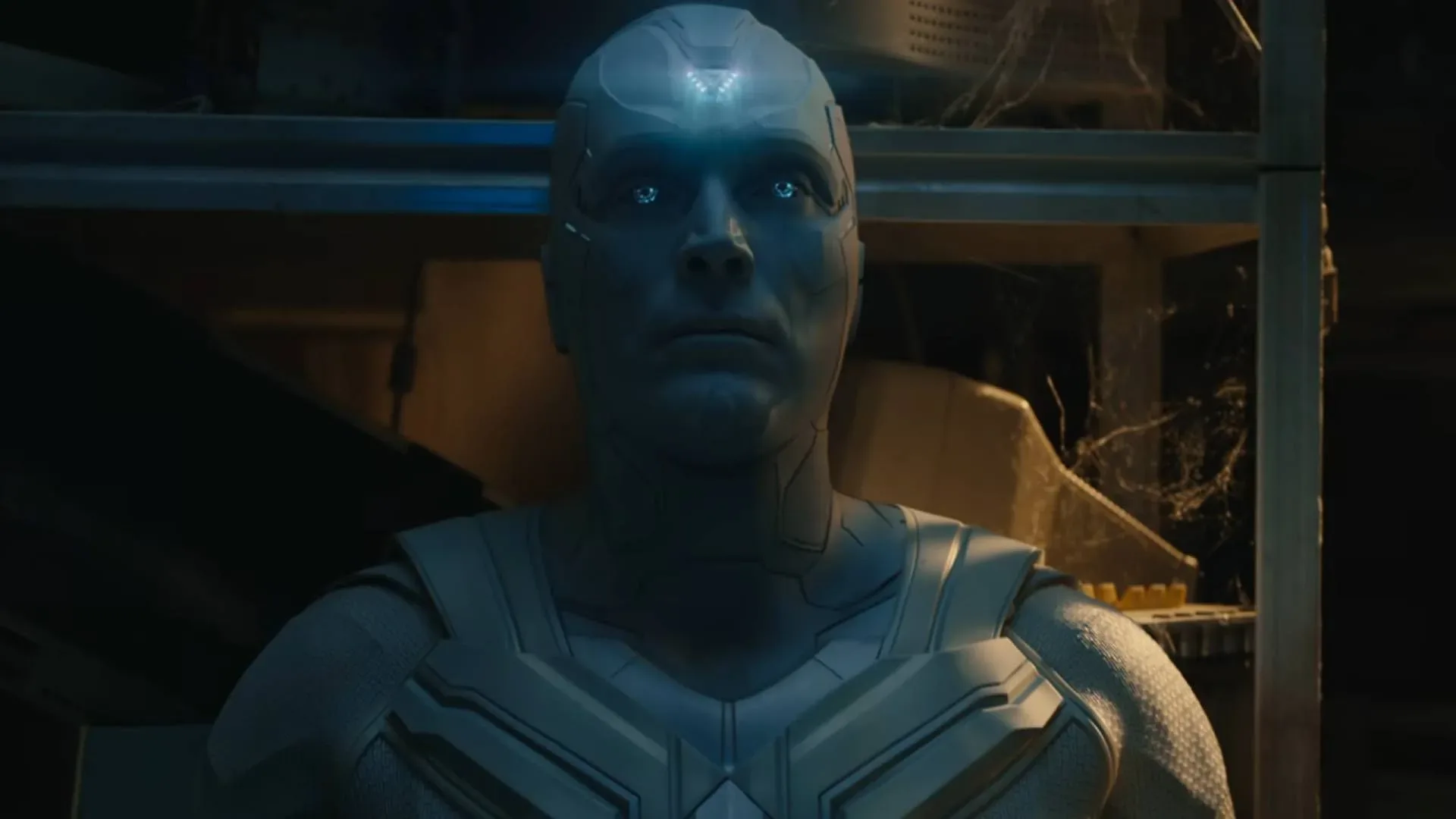
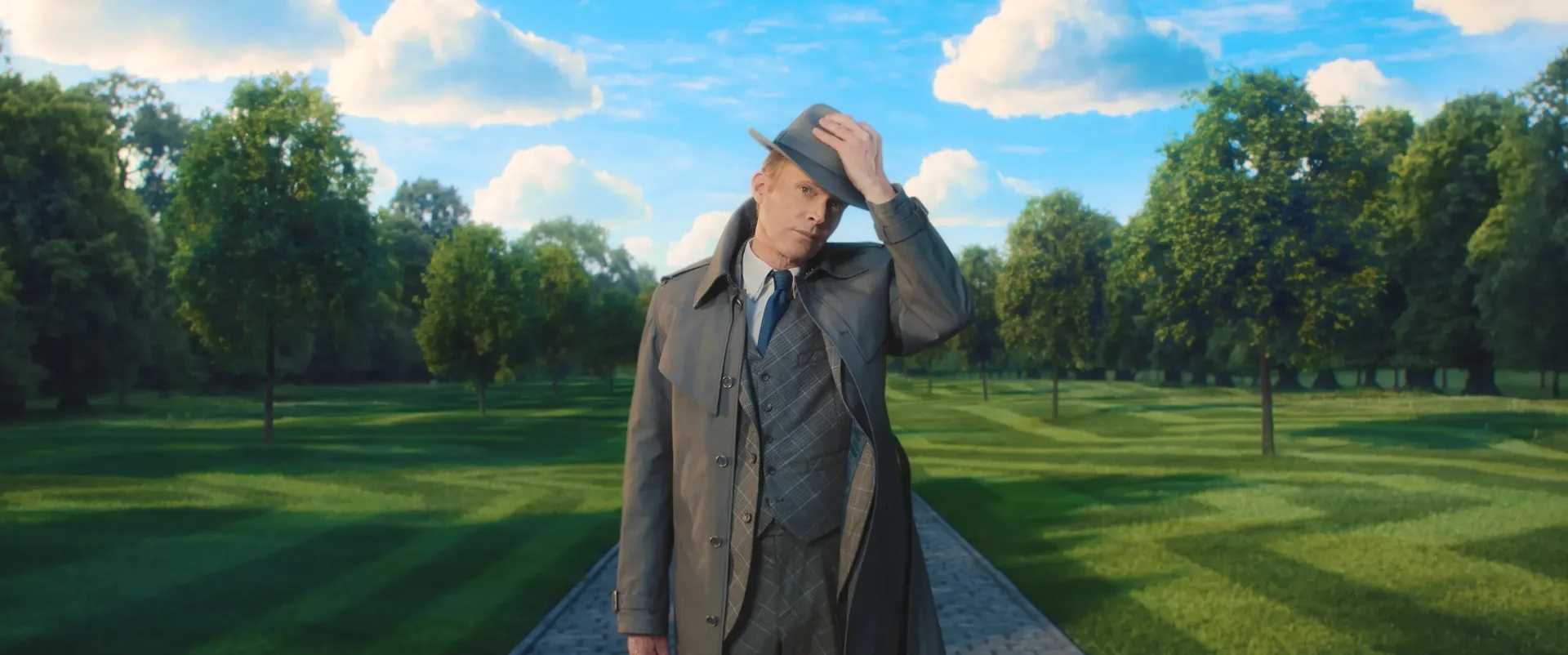
VisionQuest ended its eight-episode run with 3.7 million views worldwide in its first day on Disney+, a result Disney says places the finale ahead of every other Marvel Cinematic Universe television-series finale released in the past three years.
The comparison reaches back to Loki Season 2 in 2023 and includes a broad mix of Marvel projects that followed: additional seasons of What If...?, Echo, Agatha All Along, Your Friendly Neighborhood Spider-Man, Daredevil: Born Again, Ironheart, Eyes of Wakanda, Marvel Zombies and Wonder Man. It is a notable finish for a series built around Vision, a character whose identity has repeatedly been defined by rebooting, memory and competing versions of self.
The reported opening-day result is also a finale-specific milestone rather than a declaration about an entire season’s cumulative audience. That distinction matters. A finale number shows the attention concentrated around the final episode; it does not by itself reveal how many people completed the series, how audiences watched across all markets, or how its full-season reach compares with shows operating under different release patterns. Still, Disney’s figure provides a clear indication that interest rose rather than faded by the end.
Finale viewing rose sharply from Episode 7
Disney says the final episode was watched 44% more than Episode 7. In practical terms, that is a substantial week-to-week jump for an eight-part streaming season. The supplied figures do not establish exactly why audiences arrived in greater numbers for the conclusion, and they do not show whether viewers were catching up from earlier episodes, returning after a pause or tuning in specifically for the ending. But the direction is unambiguous: the show’s largest reported one-day audience came at the finish line.
That pattern gives the 3.7 million total added context. A finale can be a useful measure of whether a show sustained viewer curiosity, especially for serialized storytelling where unresolved plot threads are intended to pay off late in the run. VisionQuest’s premise is explicitly structured around an evolving mystery: Vision is pursued after a bounty is placed on him, while he tries to understand Thomas Shepard, a boy who may be his reincarnated son. Those story elements give the finale obvious narrative weight without requiring speculation about the episode’s specific events.
The series has also appeared twice among the top 10 streaming originals on Nielsen’s weekly rankings, most recently at No. 6. Weekly charts and a platform’s one-day view measurement are not interchangeable metrics. Nielsen’s rankings track viewing over a week, whereas Disney’s headline figure concerns global viewing in the first 24 hours. They answer different questions: one reflects a title’s position within a weekly measurement window, while the other spotlights immediate momentum around a single episode.
What the Disney measurement does—and does not—say
Streaming “views” can sound more precise than they are without a full methodology attached. Here, the key confirmed details are that Disney measured 3.7 million global views for the finale over one day and that it considers this the leading MCU-series finale result over the stated three-year comparison period. No viewing-hours total, country-by-country breakdown or completion information was provided.
That does not diminish the achievement; it defines its scope. View counts are useful for showing the size of the initial audience response, particularly when a platform uses the same internal approach to compare related programs. They are less useful as a universal scoreboard across every service, where platforms may report different types of audience data or disclose different amounts of detail.
For viewers, the more straightforward implication is that VisionQuest appears to have built meaningful late-season momentum. For the wider Marvel television slate, it demonstrates that a character-driven story connected to long-running MCU history can still concentrate attention around an ending. The result is especially relevant because the series puts the spotlight on Vision’s own existence instead of presenting him solely as part of a larger team dynamic.
Vision’s search for meaning anchors the series
Paul Bettany returns as Vision, portrayed in the series as rebooted, in hiding and attempting to find a new purpose after escaping people who wanted to weaponize him. That setup establishes a central tension between autonomy and programming: Vision is trying to decide who he is while others see him as something to be controlled or used.
His search brings him into contact with artificial-intelligence personas embedded in his programming. The lineup includes F.R.I.D.A.Y., played by Orla Brady; E.D.I.T.H., played by Emily Hampshire; J.A.R.V.I.S., played by James D’Arcy; and Ultron, played by James Spader. An AI persona, in this context, means a distinct digital intelligence with its own voice and role inside Vision’s technological framework. Their presence turns Vision’s internal struggle into something more literal: he must contend with personalities woven into the systems that make him what he is.
Ultron is described as an influence Vision must resist, raising the stakes beyond a conventional chase narrative. Meanwhile, the bounty on Vision forces him out of his discreet life and onto the run with Thomas Shepard, played by Ruaridh Mollica. Thomas is presented as a mysterious figure who may be Vision’s son reincarnate. The uncertainty is important to the premise: the series frames Thomas as an enigma Vision has to unravel, not as a question already settled for the audience.
The combination of a fugitive plot, embedded AI characters and an ambiguous possible family connection creates a story about identity under pressure. Vision is not simply evading capture. He is confronting what he is, who may claim authority over his future and whether a relationship with Thomas can offer the meaning he has been seeking.
A Marvel finale with familiar creative ties
Terry Matalas created VisionQuest and serves as an executive producer. The executive-producing team also includes Kevin Feige, Louis D’Esposito, Brad Winderbaum, Mary Livanos, Jac Schaeffer and Christopher J. Byrne, with Roopesh Parekh as producer.
Feige’s involvement places the show within Marvel Studios’ continuing screen output, while VisionQuest’s reported finale performance supplies a concrete audience benchmark for this particular corner of it. Readers tracking Marvel’s wider plans can also see how Feige has discussed the tonal direction for Gambit in Avengers: Doomsday.
For VisionQuest, the immediate takeaway is narrower and stronger: the season ended with a sizable first-day global audience, a 44% jump over its penultimate episode and a platform-reported standing above the finales of its MCU-series peers from the past three years. The available data cannot explain every factor behind that rise, but it does show a series that attracted its biggest reported burst of attention when its central questions reached their endpoint.