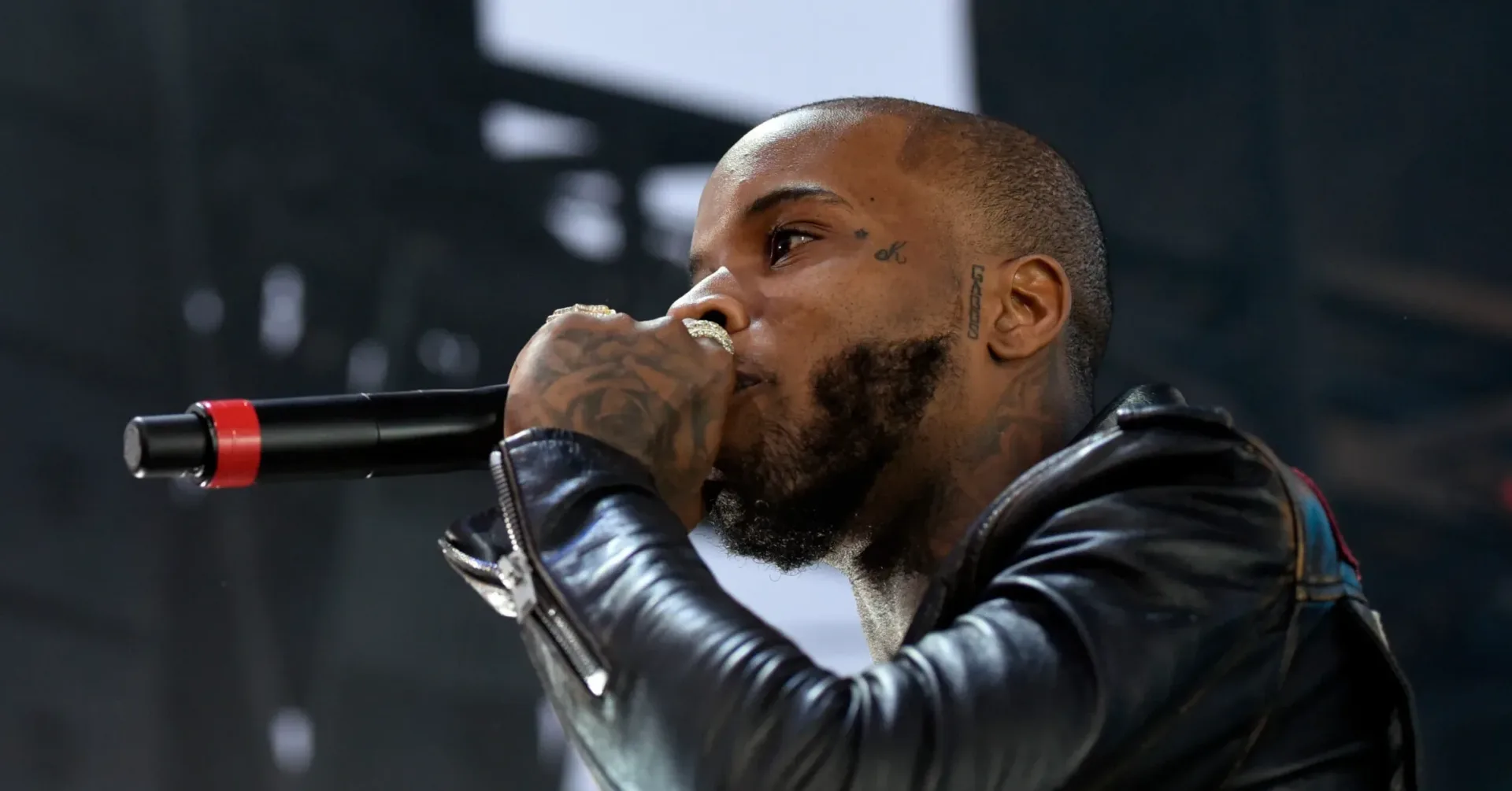
Tory Lanez is attached to a fall run of events called the “Not On Tor, Tour”—a deliberately unusual touring proposition because the artist will not be physically present. The announced program is described as a series of listening experiences, with dates currently listed for New York, Los Angeles, Washington, D.C., New Orleans and Pittsburgh.
The basic idea is clear: these are music-centered events happening in multiple cities under Lanez’s name. Nearly every practical detail beyond that, however, remains unresolved. No format has been established for what attendees will hear, whether the music will be archival or unreleased, who will host or DJ, how long each event will run, or whether any remote contribution from Lanez is planned. Montreal and Toronto have also been mentioned as cities awaiting dates.
That lack of detail matters. “Tour” normally tells an audience to expect a live performance by the billed artist. “Listening experience” is a broader term. It can describe anything from a room playing a curated sequence of recordings to a more structured presentation built around an album, visuals, guests or audience discussion. Until organizers spell out the program, prospective attendees should treat the current listings as event dates rather than proof of a conventional concert.
The announced ‘Not On Tor, Tour’ dates
- New York — Sept. 25
- Los Angeles — Oct. 15
- Washington, D.C. — Oct. 22
- New Orleans — Nov. 12
- Pittsburgh — Nov. 13
Montreal and Toronto have been identified as additional intended stops, but dates have not been provided. No venues are included in the currently available information, and there are no stated ticketing, age-restriction, accessibility or scheduling details. Those omissions are worth keeping in mind because a city-and-date list is only the start of the information people need to decide whether an event is actually for them.
What a listening experience means—and what it does not confirm
In music-event language, a listening experience generally places recorded music at the center rather than a live set. It does not carry one fixed format. It could be a communal playback of existing tracks, a premiere of new material, a DJ-led night using an artist’s catalog, or a presentation that blends playback with video or conversation. The name describes the activity, not the production scale.
For this particular series, the available announcement does not establish which of those models applies. It is unknown whether fans will hear newly recorded music, previously released songs, material from Lanez’s “Lost Tapes,” or some combination. It is also unknown whether the events will have on-site special guests or a livestreamed appearance. These are possibilities raised by the unusual setup, not confirmed components of the tour.
That distinction is especially important when an artist’s absence is central to the premise. A DJ playing a catalog, for example, would create a different experience from a first-play presentation of unreleased tracks. A video message would be different again. Each may appeal to a different segment of an audience, but none should be assumed from the phrase “listening experience” alone.
Why the format is different from a standard tour
Lanez is incarcerated and serving a 10-year sentence connected to the 2020 shooting of Megan Thee Stallion. Appeals have been attempted and denied. His incarceration means the “Not On Tor, Tour” cannot operate like a normal artist-led route of stage appearances, travel and nightly live performances.
The title makes that limitation part of the branding. Read literally, it signals that Lanez is not on tour in the usual sense while still presenting a multi-city series tied to his music. It is a compact way of framing a practical constraint and attempting to turn that constraint into the event’s hook.
The project also follows the release of “Lost Tapes” while Lanez has been in prison. That establishes that music associated with him has continued to reach fans during his incarceration. The listening-event concept extends that presence from releases into physical gathering spaces, though it remains unclear exactly what material the events will use.
There is an obvious business and audience challenge in that approach. At a standard concert, the performer’s live presence is usually the core value proposition. The audience is paying not only to hear songs, but to watch an artist interpret them in real time, react to the room and create a one-night-only atmosphere. A listening event needs to make its case differently. Its draw could be a communal premiere, careful curation, rarity, venue atmosphere or the chance to be around fellow fans. None of those elements have been confirmed here, but they illustrate why fuller event information will be important.
Practical questions fans should wait to see answered
The announced dates create a clear schedule, but not yet a complete attendee guide. People interested in going should look for event-specific details before assuming what their ticket would cover. In particular, the following questions remain open:
- Will the program feature released songs, new recordings, “Lost Tapes,” or another selection?
- Will there be a DJ, curator, host, guest performer or any other live component?
- Is a remote appearance from Lanez part of the plan, or not?
- Where will each event take place, and what time will doors and playback begin?
- Will Montreal and Toronto receive confirmed dates?
- How will organizers describe the event in ticket listings: listening session, party, premiere or something else?
Those are not minor production notes. They define the experience. A catalog listening party and a new-music reveal might share the same city, date and artist branding while representing very different reasons to attend. Clear communication will also help avoid the most basic mismatch of expectations: someone anticipating a concert when the event is explicitly centered on recorded playback.
The broader pop-culture question: can a tour be a gathering without the artist?
The “Not On Tor, Tour” tests a simple boundary in music marketing. Is a tour defined by the artist traveling and performing, or can it mean a sequence of organized fan events built around that artist’s work? The name itself seems designed to acknowledge the tension rather than hide it.
There is no need to call the concept revolutionary before its full format is known. The available facts support a narrower description: it is a planned multi-city run of listening experiences associated with Lanez, announced while he is unable to attend in person. Whether it becomes more than a branded playback event will depend on the details still to come and on how audiences respond in each market.
For now, the most accurate expectation is also the most straightforward one. Five dates have been named, two more cities remain pending, and the events are not confirmed as live Tory Lanez performances. Fans following music-industry spectacle and artist branding can also see a very different kind of visual-pop rollout in Drake’s “Princess” visual with Pinkchyu.
The unanswered questions are likely to determine the project’s reception. A transparent description of the music, venue setup and participants would let audiences judge the events on their actual merits. Until then, “Not On Tor, Tour” is best understood as a scheduled series of listening experiences—not a substitute label for a conventional concert tour.