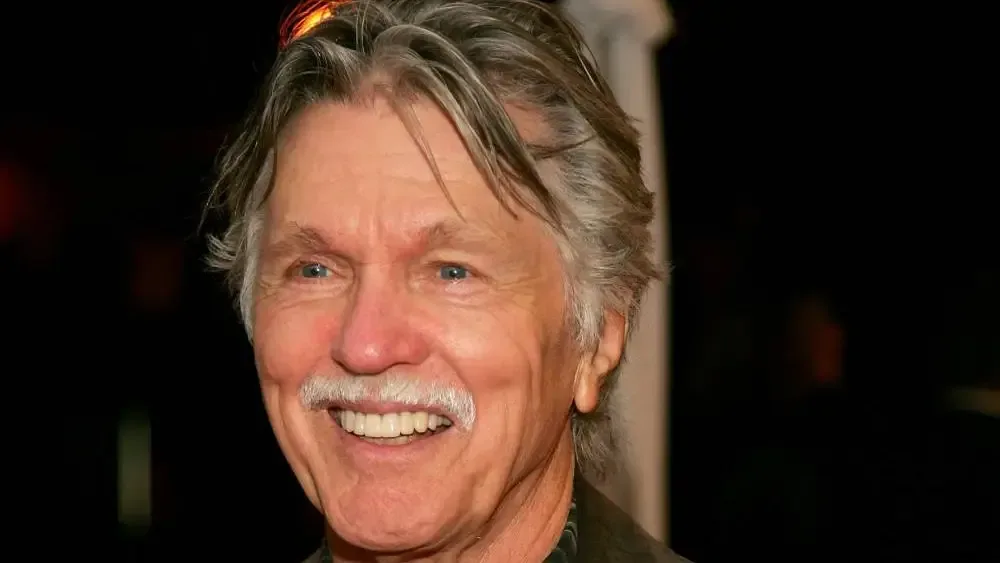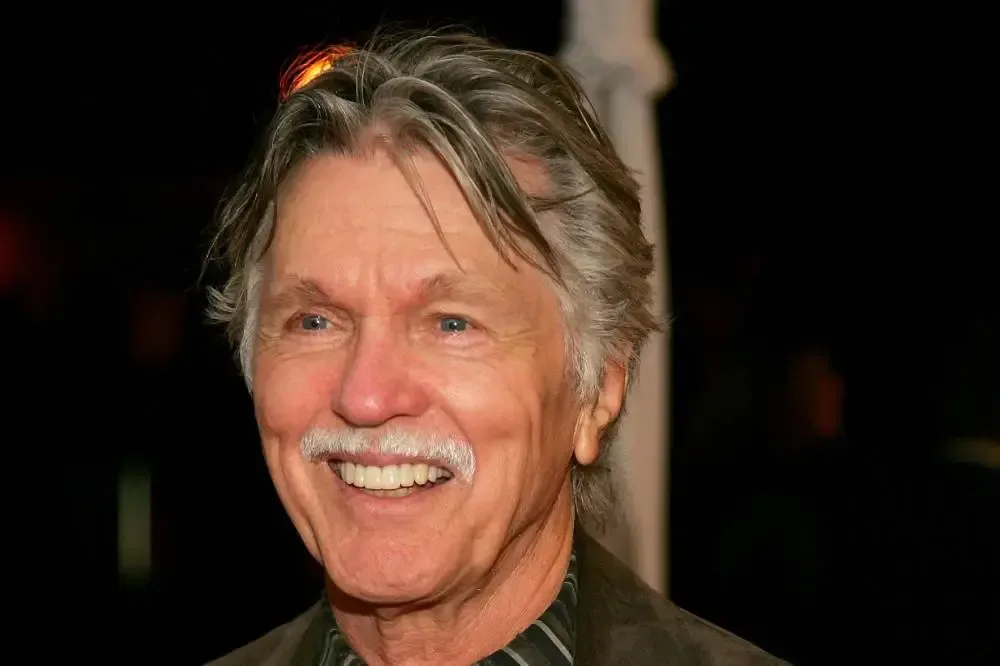
Tom Skerritt, whose career moved with uncommon ease between landmark films, episodic television and long-running dramatic roles, has died of natural causes at 93.
For many viewers, Skerritt is instantly recognizable as Dallas, the captain of the Nostromo in Alien; Commander Mike “Viper” Metcalf, the instructor who sizes up Maverick in Top Gun; or Jimmy Brock, the sheriff at the center of Picket Fences. Those are very different characters in very different kinds of productions, but they point to the same durable skill: Skerritt could make authority feel lived-in rather than ornamental.
He was rarely an actor who needed to dominate a scene through sheer volume. His screen presence instead suggested experience, reserve and, at times, a little weariness. That made him valuable in stories that needed someone to establish the rules, embody institutional power or quietly reveal the emotional cost of trying to hold a family, crew or town together.
A career built across film and television
Born Thomas Roy Skerritt in Detroit, he attended Wayne State University and UCLA and served in the U.S. Air Force. His feature-film debut came in the Korean War drama War Hunt in 1962. The cast and crew connections around that early film are striking in retrospect: it featured John Saxon and Sydney Pollack, with Robert Redford in a small role and Francis Ford Coppola uncredited.
He followed with Those Calloways in 1965, while television provided a steady route into audiences’ homes. Across the 1960s, Skerritt made guest appearances on series including The Alfred Hitchcock Hour, My Three Sons, Wagon Train, My Favorite Martian, The Fugitive and Gunsmoke. During the 1970s, his credits included Hawaii Five-O, Cannon, Barnaby Jones and Baretta.
That breadth matters when considering his later reputation. Skerritt did not emerge from a single franchise or a single defining role. He accumulated a body of work in which the genres continually changed: war comedy, science-fiction horror, family drama, action, character comedy, crime stories and television melodrama. Familiarity with his face was earned over decades, one supporting part and guest role at a time.
From Altman’s operating room to the Nostromo
In Robert Altman’s MASH in 1970, Skerritt played Duke Forrest, one of the highly capable yet deeply insubordinate surgeons. He was third billed behind Donald Sutherland and Elliott Gould, and ahead of Sally Kellerman and Robert Duvall. The film’s ensemble format rewarded performers who could establish a character quickly amid overlapping personalities and chaos, a quality Skerritt would repeatedly bring to later work.
He returned to work with Altman in Thieves Like Us in 1974. That same year brought a different kind of assignment: a bank robber in Roger Corman’s cult picture Big Bad Mama, where he was third billed after Angie Dickinson and William Shatner. He also appeared with Ernest Borgnine and Shatner in the 1975 horror film The Devil’s Rain.
Related coverage includes Tom Skerritt, ‘Alien,’ ‘Top Gun’ and ‘Picket Fences’ Actor, Dies at 93.
Skerritt’s range is particularly evident in the run of roles surrounding the late 1970s. In The Turning Point in 1977, he played the husband of Shirley MacLaine’s character and received the National Board of Review award for best supporting actor. The following year, he played Strawberry in Cheech and Chong’s Up in Smoke: the cousin of Cheech’s character, a Vietnam veteran whose flashback during a police raid leads him to mistake the officers for Viet Cong.
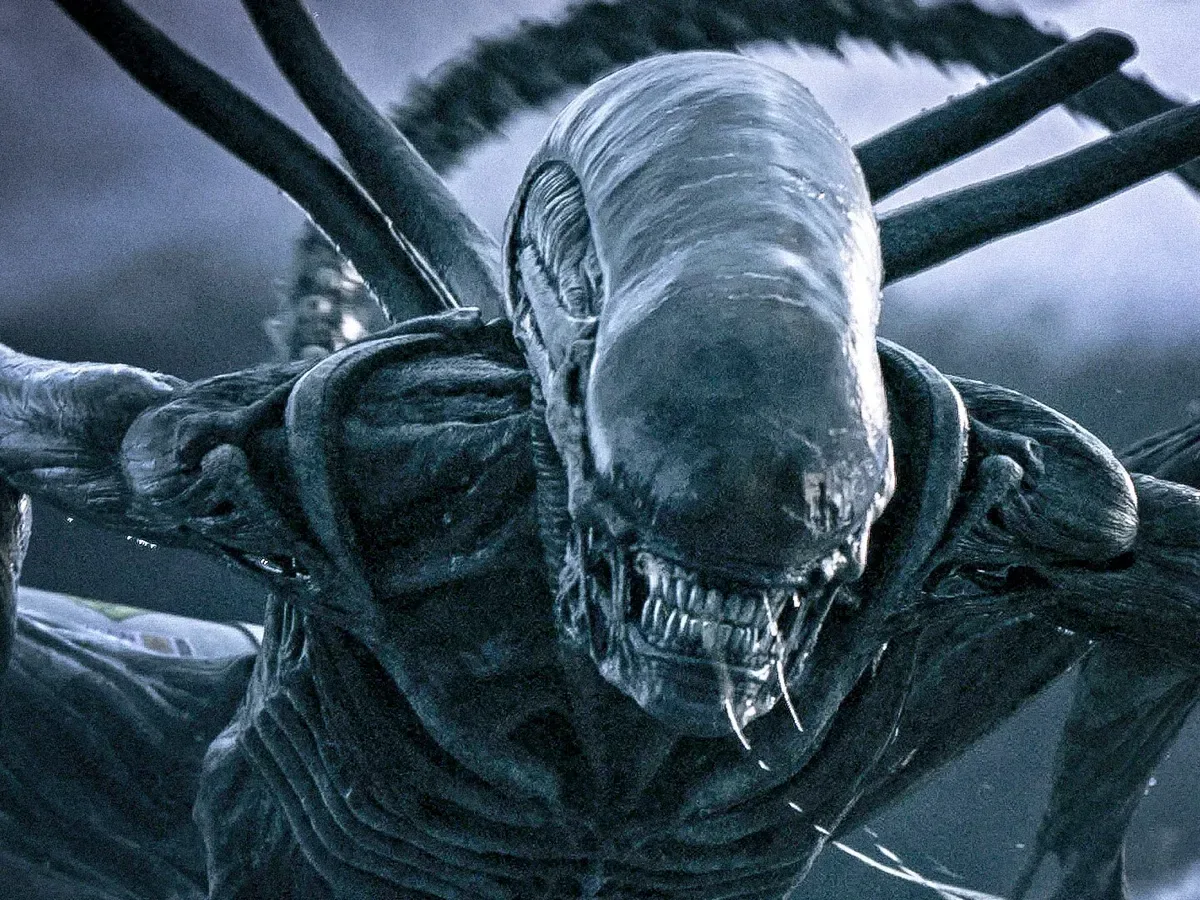
Then came Alien in 1979. Skerritt played Dallas, captain of the commercial towing vessel Nostromo, and received first billing ahead of Sigourney Weaver. Dallas is a useful example of why Skerritt’s performances have endured in ensemble films. He is in charge, but not presented as an infallible superhero. The character must make decisions under pressure with incomplete information, which helps ground a film increasingly defined by terror and the unknown.
Skerritt had initially passed on the role when the project had a smaller budget and no director attached. His eventual involvement placed him in one of science fiction and horror cinema’s most enduring films. In practical terms, his work as Dallas also shows what a captain character can contribute to suspense: a clear chain of command makes its breakdown more alarming. As the crew’s confidence and options narrow, the authority figure becomes part of the film’s vulnerability rather than a shield against it.
Viper, mentors and complicated fathers
Skerritt again brought credibility to a professional authority role in Tony Scott’s 1986 hit Top Gun. As Commander Mike “Viper” Metcalf, he is the chief instructor at the Miramar Naval Air Station’s top gun school, where Tom Cruise’s Lieutenant Pete “Maverick” Mitchell trains. Viper is a mentor figure, though not a simplistic one: the role connects Maverick’s present competitiveness to information about his father and the past.
The word “mentor” often gets used as shorthand for a character who simply gives advice. Skerritt’s best-known authority roles show a more specific function. Dallas has operational responsibility; Viper has professional knowledge and a personal connection to Maverick’s history; Jimmy Brock must contend with a community’s strange conflicts. The character may provide direction, but the drama comes from the limits of what that direction can solve.
His work in the 1980s and early 1990s was full of variations on family and civic authority. In David Cronenberg’s 1983 adaptation of Stephen King’s The Dead Zone, he had a substantial role as a local sheriff hoping to employ a psychic in the investigation of a series of murders. He appeared in Poltergeist III in 1988, then played the father of Julia Roberts’ bride-to-be in Steel Magnolias in 1989.
He played the estranged father of Charlie Sheen’s character in Clint Eastwood’s The Rookie in 1990 and starred as a small-town sheriff investigating a homicide in the television movie The China Lake Murders that same year. In Poison Ivy in 1992, he played a father drawn into the manipulations of Drew Barrymore’s Ivy. Skerritt’s arc as Evan Drake on the sixth season of Cheers, meanwhile, took a comic route: the boss of Kirstie Alley’s Rebecca Howe is the object of her unreturned affection.
One of his most resonant film performances arrived in Robert Redford’s 1992 adaptation of Norman Maclean’s A River Runs Through It. Skerritt played the Presbyterian minister father to the characters played by Brad Pitt and Craig Sheffer. The family’s fly-fishing trips provide the occasions where its members most clearly come together. It was a more overtly dramatic opportunity for an actor frequently cast as the sturdy figure at the edge of the main plot, and it put his restraint to especially effective use.
Jimmy Brock and the heart of ‘Picket Fences’
Skerritt’s most sustained television showcase was Picket Fences, the CBS dramedy in which he played Jimmy Brock from 1992 through 1996. Brock is sheriff of an eccentric town, a job that requires him to operate at the collision point of law, domestic life, politics and the series’ unusual cases.
A dramedy is a format that deliberately places comedy and drama side by side rather than treating them as separate modes. For a performer, that can mean a scene must maintain emotional credibility even as it accommodates eccentricity or humor. The role was a strong fit for Skerritt because his grounded manner gave the show an anchor. Jimmy Brock could be stern, bemused, concerned or exasperated without becoming detached from the people around him.
His work on the series earned him an Emmy in 1993 and another nomination in 1994. He also shared Screen Actors Guild Award nominations for drama-series ensemble performance in 1995 and 1996, and received a 1995 nomination for male actor in a drama series. Those ensemble nominations are meaningful in the context of Picket Fences: the series depended on the chemistry between its town’s inhabitants, not simply a single lead performance.
Skerritt continued to work prominently after the series. He appeared in Robert Zemeckis’ Contact in 1997, alongside Jodie Foster, and later supported films including Texas Rangers and Antoine Fuqua’s Tears of the Sun, starring Bruce Willis and Monica Bellucci. In 2010’s Redemption Road, he played the wise owner of a small-town honkytonk. He also made a celebrity cameo as himself in Seth MacFarlane’s 2012 comedy Ted, played an academic in At Middleton in 2013, and portrayed Ulysses S. Grant in Field of Lost Shoes in 2014.
A television presence that kept evolving
After Picket Fences, Skerritt’s television work remained eclectic. In the 2000s he appeared on The West Wing as a senator and on Law & Order: SVU as a biased judge. On HBO’s Huff, he took over the role of the title character’s father from Robert Forster. From 2006 to 2009, he recurred on Brothers & Sisters as William Walker, the family patriarch, before later guest roles on The Good Wife in 2014 and Madam Secretary in 2015.
The throughline in these parts is not that Skerritt played the same man again and again. It is that productions could rely on him to make a role’s history immediately legible. A senator, judge, father, sheriff, officer or instructor arrives with built-in expectations. Skerritt could acknowledge those expectations while giving the character enough specificity to avoid feeling like mere exposition in human form.
That is part of why his filmography crosses so many audience memories. Alien and Top Gun retain enormous cultural visibility, while Picket Fences gave him a role rich enough to reward weekly viewers. His appearances in films as different as Harold and Maude, The Dead Zone, Steel Magnolias, A River Runs Through It and Ted reflect an actor willing to shift tone without treating any one screen persona as a permanent cage.
Skerritt is survived by his third wife, Julie Tokashiki, whom he married in 1998; his sons Andy, Matt and Colin; and his daughter Erin. Matt is a director.
His passing also lands during another period of attention on major screen franchises and their changing casts, including the ongoing search for the next James Bond. Skerritt’s career is a reminder that a franchise’s enduring texture is not created by its headline name alone. It is also shaped by the performers who make the commanders, parents, mentors, sheriffs and uneasy witnesses feel like people with lives beyond the frame.