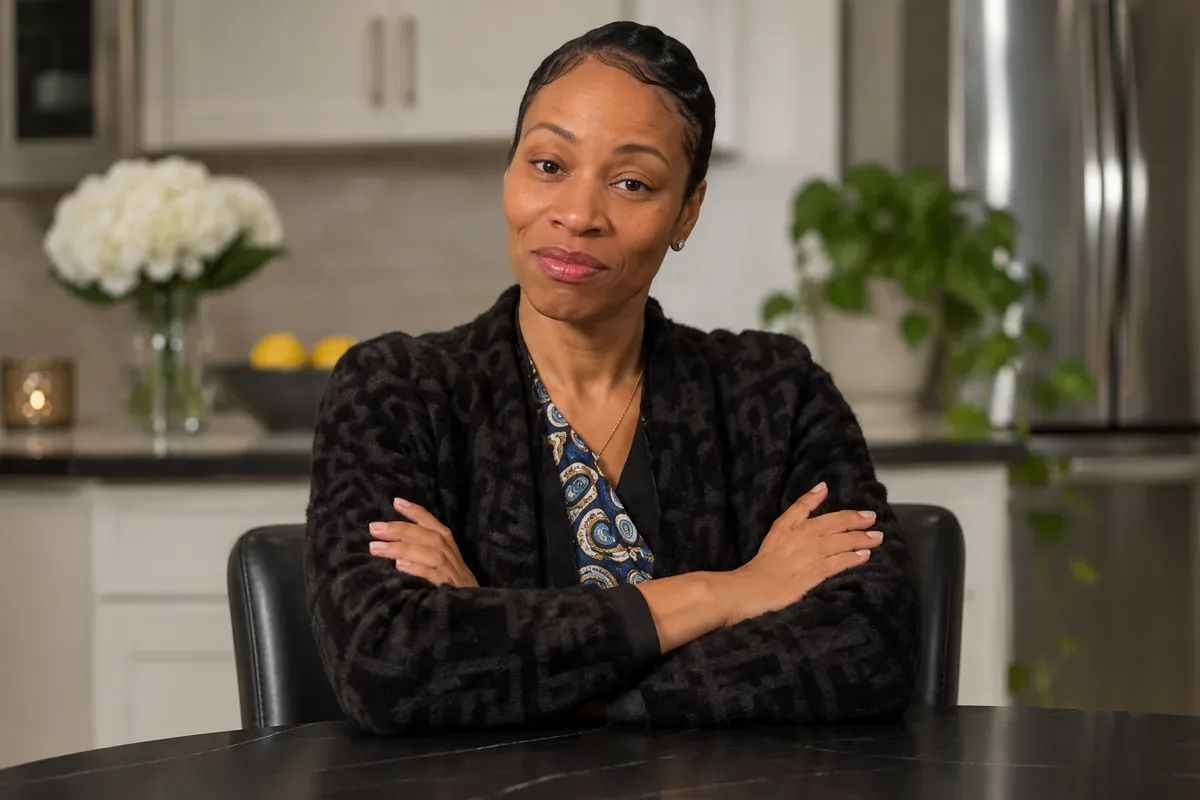
Tia Kemp has described the reported October 11 confrontation involving her son, William Roberts III, as a frightening episode in which he chose to disengage rather than answer an armed threat. In a November 13 interview, Kemp said Roberts arrived home after the incident near Bethune-Cookman University in Daytona Beach and told her that someone had threatened him and struck him with a gun.
Her account adds important personal context to a situation already reflected in a police account: Roberts was said to have identified a suspect in a photo lineup, officers noted slight swelling, and he declined medical attention. Investigators reportedly did not locate city-camera footage of the alleged assault. The reported location was McLeod Avenue and Weaver Street.
Kemp says her son did not initially contact police or family
Kemp said she had just returned from a flight when Roberts came to her with bloodshot eyes and explained what had occurred. Her immediate reaction, she said, was alarm and disbelief. The account is notable not only for the allegation of violence, but for what she says happened afterward: Roberts did not initially call his father, his mother, or law enforcement.
Instead, Kemp said women who had been with Roberts contacted authorities. She said he first went back to his apartment and then made the hours-long drive home rather than remaining in the area.
For more context, explore Phil Collins Says He Is “Much Better” and Leaves the Door Open to New Music and Live Shows.
That sequence matters because it distinguishes the reported encounter from the later response to it. A delay in personally reporting an incident does not establish why someone delayed, and Kemp did not frame it as indifference. Her comments portray a young man trying to get away from an unsettling situation before involving his family.
For readers following the case, it is also important to separate a witness or companion contacting authorities from the person involved making the report himself. Kemp’s description is that Roberts did not personally place those initial calls, while others around him did contact police.
Her account disputes claims of a sustained beating
Kemp pushed back against accounts characterizing the incident as a lengthy or severe beating. She said Roberts was hit once with a gun and did not suffer a gash. That is broadly consistent with the limited injury description attributed to police: slight swelling, with Roberts declining medical treatment.
Neither of those points should be read as minimizing the seriousness of the allegation. Being threatened by someone believed to be armed can be dangerous regardless of whether a visible injury is extensive. Kemp’s focus was on the danger she believed could have followed had Roberts chosen to argue, fight, or pursue the other person.
In her telling, Roberts backed away, did not respond to the threat, and waited until the armed man left. Kemp credited his discipline for preventing the confrontation from escalating into a shooting.
The clearest element of Kemp’s account is not an allegation of retaliation, but the opposite: she says her son left the conflict without fighting back.
What is established, alleged, and still unclear
The available details require careful distinctions. Kemp’s interview is her account of what Roberts told her and how she understood his response. The police-related details supplied alongside that account are narrower: officers reportedly observed slight swelling, Roberts declined medical attention, he identified a suspect through a photo lineup, and investigators did not find city surveillance footage of the alleged attack.
A photo lineup is an investigative procedure in which a witness or reporting person is shown photographs and asked whether they can recognize a possible suspect. An identification can be a significant step in an investigation, but it is not itself a court finding of guilt.
Likewise, the lack of city-camera footage does not mean an event did or did not occur. It means investigators did not find video from that particular surveillance system documenting the alleged assault. Kemp mentioned police body-camera recordings in her interview, but those are not the same thing as footage of the confrontation itself. Body-camera video generally documents an officer’s interactions after officers arrive; it does not automatically record an earlier incident that happened elsewhere.
This distinction is especially relevant in fast-moving online discussions, where references to “video” can flatten several separate questions into one. There may be body-camera footage connected to a police response, while there may be no municipal surveillance recording of the reported assault. Kemp’s comments did not establish that the incident itself was captured on video.
A separate report on Kemp’s interview likewise centers her description of Roberts choosing not to escalate the confrontation.
A reported dispute connected to someone Roberts had been seeing
Kemp said the encounter involved a woman Roberts had been seeing for about a month. The supplied details do not establish further circumstances behind that connection, so it would be inappropriate to draw conclusions about motives or responsibility beyond what has been described.
What Kemp emphasized instead was the immediate risk as she understood it: an armed confrontation can become much more dangerous when someone attempts to retaliate. Her perspective is that Roberts made the safer decision by stepping away, even though that decision left him shaken enough to return home before telling his family.
The reported impact on Roberts’ education
The episode also reportedly changed Roberts’ academic routine. By October 28, Kemp said he was taking classes online after she brought him home and did not want him to return to campus.
That change is a concrete consequence of the reported incident, separate from the questions around injury severity or available footage. Moving to online coursework can allow a student to continue studying while avoiding a place they or their family no longer feel comfortable visiting. Kemp did not present it as a permanent academic decision; the available information only establishes that he was attending remotely by that date.
Roberts is the son of Kemp and Rick Ross, but Kemp’s remarks place the spotlight less on celebrity and more on a parent’s response to a reported threat. She said Roberts wanted her to contact his father, while she first wanted to know whether police had been informed. Her account frames the family’s concern around safety, reporting, and keeping him away from the area afterward.
Why the distinctions matter
The most reliable way to discuss this matter is to keep the layers of information separate:
- Kemp’s account: Roberts told her he was threatened and hit with a gun; she says he did not fight back, initially did not call family or police, and later returned home.
- Reported police details: slight swelling was noted, medical attention was declined, Roberts identified a suspect in a photo lineup, and no city-camera footage of the alleged attack was found.
- What remains unconfirmed in the available material: a recording of the assault itself, the full circumstances leading to the confrontation, and any ultimate outcome of the investigation.
Those distinctions do not lessen the seriousness of the reported event. They simply prevent speculation from being presented as fact. Kemp’s central message is clear: she believes her son avoided a potentially much worse outcome by refusing to engage with an armed person and leaving the situation behind.