
Hulu’s The Secret Lives of Mormon Wives: Orange County has arrived with eight episodes, a beachier backdrop and a very recognizable gameplay loop. The first spinoff of The Secret Lives of Mormon Wives takes the franchise from Utah to Orange County, where influencer careers, fraught partnerships, group-event disputes and debates over tradition all return in force. Its central issue is not a lack of material. It is that much of the material will feel immediately familiar to viewers of the flagship series.
That resemblance is baked into the casting. McCall DaPron is the sister of original-series cast member Mayci Neeley, while Jennifer Affleck makes the move from the original show into this new ensemble. Flashbacks also reveal that several Orange County faces previously appeared in party scenes on the Utah series. The connection is real, not merely a branding exercise. Yet the new show’s early episodes suggest it has inherited the original’s conflicts more completely than it has established a distinct identity of its own.
A new coast, a familiar faction map
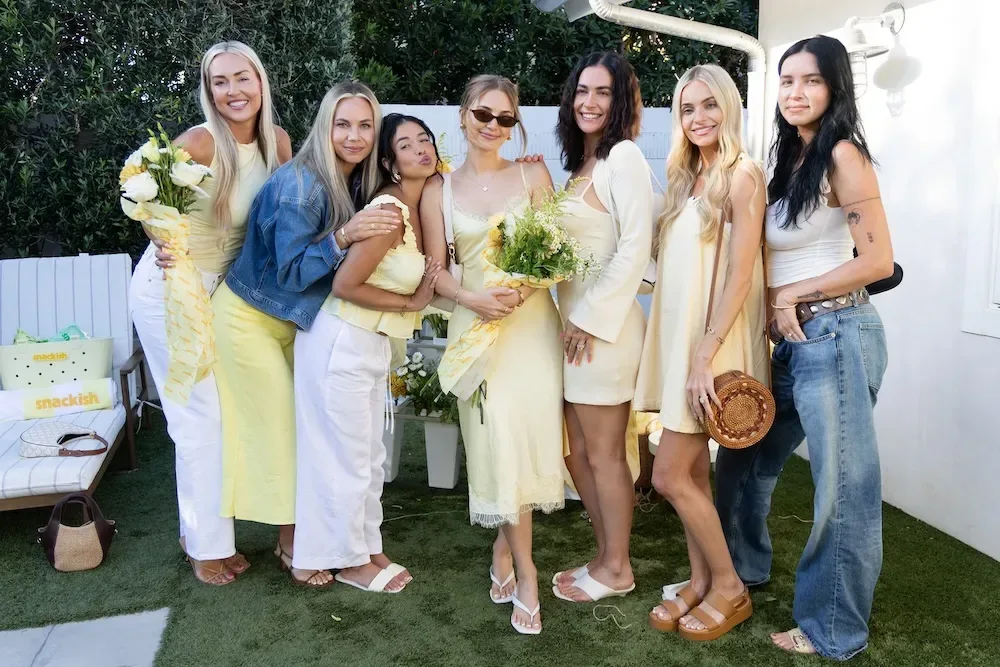
The Orange County cast is framed around a divide between the observant, traditionally family-oriented “Molly Mormons” and the women who are less conventionally aligned with that identity. DaPron takes a leading role on the more traditional side. The other camp includes podcaster Bobbi Althoff, comedy host Avery Woods, YouTuber Aspyn Ovard and Salomé Andrea.
That structure closely resembles the flagship show’s earlier sorting of personalities into opposing camps. Here, the tension again becomes a contest between carefully presented domestic traditionalism and a looser, more modern social outlook. It supplies understandable reality-TV friction, but it also makes the spinoff feel like it has selected a familiar character class rather than built a new party.
Ovard provides one of the clearest points of difference. Her relationship situation is presented as a throuple, a romantic relationship involving three people, a dynamic absent from the first show’s core cast. It is a genuinely different ingredient, though one ingredient does not automatically change the whole recipe.
Althoff’s presence also signals where the franchise’s actual focus lies. Her connection to the Church of Jesus Christ of Latter-Day Saints is indirect: her brother converted as an adult. Her larger fit is her established online profile. That makes sense within a series whose strongest throughline is less theology than the professionalized influencer life: audience, sponsorship, personal brand and the way income from all three alters household power.
The real engine is the influencer economy
The original show had #MomTok, an existing cohort of social-media personalities with a recognizable shared identity before cameras arrived. Orange County instead begins with a looser web of acquaintances. Affleck says she met members of the group while filming Dancing With the Stars in Los Angeles, but the practical common ground is that these women monetize public-facing personas.
That distinction matters. A pre-existing friend group comes with history, in-jokes, loyalties and resentments that do not need to be invented for an episode outline. An assembled cast must create those rhythms on-screen. Orange County has the recurring language of group support and belonging, but the repeated arguments over what “this group” owes its members can make the group itself feel more like a production objective than a settled social circle.
Related coverage includes ‘Mormon Wives: Orange County’ Brings Familiar Drama to a New Coast.
In reality-TV terms, the show is working toward a center of gravity: the set of relationships that makes viewers believe every gathering could naturally produce either solidarity or a disaster. Orange County has not fully found that center yet. The women have professional visibility and overlapping connections, but not the instant shared cultural identity that #MomTok provided the original.
That does not mean there is no drama. It means the drama can sometimes read as an invitation to accept the group’s importance before the series has entirely demonstrated why these people would choose one another when the cameras are off.
Money is not background scenery
The most substantial material involves the relationship between independent income and control at home. Sponsored content is not treated merely as a cute montage prop. It is work, a revenue source and, in several stories, a pressure point.
Former child actor Madison Bontempo, a mother of five, is shown creating sponsored material as she discusses a traumatic upbringing. Her husband Kyler makes questionable investments and tells her that she is emasculating him. Ovard’s attempt to discuss financial support during a therapy session with her ex, in the context of coparenting, escalates into a screaming argument. Affleck’s financial strain is also felt despite her husband Zac remaining offscreen.
The show’s recurring paradox is straightforward: online brand work can provide women with income and therefore greater practical agency, while the relationships around them may resist the independence that income makes possible. That tension is more compelling than the franchise’s surface-level labels because it concerns day-to-day leverage. Who earns? Who decides? Who gets to call help “support,” and who treats it as an insult?
It is also why the franchise’s social-media premise has more bite than standard influencer spectacle. The sponsored post becomes part of the domestic plot, rather than a detached marker of celebrity. The personal brand is a business asset, but its effects are personal and sometimes painful.
For viewers interested in the wider television business behind this kind of personality-driven programming, the uneven value placed on established screen talent remains a major industry discussion; TV’s star-salary market offers another lens on how fame and bargaining power can shape what reaches the screen.
When petty drama works—and when it feels queued up
Not every dispute carries the same emotional weight, and the smaller ones are often the show’s most enjoyable. On a group trip, DaPron pushes a Palm Royale outfit theme, while Althoff refuses to comply. It is a clean, silly conflict with low stakes: one person sees a theme as communal fun; another sees it as an unnecessary demand on an adult’s wardrobe. No one needs a mediation circle to understand the assignment.
Andrea’s storyline, meanwhile, centers on her fixation on what happened during a mutual yearlong separation from her husband. It adds another form of relationship uncertainty to a cast already dealing with money, co-parenting and competing ideas about partnership.
The show is helped by the absence of Taylor Frankie Paul, whose volatile relationship storyline has taken up considerable space in the Utah series. Without that narrative pulling attention toward something darker, Orange County can more consistently play as heightened interpersonal television. It retains messy relationships and discomfort, but has more room for interpersonal bickering that functions as a diversion rather than an emotional emergency.
Still, removing one overwhelming storyline does not solve the spinoff’s defining challenge. Familiar arguments are only addictive when the audience is invested in the particular people having them. Orange County has cast members with distinct jobs, families and public personas, yet its early identity is still largely defined by how closely it resembles its predecessor.
A spinoff in search of its own save file
The series has obvious connective tissue to the original, enough to satisfy viewers who want another serving of the same broad genre of drama. The beaches are different; the franchise’s preoccupation with women who turn digital attention into income is not. Nor are the recurrent divides between traditional expectations and individual autonomy.
The comparison is especially difficult to avoid because Orange County carries its own long reality-TV shadow. The show is not trying to be a version of The Real Housewives, but arguments about loyalty, support and group membership inevitably create a Housewives-adjacent atmosphere. The difference is that Mormon Wives is built around influencer culture as much as social status, and its central conflict is often what financial autonomy does to intimate relationships.
At its best, The Secret Lives of Mormon Wives: Orange County makes that collision legible. It recognizes that a sponsored post can be both a glossy piece of content and a flashpoint in a household negotiating power. At its weakest, it resembles a geographic reskin: the same systems, roles and quarrels with a new map texture.
There is room for the cast to become more convincing as a social unit and for its individual dynamics to separate from the Utah blueprint. For now, viewers should approach the spinoff as a close relative rather than a radically different branch. The setting has changed. The drama has mostly transferred intact.