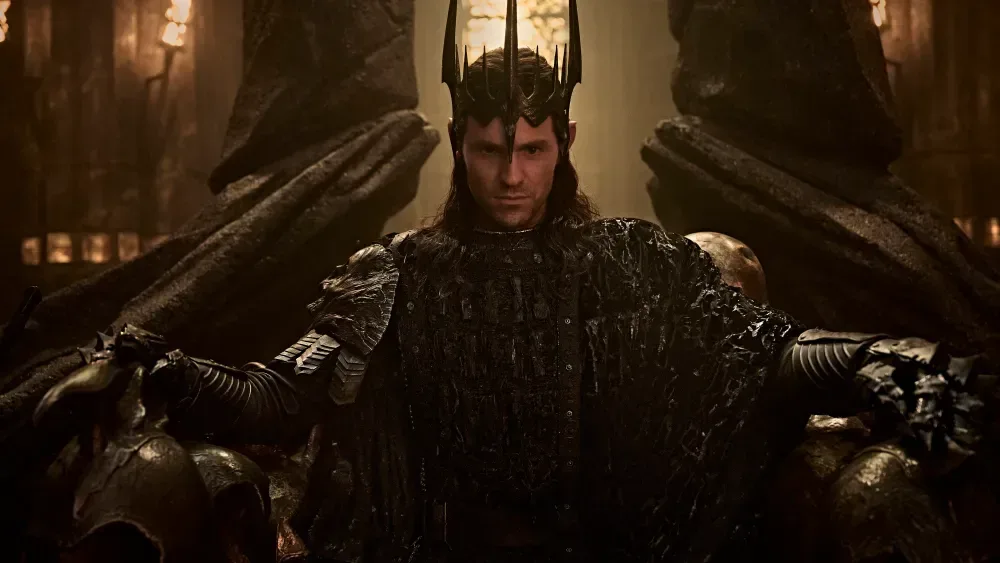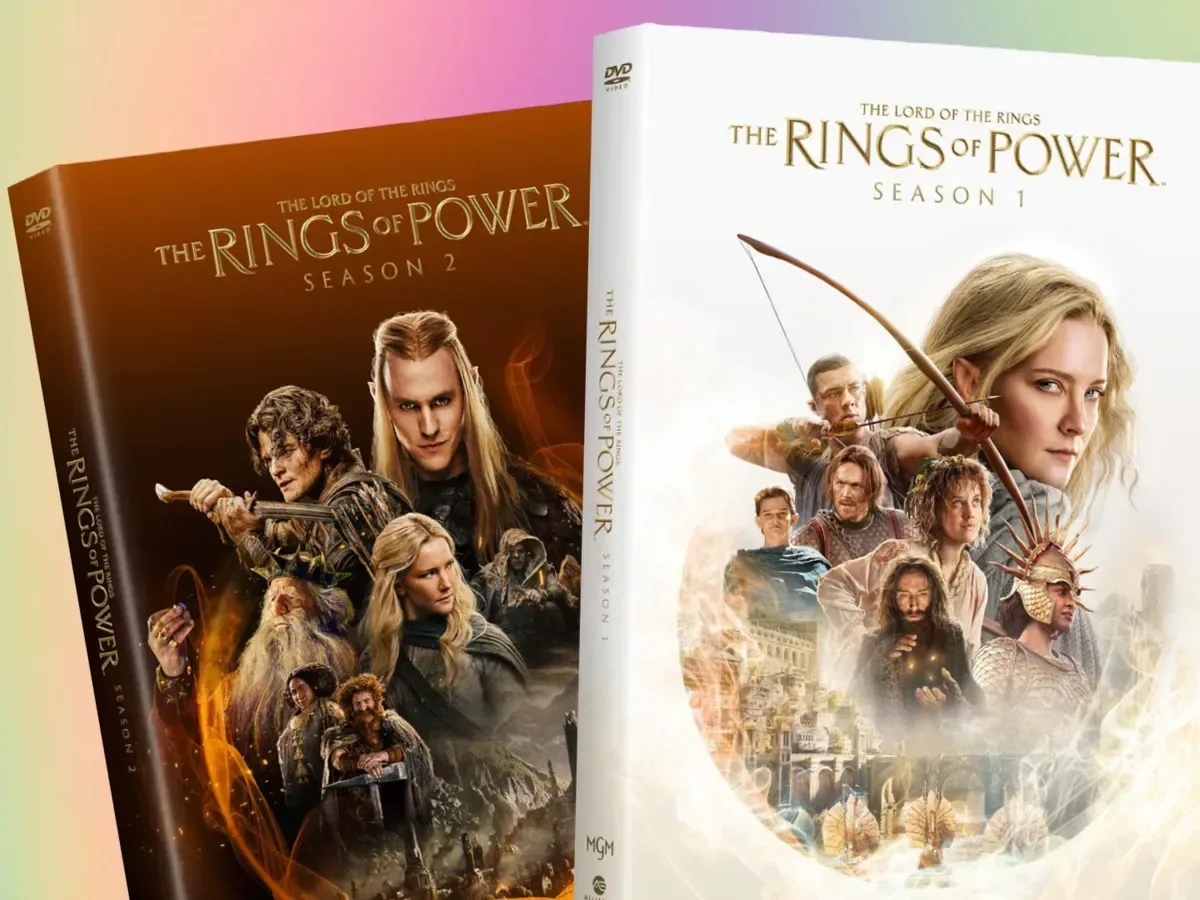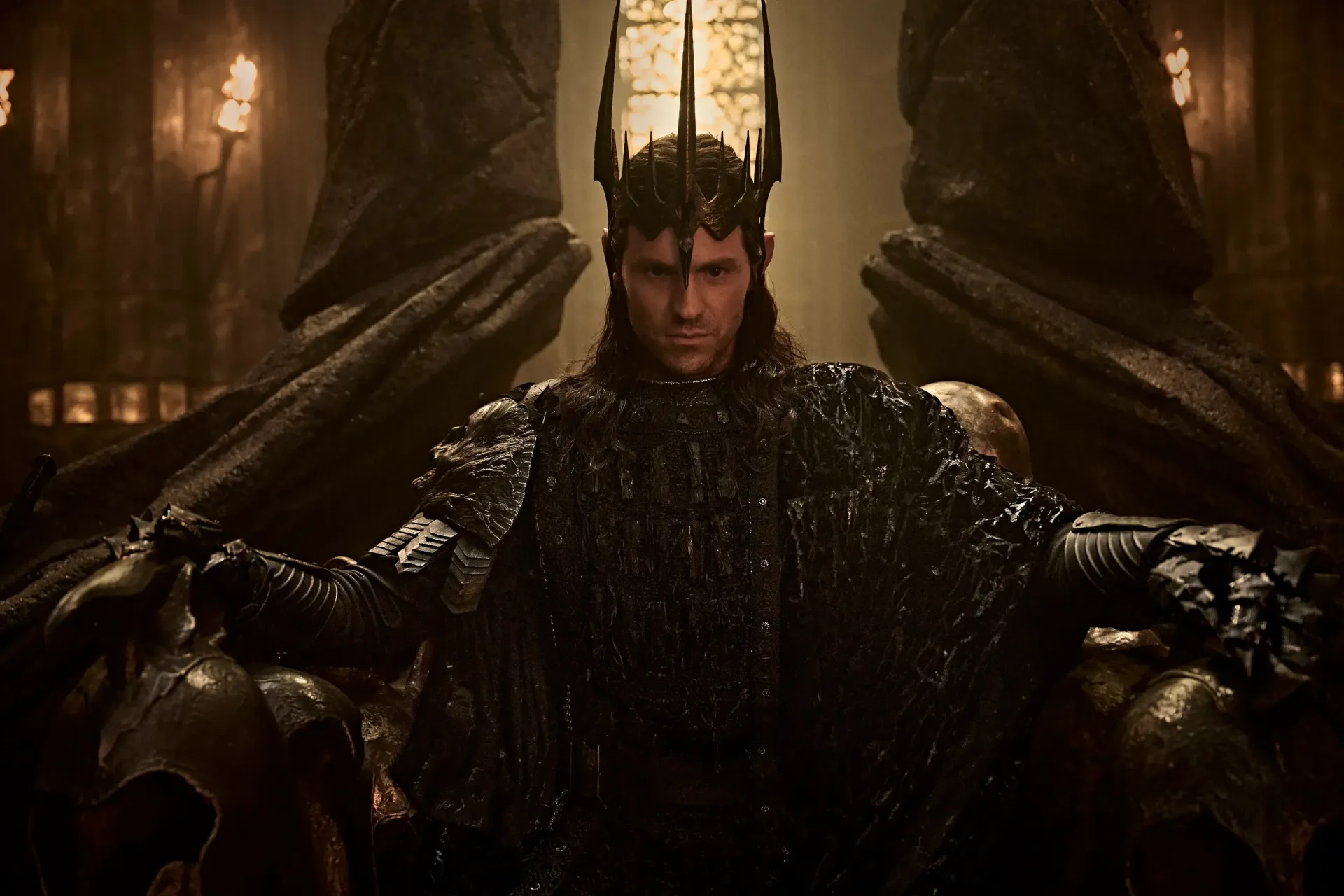
The Lord of the Rings: The Rings of Power will return for its third season on Prime Video on Nov. 11, and the newly released trailer frames the next chapter as a broad war for Middle-earth. Sauron’s advancing forces include Orcs, dragons and armored Ring-servants, while the opposing side is shown attempting to resist an assault that reaches across several major regions.
The season will arrive in three batches rather than as a single full-season drop. The first four episodes premiere Nov. 11, followed by two episodes on Nov. 18 and the final two on Nov. 25. That makes Season 3 an eight-episode run spread over three weeks.
For viewers, the trailer’s biggest promise is not merely a larger battle. It is a conflict with simultaneous military, political and family pressures: Elves are holding front lines, Dwarven ties are under strain in Khazad-dûm, Númenor is being pushed toward civil war, and Gandalf is working in Rhûn to counter the growing darkness. The footage also brings the Balrog into focus; Simon Pegg was previously revealed as the character’s voice for this season.
A campaign across Middle-earth, not one front
The Season 3 premise describes every people of Middle-earth as being caught in the struggle against Sauron and his Orc army. That language matters because it establishes a story designed around several locations and perspectives rather than a single isolated quest. The trailer reinforces that shape with imagery of Sauron’s side devastating the landscape and heroes fighting back under mounting pressure.
The logline identifies the Ring-servants as the Nazgnagôl, black-armored figures who roam Middle-earth. In the context provided for the season, “Ring-servants” is the essential description: these are agents acting in Sauron’s cause, and their presence broadens his reach beyond a conventional army. The trailer’s emphasis on them suggests that the antagonists are not just a mass of troops. They include imposing figures who can carry the threat between storylines and locations.
Dragons are another notable part of the trailer’s enemy imagery. Alongside Orcs and the Ring-servants, they signal that the escalating war will draw on forces beyond ground combat. The available details do not identify particular dragons, explain their allegiance beyond their place within Sauron’s destructive army, or reveal how heavily they feature. Still, their inclusion is a clear visual marker of scale: the heroes are facing an enemy presented as varied, mobile and overwhelming.
What “war footing” means for the season
A story on a war footing is one in which decisions are made under the immediate pressure of conflict. The supplied Season 3 setup points to precisely that arrangement. The Elves must hold the front line; the Dwarves in Khazad-dûm face strained familial relationships; Númenor’s political factions risk tearing their kingdom apart; and Gandalf has a mission in the eastern lands of Rhûn.
Those threads can affect one another even when characters are not standing in the same place. A front line can fail if allies are divided. A kingdom approaching civil war may be less capable of responding to an outside enemy. Personal tensions among the Dwarves can matter on the same level as battlefield plans when a stronghold and its people are under pressure. This is analysis of the setup rather than a claim about events yet to be seen, but it explains why the trailer’s spread of locations is significant: Season 3 appears structured around whether disparate groups can act together quickly enough.
Related coverage includes The Rings of Power Season 3 Trailer Sets Middle-earth on a War Footing.
The pressure points: Elves, Dwarves, Númenor and Rhûn
The Elven story is described in direct military terms. They are trying desperately to maintain the front lines, which positions them as an active defensive force rather than distant observers of Sauron’s expansion. The trailer’s larger conflict therefore has a clear immediate consequence: holding territory against an enemy advance.
Khazad-dûm, meanwhile, is identified as the setting for strained familial bonds among the Dwarves. The wording does not specify which relationships are affected or what causes the tension, so the trailer should not be treated as confirmation of any particular betrayal, death or succession dispute. What it does establish is that the Dwarven storyline will not be limited to the external invasion. Its stakes are personal as well as strategic.
Númenor’s situation is overtly political. Factions are pushing the island kingdom to the brink of civil war, a term for armed conflict among groups within the same state or society. Unlike a war between separate nations, a civil war makes the question of internal legitimacy central: competing groups are fighting over who has the authority to direct the country’s future. The season’s official setup does not say that civil war definitively begins, only that the kingdom approaches that breaking point. That distinction leaves room for the story to explore the danger of division without pre-confirming its outcome.
In Rhûn, Gandalf is said to employ his magic and persuasion in an effort to turn back the oncoming darkness. Persuasion is an especially important word next to magic. It indicates that his work is not framed solely as a matter of magical force; changing minds, building support or influencing choices is also part of the struggle. The available information does not identify whom Gandalf is seeking to persuade, but the two-part description suggests a storyline where power is exercised through more than combat.
The Balrog and what the trailer confirms
The Balrog is among the trailer’s marquee presences. Simon Pegg was revealed at San Diego Comic-Con as the voice of the Balrog in Season 3, confirming that the creature has a vocal performance in the new episodes. Beyond that casting detail and the trailer attention, the material does not provide a plot role, specific confrontation or episode placement for the character.
That limitation is worth keeping in view. A trailer can establish tone and showcase major visual elements without explaining narrative function. The Balrog’s appearance tells audiences to expect it to matter this season; it does not establish whether it is controlled by anyone, where it travels, who encounters it, or how long it remains on screen. Treating those unanswered questions as open preserves the difference between promotional imagery and confirmed plot information.
In the same vein, the sight of Orcs, dragons and Ring-servants shows the breadth of Sauron’s forces, but it does not establish a chain of command or disclose the precise military objective. The confirmed core is simpler: Sauron’s army is bringing destruction to Middle-earth, and the season’s protagonists are fighting to push back.
Cast and creative team
Returning cast members named for Season 3 include Charlie Vickers, Morfydd Clark, Robert Aramayo, Ismael Cruz Córdova, Charles Edwards, Robert Strange and Markella Kavenagh. Jamie Campbell Bower, Eddie Marsan, Andrew Richardson, Zubin Varla and Adam Young have also joined the cast for the new season.
J.D. Payne and Patrick McKay serve as showrunners and executive producers. Lindsey Weber, Justin Doble, Kate Hazell and director Charlotte Brändström are also executive producers. Brändström directs multiple episodes, joined by Sanaa Hamri and Stefan Schwartz, who will likewise oversee multiple episodes. Matthew Penry-Davey is producer, with Ally O’Leary, Tim Keene and Andrew Lee as co-producers.
That multi-director arrangement is compatible with the season’s scope, though it does not itself reveal how the eight episodes will be divided. It does confirm that Brändström, Hamri and Schwartz each have responsibility for more than one episode rather than contributing only a single installment.
The release schedule at a glance
- Nov. 11: Episodes 1–4
- Nov. 18: Episodes 5–6
- Nov. 25: Episodes 7–8
The release plan gives the premiere week the largest share of the season, then reserves two weekly follow-ups to complete the story. For anyone waiting to start until every episode is available, Nov. 25 is the relevant date. For those watching as episodes arrive, the initial four-episode batch should provide the clearest early picture of how the separate Elven, Dwarven, Númenórean and Rhûn storylines connect.
Prime Video has positioned its fantasy series as one of several major television projects returning or expanding their worlds; elsewhere, Daisy Ridley is set to lead a revival of Voyage to the Bottom of the Sea. In the case of The Rings of Power, though, the immediate focus is firmly on the coming campaign: Sauron’s army is in motion, longstanding pressures are becoming emergencies, and Season 3 is set to reveal whether Middle-earth’s divided powers can meet the threat together.