
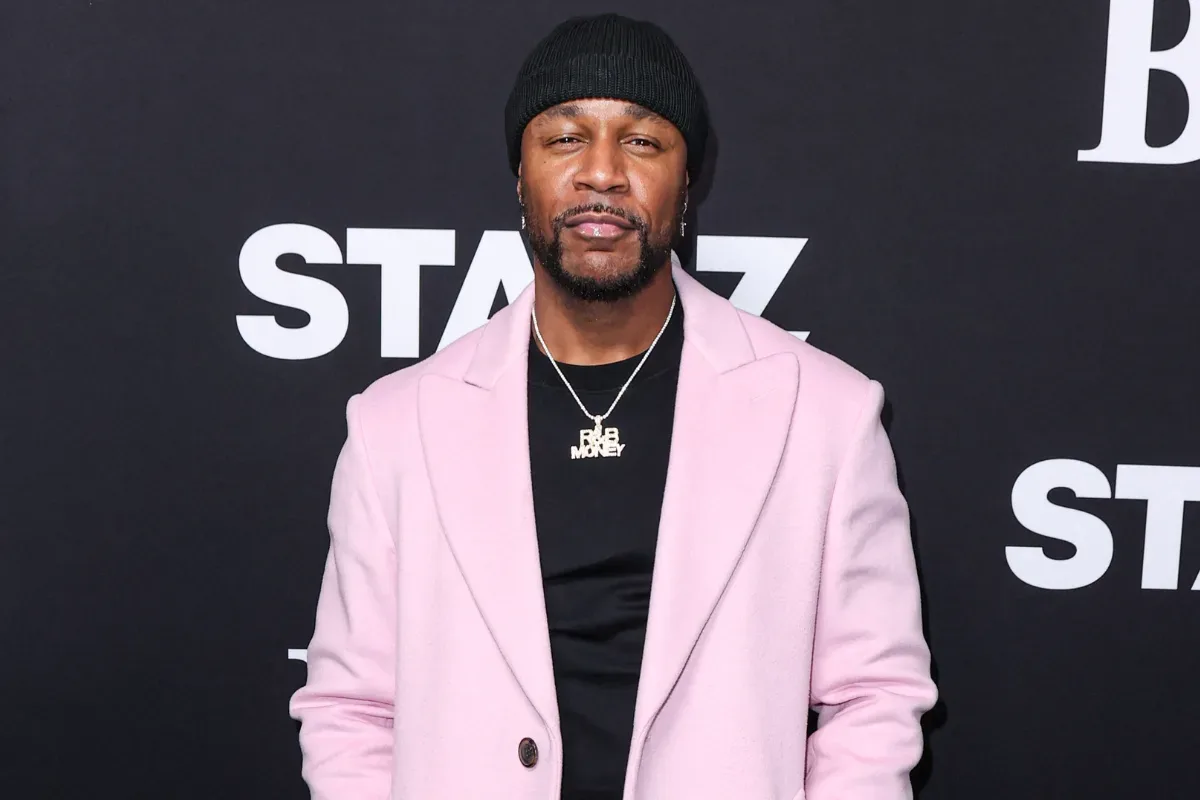
Tank has revisited the unlikely support system behind Sex, Love & Pain, the 2007 album that returned him to the center of contemporary R&B after a five-year gap between releases. In a recent podcast conversation, the singer said Black Mafia Family, widely known as BMF, invested in the music before the album’s eventual release through Blackground Records.
The account is not a claim that BMF released the album itself. Tank’s version of events instead describes a complicated period in which outside backing helped finance work on a project while he remained contractually tied to Blackground. Once the label heard the material, he recalled, it asserted its rights to its signed artist and took control of the release path.
That distinction matters. Funding an artist’s recording work, owning completed recordings, and possessing the contractual right to distribute an album can all be separate things. Tank’s recollection places BMF in the first role: backing the music at a moment when his commercial momentum had stalled. Blackground ultimately filled the third role by releasing Sex, Love & Pain in May 2007.
A Miami introduction that became a turning point
Tank traced the opportunity to an acquaintance who had been incarcerated with people prepared to support a music project. He said he did not know of BMF when the introduction was first proposed in the early 2000s.
He recalled traveling to Miami with his then-girlfriend Zena, now his wife. The encounter made an immediate visual impression: luxury vehicles lined up outside, and people seemed to be carrying away bottles from a room. Tank said he later realized BMF had paid for the entire club.
It is an anecdote with the kind of excess often associated with music-business lore, but Tank’s central point was more practical than glamorous. The Miami meeting connected him with people willing to spend money on the next phase of his career. In his telling, that backing helped put him in a position to make the songs that changed his trajectory.
“When they heard the music, they was like, ‘No, that’s our artist. You can’t do that,’” Tank recalled of the label’s response.
That response captures the tension at the heart of the story. An artist can be creatively inactive, commercially overlooked, or searching for a new team while still bound by an existing recording agreement. A label may have first claim over the artist’s releases even when other people help fund sessions or develop a project. Tank said Blackground objected when it learned BMF was moving ahead because he was still signed to the company.
Related coverage includes Tank Says BMF Backed the Album That Revived His Career.
What BMF’s involvement did—and did not—mean
BMF co-founder Big Meech previously described himself as the head of BMF’s record label, indicating that music was part of the organization’s ambitions. Tank’s account adds another example of BMF being connected to recording activity, though he did not detail a formal label deal, a release agreement, ownership split, or a specific amount of funding.
Those absences are important. Tank said BMF spent money on Sex, Love & Pain, but the available account does not establish the exact budget, which songs were financed, or the legal terms of the investment. It also does not establish that BMF had a commercial credit on the final Blackground release. The clearest supported conclusion is simply that Tank believes the group materially backed the music during the album’s development.
His story also underlines a less visible part of album-making. The public generally encounters an album at release: the cover, the singles, videos, chart position and award nominations. Before that, an artist needs time in studios, producers, songwriters, recording resources and someone prepared to cover the costs. For an artist emerging from a quiet stretch, that early commitment can be the difference between having a promising direction and completing a body of work capable of reaching a label.
In this case, the completed music was strong enough to prompt Blackground to step in and release it. Tank’s recollection frames the label’s response as recognition that it had an artist and a potentially important project on its hands—not an invitation for an outside camp to take him elsewhere.
The Underdogs and a new creative stretch
The financial support is only one side of Tank’s account. He also identified the album as a formative period with The Underdogs, the production and songwriting team associated here with Damon Thomas and Harvey Mason Jr. Tank credited their approach with helping him improve as an artist.
That is a more enduring part of the album’s story than any single funding arrangement. A producer team’s influence can extend beyond beats or session logistics. For a singer-songwriter, it can mean sharper choices about vocal phrasing, melodies, song structure and the level of detail needed to make a song land. Tank did not provide a track-by-track account of those lessons, but he specifically pointed to Thomas and Mason as important teachers during this run.
Thomas also had a documented connection to BMF co-founder Terry “Southwest T” Flenory. In 2007, Thomas was called to testify in a federal BMF case after police had seized roughly $5 million in jewelry from Flenory in a 2005 traffic stop. Thomas denied that the jewelry belonged to him. That history supplies context for the overlapping names around the album, but it should not be stretched beyond what is known: Tank’s present account centers on investment in his music and his creative work with The Underdogs.
The results were measurable once the album arrived
Whatever the behind-the-scenes route, Sex, Love & Pain became a decisive commercial reset. It was Tank’s first album in five years, and it reached No. 2 on the Billboard 200. It also hit No. 1 on the Top R&B/Hip-Hop Albums chart.
The two chart results describe different measures of impact. The Billboard 200 compares albums across genres, so a No. 2 peak signaled broad market reach. The Top R&B/Hip-Hop Albums ranking measures performance within the genre field, and its No. 1 placement showed that Tank had returned to the front of his core audience. Together, they show why the record has remained a pivotal title in his catalog.
The recognition continued beyond sales and chart performance. The Recording Academy nominated Sex, Love & Pain for Best R&B Album, while “Please Don’t Go” received a nomination for Best Male R&B Vocal Performance. Nominations are not a replacement for commercial performance, but they demonstrate that the record’s return was received as an artistic event as well as a market success.
For readers following the broader history around R&B and Black music institutions, Tony Cornelius’ planned book on Don Cornelius and the family legacy of Soul Train offers another lens on the people and systems that have helped shape how the genre reaches audiences.
Why Tank’s recollection changes the album’s context
Sex, Love & Pain can be understood first and foremost through its public outcome: a chart-leading R&B album, a No. 2 Billboard 200 peak, and major Recording Academy nominations. Tank’s comments add the pre-release chapter that listeners could not see at the time.
His account suggests the project was not born from a straightforward label relaunch. It emerged amid a career pause, outside investment, an artist still under a prior contract, and studio collaboration that Tank says improved his work. Blackground’s decision to release the album then converted that private development phase into a formal comeback.
There is no need to overstate the story as though one meeting alone made the record successful. The available facts point to several forces: BMF’s reported financial support, Tank’s sessions with The Underdogs, Blackground’s eventual release, and an audience response substantial enough to push the album to the top of the R&B/hip-hop chart. What Tank supplies is the connective tissue between those facts. In his view, BMF took a chance on music that helped bring his career back into focus.