Stefon Diggs’ latest custom cleats take a basketball silhouette with a substantial place in Jordan Brand history and rebuild it for the far less forgiving requirements of an NFL field. The wide receiver has a custom Air Jordan 17 Low “Lightning” pair ready for the season, wearing a white leather base with yellow and black detailing that reflects the retail sneaker colorway brought back in 2024.
The footwear is not simply an Air Jordan 17 Low with studs added beneath it. Its working foundation is the lightweight upper from Nike’s Vapor Edge 360 Speed, with Jordan-inspired overlays built over that base to produce the look of the “Lightning” 17 Low. That distinction is the central story of the pair: it is a visual tribute engineered around football-specific equipment rather than a display sneaker forced into game duty.
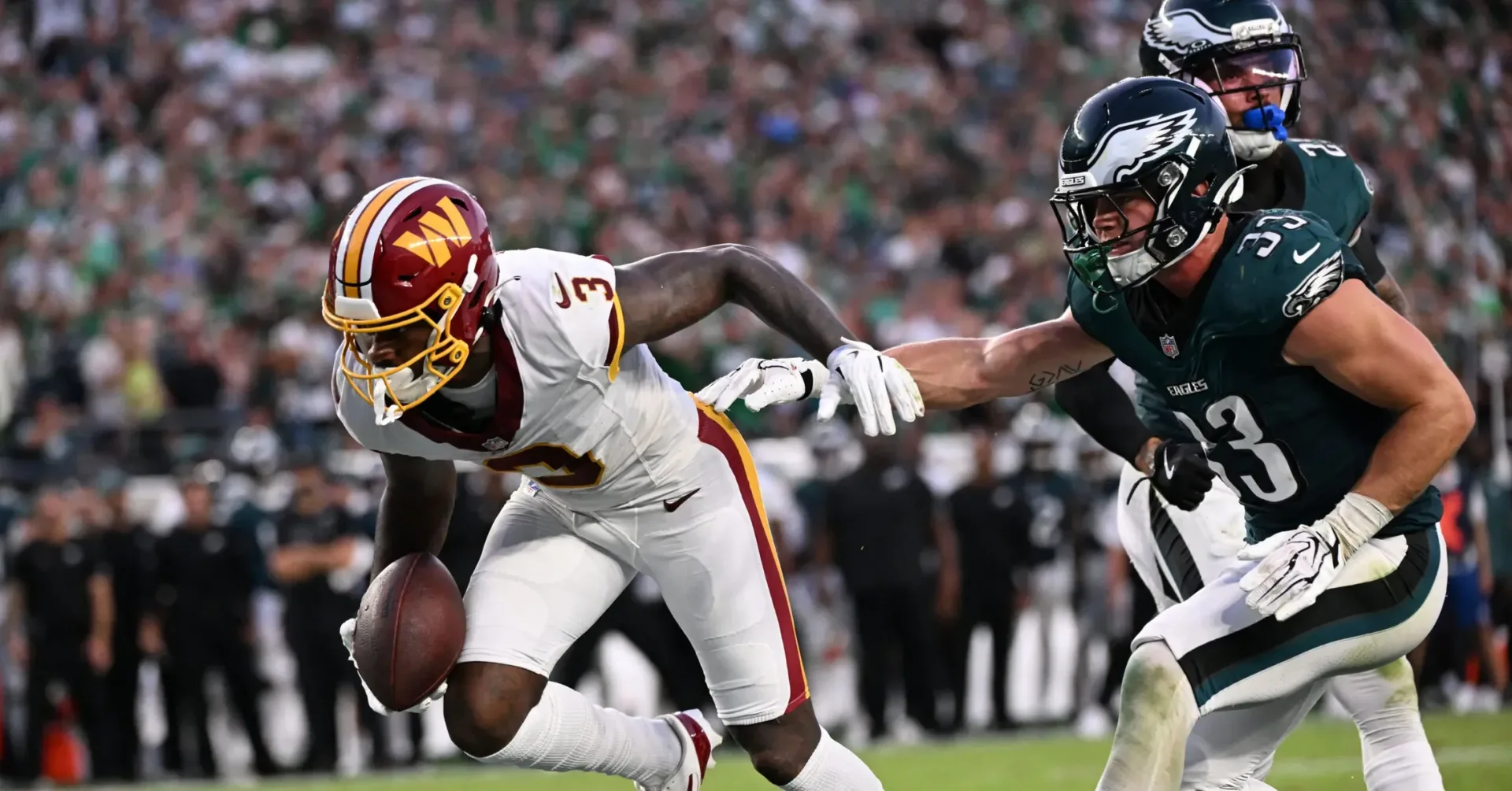
It also arrives as Diggs begins his Washington Commanders tenure after signing with the team this year. He has remained with Jordan Brand through team changes since first signing an endorsement deal while he was with the Bills, making this another chapter in a long-running relationship rather than a sudden one-off crossover.
A familiar colorway, translated for the field
The “Lightning” name refers to a retail Air Jordan 17 Low colorway that returned in 2024. That edition itself looked back to the pair Michael Jordan wore during his first All-Star Game appearance with the Wizards. By carrying the white, yellow and black arrangement into a football cleat, the Diggs version joins two separate sports timelines: a Jordan-era basketball reference and a current NFL player’s gameday rotation.
That heritage matters because the appeal is more specific than simply matching team colors or applying a bold paint job. The design asks sneaker fans to recognize the Air Jordan 17 Low reference while allowing football fans to see it in the context where Diggs actually performs. It is an example of sports style functioning as a visual language. The colors and panel shapes signal a particular model and moment even when the underlying performance construction belongs to another product.
There is no announced game for the debut of this specific pair. The cleats are ready for the season, but any precise on-field timing remains unconfirmed.
What makes these a functional custom rather than a cosmetic conversion
Custom athlete footwear can mean very different things. At its most basic, a custom can be a conventional shoe or cleat whose exterior has been repainted. Diggs’ setup is more deliberate. The Vapor Edge 360 Speed upper provides the base structure, while the added Jordan-style overlays create the desired silhouette.
An upper is the section of footwear that wraps around and secures the foot above the sole. Overlays are material panels placed on top of that base; they can affect appearance, reinforcement and the way a shoe’s layered shape reads from a distance. Here, the supplied details identify the Vapor Edge 360 Speed upper as the lightweight functional component and the Air Jordan-style overlay treatment as the stylistic transformation.
That construction approach recognizes an obvious practical point: a receiver’s cleats are equipment first. Diggs needs a pair intended for football movement, not an ornamental replica. Preserving a lightweight football upper while applying the visual cues of the Air Jordan 17 Low lets the design chase both objectives without treating one as an afterthought.
It is also why the phrase “custom cleat” should not automatically be read as “a retail sneaker adapted for play.” The details here describe a football performance base that has been made to resemble a basketball model. For collectors and footwear followers, that makes the object interesting in a different way from a standard retail retro: it is a player-specific design solution, made for use, with its own hybrid identity.
Diggs’ weekly customs are the larger story
The “Lightning” pair is part of a much broader pattern. Diggs has become one of the NFL’s most regular wearers of custom cleats, working with sneaker artist Dan “Mache” Gamache on newly hand-painted pairs almost every week. Past concepts have included nods to the Air Jordan 7 and Air Jordan 5, as well as designs tied to musicians and films he enjoys.
That pace is unusual enough to make the rotation part of the season’s ongoing visual narrative. A single themed pair can create a memorable pregame image; a near-weekly succession of different ideas builds anticipation. Fans are not just waiting to see a player’s stat line or uniform combination. They can also watch for which reference Diggs and his collaborator will bring to the field next.
There is a useful difference between that consistency and a standard endorsement campaign. Diggs’ loyalty to Jordan Brand supplies a throughline, but individual customs give the partnership room to change week by week. The brand identity stays recognizable while the model references, subjects and color stories can shift. In the case of “Lightning,” the chosen reference is rooted in Jordan history. In other cases, the concept can point to a musician or movie instead.
That makes the cleats personal without making them random. The rotation has a recognizable format: football-ready footwear, Jordan Brand framing, and a distinct cultural or sneaker-inspired prompt. Over time, repetition becomes a feature rather than a limitation because fans learn that each pair is a new installment in the same larger project.
Why the Air Jordan 17 Low reference fits this moment
For Diggs, the 17 Low theme offers a clean bridge between the past and the present. Its “Lightning” presentation is already a callback through the 2024 retail return and the colorway’s association with Michael Jordan’s Wizards-era All-Star appearance. Reworking it for a current Commanders player creates another layer of Washington relevance without changing the original reference into something it is not.
That is an especially neat fit for a player entering a new team situation. The custom acknowledges Jordan Brand continuity across Diggs’ career while arriving alongside his Commanders chapter. It does not need to be a literal team-branded cleat to feel connected to the setting; the relationship is created through the Jordan reference, the Washington backdrop, and the fact that it is made to be worn in NFL action.
There is no indication that this particular pair will be sold to the public. That point is worth separating from the wider collector conversation. A player custom may be visually inspired by a returning retail colorway, but it is not automatically a retail release or a purchasable version. That gap between game-used-style storytelling and consumer availability is also what distinguishes it from purpose-built merchandise such as the collectible music formats covered in this GTA 6 soundtrack collector-edition report.
Style with a job to do
The strongest part of Diggs’ “Lightning” cleats may be that the design does not ask viewers to choose between authenticity of reference and credibility as sports equipment. The white leather, yellow and black details communicate the Air Jordan 17 Low inspiration. The Vapor Edge 360 Speed upper addresses the footwear’s actual football purpose. The overlays connect the two.
That balance is also a concise explanation for why Diggs’ custom work has become so visible. The pairs are not merely sideline fashion, nor are they anonymous pieces of performance gear. Each new design can carry an identifiable theme while remaining part of a cleat rotation built for the field.
For now, the next detail to watch is simply when the “Lightning” pair appears in a game. Until then, it stands as another carefully constructed entry in Diggs’ nearly weekly custom-cleat run: basketball sneaker history remade on a lightweight football platform, ready for Washington’s newest receiver to put it into action.