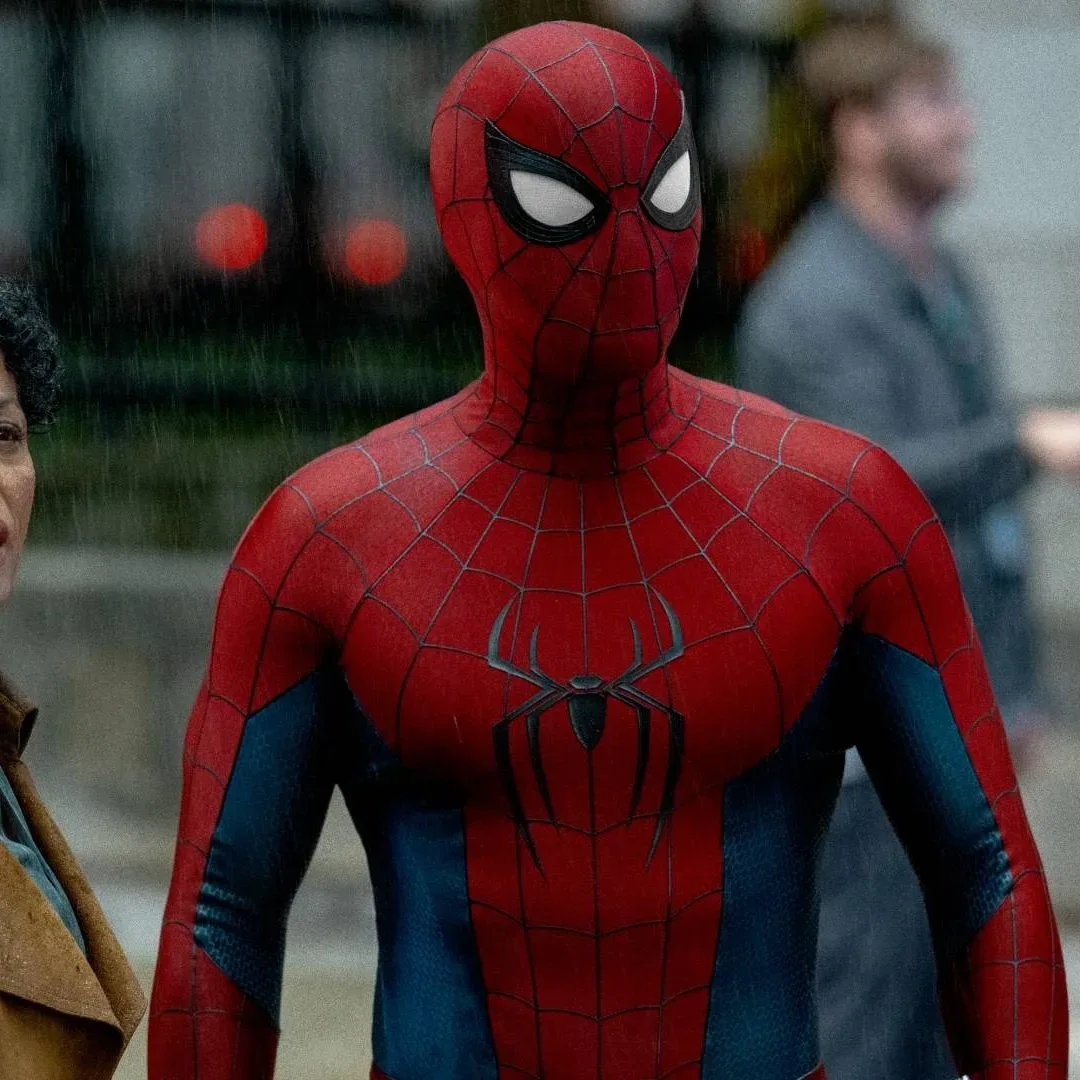
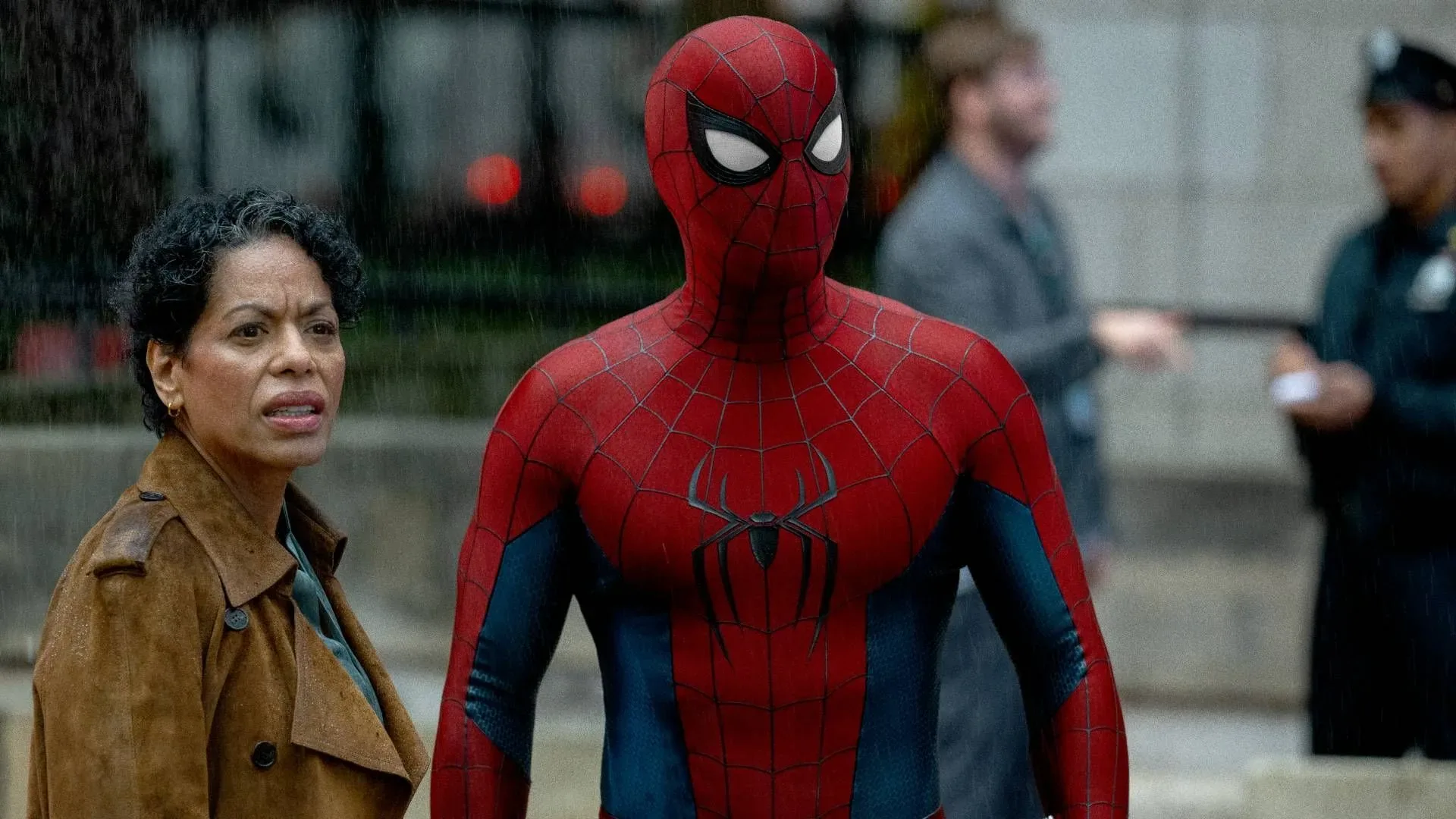
Sony Pictures is preparing to push Spider-Man: Brand New Day into the Best Picture conversation for the 99th Academy Awards, with the studio’s chairman and CEO making an unusually direct argument: the film should be judged as one of the year’s 10 strongest movies, not placed in a separate “commercial blockbuster” lane.
The executive’s case rests on more than the scale of a Spider-Man release. He highlighted the film’s reportedly melancholy, intimate storytelling and a final stretch that does not build toward the kind of city-leveling showdown audiences often associate with superhero cinema. Instead, he described the climax as two young people sharing their pain while sitting on the edge of a bed.
“Are you telling me that there are 10 films this year that are better than this film?”
That question is plainly part of an awards campaign rather than a neutral assessment. Still, it gets at a longstanding tension in Oscar season: whether prestige is granted to a particular kind of drama by default, while ambitious mainstream filmmaking must first prove that it belongs in the room.
A campaign built around dramatic restraint
The defining detail in Sony’s pitch is the ending. Superhero climaxes are frequently designed around escalation: the greatest danger arrives last, heroes face an opponent at maximum power, and a large action sequence supplies the final emotional punctuation. Sony’s executive argues that Brand New Day takes another route, ending with conversation and vulnerability rather than a giant battle.
That does not automatically establish awards quality. A quiet ending can be moving, awkward, earned, abrupt, or any combination of those things. But it explains how Sony intends to frame the movie for Academy voters. Rather than asking them to reward Spider-Man despite its comic-book identity, the studio is arguing that the film’s identity includes qualities usually associated with character dramas: melancholy, emotional disclosure, and a focus on loneliness among young adults.
In awards language, a Best Picture campaign is the organized effort to keep a movie visible and persuasive during the voting season. It can emphasize a film’s craft, cultural reach, performances, themes, or narrative risks. Here, the obvious campaign message is that a popular franchise installment can also be a personal story, and that its popularity should not erase the artistic choices Sony believes distinguish it.
The argument also challenges a common assumption about “quality commercial filmmaking.” The phrase can sound like public-relations shorthand, but its basic meaning is straightforward: a movie made for a wide audience can still demand careful work in storytelling, performance, pacing, production design, sound, and visual effects. Commercial success and artistic ambition are not opposites, even if awards races often treat them as though they are competing categories.
Why Best Picture is a particularly difficult target for comic-book films
Superhero movies have had Oscar recognition before, but the track record described for live-action Spider-Man films shows why a Best Picture nomination would be a meaningful step. Several have received nominations in Visual Effects and Sound, and Spider-Man 2 won Best Visual Effects in 2005. Those categories recognize major filmmaking contributions, yet they do not necessarily signal that voters see a franchise entry as one of the year’s overall best films.
That distinction matters. Craft categories ask voters to assess a specific discipline. Best Picture is a broader judgment, encompassing the total achievement of a film and its place among the year’s contenders. Sony is therefore trying to move the conversation from “Was the spectacle impressive?” to “Was this one of the most complete and affecting films of the year?”
The supplied awards context also underscores how rare top-level acting recognition has been for the genre. Joaquin Phoenix won Best Actor for Joker, while Heath Ledger won Supporting Actor for his performance in The Dark Knight. Those wins demonstrate that superhero-related films can break through in individual categories. But an all-out comic-book movie has not won Best Picture.
That history does not mean Academy voters reject every popular film or every effects-heavy production. It does mean that a superhero project has to overcome a durable perception: that franchise cinema is primarily built for spectacle and brand continuity, while awards favorites are more often presented as singular, adult-oriented, and self-contained dramatic achievements. A campaign centered on an emotionally subdued ending is a direct response to that perception.
There is also a wider superhero conversation happening around this awards push. Recent discussion around Superman’s next big-screen chapter is a reminder that these characters remain central to studio filmmaking, but each project still has to make its own case for what it wants to be. Sony’s stated approach for Brand New Day is not simply “Spider-Man is important.” It is “this particular Spider-Man story uses the character for an intimate emotional drama.”
The 10-nominee field changes the question, not the challenge
The Academy expanded the Best Picture field to 10 nominees in 2021, a change intended to make room for a broader mix of films. That structure gives studios behind major crowd-pleasers a more plausible route into the final slate than a rigid smaller field might. Sony’s executive specifically invoked the 10-film format in posing his challenge: are there really 10 films better than Brand New Day?
It is a sharp rhetorical line because it frames a nomination as a ranking question. Yet Best Picture voting is more complicated than an abstract list of the year’s 10 best movies. Voters can respond differently to emotional impact, formal ambition, social relevance, technical execution, cultural visibility, and personal taste. Campaigns matter because they help define which aspects of a movie voters are being asked to remember.
For Brand New Day, the campaign appears likely to lean on three connected claims:
- Audience scale: The film became the highest-grossing movie ever in the United States, exceeding expectations at the box office.
- Emotional relevance: Sony identifies loneliness among young adults as an important issue addressed by the story.
- Narrative difference: The studio says the film avoids ending on an enormous action sequence and instead resolves its central feeling through an intimate exchange.
None of those claims alone guarantees an Oscar nomination. Box-office records can establish cultural reach, but revenue is not an Academy category. A topical subject can give a film resonance, but the issue still has to be convincingly explored on screen. And subverting a genre expectation works only if the alternative ending feels dramatically earned.
Together, however, they form a coherent argument. Sony is positioning the movie as both a massive public event and a story about a recognizably human form of isolation. That is the most compelling version of the studio’s pitch: not that voters should lower the bar for a superhero film, but that a large franchise film can meet a high bar through choices audiences may not expect from it.
What the claim says about the modern blockbuster
Spider-Man: Brand New Day is Tom Holland’s fourth film as Spider-Man. By the fourth outing, a franchise character comes with enormous audience expectations: familiar iconography, established relationships, action set pieces, and an ongoing legacy that makes every installment part of a bigger cultural conversation. Sony’s awards argument suggests the movie uses that familiarity as a route toward something less externalized.
Loneliness is an especially notable theme for that purpose. Superhero stories often make isolation literal: a hero hides an identity, bears responsibilities nobody else understands, or is separated from ordinary life by unusual abilities. Sony’s description frames Brand New Day as treating that condition not merely as plot machinery, but as an emotional subject tied to young adulthood. The studio’s emphasis on two people speaking openly about their deepest pain suggests that connection, rather than combat, is intended to carry the ending’s real stakes.
That remains Sony’s reading of its own film, and Academy members will decide whether they share it. But the campaign has identified a useful question for audiences too. When a franchise movie’s biggest moment is not the largest explosion or the final opponent, what kind of satisfaction is it pursuing? If the answer is emotional recognition, then the movie is making a different bargain with viewers than a conventional finale centered solely on victory.
The studio’s push also arrives with a practical benefit: Brand New Day has already reached an enormous audience. Being the highest-grossing film ever in the US makes it impossible to dismiss the movie as a niche contender seeking attention outside its audience. The harder task is persuading awards voters that huge reach and formal or emotional achievement are mutually reinforcing rather than separate facts.
An awards argument, not a foregone result
Sony is not claiming a nomination has been secured; it is beginning the work of making the case. The studio executive’s comments openly acknowledge that commercial films must encourage people to think about their value in an awards context. That is a realistic reading of the race. Visibility, conversation, and a clear account of what makes a film special all matter when voters face a crowded year.
The eventual Best Picture field will show whether Academy members agree that Spider-Man: Brand New Day belongs among the 10 nominees. For now, the campaign’s central premise is unusually specific: the movie’s importance lies not just in its Spider-Man scale, but in its willingness to put its emotional resolution in a small room with two people talking.
For a genre so often defined by the question of how big the final battle can become, that is a strategically smart place to start the conversation.