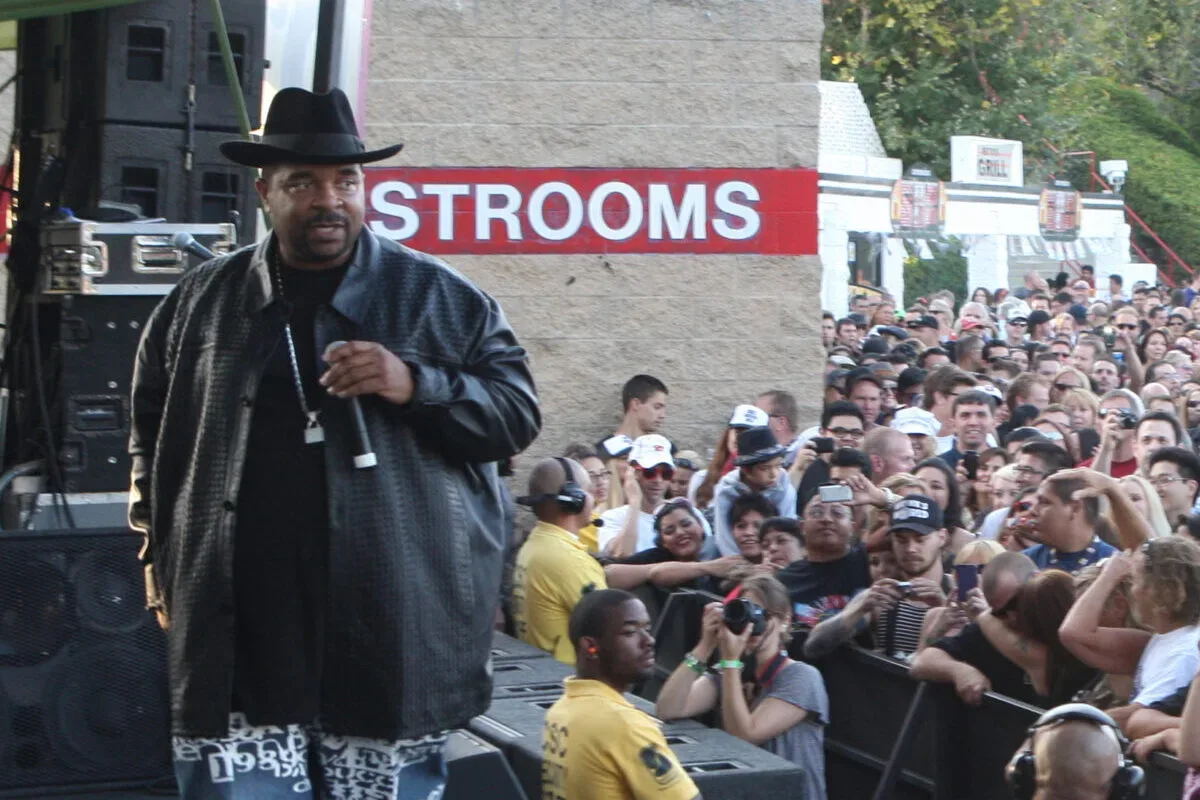
Seattle’s music story is getting a broader frame at the Museum of Pop Culture, where the newly opened Puget Sound Stories: Seattle Music + Beyond gives Sir Mix-A-Lot a lasting place in the gallery. The exhibition opened November 21 and begins with 25 stories drawn from across the region’s musical history.
That structure matters. Seattle is often reduced to a short list of globally recognized sounds and names, but this exhibition is designed to put Hip-Hop in the same institutional conversation as other major regional movements. Sir Mix-A-Lot will remain one of its continuing presences, alongside the likes of grunge and Heart, while other sections rotate through the galleries.
For visitors, the result is not simply a greatest-hits display. It is an attempt to show how a local music ecosystem produces very different kinds of artists, scenes and routes to a national audience. In Sir Mix-A-Lot’s case, the story is expressly tied to how Seattle Hip-Hop traveled far beyond the Northwest without shedding its local identity.
From a Seattle street to an international hit
Sir Mix-A-Lot’s place in the exhibition rests on both cultural reach and geographic specificity. “Posse on Broadway” put a Seattle street directly in its title, attaching a local landmark to a rap record. “Baby Got Back,” meanwhile, became the song that brought him the Grammy for Best Rap Solo Performance in 1993.
Those two reference points illustrate the arc the gallery is positioned to explore: music grounded in a particular city that ultimately reaches listeners who may know little about that city. A local reference can function as more than scenery in a song. It preserves a sense of where an artist is from, even when the audience grows far beyond home.
That is particularly meaningful in a museum setting. Exhibitions often turn individual achievements into a single frozen moment—one famous track, one trophy, one headline. A section focused on Sir Mix-A-Lot’s records carrying Seattle Hip-Hop outward has room for a more useful idea: regional music history is also about circulation. It is about which voices make it through local venues, radio, recording and audiences to become part of the wider culture.
The continuing gallery placement also avoids treating Hip-Hop as a short-term addition to a story otherwise dominated by rock. Museum of Pop Culture Chief Collections and Exhibitions Officer Jacob McMurray has described Sir Mix-A-Lot as among the mainstream stories intended to remain represented as the exhibition develops.
A format built for both fixtures and discoveries
Puget Sound Stories: Seattle Music + Beyond launches with 25 regional stories, but it is not meant to stay fixed in that initial form. The museum expects to rotate two or three sections focused on lesser-known musicians and scenes each year.
Related coverage includes Sir Mix-A-Lot Joins Seattle Music Exhibition With Permanent Gallery Presence.
In practical terms, a rotating-gallery model makes room for a central challenge facing any regional music exhibition: the history is not finished, and no opening selection can cover every community, genre or era. Permanent or long-running sections establish landmarks for visitors. Rotating sections can make the exhibition responsive, introducing artists and scenes that may not have had the same national visibility but remain essential to the area’s musical life.
Visitors will also be able to suggest subjects for future coverage. That does not guarantee any particular artist or scene will be selected, but it creates a pathway for public input rather than presenting the museum’s initial list as a closed canon.
The show’s video area is likewise expected to grow. It opens with roughly 30 short pieces, including performances and oral histories. An oral history is a recorded firsthand account: in this context, it can preserve the testimony of artists and people who participated in a scene, rather than relying only on objects or retrospective summaries. Performances, meanwhile, can make a gallery feel less like a collection of artifacts and more like a record of music as a living practice.
That ongoing approach is well suited to music, where the most important evidence is often intangible. Songs, memories, performance styles and community connections do not always fit neatly inside a display case. Video and recorded testimony give an exhibition additional ways to communicate those parts of the story.
Stas THEE Boss connects multiple parts of the region’s Hip-Hop story
Sir Mix-A-Lot is not the exhibition’s only Hip-Hop presence. Stas THEE Boss is included in the gallery and is also set to appear onstage. Her career offers another perspective on the Puget Sound region’s creative networks and genre-crossing work.
As one half of THEESatisfaction, the Seattle duo that recorded for Sub Pop, Stas THEE Boss helped create music that brought rap, jazz and soul together. That blend is an important reminder that genre labels can describe a starting point without fully defining the music. Rap, jazz and soul each carry distinct traditions, but musicians routinely build work across those boundaries.
Her background also links places within the region. Her biography traces a path from Tacoma’s Hilltop to Seattle’s South End, through work as a rapper, producer and DJ. Each role signals a different kind of contribution. A rapper performs and writes within the vocal tradition of Hip-Hop; a producer helps shape a recording’s musical and sonic direction; and a DJ selects and presents music for an audience. Taken together, those roles show a career rooted in more than one lane of music-making.
Stas THEE Boss later hosted Street Sounds, KEXP’s long-running Hip-Hop mix show. Including an artist whose work spans performance, production and radio expands the exhibition’s view of how scenes operate. Music does not move only through albums and concerts. It also moves through DJs, radio programs, collaborators and the places where listeners encounter records together.
Jimi Hendrix’s Seattle roots arrive in a companion exhibition
The museum also opened a companion exhibition centered on Jimi Hendrix’s Seattle roots on the same day. Janie Hendrix was scheduled to take part in a Q&A, adding a live discussion component to the opening.
Placed alongside Puget Sound Stories, the Hendrix exhibition reinforces the scale of the museum’s regional focus. Seattle music history can include artists whose names are known almost everywhere, while still creating space to examine the scenes and individuals that have been less widely documented. The pairing is less about flattening those careers into one category than it is about acknowledging the range of music connected to the area.
That range is also why Sir Mix-A-Lot’s gallery presence is significant. His work is not being presented as an aside to a more familiar Seattle narrative. It is being treated as one of the enduring threads necessary to tell the region’s music story with greater accuracy.
Why the exhibition’s approach is worth watching
The most notable feature of Puget Sound Stories may be its willingness to combine recognized touchstones with room for revision. The lasting sections offer clear entry points for visitors who know the biggest names. The planned rotations and expanding video collection acknowledge that a city’s musical history cannot be exhausted by those names.
For fans of Seattle Hip-Hop, the Sir Mix-A-Lot section gives institutional recognition to a career that connected direct local references with a Grammy-winning global hit. For visitors discovering Stas THEE Boss or THEESatisfaction, the exhibition offers an opening to a different strand of the region’s musical output—one shaped by rap, jazz, soul, radio and cross-city connections.
For anyone interested in current music coverage beyond museum walls, Joking Joystick has also followed how artists continue to shape the larger chart landscape, including Ateez’s third No. 1 EP of 2026 and U2’s new chart debut.
As the exhibition adds new stories, performances and oral histories, its evolving format should make the gallery as important for what it can still introduce as for the established artists it keeps in view. Sir Mix-A-Lot’s continuing presence provides one of those foundations: a Seattle Hip-Hop story with a distinctly local name on one landmark track and a Grammy-recognized hit that reached the world.