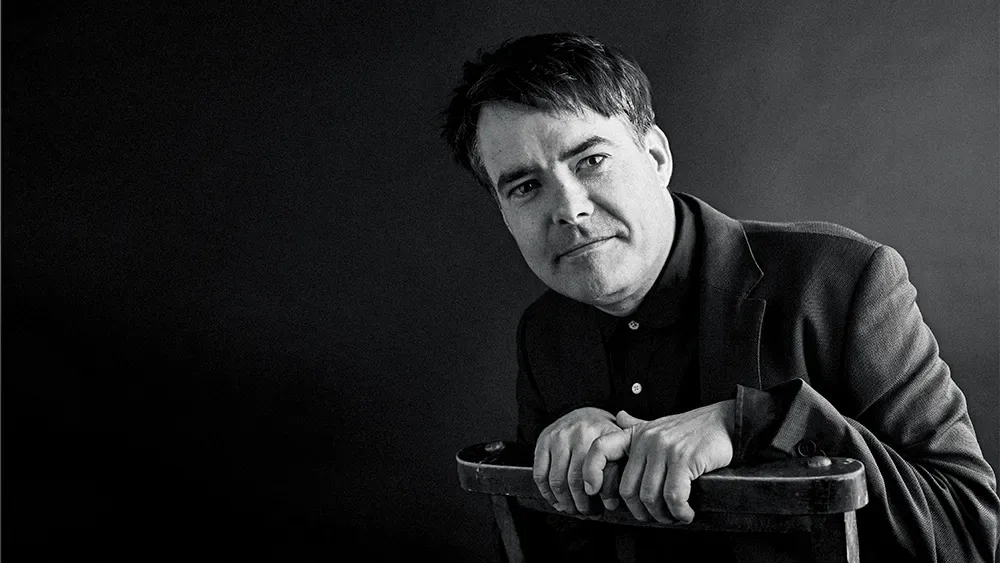
Chilean writer-director Sebastián Lelio has died at 52, leaving behind a filmography that was varied in setting, language and form but unusually coherent in its attention to inner lives. His films could be funny, bruising, formally severe, sensuous or openly theatrical. What connected them was a refusal to reduce people to an argument, a label or a neatly solved problem.
That quality made Lelio an important filmmaker of women’s stories and queer experience without making his work feel like a checklist of approved themes. His characters do not exist simply to symbolize resilience, oppression, liberation or social change. They can be impulsive, lonely, funny, guarded, desirous and wrong. The films make room for the people on screen to complicate the director’s design.
For audiences coming to his work through A Fantastic Woman, the 2017 drama that won Chile its first Oscar for Best International Feature, the scale of that achievement may be most visible in Daniela Vega’s performance as Marina, a trans woman grieving the death of her lover while facing hostility from his family. But Lelio’s work had been moving toward that blend of empathy and formal control for years. And he kept changing its shape afterward: an English-language religious-community romance, a U.S. remake of his own breakout, a 19th-century Irish period drama and, most recently, a political musical set in Chile.
He was not an auteur in the narrow sense of a director who stamps every production with the same visual flourish or narrative mechanism. His signature was more human than decorative. The questions recur: Who is allowed to define a person? What happens when private feeling collides with social expectations? Can dignity survive humiliation, suspicion or abandonment? Lelio’s answers were never as simple as a victory speech.
The two versions of Gloria explain a great deal
The most useful starting point may be Gloria, his 2013 breakthrough, and its 2019 English-language counterpart, Gloria Bell. At first, remaking one’s own acclaimed film can sound creatively unnecessary. The original is a warm, unsentimental comedy-drama about a divorced woman in her fifties experiencing a renewed sense of possibility. It already had a central performance from Paulina García that was funny, durable and alive to the character’s many mixed feelings.
Yet Gloria Bell was not a simple replay. Julianne Moore’s lead performance shifted the emotional weather of the same basic story. Where García’s Gloria feels resilient and forceful, Moore brings a sharper sense of yearning and vulnerability. The later film preserves the original’s pleasure and its forward motion, but it also gives that uplift a more melancholy current.
That difference is central to understanding Lelio. A remake that adheres closely to an earlier template can still be a creative experiment if it asks what a new performer does to the material. In this case, the performer becomes a major authorial force: not replacing the director, but changing the interpretation available inside the screenplay, scenes and structure. Lelio’s decision to revisit Gloria demonstrates trust in acting as more than execution. An actor’s particular presence can alter a film’s tone, stakes and emotional meaning.
It also reinforces the generosity in his approach to protagonists. Gloria is not treated as an inspirational emblem of midlife freedom. She is allowed disappointment and need along with pleasure. Lelio could make a story feel affirmative without pretending that affirmation erased loneliness.
Early films and an evolving method
Lelio’s 2005 debut, The Sacred Family, was rougher and more handheld than the polished films that followed. Its comic story of a bourgeois man falling for his son’s girlfriend is far from the feminist portraits that became most associated with the director, but it showed liveliness and confidence. Its semi-improvised method also carried into Navidad, a troubled-youth film selected for the Cannes Directors’ Fortnight in 2009.
Improvisation, in this context, does not merely mean dialogue made up without a script. As an artistic approach, it can create a sense that people are discovering what they feel while the scene unfolds, rather than simply delivering information that the plot requires. The available record of Lelio’s early work suggests a filmmaker attracted to that unpredictability, even as he later developed a more controlled visual and dramatic style.
His third feature, 2011’s The Year of the Tiger, marked a more understated and sophisticated turn. Set in the aftermath of Chile’s devastating 2010 earthquake, it explores faith, guilt and trauma. The film competed at Locarno, and its quiet, soulful approach showed that Lelio did not need overt melodrama to address massive collective catastrophe. He could focus instead on the moral and emotional aftershocks that persist after the immediate disaster.
By the time Gloria reached the main competition in Berlin two years later, Lelio had become a major name in a flourishing Chilean cinema alongside filmmakers including Sebastián Silva and producer Pablo Larraín. If some of that movement’s work was defined by abrasive political energy or dark provocation, Lelio established a different register. His films could be light on their feet without becoming lightweight; probing without treating characters as specimens.
A Fantastic Woman and the value of collaboration
A Fantastic Woman brought Lelio his widest international recognition. The film won Best Screenplay at the Berlinale before becoming the first Chilean film to take the Academy Award for Best International Feature, a prize then still called Best Foreign Language Film.
Its importance is inseparable from Vega’s emotionally open performance as Marina. The film follows her grief after the death of her partner and the prejudice she encounters from his relatives. It arrived during an important period for trans stories and trans artists in mainstream culture, yet its force comes from its specificity. Marina is not presented as a lesson for other people to learn. The film is attentive to the intrusions, indignities and disbelief imposed on her, while keeping its focus on her self-definition.
Lelio developed Marina’s character closely with Vega, drawing on her experience, and he allowed her to be the film’s principal public voice. That matters both ethically and artistically. A director can tell a story involving experiences outside his own, but collaboration affects whose knowledge shapes the work and who gets heard when the work enters public conversation. Lelio’s relative self-effacement did not eliminate the difficult question of representation; it acknowledged that the question should be asked.
That balance appears throughout his filmography. He was a filmmaker with a clear point of view, but he did not put himself ahead of the people represented by the film. His work argues for attention rather than possession.
Crossing countries and genres without losing the thread
After A Fantastic Woman, Lelio’s English-language work made clear that he was not interested in repeating one successful mode. Disobedience, his English-language debut, stars Rachel Weisz and Rachel McAdams as women involved in an illicit romance within a strict Orthodox Jewish community in North London. Its mood is sober and restrained, though that restraint is punctuated by frank sensuality. The film’s drama comes not from flattening belief into villainy, but from the pressure between personal desire, religious obligation and communal belonging.
That is an important distinction in Lelio’s stories. Institutions can wound people, but the people within those institutions are rarely treated as cartoons. His focus remains on the cost of a life constrained by rules one may still, in some way, love or recognize as part of oneself.
The Wonder took another sharp turn: a period drama set in 19th-century Ireland and adapted from Emma Donoghue’s novel. Shot by Ari Wegner with a damp, chilly green-gray texture, it initially appears distant from the contemporary environments of Gloria or A Fantastic Woman. But its foundations are recognizably Lelio’s. Florence Pugh’s character faces competing moral and spiritual claims, while the story centers feminine resolve in a repressive environment. The movie pairs earthy folk-tale material with a starkly formal construction, proving that Lelio’s emotional interests could survive radical changes of genre and historical setting.
Readers looking for another recent international-film production story can also find context in this report on Kim Hong-sun’s Joseon-era revenge film The Hit List.
The Wave made the director part of the question
Lelio’s last film, The Wave, returned him to Chile with an ambitious political musical. It was inspired by feminist student protests connected to #MeToo that shut down universities across the country in 2018. The film’s rhetoric could be heavy-handed, but its staging and choreography gave real force to bodies moving together on screen. The spectacle of mass movement was dynamic enough to suggest a compelling possible future for Lelio in musical filmmaking.
One especially revealing flourish breaks the fourth wall to recognize Lelio himself as the director and to ask why a man is directing a work that is explicitly feminist. A fourth-wall break is when a film acknowledges its own construction or directly addresses the audience, disrupting the illusion that viewers are simply observing an untouched world. Here, the device is playful, but it also makes authorship an issue within the film rather than an invisible authority outside it.
The gesture does not provide an easy answer. Instead, it models the self-questioning that Lelio’s career often invited. His films centered women and queer characters with uncommon sympathy, but they did not pretend that a director’s position ceased to matter. By placing the question in the work, he made space for the audience to consider it too.
A legacy larger than a single accolade
The Oscar success of A Fantastic Woman will remain a defining landmark, both for Lelio and for Chilean film. But his legacy is stronger when viewed as a complete body of work rather than a single award-winning title. The semi-improvised sharpness of The Sacred Family, the trauma and faith of The Year of the Tiger, the buoyant ache of the two Gloria films, Marina’s hard-won self-possession, the moral chill of The Wonder and the collective motion of The Wave all point to a director unwilling to let familiarity become complacency.
Lelio’s most enduring achievement may be that he made empathy feel active. In his films, compassion is not soft focus or automatic forgiveness. It is the work of looking closely: at what a person wants, what they fear, what they cannot say, and what systems or families demand of them. He treated performers as collaborators capable of transforming a role, and he made films in which dignity was not handed down by a benevolent story. It had to be claimed, protected and sometimes rebuilt.