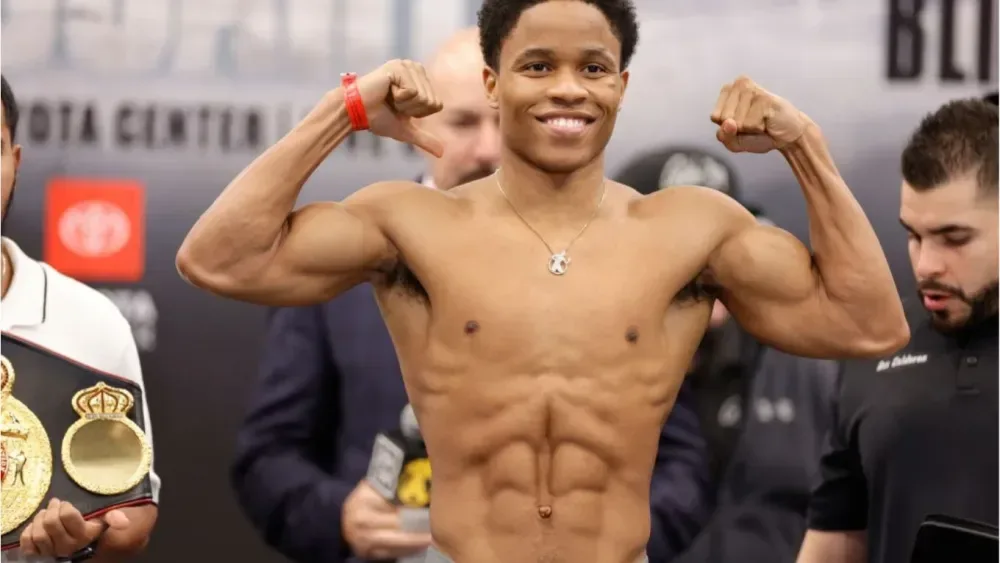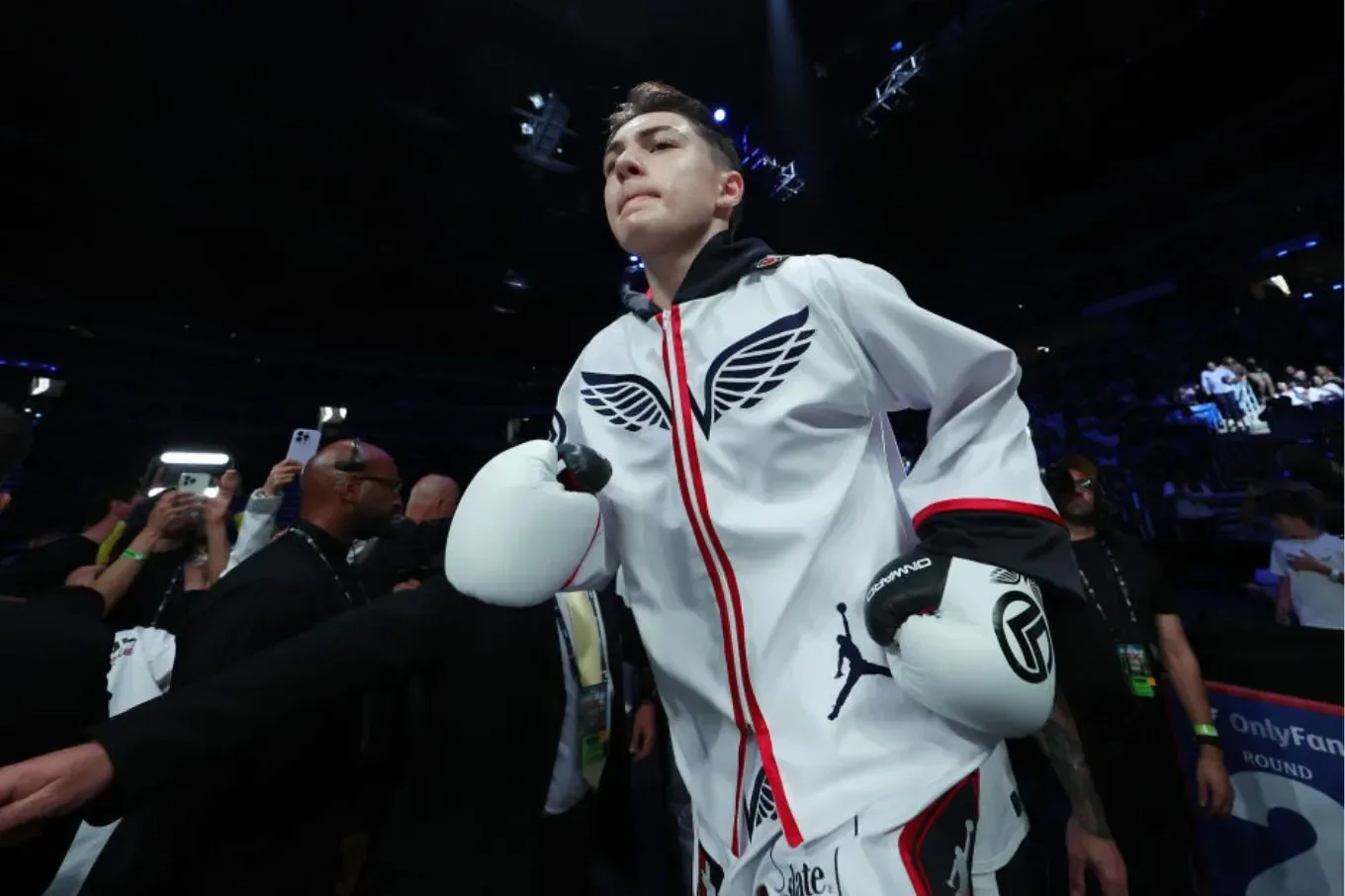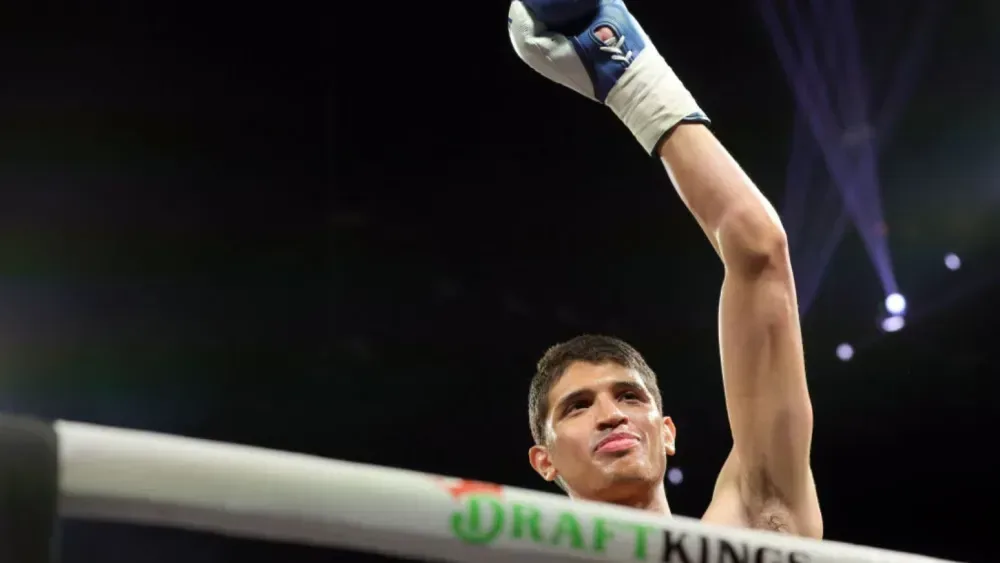
Sebastian Fundora is set to defend the WBC super welterweight championship against Ermal Hadribeaj on Saturday, Oct. 17, at The Chelsea at The Cosmopolitan in Las Vegas, Nevada. The main event is scheduled for 12 rounds, bringing together a reigning champion with a 24-1-1 record and an unbeaten challenger listed at 23-0-1.
The event begins at 8 p.m. ET / 5 p.m. PT. Main-event ringwalks are expected at approximately 11 p.m. ET / 8 p.m. PT, although ringwalk timing can move depending on how long the earlier fights last. For anyone treating the card like a live-service event schedule, that distinction matters: the opening bell of the broadcast is not the same thing as the moment Fundora and Hadribeaj enter the ring.
The championship matchup
Fundora enters as the WBC super welterweight titleholder and the favored fighter. The supplied matchup information points to his height, reach and aggressive, explosive approach as the central reasons for that status. In practical boxing terms, reach is the distance a fighter can cover with their punches, while a height advantage can help dictate range. Those tools can be especially important when a champion is attempting to keep a challenger at the end of jabs and straight shots before exchanges become more chaotic.
But a favorite is not an automatic winner, and Hadribeaj’s unbeaten record is the cleanest reason not to treat the result as preloaded. He is described as a quick-footed fighter with fast punching and a tactical approach. Footwork is not merely moving around the ring; it is the process of taking position, leaving danger, creating an angle and deciding where an exchange happens. Against a longer opponent, smart movement can be a route to getting inside, landing quickly and exiting before the counter arrives.
The stylistic setup is straightforward even without pretending a fight can be solved like a matchup screen. Fundora’s advantages are framed around physical dimensions and offense. Hadribeaj’s path is framed around timing, mobility and decision-making. That makes range the obvious contest within the contest: can Fundora establish it consistently, or can Hadribeaj disrupt it often enough to turn the title fight into a closer tactical battle?
What is at stake
The WBC belt is the championship on the line in the main event. “Super welterweight” identifies the weight class; it is also commonly called junior middleweight. The fight’s 12-round designation signals a championship-distance contest rather than a shorter bout. That does not guarantee the contest lasts all 12 rounds, of course, but it raises the value of pacing and adjustment. A fighter can have a strong early stretch and still need an answer when the other corner changes its approach later.
For Fundora, a successful defense would preserve his hold on the title. For Hadribeaj, the opportunity is much larger than adding another win to an unbeaten record: an upset would make him the new WBC champion. That is the competitive hook here. The challenger does not need to match the favorite’s reputation heading into the arena; he needs to win the rounds, find a decisive moment, or otherwise do enough across the scheduled distance to take the belt.
When to tune in
- Date: Saturday, Oct. 17
- Venue: The Chelsea at The Cosmopolitan, Las Vegas, Nevada
- Event start: 8 p.m. ET / 5 p.m. PT
- Expected main-event ringwalks: about 11 p.m. ET / 8 p.m. PT
- Main event: Sebastian Fundora vs. Ermal Hadribeaj, 12 rounds for the WBC super welterweight championship
The word expected does real work in a ringwalk estimate. The preceding fights determine the actual pace of a combat-sports card. Fast finishes can bring the main event forward; competitive bouts that go the distance can push it later. Viewers who only want the headliner may wish to be ready well before the estimate, while viewers who want the full card should start at the advertised event time.
Related coverage includes Sebastian Fundora vs. Ermal Hadribeaj: Start Time, Fight Card and Streaming Options.
Fundora vs. Hadribeaj fight card
- Super welterweight: Sebastian Fundora vs. Ermal Hadribeaj — WBC title fight, main event
- Middleweight: Jaime Enrique Osuna Diaz vs. Cristian Cangelosi
- Featherweight: David Garcia vs. Angel Carrillo
- Super middleweight: Marco Romero vs. DeAndre Ware
Those divisions are not interchangeable labels. They identify the contracted weight categories for each contest, so the card moves through featherweight, middleweight, super middleweight and finally super welterweight. The supplied lineup does not include bout order beyond identifying Fundora-Hadribeaj as the main event, so it is safest to treat the three listed non-title bouts as the announced supporting matchups rather than assume a precise running order.
Streaming and TV options: check the channel before subscribing
The viewing information lists multiple ways to access the fight, but there is a detail worth handling carefully. Several live-TV packages are identified as carrying TNT, while DAZN is also identified as making the event available to subscribers. Distribution rights and channel availability can vary by market, package and device, so prospective viewers should confirm the event page and their local channel lineup before paying for a service.
This is particularly important because an “included” event is not the same as “free” in the everyday sense. It means no separate event charge is described beyond an eligible subscription. The subscription itself still has a cost, and introductory rates can rise after an initial period.
Live-TV services listed with TNT access
DirecTV Entertainment is listed at $59.99 for the first month and $89.99 per month afterward, with more than 90 channels and TNT included. That makes it an option for viewers who want the card within a broader live-TV package rather than a boxing-focused platform.
Sling Blue is listed at $54.99 per month and includes TNT. The service notes that pricing and channel availability are subject to local market conditions. That is a useful reminder to check the account-level channel list rather than relying solely on a national package description.
Fubo is listed at $63.99 for the first month and $88.99 per month afterward. It is described as offering TNT and more than 230 live TV channels, plus a five-day free trial. Trial terms and eligibility can change, so a viewer considering that route should verify the offer before beginning a signup.
Hulu + Live TV is listed at $49.99 for the first month and $99.99 per month afterward, with TNT among more than 100 channels. The package is also described as including access to Disney+, Hulu and ESPN Unlimited.
DAZN subscription details
DAZN is also listed as a place where subscribers can watch the Fundora-Hadribeaj event live. Its subscription is listed from $24.99 per month. An Ultimate Tier is listed at $49.99 per month and is described as including this event along with 12 other pay-per-view events during the year without a separate charge, plus more than 100 live fights annually, replays, highlights and documentaries.
For a boxing fan, the meaningful comparison is not just the lowest advertised monthly number. It is whether a service carries the particular event in the viewer’s location, whether the viewer wants the rest of its programming, and what the price becomes after any promotional window ends. For a household that already has a TNT-carrying live-TV package, adding another service may be unnecessary. For someone who intends to follow a fuller schedule of fights and replays, DAZN’s wider fight library may be the more relevant consideration.
Why this is more than a record check
Records provide context, not a result. Fundora’s 24-1-1 line reflects a long track record entering the defense, while Hadribeaj arrives at 23-0-1 without a defeat. The draw in each record is also worth preserving rather than rounding the matchup into an oversimplified “one-loss champion versus undefeated challenger” story. Both fighters have a draw; neither record is a perfect win-only ledger.
The title fight is built around a familiar sporting question: can the fighter expected to control the physical geography of the ring impose that game plan, or does the mobile challenger find a way to make the favorite uncomfortable? Hadribeaj does not need to win a hypothetical debate about height and reach. He needs to make his speed, movement and tactical choices count when the bell rings.
Las Vegas provides the setting, The Chelsea hosts the event, and the card has enough scheduled bouts that viewers should plan around an evening rather than a single fixed main-event timestamp. For a broader entertainment detour before the opening bell, Joking Joystick has also looked at Stoic’s approach to making room in “Bullfrog”—a very different kind of pacing exercise.
As for the boxing, the essential plan is simple: be ready from 8 p.m. ET / 5 p.m. PT for the complete event, expect Fundora and Hadribeaj later in the night, and verify access through the specific service and market before committing to a subscription.