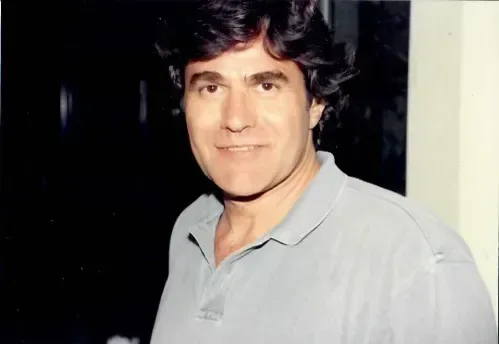
Ron Koslow, the writer-producer who created the 1987 television series Beauty and the Beast, died Oct. 7 at his home in Brentwood, California. His family confirmed his death. He was 81.
Koslow’s most enduring television work took a familiar fairy-tale title and used it for a notably different kind of series: a romantic fantasy set between New York City and an imagined underground community beneath it. Starring Linda Hamilton and Ron Perlman, Beauty and the Beast placed love, compassion, humanity and the limits of outward appearance at the center of its premise. Its distinctive setting and emotional stakes made it a particularly memorable example of television fantasy from its era.
A creator whose best-known work reshaped a classic premise
The phrase “creator” can mean more than supplying an initial idea. In television, it commonly identifies the person responsible for originating a series’ foundational concept: its characters, setting, dramatic engine and the rules that guide its stories. Koslow’s contribution to Beauty and the Beast was precisely that kind of authorship. He conceived a reworking of a well-known tale that moved away from a conventional storybook kingdom and into a modern urban fantasy world.
The series imagined a hidden society beneath New York City, while its title invoked the classic relationship between beauty and monstrosity. That framework allowed the show to treat the fairy tale as a drama about empathy and recognition rather than simply a plot about changing appearances. The supplied description identifies love, compassion and humanity as central concerns, alongside the notion that beauty can be found beyond external appearances.
That distinction helps explain why the show’s legacy rests on more than its title. Fairy tales offer an instantly recognizable piece of cultural shorthand, but Koslow’s version depended on the specific contrast between a grounded city and a fantastical subterranean world. It also depended on treating its central emotional ideas seriously. Fantasy, in this context, is not merely a decorative backdrop; it is the device that permits an everyday world to be viewed through questions of isolation, acceptance and human connection.
Koslow received three Emmy Award nominations for the series, including a nomination for Outstanding Writing in a Drama Series. An Emmy nomination in a writing category recognizes the script work behind a dramatic production—the construction of scenes, character voice, pacing, conflict and theme—not only the performances or the technical presentation visible on screen. The recognition underlines the importance of writing to the series’ identity.
From legal training to screen storytelling
Born April 9, 1945, Koslow was raised between St. Louis and Los Angeles. His education moved through several disciplines: he attended the University of California, Berkeley and UCLA film school, then earned a law degree from Loyola University and joined the California Bar.
That path included formal preparation for a legal career, but the work for which he became known was storytelling. His route is a useful reminder that creative careers are not always linear. Film-school study gave him a direct connection to the craft and culture of filmmaking, while legal education represented a separate professional qualification. His eventual screen career drew public attention to the former rather than the latter.
He entered Hollywood through feature writing, with a screenplay credit on the 1976 film Lifeguard, starring Sam Elliott. Screenwriting and television creation are related but distinct jobs. A screenwriter writes a screenplay for a film; a television creator establishes the underlying series concept, which can then generate many episodes and involve a larger group of writers and producers. Koslow worked across both forms during a career that spanned decades.
His other screenplay credits included Last Dance, with Sharon Stone; Firstborn, starring Teri Garr and Peter Weller; and John Landis’ Into the Night, starring Jeff Goldblum and Michelle Pfeiffer. Taken together with Lifeguard, those credits show that his career was not confined to the series most associated with his name.
Work beyond ‘Beauty and the Beast’
Koslow also wrote for My Life and Times and Roar. He created and wrote the series Moonlight, and served as an executive producer on Birds of Prey.
An executive producer’s duties can vary from production to production, so the title alone does not define a single fixed set of responsibilities. Broadly, it signals a senior producing role and can encompass creative oversight, organizational leadership or other high-level work. What is clear is that Koslow’s credits extended across writing, creation and producing, rather than being limited to one assignment or one genre.
His original Beauty and the Beast later served as the basis for a television adaptation on The CW. That later adaptation is an important measure of the durability of the original concept: its underlying premise was strong enough to be revisited for another television era. It does not erase the distinct identity of the 1987 series, which remains associated with Hamilton, Perlman and the underground New York setting originated by Koslow.
Television adaptations are often discussed as though a shared title is the whole connection. In practice, “served as the basis” means the earlier work provided a foundation for a later version. A remake or adaptation may change performers, tone, structure and many story details while retaining the core conceptual inheritance. In Koslow’s case, the later series points back to a premise with continued appeal: the collision of a romantic fairy tale, a contemporary city and a hidden fantastical world.
Why the series remains an important television-fantasy reference point
Beauty and the Beast is notable because it treats fantasy as a language for emotional drama. The underground world beneath New York is an imaginative premise, but it also creates a separation between visible society and people who exist outside it. The title’s focus on appearance creates another contrast: what characters look like versus who they are. Those ideas are directly connected to the show’s stated emphasis on compassion, humanity and beauty beyond surface impressions.
That combination is the practical reason the series has remained part of conversations around genre television. It did not rely only on spectacle or a recognizable title. Its premise gave writers a continuing way to explore an emotional relationship through a divided world. The distinction matters for viewers revisiting older genre shows: an ambitious setting can be memorable, but the setting has to support repeatable character conflict if it is going to sustain a television series.
Koslow’s work also illustrates how television creators can leave a long footprint through a single enduring idea. A creator may have numerous credits, yet one series can become the clearest expression of their interests. In this instance, the relevant themes are unusually explicit: imagination joined to stories about the deeper parts of human experience.
Current television news continues to show how enduring on-screen identities can remain central to a program’s future, whether through a returning host or a long-running format; Jon Stewart’s extended run on The Daily Show is a separate example of how a creative figure and a television property can remain linked across years. Koslow’s legacy operates differently, through a story world and a fairy-tale reinterpretation that continued into a later adaptation.
A personal legacy remembered with care
In addition to his professional work, Koslow was remembered by his family for imagination and for storytelling rooted in the deepest parts of human experience. They also described him as someone who formed deep, lasting relationships and approached people he loved with generosity, thoughtfulness and care.
He is survived by his sister, Judy; his brother-in-law, Stefan; and his nieces, Jenna and Lily. He was preceded in death by his parents, Sammye and Dave, and his brothers, Bobby and Ken.
For audiences, Koslow’s name will remain inseparable from a television series that gave a classic tale a modern, emotionally serious setting. For the industry, his body of work encompasses feature screenplays, television writing, series creation and producing. And for those closest to him, the remembrance offered by his family places his creative imagination alongside the generosity and care he brought to his personal relationships.