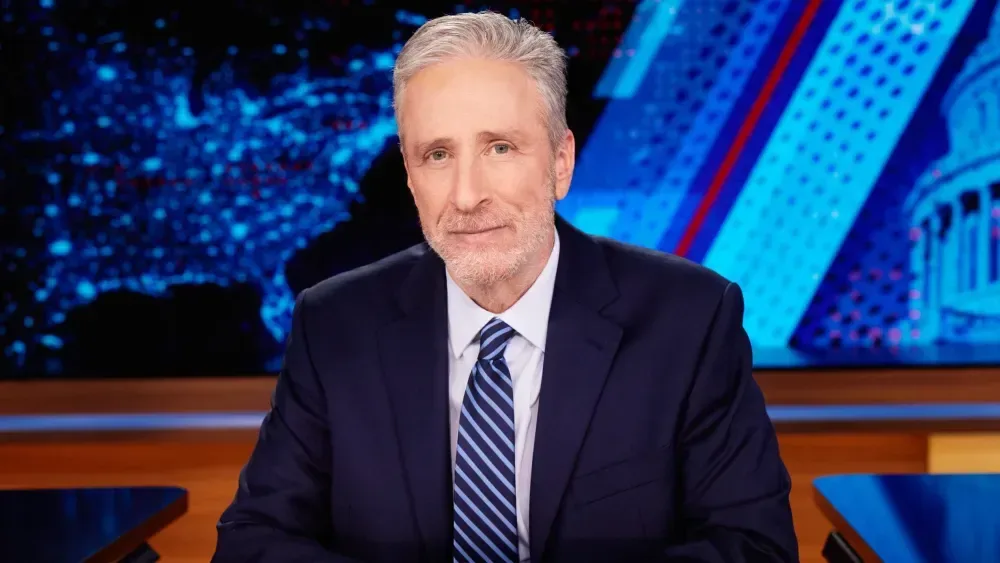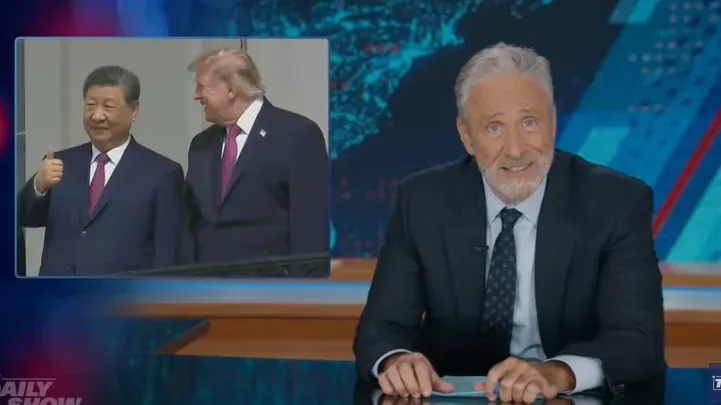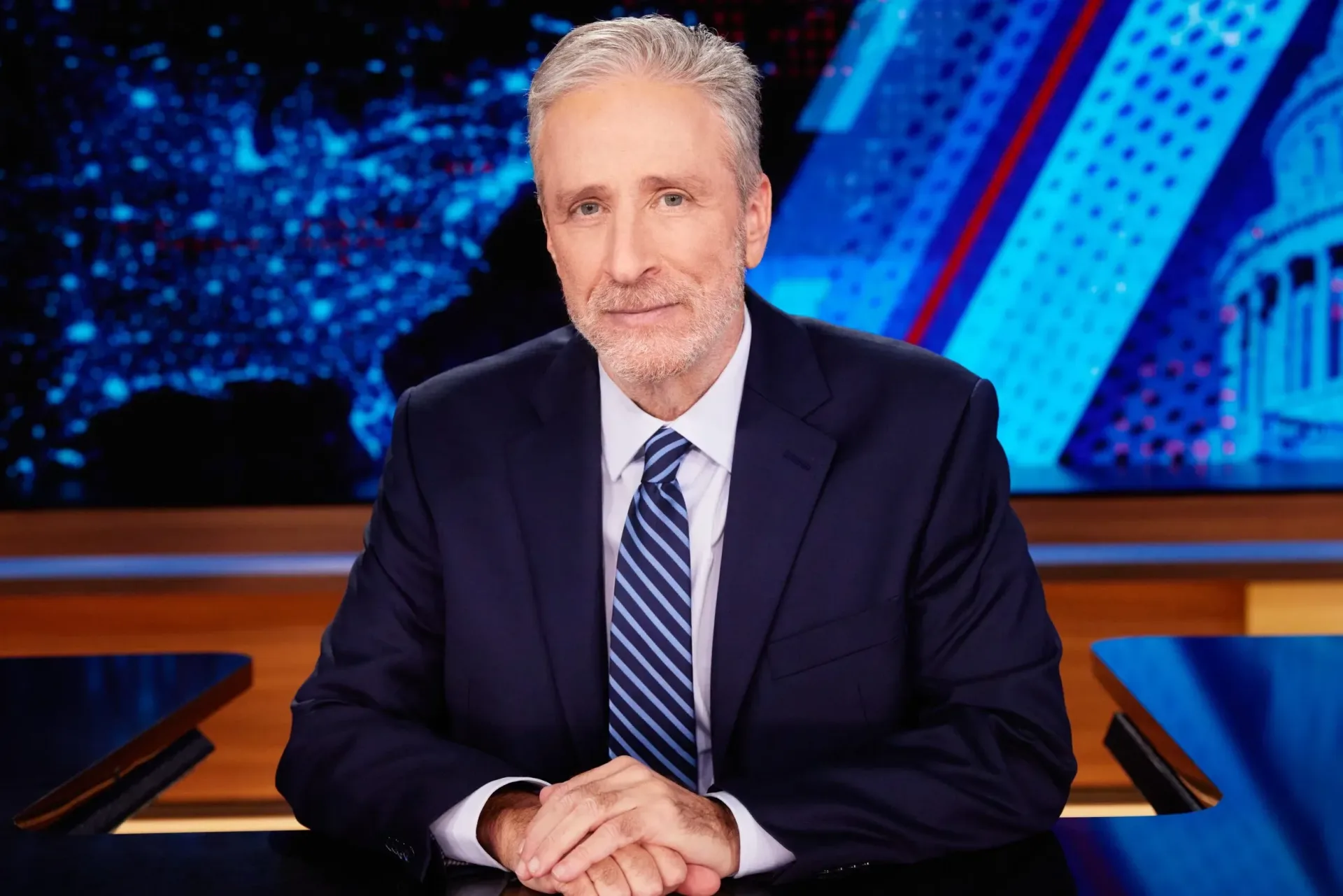
Jon Stewart will remain with The Daily Show through 2028 after extending his agreement with the Comedy Central program for another two years. The deal keeps Stewart at the desk through the next U.S. presidential election and continues a return that began in February 2024.
The timing matters because Stewart’s previous agreement had been due to conclude at the end of 2026. That arrangement itself followed a one-year renewal signed in November 2025. The new extension gives the satirical-news series a longer period of continuity during an especially consequential stretch of the political calendar.
Stewart is not described as taking over a conventional five-night hosting assignment. He will remain part of the show’s rotating host group, alongside Ronny Chieng, Josh Johnson, Jordan Klepper, Michael Kosta and Desi Lydic. Troy Iwata and Grace Kuhlenschmidt will continue as correspondents rather than hosts.
For viewers, that distinction is important. A rotating lineup allows the series to maintain several comic voices and reporting styles, while Stewart’s continuing presence provides a familiar anchor for major political moments. It is a format built around a shared program identity rather than the idea that every episode must be delivered by one presenter.
Stewart’s return now has a longer horizon
Stewart first began hosting The Daily Show in 1999 and departed in 2015. Trevor Noah subsequently became the satirical-news program’s anchor and stepped down in 2022. Stewart returned in February 2024, and the show’s ratings rose after that return.
Paramount’s metrics say that The Daily Show is the most-viewed cable program across social media in 2026. That phrasing refers to reach across social platforms, rather than simply a traditional live television audience. It is nevertheless a meaningful measure for a show whose clips, interviews and monologues are designed to circulate well beyond the initial cable broadcast.
The extension suggests that Comedy Central’s parent company sees Stewart as central to sustaining that audience relationship. George Cheeks, co-chair and chief content officer of Skydance TV, called Stewart a “generational talent” and described the series as both an influential television franchise and a cornerstone of Comedy Central.
That language is corporate praise, naturally, but it also identifies the practical appeal of the deal: a recognizable host, a durable title, and a show with an established ability to generate conversation in both television and social-video spaces. In an environment where viewers encounter segments through multiple platforms, continuity can be as valuable as a wholesale format change.
The on-air team and producing structure stay in place
Stewart’s role will extend beyond appearing on screen. He remains an executive producer with showrunner and executive producer Jen Flanz and James “Baby Doll” Dixon, Stewart’s longtime manager. An executive producer is generally involved at a senior creative and organizational level; the title does not by itself spell out the exact day-to-day responsibilities each person performs. What the announced arrangement does establish is that Stewart remains connected to both the editorial-facing and production-side leadership of the series.
Flanz’s continued role as showrunner is particularly relevant to how a program can preserve consistency amid a rotating host schedule. A showrunner is the senior producer who guides a television series’ creative direction and production operation. With several hosts, correspondents and regular contributors, a stable production leadership team can help ensure that the program still feels like one show rather than unrelated late-night slots sharing a name.
The returning host roster also gives the series flexibility in tone. The announcement does not assign individual days, beats or future segments to any of the hosts, so those details should not be assumed. But the named group confirms that the current collaborative setup will continue alongside Stewart’s longer commitment.
- Jon Stewart remains a host within the rotation and an executive producer.
- Ronny Chieng, Josh Johnson, Jordan Klepper, Michael Kosta and Desi Lydic remain in the host lineup.
- Troy Iwata and Grace Kuhlenschmidt remain non-hosting correspondents.
- Jen Flanz continues as showrunner and executive producer.
- James “Baby Doll” Dixon continues as an executive producer with Stewart and Flanz.
Why the election window is significant
Political satire becomes especially prominent during election cycles because campaigns supply a constant stream of speeches, debates, advertising, party messaging and breaking developments. Keeping Stewart through 2028 means the show will enter that period without an impending contract endpoint at the end of 2026 hanging over its most recognizable returning figure.
That does not mean the series has announced any particular election coverage plan. No episode schedule, special programming or format change was specified. The significance is simpler: the show has secured a known creative presence for a period when political comedy and commentary commonly draw heightened attention.
Stewart’s earlier tenure also provides context for why that continuity has weight. He led the program from 1999 until 2015, a long span that established his association with the franchise. His return in 2024 restored that relationship after the post-Noah transition, and the 2028 extension means that return is not a short-term experiment.
For a broader view of recent television casting news, see Gwyneth Paltrow’s first lead television role in Netflix’s ‘The Apology’.
A deal made during corporate change
The renewal also arrives amid major ownership developments around Comedy Central’s corporate parent. Stewart’s prior renewal came a few months after Paramount was acquired by Skydance Media. This new agreement comes weeks after the David Ellison-led conglomerate completed a merger between Paramount and Warner Bros.
Corporate developments can create uncertainty around brands, programming priorities and executive structures. The announcement provides one concrete point of clarity for The Daily Show: Stewart’s role has been renewed through 2028, and the show’s present host-and-producer framework remains in place.
It would be a leap to infer broader plans for every Comedy Central show or every element of the merged company from this one agreement. Still, the extension represents a visible commitment to a long-running series at a time when the company structure around it has been changing.
What has been confirmed—and what has not
The confirmed news is substantial but specific. Stewart is signed through 2028, will continue to host as part of the rotation, and will remain an executive producer. The announced host roster, correspondent roles and senior production team also remain attached to the show.
Nothing in the information provided establishes a new broadcast schedule, a revised format, additional hosts, a replacement plan, or named election-night programming. Likewise, the cited 2026 social-media standing is based on metrics supplied by Paramount, so it should be understood as the company’s stated measurement rather than a fully detailed public methodology.
What is clear is that The Daily Show has chosen continuity: continuity in Stewart’s role, continuity in the rotating lineup, and continuity in its production leadership. With the agreement extending to 2028, viewers can expect Stewart to remain a key part of the show’s satirical-news identity through the next presidential-election cycle.