
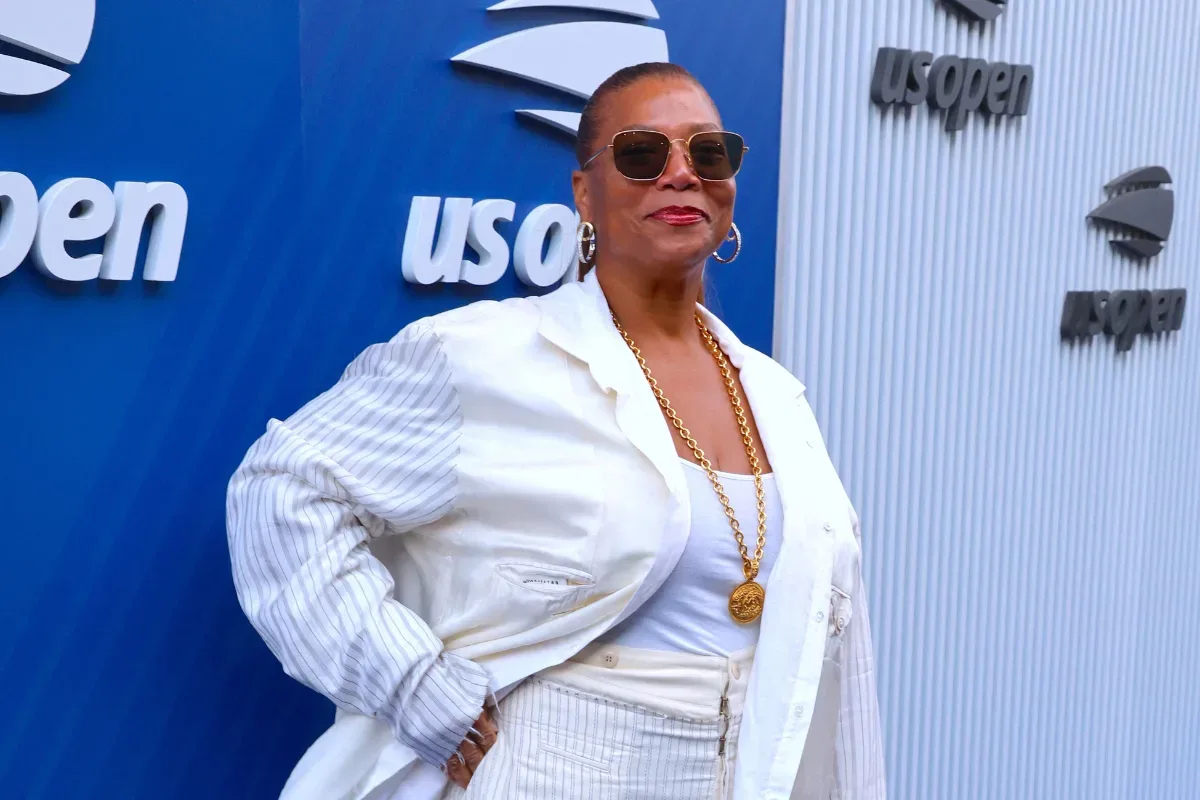
Queen Latifah’s work in Newark will be the focus of You Can Go Home Again, a documentary scheduled to air on BET at 10 p.m. Eastern on Friday, November 27. Rather than treating Newark simply as a backdrop to a celebrity profile, the film centers on a years-long housing effort in the New Jersey city where Latifah grew up.
The project at the heart of the documentary is RISE Living, a mixed-use residential development developed with affordable apartments as part of its plan. Its name, RISE, means Rita Is Still Everywhere, honoring Latifah’s late mother, Rita, a schoolteacher. That personal connection gives the title’s idea of going home a more specific meaning: the film is about a return to the people, institutions and neighborhood ties that shaped her, as well as an attempt to help build something lasting there.
“It’s about my community and the people and places that make us who we are,” Queen Latifah said.
A housing story with a long runway
The documentary arrives well after the underlying development work began. Construction on RISE Living started in January 2022, followed by an April 2022 groundbreaking attended by Latifah and Newark Mayor Ras Baraka. Latifah’s BlueSugar Corporation worked with Life Assets Development and Gonsosa on the project.
That timeline matters because it distinguishes the documentary from a project created solely around a television premiere. The film has an established story to follow: a development moving from plans and construction into a broader account of why the work matters to the people involved. Its subject is not just a public appearance at a ceremonial groundbreaking, but the extended effort behind a residential project conceived years earlier.
The 2022 plans called for 76 homes, with 16 designated as affordable and the remainder intended as market-rate housing. In practical terms, market-rate homes are offered at prevailing market prices, while affordable homes are designated to meet affordability requirements. The supplied plans present RISE as a mixed-income development, meaning both kinds of housing were part of the same larger community rather than entirely separate projects.
That distinction is central to understanding what the film is likely to be documenting. “Affordable housing” can become a catch-all phrase in entertainment coverage, but the available plan was more precise: 16 of the proposed 76 homes were classified as affordable. That is a meaningful component of the development, but it is not the same as saying every residence was affordable. Keeping the two categories clear is important when considering both the project’s structure and its stated community purpose.
More than apartments in the original plan
RISE Living was planned as a mixed-use development, a term that means a project combines residential space with other functions instead of limiting a site to housing alone. Here, the non-residential component included 1,900 square feet of ground-floor space reserved for nonprofit organizations.
The 2022 development-phase outline also included a business center, fitness space, electric-vehicle charging stations, in-unit laundry and common-area Wi-Fi. These are proposed features described during that stage of the project, not a substitute for the documentary itself or a guarantee about what footage will appear in the final film. Still, they help explain the development’s intended scope. The plan was not framed only around placing homes on a site; it also made room for nonprofit activity and resident-oriented amenities.
For viewers, the technical language is worth unpacking because it can otherwise flatten into real-estate shorthand. A business center generally refers to shared space intended for work-related tasks, while common-area Wi-Fi means wireless internet in shared spaces rather than necessarily in each home. In-unit laundry means laundry equipment located within individual residences, as opposed to a shared laundry room. The planned EV charging stations address electric-vehicle charging at the development.
None of those details alone defines whether a development meets a community’s needs. But collectively, they show the project was envisioned as a place with both housing and supporting spaces. The nonprofit allocation is especially notable because it explicitly reserves ground-floor area for organizations rather than leaving every square foot to residential use.
Rita’s legacy is built into the name
The project’s name gives the documentary an emotional throughline that goes beyond development terminology. RISE stands for Rita Is Still Everywhere, a reference to Latifah’s mother. Rita was a schoolteacher, and the film connects that family history with Latifah’s continuing investment in Newark.
In that context, the development’s title is not merely branding. It preserves a personal remembrance in a public-facing project, linking family memory to homes, community organizations and a neighborhood investment. The documentary’s title, You Can Go Home Again, similarly suggests that “home” is not just a birthplace or a childhood memory. It can also be a place where a person returns with resources, partnerships and a concrete plan.
That does not make the development a solo undertaking. The named collaborators—BlueSugar Corporation, Life Assets Development and Gonsosa—underscore that housing projects depend on organizational partnerships. Latifah’s role brings visibility and a personal stake, while the development itself is described through a network of companies and project partners.
From a Chicago first look to a BET premiere
You Can Go Home Again received a first look in Chicago on November 4. Latifah appeared at that event with childhood friend and project partner Tammy Hammond at the Obama Presidential Center. The appearance reinforced the documentary’s stated interest in personal history alongside the practical work of creating RISE Living.
Muta’Ali directed the film. Flavor Unit Entertainment and P&G Studios are co-producing, while Shakim Compere and Loretha Jones are executive producers. Compere also runs Flavor Unit with Latifah, placing the documentary within a production operation that is closely connected to her wider television and film work.
Latifah’s BET relationship also extends beyond this one broadcast. In June, she and LL Cool J joined the network’s first advisory board. The documentary therefore arrives at a moment when Latifah has a role connected to the network both as a screen presence and as an advisory-board member, although those are distinct responsibilities.
What viewers should expect—and what remains unspecified
The confirmed premise is straightforward: the film follows the RISE Living housing work alongside Latifah’s early life in Newark. That leaves room for a story operating on two tracks. One track is personal, involving the city that raised her, her mother’s legacy and longtime relationships. The other is structural, involving a development with market-rate and affordable residences, nonprofit space and planned amenities.
There are important limits to what has been detailed. No running time, on-demand availability, streaming plan, full participant list or complete scene-by-scene outline has been specified. Nor has a final status update been provided for every feature listed in the 2022 plan. Viewers should therefore treat the announced schedule, creative team and original development details as confirmed information, while avoiding assumptions about the documentary’s exact format or the present-day completion of every planned element.
For anyone organizing holiday viewing, a television air time and an offline copy are not interchangeable. The film is scheduled for a linear TV broadcast at 10 p.m. Eastern, and no offline-viewing option is stated here. For a broader refresher on making legitimate offline media plans without wandering into sketchy download traps, see our guide to downloading movies legally for offline viewing.
The larger appeal of You Can Go Home Again is its focus on work that can be discussed in tangible terms: a 76-home plan, 16 affordable homes, 1,900 square feet intended for nonprofits, named partners and a title rooted in Rita’s memory. Celebrity documentaries often rely on retrospective milestones or backstage access. This one is positioned around a civic project, asking audiences to consider how a hometown story can be told through construction, housing design, community organizations and the enduring influence of family.