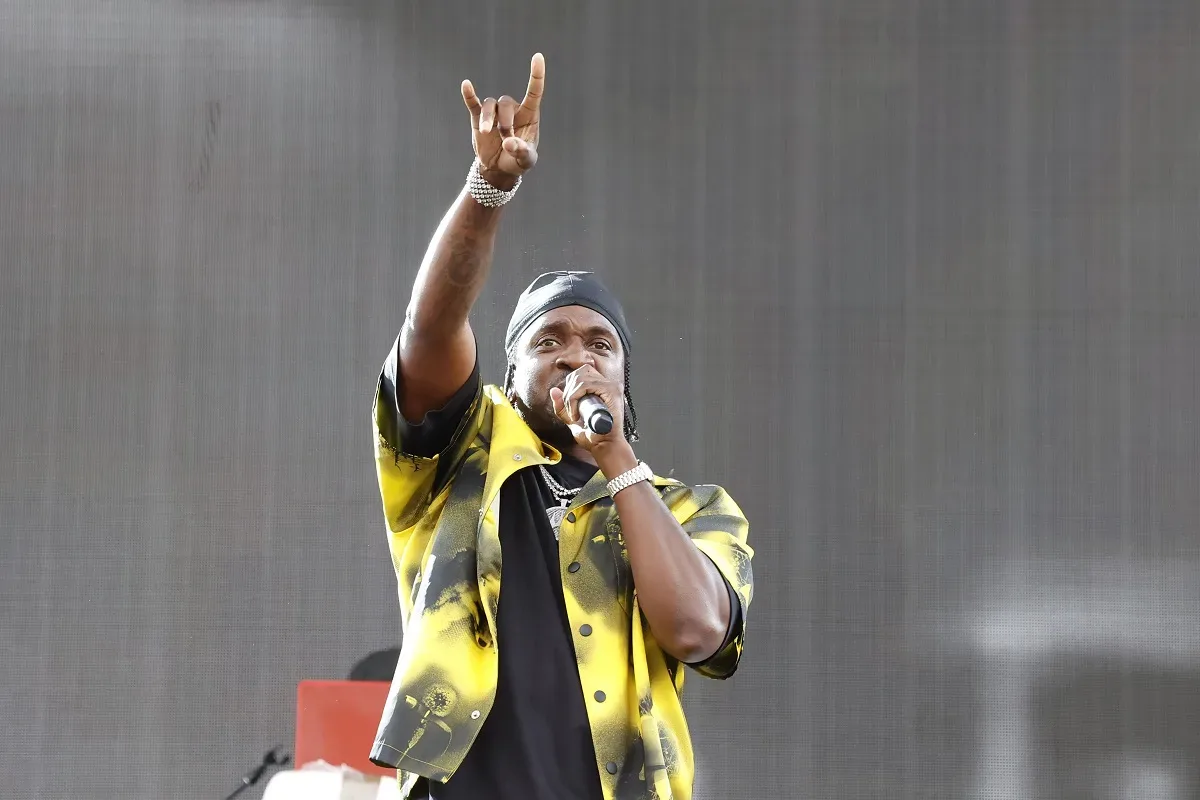
Pusha T’s critique of contemporary rap is not that artists have stopped working or that the field has run out of ability. His concern is more pointed: too many performers may be capable, but too few are trying to be unmistakable.
In remarks about work, competition and longevity, the Clipse rapper argued that individuality once sat at the center of hip-hop ambition. Being different was not merely a branding advantage. It was part of what it meant to aim for greatness.
“It started off with a lot more individuality. Everybody wanted to be different. They wanted to be great, and they wanted to set themselves apart.”
His argument cuts into a familiar tension in a fast-moving music culture. When a sound, visual style or format is attracting attention, the immediate incentive is to make another version of it. That response can be commercially understandable. It can also create a crowded landscape in which plenty of songs are competently made, while far fewer artists feel identifiable within seconds.
Pusha T is making a distinction between talent and identity. The first describes whether an artist can perform, write or construct a record effectively. The second is the harder-to-replace quality that makes the listener associate particular choices—delivery, perspective, phrasing, sonic restraint or attitude—with one person. His concern is that imitation can deliver short-term visibility without building that second quality.
Individuality is more than sounding unusual
“Be different” can be an empty instruction if it only means adopting a strange costume or chasing novelty for its own sake. Pusha T’s comments suggest a more demanding idea. A distinct voice has to hold up across records, competitive moments and changing trends. It needs enough clarity that an audience can recognize the artist’s point of view rather than simply recognizing the current template.
That matters especially when music arrives in constant volume. A listener does not need every artist to sound alike for repetition to take hold; a handful of successful traits can become the default around which countless releases are built. In that environment, sounding adjacent to a popular act may lower the creative risk. But it can make long-term differentiation harder.
Pusha T frames the issue as a cultural choice, not a claim that rap should abandon competition. In fact, he continues to defend competition as part of the form. The important boundary, in his view, is where that competitive energy is expressed: on the record, rather than outside it.
Related coverage includes Pusha T Says Rap Needs More Individuality, Not Imitation.
That is a useful distinction. Lyrical rivalry means artists answer one another through music—through writing, performance and the ability to make a sharper record. The danger begins when disputes stop being about the work itself. Pusha T’s position is not that every disagreement needs to vanish because online fan behavior can become ugly. It is that competition needs limits if it is to remain creative rather than reckless.
Clipse’s return illustrates the case
Pusha T’s recent run gives his perspective particular weight. He and Malice reunited as Clipse after 16 years, released Let God Sort Em Out, toured and earned the duo’s first Grammy. The return was not presented as an attempt to reproduce the sound of a younger act in order to reenter the conversation.
Instead, the brothers returned with the traits associated with Clipse: focused writing, tension and restraint. Restraint is a meaningful word here. It does not mean an absence of intensity. It means the group’s identity is not dependent on throwing every available idea at a track. The style works through precision—selecting a detail, a line or a mood and giving it room to land.
That approach provides the practical example behind Pusha T’s broader view. A comeback can be built around recognition without becoming a nostalgia act. In this case, recognition comes from preserving the creative characteristics that made Clipse distinct in the first place. The objective is continuity of voice, not imitation of a market leader.
There is no guarantee that every artist can, or should, return to an earlier version of themselves. Nor does Pusha T’s point require rap to freeze in place. Difference can involve new sounds and new collaborators. His warning is aimed at the opposite impulse: treating the most visible sound of the moment as a shortcut to having an artistic identity at all.
Discipline behind the point of view
Pusha T’s daily routine reinforces how seriously he treats longevity. He has described waking around 5 a.m., often putting in 12-hour studio days and generally going to bed by 9 p.m. That schedule is not presented as a universal prescription for making good music. It is evidence of a method tailored to his own work.
For an artist arguing against easy imitation, routine has a clear role. Developing a lasting voice involves repetition, editing and enough time with the work to identify what does and does not belong to the artist. Long studio hours do not automatically create originality; people can work very hard on derivative material. But discipline can make it easier to move beyond first impulses and refine choices that genuinely fit an artist’s strengths.
There is also a distinction between being productive and being recognizable. Productivity measures output. Recognizability measures whether that output has a coherent center. Pusha T’s comments lean toward the latter. A packed release schedule may generate attention, but it cannot by itself answer the question of why someone’s work should endure after the immediate trend changes.
That emphasis on a clearly defined voice also helps explain why audiences often view veteran artists differently from newcomers. Longevity is not simply remaining visible. It is maintaining a point of view while navigating shifts in taste, technology and audience habits. Clipse’s reunion places Pusha T and Malice in that test directly: their music has to sound like itself while existing alongside a completely different contemporary release environment.
A partnership built through music
Pusha T’s enduring relationship with Pharrell Williams is another piece of that working system. The pair recently launched Grindin’ Coffee, extending a friendship that began in Virginia Beach before either had a hit. Their relationship has long been rooted in music, and their present-day early calls and extensive studio work show that it remains active rather than ceremonial.
“My earliest memory of our friendship was acting like we went to school that day.”
That memory offers a small but telling view of the partnership’s longevity. The connection predates the professional milestones attached to either name, while their continued work gives it a current purpose. The coffee venture is separate from recording, but it reflects the same long-running association rather than an unexplained, short-term pairing.
For Pusha T, collaboration clearly does not conflict with individuality. The Clipse partnership and his ongoing work with Pharrell point to the opposite conclusion: an artist can build a distinctive identity through trusted creative relationships. What matters is whether those relationships clarify a voice instead of dissolving it into whatever is already popular.
That is also why his critique is broader than a complaint about any one sound. He is describing the incentives around music-making. When quick attention rewards proximity to something already winning, artists can feel pressure to become interchangeable. His counterargument is built around commitment: commit to craft, commit to a perspective and allow competitive energy to remain in the music.
What Pusha T is—and is not—arguing
Pusha T is not saying every rapper needs the same schedule, the same writing style or the same approach to rivalry. His recent success instead underlines a narrower proposition: durable work is more likely to come from an identifiable creative center than from simply mirroring the most effective contemporary formula.
His position also leaves room for evolution. Individuality is not a refusal to change; it is the ability to change without becoming anonymous. An artist may adjust production, collaborators or subject matter while retaining a recognizable sensibility. That is very different from copying the outer features of another act because those features happen to be moving quickly.
For listeners, the argument provides a useful way to talk about rap beyond simple rankings. A record can be technically polished and still leave little impression of who made it. Another can be divisive but immediately legible as an expression of its creator. Pusha T plainly values the latter quality, especially if the aim is to build a career rather than merely catch a week’s attention.
It also makes his defense of music-first competition more coherent. If rap is a space where artists prove distinctiveness, then lyrical challenge has a creative function. It pressures performers to sharpen their writing and establish what separates them. Once a conflict moves beyond the record, it no longer tests artistry in the same way.
The conversation arrives as artists across rap continue to navigate speed, visibility and fan scrutiny. Recent claims around rapid recording and rollout cycles have shown how closely audiences follow the mechanics behind releases; one recent account of a song made and filmed in a matter of days is a reminder that fast execution itself can become part of the public narrative. Pusha T’s comments do not reject speed outright. They ask whether speed is serving an artist’s identity—or replacing the work of building one.
With Clipse active again, a Grammy win attached to the duo’s return, and a highly structured creative routine behind him, Pusha T is making his case through both words and example. His bet is straightforward: in a field full of capable artists, the ones who last will give people a reason to recognize them apart from the crowd.