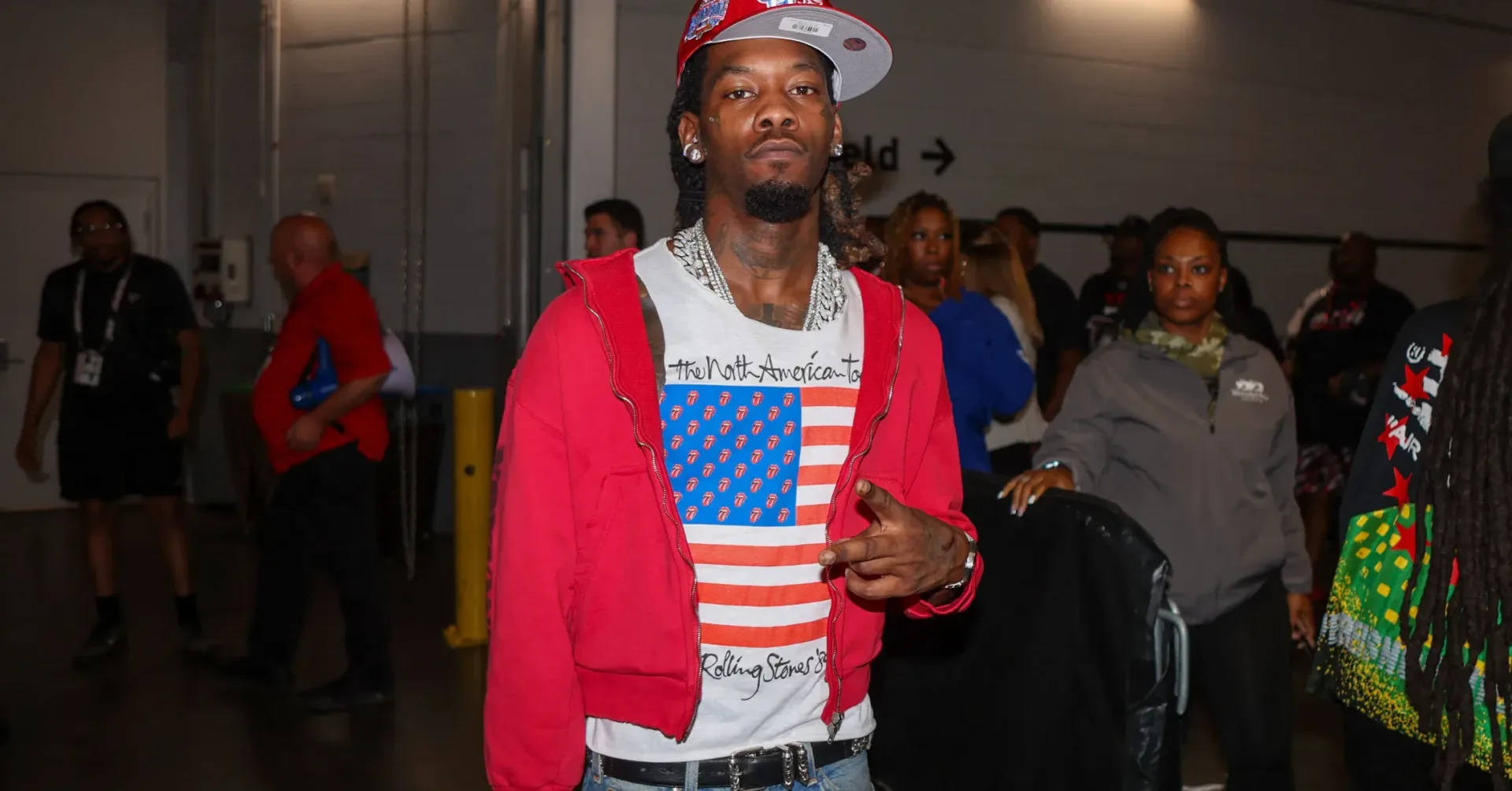
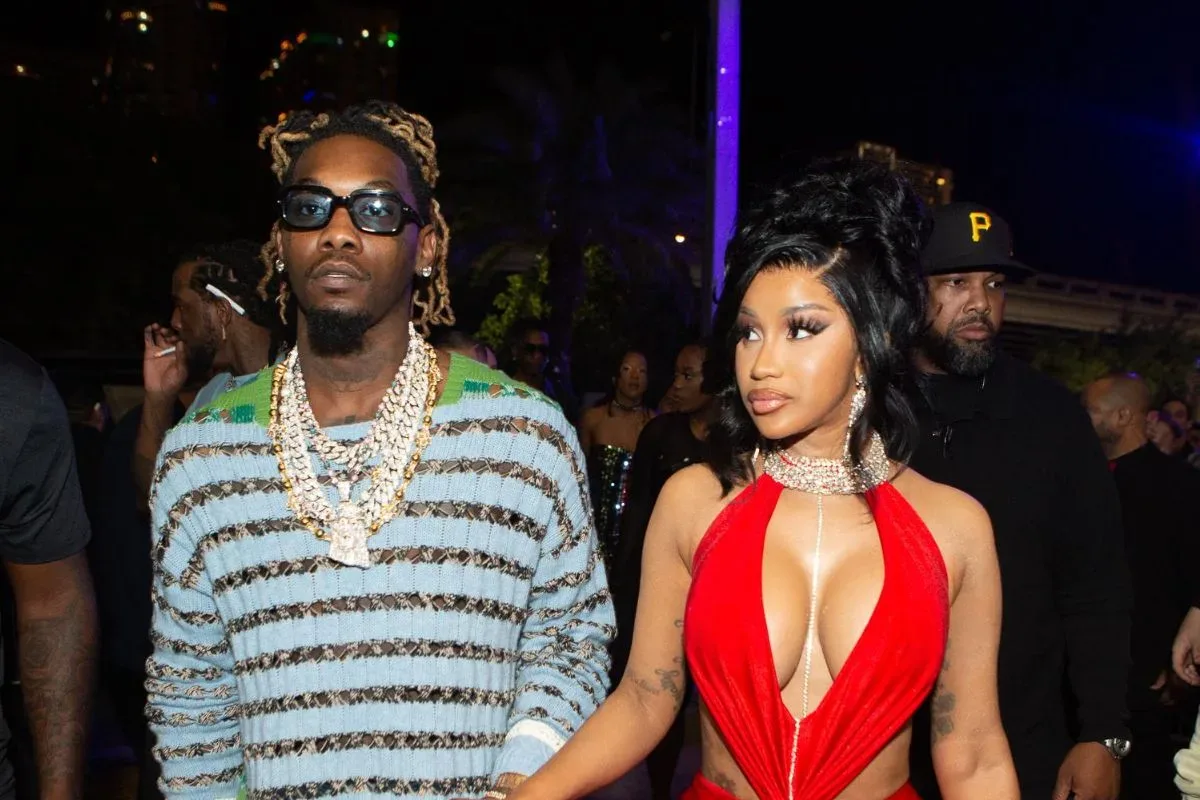
Offset says the relationship between himself and Cardi B is peaceful, but he does not intend to turn that private progress into proof for a public audience.
In a November 12 appearance on Popcast, the rapper addressed how his romantic history has shaped the way some people see him. His comments were not a reunion announcement, and he did not suggest that he and Cardi B are resuming a romantic relationship. Instead, he described a situation built around mutual respect, separate lives and a shared commitment to their children.
“I have no issues with my ex. Like I salute everything she doing,” Offset said.
The distinction matters. Celebrity coverage can treat a photograph, a family event or a civil public comment as a clue that a former couple is getting back together. Offset’s framing points elsewhere: a former relationship can improve without becoming a romance again, and successful co-parenting does not require a public campaign designed to persuade strangers that everything is fine.
A response to reputation, not a reconciliation reveal
The conversation began with Offset discussing his public image. He said personal problems had at times eclipsed his music and affected how audiences viewed him. Rather than placing the responsibility entirely on coverage or online discussion, he said rebuilding his focus involved examining his own choices.
That context is crucial to the comments about Cardi B. When asked whether a more visible display of their improved relationship might challenge the negative narrative surrounding him, Offset declined the premise. He did not appear interested in using private interactions as reputation management.
His position was straightforward: people on the outside may not have the full picture, but providing that picture could impose on Cardi B. He said he respects her privacy and acknowledged the trade-off involved. Staying quiet may mean receiving criticism from people who assume they understand the relationship, yet he presented that as preferable to making her uncomfortable for the sake of changing the conversation.
“I respect her privacy,” Offset said.
That is also why the remarks should not be read as an invitation to parse every future public appearance. Offset referred to two separate lives and raised the possibility that bringing those lives together publicly could be uncomfortable for Cardi B. The point was not that they are hiding a return to romance; it was that the boundaries of a private family relationship should not be dictated by an audience’s appetite for an update.
What “good terms” means in this context
“Good terms” is often an imprecise phrase in celebrity reporting. Here, Offset attached it to several specific ideas: they have worked through a hard period, he supports what Cardi B is doing, and their attention is on their children. Those are signs of cooperation and respect. They are not, on their own, evidence of a relationship restarting.
Co-parenting means parents coordinating around their children after a separation or outside of a romantic partnership. It can include sharing family occasions, communicating about children and maintaining enough trust to make those situations work. It does not require parents to share every detail with the public, nor does it inherently signal a change in their romantic status.
Offset and Cardi B previously attended a joint birthday celebration for their children in September despite their split. That occasion established that they could be present for their family together. The new interview provides Offset’s explanation for why such moments should not automatically become public evidence in a larger narrative about the pair.
For a public-facing artist, the calculation is unusually visible. A candid post or appearance could potentially soften public assumptions about a past relationship. But it could also invite more commentary, more speculation and more pressure on the other parent to participate in a story they did not choose to tell. Offset’s comments favor the second concern over the first.
Privacy is not the same as silence about accountability
Offset did not use privacy as a way to deny that his past choices affected how he is perceived. In the same discussion, he connected his reputation to difficulties in his personal life and said he had to look inward rather than merely blame coverage. That makes his comments more nuanced than a broad complaint about public scrutiny.
There are two separate points in his account. First, he recognizes that public perception has consequences: his personal life has, in his view, distracted from his music and contributed to a villain-like image. Second, he does not believe that correcting every assumption requires Cardi B to publicly validate their current relationship.
Those ideas can coexist. Accountability concerns his own conduct and decisions. Privacy concerns what he believes should remain between two people, particularly where their children and a former partner are involved. The interview places the responsibility for improving his focus on himself, not on Cardi B offering the public a more flattering storyline about him.
That distinction also guards against a familiar false choice. Public figures are often expected either to disclose every change in a relationship or to accept that silence will be treated as confirmation of the harshest interpretation. Offset’s remarks suggest another option: accept that some criticism may continue while declining to make private healing into content.
Why public speculation can flatten the reality of a split
Former couples with children can have a relationship that is neither hostile nor romantic. That middle ground is easy to miss when public interest tends to reward simple labels: together, broken up, feuding or reunited. Real family arrangements can be more complicated and less dramatic than any of those categories.
Offset’s words place his and Cardi B’s present dynamic in that middle ground. He characterized the relationship as free of current conflict, praised her work and said they had come through a difficult phase. At the same time, he explicitly avoided portraying joint family moments as the beginning of a new chapter as a couple.
For readers, the practical takeaway is restraint. A birthday appearance is consistent with parents prioritizing their children. It is not a reliable measure of their romantic future. Likewise, choosing not to show cordial interactions online can reflect a wish to protect boundaries rather than evidence that no progress has occurred.
The broader entertainment ecosystem makes that restraint harder. Personal turmoil can become attached to an artist’s identity more quickly than a new release, an interview about creative work or a period of professional refocusing. Offset himself said that his personal troubles had overshadowed his music. His reluctance to publicly stage a better relationship with Cardi B can be understood as a refusal to let the next phase of their private life become another episode in that cycle.
The interview was conducted by Joe Coscarelli and Jon Caramanica. Its most concrete update is not a romantic one: Offset says he and Cardi B have reached a cooperative, respectful place and are concentrating on their children. Everything beyond that would be speculation—and, by Offset’s own account, exactly the kind of private territory he does not want to turn into a performance.
For more music-and-celebrity context, see the latest on Eminem’s Infinite reissue.