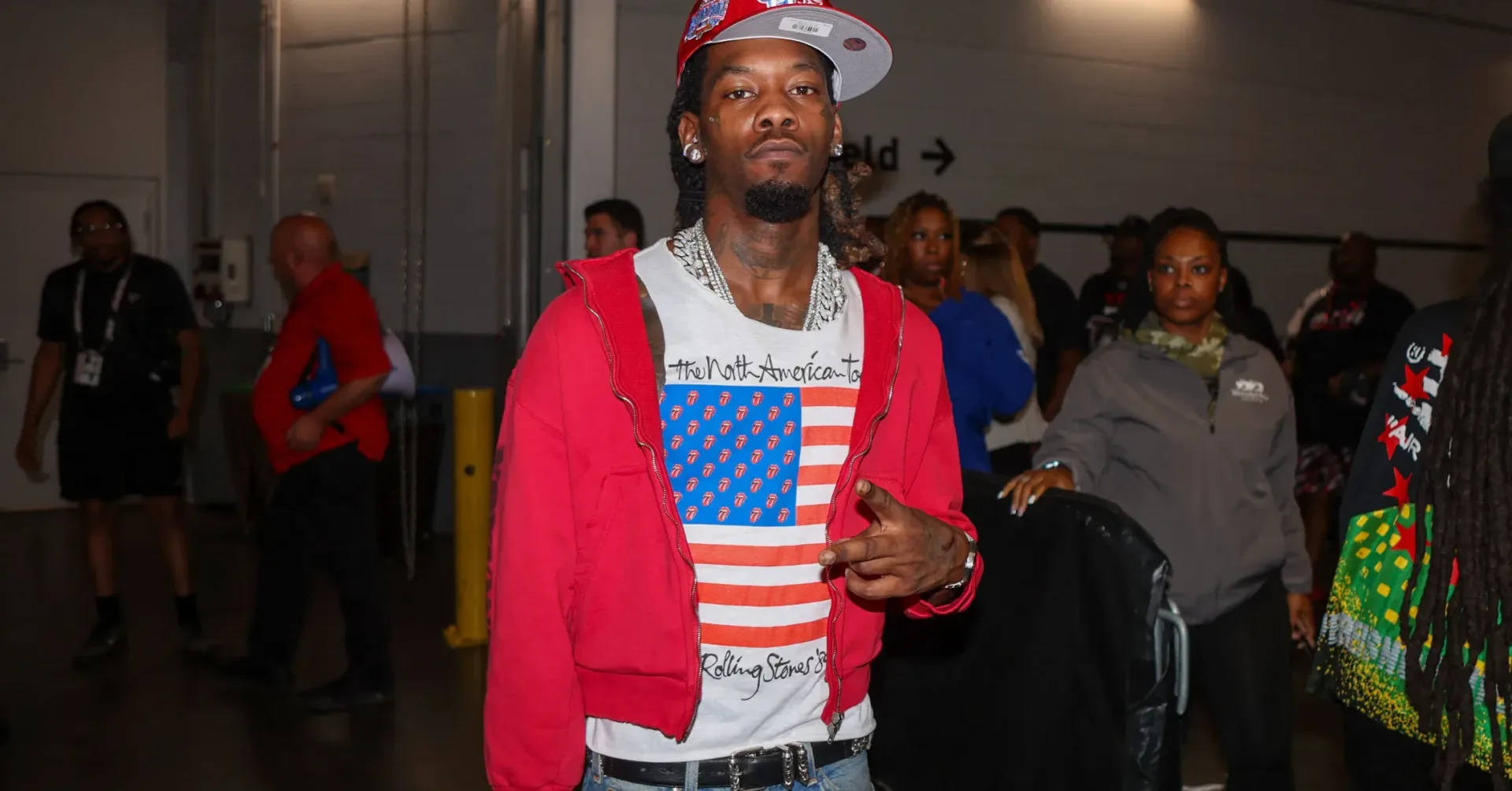
Offset’s planned new album GMFU did not arrive on its announced October 23 release date. Listeners looking for the project on Spotify after midnight found no album page or release, while Offset had not issued a public update explaining the change at the time of writing.
The missing release comes after Offset shared “Every Night,” a collaboration with Don Toliver that had been positioned as part of the forthcoming album campaign. That single drew a mixed response, particularly around the different sound Offset was exploring, but it established GMFU as an active project rather than a distant possibility. The absence of the full record therefore leaves a fairly simple, but important, unanswered question: was the album delayed, or has its rollout changed more substantially?
What is confirmed about the missing release
The confirmed facts are narrow. GMFU had an October 23 date attached to it, and the album was not available on Spotify when that date began. Offset also did not provide a contemporaneous public statement about the project’s status.
Everything beyond that needs to remain clearly labeled as uncertain. A release can miss its scheduled date for a range of reasons, from a last-minute distribution issue to an intentional change in campaign strategy. No explanation can responsibly be treated as fact until Offset or his team addresses it. In particular, talk that record labels may be moving releases because of budgets is only rumor in this situation; there is no provided confirmation tying that claim to GMFU.
That distinction matters because a silent release-date miss can generate a lot of confident-looking speculation very quickly. Fans may call it a shelving, a cancellation, or a strategic pause. Those phrases mean different things, and none is established here. Delayed generally means a project remains planned but has a later date. Shelved suggests the album has been put aside with no clear release timetable. Cancelled means it will not be released in its intended form. At present, the available information supports only the first observation: the announced date passed without the album appearing.
Why the lack of a message changes the story
Albums do move. That alone is not unusual. What makes this case notable is that the expected release was met with silence rather than a new date, a statement, or a revised promotional plan. Once an artist announces a day for an album, audiences arrange their expectations around a fixed moment: streaming libraries are checked at midnight, tracklists and features are anticipated, and discussion naturally shifts from “is it coming?” to “what does it sound like?”
When the record does not appear, the communication gap becomes the immediate story. A delay notice can still frustrate listeners, but it gives them something concrete: confirmation that the project exists, acknowledgement that the date changed, and a next step to watch for. With no such notice, fans are left separating what they expected from what can actually be verified.
There is also a practical difference between a single being released and an album arriving. “Every Night” remains a tangible part of the campaign, but a song associated with an announced record does not confirm when the larger project will follow. Until a revised plan is shared, it is unclear whether the single’s role in the GMFU rollout has changed at all.
Related coverage includes Offset’s ‘GMFU’ Does Not Arrive on Its Announced October 23 Date.
Offset and the expectations around a solo rollout
Offset’s solo work has made a full-length release from him a significant event for listeners who have followed his career after Migos. His individual projects and periodic songs have maintained attention around his music, and a collaboration with Don Toliver offered a recent entry point into the next era.
That context helps explain why listeners went straight to Spotify as October 23 began. In a digital release cycle, the platform availability is the clearest consumer-facing test of whether an album has launched. A teaser, post, or previously announced date may signal intent, but the release itself is what lets audiences hear the project and assess its direction. With GMFU not there, the campaign is now defined less by the album’s music than by the unresolved status of its date.
The response to “Every Night” also makes an update especially useful. Mixed reactions do not automatically indicate anything about an album’s prospects; listeners can disagree strongly about a single while responding very differently to the surrounding record. But a new sound can make a complete project feel more important as context. If the song was meant to introduce a broader musical shift, the missing album postpones the chance to understand that shift on its own terms.
What fans should watch for next
For now, the most reliable signals will be direct ones. A statement from Offset, a new date, album artwork reposted with updated information, or the project appearing on major music services would all provide a clearer picture. Until then, social-media claims, speculative tracklists, and assumptions based on silence should be treated carefully.
- A replacement release date: This would establish that GMFU is delayed rather than merely absent.
- A direct explanation: Offset could clarify whether the change concerns timing, the album’s contents, or another issue entirely.
- Updated platform listings: A visible official album page or preorder-style listing would be more meaningful than unverified screenshots or reposts.
- Further music or promotion: Another official single or campaign post could show that the rollout is continuing, though it would not necessarily confirm a release date by itself.
Until one of those developments occurs, the most accurate description is that GMFU missed its announced October 23 arrival and remains without a publicly confirmed next step. The lack of information may be disappointing for fans ready to hear the album, but it is not proof of a cancellation or a label-driven decision.
The broader entertainment calendar continues to move even as this rollout pauses; for another music-and-TV event on the horizon, see Love & Hip Hop: The Final Chapter’s four-city reunion tour plans.
For Offset listeners, the next meaningful development is not more guesswork—it is confirmation. Whether GMFU arrives on a new date or receives a fuller explanation, an official update is what will turn an unexplained missed release into an actual rollout plan.