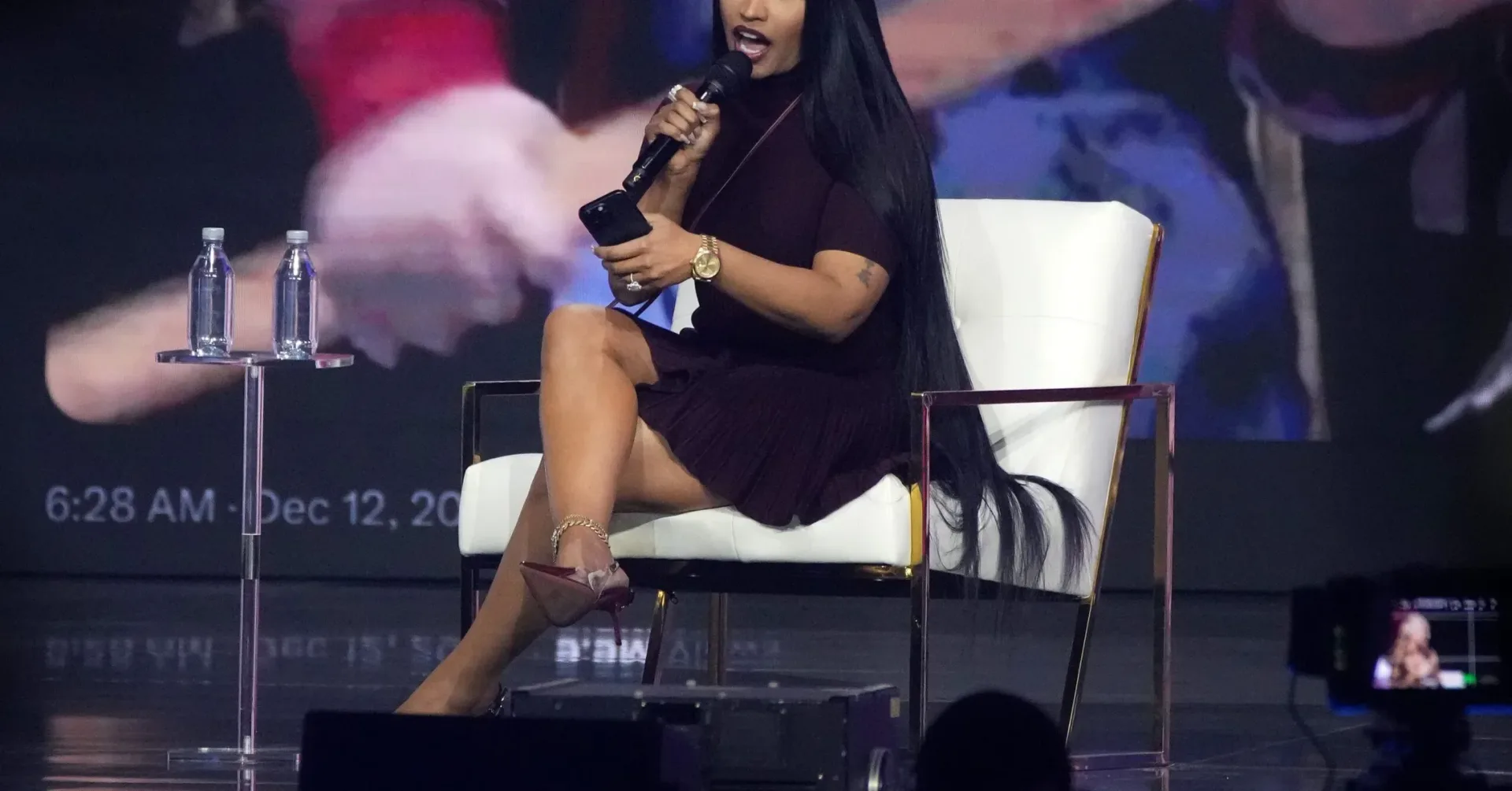

Nicki Minaj is facing two distinct legal disputes involving the lawyers who have represented her, with proceedings now pending in both Los Angeles and New York. One firm is seeking a court judgment over alleged unpaid legal bills connected to an earlier copyright case. Another firm, which represents Minaj and Pink Friday Productions LLC in an ongoing business dispute, has asked to end the attorney-client relationship.
Neither matter has been decided. The filings describe allegations and procedural requests rather than final findings by the courts, and the two cases concern different work, different firms and different underlying lawsuits. Still, together they place the practical mechanics of legal representation—fees, communication and litigation strategy—at the center of separate court calendars.
Los Angeles firm seeks judgment over alleged unpaid fees
In Los Angeles County Superior Court, Gordon Rees Scully Mansukhani has renewed its request for a default judgment against Minaj. The firm says it filed a lawsuit in March seeking payment of outstanding legal fees and has not received a response to its complaint.
The requested amount is about $295,605, a figure that includes the firm’s claimed costs of pursuing the matter. The underlying invoices initially totaled roughly $229,542, according to the allegations. Court documents also reference contractual late fees, which the firm says increased the amount it seeks.
The bill stems from Gordon Rees’ defense of Minaj in a copyright infringement case involving her 2014 song I Lied. Composer Julius Johnson alleged that the song copied elements of his work, onmysleeve. That copyright litigation ended in a confidential settlement in late 2024. Gordon Rees alleges that its invoices for its representation were not paid afterward.
What a default judgment request means
A default judgment is a procedural remedy a plaintiff can request when it contends that the defendant has not formally answered or otherwise defended against a lawsuit within the applicable process. It is not the same thing as an automatic victory upon filing a complaint. The court must still consider the request and determine whether the procedural and evidentiary requirements have been met.
That distinction matters here: Gordon Rees has asked for a default judgment, but the judge has not granted one. The Los Angeles case has a hearing set for November 16, when the firm is due to pursue the request.
If a default judgment were entered, it could resolve the fee action without a full contest on the merits by both sides. If it is not entered, the case could take another procedural route. The available information does not establish what the court will do, and it does not contain a ruling that Minaj owes the requested amount.
Related coverage includes Nicki Minaj Faces Separate Legal Disputes With Current and Former Attorneys.
New York counsel asks to withdraw from production-expenses case
A separate issue is playing out in New York, where Kurzman Eisenberg Corbin & Lever represents Minaj and her company, Pink Friday Productions LLC, in litigation brought by 24/7 Productions.
That lawsuit concerns claimed production and hospitality costs tied to Minaj’s 2023 Jingle Ball appearances and promotional events for Pink Friday 2. 24/7 Productions alleges that it was not reimbursed for approximately $275,149 in expenses.
Minaj’s attorneys have disputed those allegations. Their position is that Pink Friday Productions paid what it owed and that Minaj should not be personally liable for obligations attributed to the company. The underlying production-expenses case therefore remains contested; a withdrawal motion does not decide who owes what in that litigation.
Attorney Bruce W. Bieber filed the request to withdraw on October 23. The filing cited irreconcilable differences, a claimed inability to agree on litigation strategy, and a breakdown in communication that the firm says made continued representation unworkable.
Why a lawyer generally needs court approval to leave an active case
When litigation is underway, an attorney’s decision to step away is not necessarily immediate. Courts can require permission for counsel to withdraw, particularly where a change could affect case scheduling, notice to a client or the orderly progression of a dispute. A withdrawal request asks the court to release the lawyer or firm from the representation; it does not itself end the underlying lawsuit.
In this instance, the New York proceedings have been temporarily paused while the court considers the request. Judge Leslie A. Stroth has scheduled a December 1 hearing on whether Kurzman Eisenberg Corbin & Lever may withdraw.
Filings described efforts to notify Minaj of the withdrawal request at her New York residence. In one account, a process server was told someone would come downstairs to accept the documents, but no one appeared. A later attempt on November 2 was also unsuccessful after the server was told that Minaj was unavailable. Those descriptions relate to the firm’s stated attempts at service and notification; they are not a court finding about why delivery was unsuccessful.
Two legal tracks, with different questions for the courts
The cases may look connected because both involve Minaj’s lawyers, but their questions are materially different.
- The Los Angeles matter is a fee-collection dispute. Gordon Rees alleges it has not been paid for earlier legal work and wants a default judgment for approximately $295,605.
- The New York matter involves current counsel’s request to exit an active defense. The immediate question is whether the firm may withdraw, while the separate 24/7 Productions expense dispute remains unresolved.
- The copyright case involving I Lied is background to the Los Angeles fee claim, not the lawsuit currently being litigated over the alleged legal bill. It concluded through a confidential settlement in late 2024.
The difference is important for readers following the docket. A ruling allowing withdrawal in New York would not determine the production-expenses allegations. Similarly, a Los Angeles ruling on the default-judgment request would address the former firm’s fee lawsuit, not the New York case or the earlier copyright claims.
What happens next
The Los Angeles hearing is scheduled first, on November 16. Gordon Rees is expected to pursue its request for a default judgment at that proceeding. No judgment has yet been entered.
New York’s December 1 hearing is focused on Kurzman Eisenberg Corbin & Lever’s withdrawal request. Until the court rules, the firm has not received the permission it seeks to end the representation. The pause also gives the court space to address representation before the 24/7 Productions dispute resumes.
For Pink Friday Productions and Minaj, the representation question has practical significance beyond the wording of the withdrawal papers. Active civil cases require responses, filings and strategic decisions. If a court permits current lawyers to withdraw, the parties may need replacement counsel or may need to decide how to proceed under the court’s directions. The supplied filings do not establish whether new counsel has been retained.
For the Los Angeles fee action, the key issue in the immediate term is procedural: whether the court will grant the former firm’s requested default judgment. The claim amount includes more than the original alleged invoices because the firm also points to late fees and the expense of attempting to collect. But the amount remains a request, not an award, unless and until the court enters judgment.
These developments arrive amid continuing attention on entertainment-business disputes, where work can involve artists individually, production companies and outside vendors at once. Here, the records described do not collapse those roles into a single issue. The New York defense has specifically maintained that Minaj should not automatically be personally responsible for debts alleged against Pink Friday Productions, while the Los Angeles case concerns fees allegedly owed for legal services rendered in a separate matter.
For more entertainment coverage, read our report on Yung Miami’s comments on moving forward while leaving the JT question unresolved.
For now, the clearest takeaway is procedural rather than conclusive: one former law firm is trying to obtain a judgment over an alleged unpaid bill, and another firm is asking a judge for permission to step away from an ongoing case. The November 16 and December 1 hearings are the next identified moments at which those requests may receive court action.