Broadway is heading back to the ballpark with Damn Yankees, but this will not be a museum-piece return to the 1950s. A new production starring Neil Patrick Harris, Julianne Hough and Austin Scott is set for the Marquis Theatre, with previews beginning March 24 and an opening night scheduled for April 20.
The musical’s central bargain remains intact: a devoted fan named Joe Boyd wants desperately to see his struggling team succeed, and a charismatic stranger offers a shortcut with a steep, supernatural catch. Yet the revised version moves the action from the original show’s 1950s setting to the early 2000s. In this telling, Joe is a Baltimore Orioles fan longing for his club to return to glory, while Harris plays Applegate, the devilish figure behind the offer.
For baseball and theatre fans, the most unusual part of the production may be who is joining the creative team offstage. Major League Baseball and its production label, MLB Studios, will participate as partners—a first for a Broadway production. It is an unusually direct meeting of two live-event institutions, and it gives this revival a distinctly modern identity even before its broader cast has been announced.
A revival that calls itself a revisal
Damn Yankees first arrived on Broadway in 1955. Its original cast included Robert Shafer, Gwen Verdon, Ray Walston and Stephen Douglass, and the show won seven Tony Awards, including Best Musical. Richard Adler and Jerry Ross wrote its music and lyrics, while George Abbott and Douglass Wallop wrote the original book. The most recent Broadway revival came in 1993, led by Jarrod Emick, Bebe Neuwirth and Victor Garber.
This is the first Broadway return in more than three decades, following a run at Arena Stage in Washington, D.C., last fall. But director and choreographer Sergio Trujillo is framing the show as a revisal, rather than a straightforward revival. In theatre terms, that signals a production that retains a work’s basic identity while intentionally reshaping material for a new staging, period or audience. It does not mean discarding the score; it means the book, lyrics or dramatic frame may be adjusted around it.
Will Power and Dough Wright have provided the revised book, with additional lyrics by Lynn Ahrens. Trujillo’s stated goal is to preserve the musical’s wit, emotional core and major songs while making a case for its contemporary relevance. The shift to the early 2000s is the clearest evidence of that approach. Rather than asking audiences to view baseball fandom entirely through a mid-century lens, the new version places Joe’s frustration in a more recent era.
That choice also changes the cultural texture without changing the engine of the story. A Faustian bargain is an agreement in which someone exchanges something deeply valuable—often personal freedom, integrity or a soul—for a tempting reward. Here, the reward is a chance for Joe and his favorite team to become winners. The phrase comes from the legend of Faust, but its appeal in popular storytelling is immediate: the deal solves a character’s problem quickly, then makes the consequences impossible to ignore.
Baseball is particularly suited to that kind of premise. A season is built around hope, disappointment, improbable reversals and the persistent belief that one dramatic moment can reset everything. Theatre works similarly in miniature: an audience comes together expecting an uncertain, unrepeatable event. The MLB partnership leans into that overlap rather than treating the sport as mere scenery.
Related coverage includes Neil Patrick Harris to Lead ‘Damn Yankees’ Broadway Revival.
The announced cast and the roles to watch
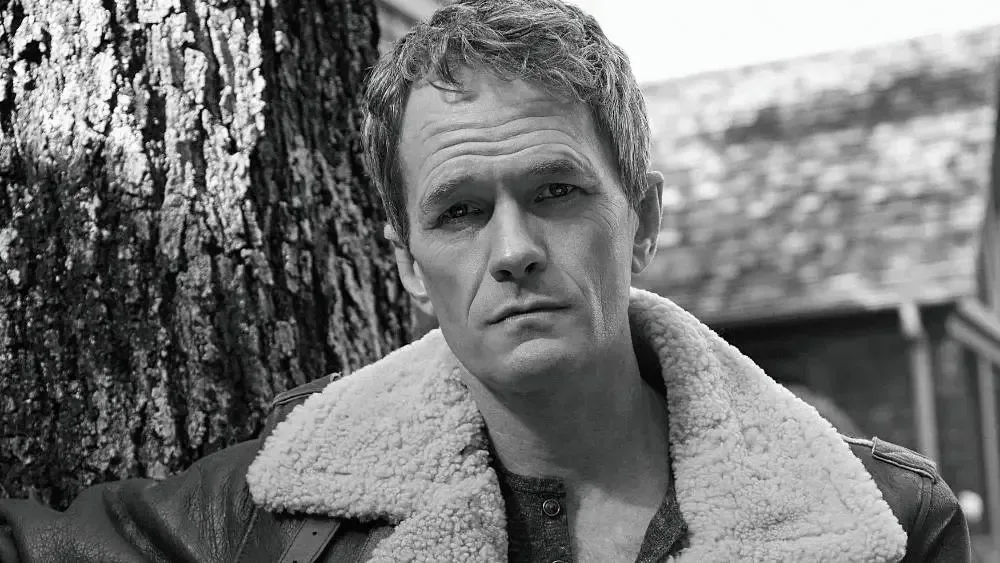
Harris will play Applegate, the devil in disguise who sets the story’s bargain in motion. He previously won a Tony Award for the 2014 revival of Hedwig and the Angry Inch and has hosted the Tony Awards several times. He was also recently on Broadway in the revival of Art, alongside James Corden and Bobby Cannavale.
At a Yankees Stadium press conference, Harris described the large-scale musical format—with an ensemble and dance numbers—as a personal wish-list experience. He also pointed to the character’s appeal: Applegate is not simply a villain standing at the edge of the action, but a seductive manipulator whose power depends on making a bad decision look irresistible. Harris said he wants the role to feel alluring as well as masterful in its control of others.
That distinction matters for Applegate. In a story about temptation, the tempter has to be convincing. The character’s theatrical effectiveness rests on charm, humor and menace operating at once. Too much menace makes the bargain implausible; too much comedy can drain it of danger. Harris’s comments suggest a performance built around that balancing act.
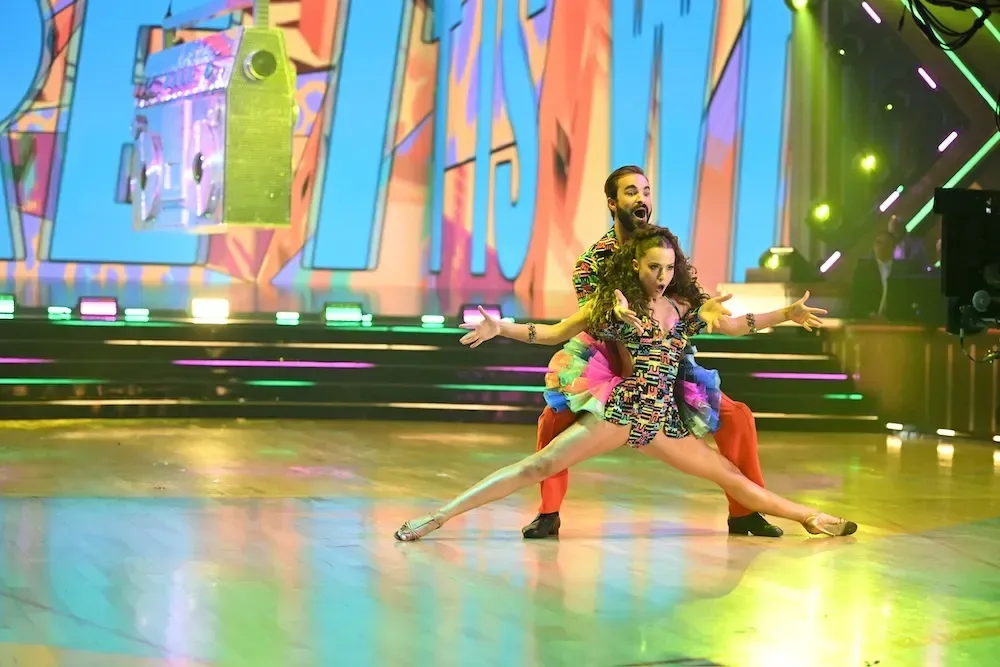
Hough is making her Broadway debut as Joe’s wife, Lola. Scott will play Young Joe. The remaining cast has not yet been announced, so audiences should be cautious about assuming the full shape of the ensemble, supporting roles or specific staging choices before further details are released.
Hough’s debut adds another point of interest because this production is being led by Trujillo, who is handling both direction and choreography. With dance direction and movement coming from the same person guiding the overall staging, choreography can function as storytelling rather than an ornamental pause between scenes. That does not reveal what individual numbers will look like, but it establishes how closely movement is likely to be integrated with the show’s revised dramatic approach.
Why the Orioles change is more than a jersey swap
The original premise concerned a man desperate to see his losing team beat the seemingly unstoppable Yankees. The new official setup keeps the Yankees as the looming force but identifies Joe as a Baltimore Orioles supporter. That establishes a specific rivalry context and gives the protagonist’s yearning a clearer team identity.
It is also a reminder that an update is not automatically a complete rewrite. The fundamental dramatic question remains whether success obtained through a crooked deal can truly satisfy the person who wants it. What changes is the setting around that question: early-2000s baseball, an Orioles fan’s perspective and a creative team actively presenting the work as a new version for today rather than a replica of a prior Broadway staging.
That kind of tension—honoring a well-known work while leaving room for a different angle—is a familiar issue across modern entertainment. The same broad challenge of balancing established character history with new surprises applies in a different medium: recognizable material gives audiences a point of entry, but repetition alone cannot justify a return.
For Damn Yankees, the score by Adler and Ross is the major inheritance. The revised book and additional lyrics are the means by which the production can recontextualize that inheritance. The result will be judged not by whether it erases the past, but by whether the new setting and characterization make the old bargain feel alive onstage.
MLB’s role brings baseball closer to the footlights
MLB and MLB Studios joining the production marks an important practical and symbolic development. It brings the league itself into a musical whose title, plot and imagery are inseparable from professional baseball. Producers Haley Swindal and Lia Vollack are leading the production, and Swindal described baseball and Broadway as forms of live entertainment built on drama, stakes and the possibility of witnessing something singular.
Swindal has a personal link to the Yankees through her grandfather, former Yankees owner George Steinbrenner. Steinbrenner also had Broadway experience, investing in six productions, including the Tony Award-winning Applause in 1970 and the musical Seesaw in 1974.
MLB deputy commissioner of business and media Noah Garden emphasized the value of baseball reaching beyond the diamond and into other parts of culture. That is a promotional objective, certainly, but it is also compatible with the material. Damn Yankees is already a baseball musical; the league’s involvement makes the connection more formal and visible.
What has not been detailed is equally important: no further casting has been announced, and no specific production elements tied to MLB’s participation have been outlined. For now, the clearest promise is a revised American musical with a major league partner, a new time period and a trio of principal performers at its center.
At its heart, the show’s pitch remains wonderfully uncomplicated: a fan gets the impossible chance to change his team’s fortunes and discovers that a win can cost more than expected. The forthcoming Broadway production is betting that the idea still plays—only now with early-2000s framing, a Baltimore perspective, a newly revised book and baseball itself sitting at the table.