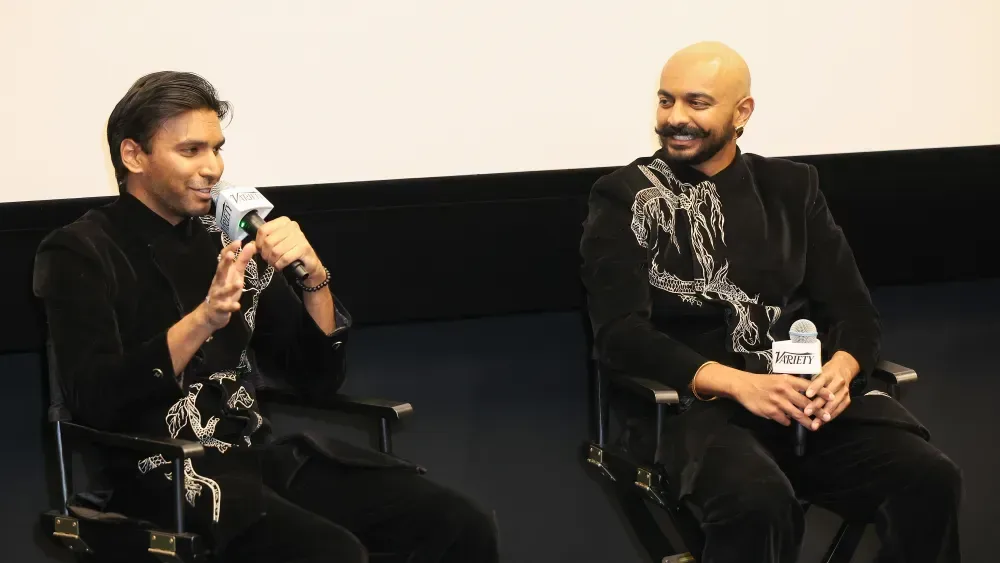
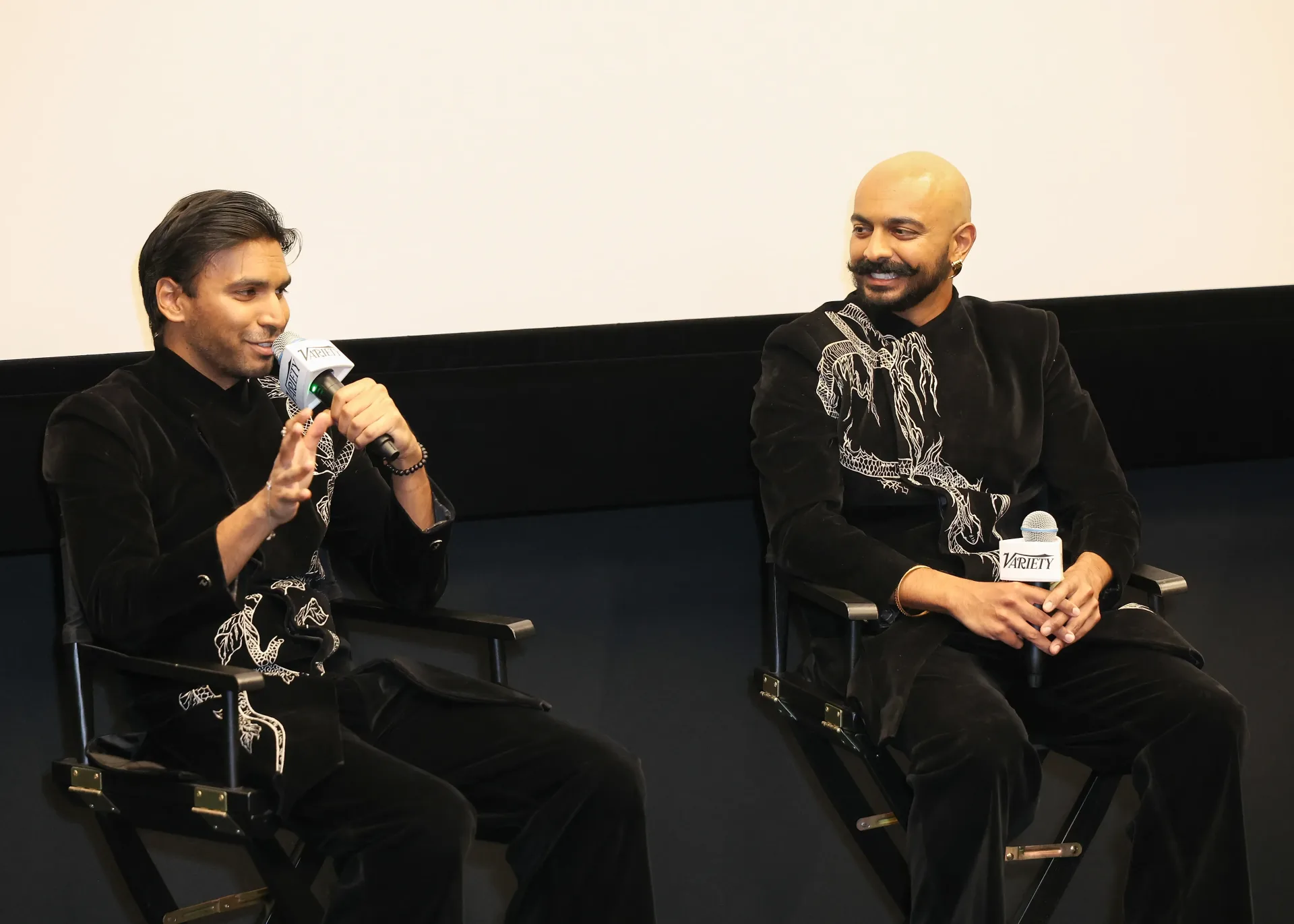
Kanish and Rish Arhant-Sudhir’s first feature, Namaslay, is rooted in a premise that joins family memory to a pointed cultural critique. The brothers wrote and directed the horror satire around questions of how yoga is appropriated in the West, but their approach was not simply to make identity itself the story. Instead, they drew on relationships within their own family, shaped a grandmother-inspired character named Paati, and cast their great aunt, Usha Krishnan, in the role.
That combination gives the project a particularly personal foundation. The film’s concern is exploitation and commodification: the process in which something with cultural and spiritual meaning is extracted, repackaged and sold back at a premium. Yet the filmmakers describe a creative process that aimed for sensitivity rather than blunt-force messaging. For them, family was not decorative authenticity placed around a pre-existing premise. It became part of the machinery that helped determine the film’s tone, character work and satire.
A horror satire with a target
Namaslay is described as a horror satire, a useful pairing for a subject built around uncomfortable contradictions. Satire uses exaggeration, comedy and irony to expose an idea or behavior. Horror, meanwhile, can make a threat feel physical, invasive or impossible to ignore. Put together, the genres can turn a seemingly absurd situation into something more unsettling as the joke reveals a sharper underlying reality.
Rish Arhant-Sudhir characterized the film’s experience as having a nearly slapstick quality while also carrying something sinister beneath it. In his framing, the story addresses several connected pressures: colonialism, commoditization, extraction and resale. The distinction matters. The critique is not merely that yoga becomes popular elsewhere; it is about the economic and cultural imbalance implied when a practice is detached from its origins and then turned into a premium product.
That is the kind of subject where a film can easily become overly declarative, explaining its thesis rather than dramatizing it. The brothers’ comments suggest they were alert to that risk. They wanted the comedy and the horror to work as storytelling tools, not just as labels attached to a message.
“An identity is not a story,” Kanish Arhant-Sudhir said, arguing that identity is one part of a character that changes how they move through a narrative rather than a replacement for narrative itself.
It is a clear creative principle. Characters can have specific cultural identities, but specificity alone does not automatically create stakes, conflict, momentum or personality. A character still needs desires, relationships and choices. In Namaslay, the filmmakers’ family connections appear to have offered those qualities in a more lived-in form than a purely conceptual treatment could.
Paati and the value of a newly deepened relationship
The central personal connection behind the film is the brothers’ relationship with their grandmother. Paati, the character played by Krishnan, was directly inspired by her. The filmmakers also said that developing a new relationship with their grandmother helped them articulate the material with more care.
Rish described that change in terms of adjusting the script from “more blowtorch, less flamethrower.” It is a memorable image for revision: the target remains in view, but the storytelling becomes more precise. A flamethrower is indiscriminate. A blowtorch is focused. In practical screenwriting terms, that can mean shifting away from broad condemnation and toward the small details of how a cultural wound affects particular people and relationships.
The grandmother-granddaughter relationship was especially important to this recalibration. Intergenerational relationships can carry tension, affection, disagreement, inherited expectations and different ways of understanding the past. Those dynamics give an issue-driven premise somewhere human to land. Rather than treating cultural heritage as an abstract symbol, the film’s creative process was informed by an actual family relationship that could complicate the brothers’ initial instincts.
There is also an unusual production-side resonance in Krishnan’s casting. A character inspired by the filmmakers’ grandmother is played by their great aunt. That does not mean a real family relationship simply transfers intact to the screen, but it does point to the level of trust and proximity behind the project. The film’s family connection operates at multiple levels: inspiration, character construction and performance.
How two brothers write together
The Arhant-Sudhir brothers’ collaboration is also central to the film’s identity. They describe their dynamic as one of constantly trying to entertain each other, a quality that suits a horror satire especially well. Comedy benefits from surprise, escalation and the willingness to push a scene somewhere stranger than expected. A writing partnership built around passing an idea back and forth can create exactly that kind of momentum.
Kanish explained that when he reaches the point where he does not know what comes next, he sends material to Rish. Rish adds to it, then sends it back, prompting Kanish to find a new direction in response. The first draft, by that account, has already undergone a form of challenge and revision before it is treated as a finished first pass.
This is more than dividing scenes or assigning one brother dialogue and the other plot. Their method is iterative: each writer reacts to what the other has introduced. That can preserve surprise inside the work itself. Instead of one person executing a fixed plan, the script develops through a continuing exchange of provocations, revisions and attempts to top the previous move.
For a project trying to balance slapstick and menace, that rhythm may be particularly valuable. One writer can lean into a comic idea, while the other locates its darker implication. The result, at least in intention, is a story where the tones are in conversation rather than kept in separate compartments.
There is a wider lesson here for creators working in any collaborative medium, including games, comics and film: specificity does not require an isolated voice. A project can be deeply personal while being shaped through active disagreement, surprise and revision. That balance between a clear point of view and a willingness to test it is relevant to creative teams grappling with the challenge of serving an audience without flattening what makes their work distinct, a tension also explored in this discussion of trying to chase every audience at once.
Friends as department heads, trust as infrastructure
Family was not the only support system behind Namaslay. The brothers brought close friends into the production as department heads after repeatedly being told that they could not pull the project off. A department head leads a major production area, such as a film’s visual, costume, sound or other specialized work. The role carries substantial responsibility because each department’s choices have to serve the same final film.
Rish said the project’s possibilities became real because these department heads took chances on the brothers. That statement frames collaboration as a concrete answer to rejection. It was not merely encouragement from friends; it was skilled work and responsibility accepted by people willing to invest in the film.
Kanish’s appreciation for that team emphasizes both artistry and closeness. He said he would value having a front-row seat to their precise work even without knowing them personally, while also recognizing the rare comfort of sharing food, drinks and everyday conversation with them outside the production. The point is not that friendship substitutes for craft. His comments explicitly foreground the level of artistry. Friendship seems to have made the demanding work feel communal while the team’s capabilities helped make the ambition viable.
That distinction is important when discussing independent creative projects. Familiarity alone does not solve logistical or artistic challenges. But trust can make it easier to take risks, communicate candidly and sustain a project through difficult stretches. On Namaslay, the filmmakers identify their department heads as essential collaborators rather than background support.
Seven years and an answer to rejection
The brothers say Namaslay took seven years to make, with financial difficulties and repeated refusals along the way. They do not present that span as a simple inspirational montage where persistence alone makes every obstacle disappear. The account instead highlights the practical value of having another person committed to the same goal, along with friends prepared to assume key creative roles.
Kanish said there has never been a day when both brothers gave up at once. Their outlook is reciprocal: if one is looking ahead and believes the sun will come up, that belief can carry the other through the moment. It is an apt description of why their partnership matters beyond shared writing credits. The collaboration provides continuity when individual confidence fluctuates.
That is especially meaningful for a film whose subject involves inheritance and cultural survival. Namaslay grew from a living family relationship, from a great aunt’s performance, from brothers who challenge each other on the page, and from friends who accepted leadership roles after others dismissed the possibility. The production story mirrors the film’s stated interest in what is retained, who gets to shape it and what happens when people refuse to let a meaningful story be reduced to a marketable surface.
The available details do not establish where or when audiences will be able to see Namaslay. What they do establish is the intent behind it: a first feature designed to make room for laughs and unease, cultural critique and family specificity, with a filmmaking partnership that kept moving even when the answer from elsewhere was no.