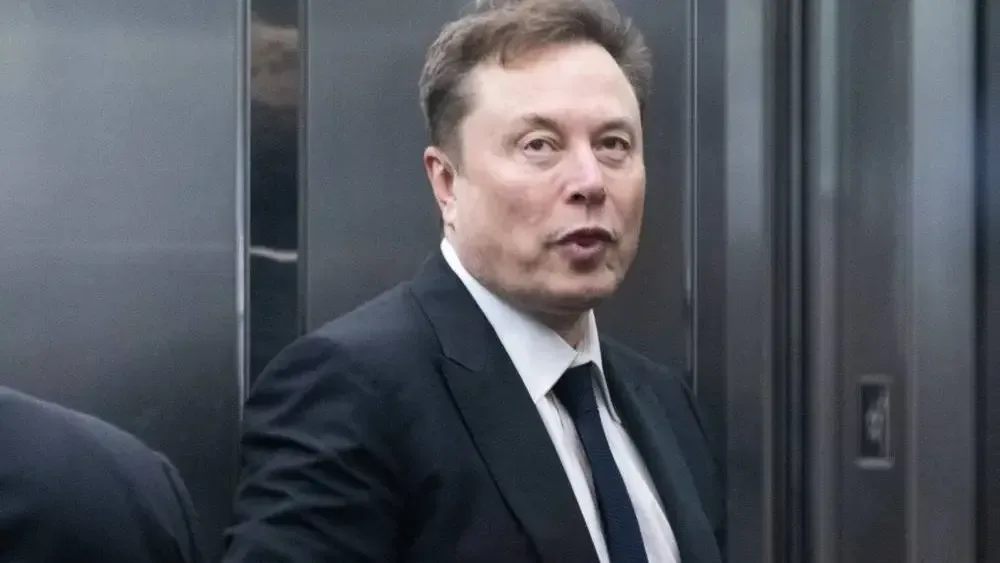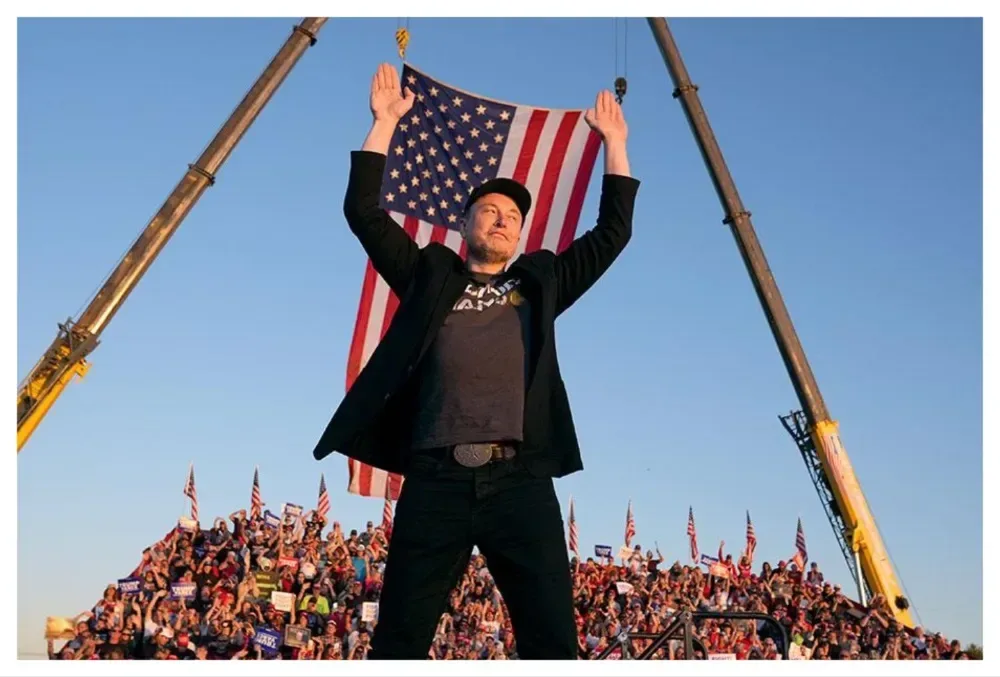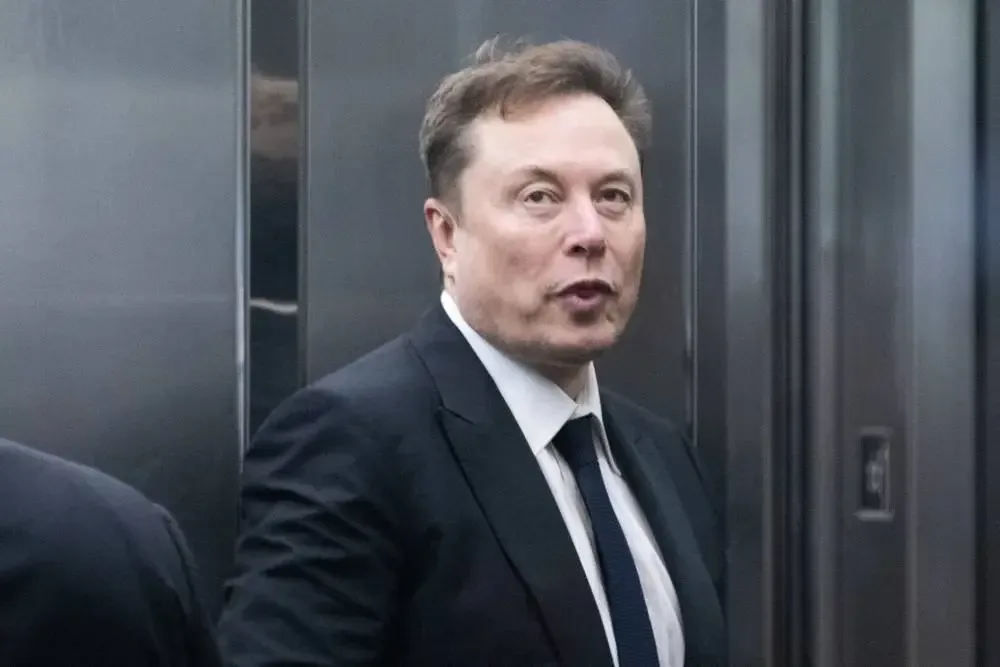
Alex Gibney’s documentary Musk has unveiled its first teaser, and the 48-second preview makes its intentions clear without supplying anything close to a neat answer. The film is built around the fierce, often irreconcilable reactions Elon Musk inspires: visionary inventor, extraordinary capitalist, disruptive builder, volatile public figure, and—among the voices heard in the trailer—a much harsher political accusation.
That tension is the teaser’s entire engine. Images of spacecraft and aerospace hardware appear while off-screen comments stack up in quick succession. At first, the language is reverential, presenting Musk in terms normally reserved for comic-book heroes and epoch-defining industrialists. The mood then pivots sharply toward criticism, characterizing him as unpredictable, cruel, selfish, and, in one speaker’s framing, a fascist. The preview ends with a voice calling Musk “a nuke” as a spacecraft crashes and erupts in flames.
It is a deliberately confrontational way to introduce a documentary about a person who has become almost impossible to discuss in neutral terms. The teaser does not establish whose voices are being heard, nor does it map out the movie’s reporting, chronology, or ultimate conclusion. Instead, it uses the collision between praise and condemnation as its principal dramatic device. For a project carrying a reported running time of nearly four hours, the short clip plays less like a synopsis than a warning label: this will be a large, contested portrait rather than a simple tribute to technological ambition.
A festival debut for a sprawling profile
Musk is scheduled to have its world premiere out of competition at the 83rd Venice International Film Festival on September 8. It will then continue to the Toronto International Film Festival. Those festival stops put the documentary in a high-profile setting before its broader path becomes clear.
The out-of-competition placement is notable in its own right. It gives the film a major premiere platform while keeping it outside the festival’s competitive awards race. For a nearly four-hour documentary centered on one of the world’s most scrutinized business and political figures, the arrangement leaves room for the conversation around the screening to become its own event. The teaser seems designed with that dynamic in mind: it is compact, provocative, and likely to be interpreted differently by audiences who already arrive with firm views of Musk.
Gibney disclosed that he had begun working on the film in March 2023, saying at the time that production was already many months underway. Musk responded publicly on X, the platform formerly known as Twitter, predicting the project would be a “hit piece.” Gibney responded on the same platform by asking how Musk could know that. That brief exchange now functions as an early chapter in the documentary’s public story, even before viewers have had the chance to see the finished film.
The teaser sells disagreement, not certainty
Few public figures fit more naturally into a documentary structure based on contradiction. Musk is associated with businesses and initiatives linked to electric vehicles, private spaceflight, satellite internet, artificial intelligence, social media, and more. He is also a frequent and forceful participant in public arguments online. Any film attempting to encompass that footprint must confront competing ideas of what his influence represents.
The teaser acknowledges this problem head-on. The early compliments cast Musk as possibly the greatest living inventor, a real-world version of Iron Man, and one of history’s greatest builders. Those are evaluations voiced in the trailer, not facts settled by the teaser. They are followed by comments that call him the greatest capitalist in history and then turn decisively hostile. The progression is not subtle. It is edited to make the ideological whiplash feel unavoidable.
Related coverage includes ‘Musk’ Teaser Frames Alex Gibney’s Documentary Around Elon Musk’s Contradictions.
The trailer’s central question is not whether viewers have an opinion on Musk. It is whether one familiar label can plausibly contain a figure whose admirers and critics describe him in radically different ways.
That construction also avoids pretending that the audience is meeting an unknown subject. Musk’s public profile is so vast that many viewers will bring years of assumptions to the film. A conventional introductory trailer might explain who he is or list accomplishments in sequence. This one chooses another route: it foregrounds the arguments surrounding him, pairing sweeping aerospace imagery with assessments that range from admiration to alarm.
The final crash image sharpens the metaphor without explaining it. A vehicle associated with grand ambition hits the ground, collapses, and burns. The teaser does not say whether the moment is intended to symbolize personal risk, technological danger, commercial instability, political fallout, or simply the peril built into spaceflight. Its ambiguity is likely intentional. The sequence gives the audience a striking image while withholding the documentary’s interpretation.
David Byrne contributes an original song
Alongside the scale of the production and its festival itinerary, one of the most distinctive details is its music. David Byrne, the Talking Heads frontman, wrote and performs a new original song for the documentary titled “Let Me Sell You a Dream.” The title sits comfortably beside the teaser’s focus on public mythmaking, persuasion, ambition, and skepticism, although the preview does not reveal how extensively the song will feature in the finished film.
An original contribution from Byrne gives the project a defined musical identity rather than simply another licensed-track placement. It also suggests that Musk is positioned as a substantial authored documentary event, with its scale extending beyond interviews and archival material into a purpose-built soundtrack element. With a reported duration approaching four hours, the film will have considerable room to shift tone, examine different periods, and let its musical choices support the movement between corporate history, cultural reputation, and public conflict.
For readers following documentaries built around powerful and controversial people, there is a useful comparison point in this look at Mark Curry’s comments about his work on 50 Cent’s Diddy documentary. High-profile nonfiction projects increasingly arrive with their own disputes, expectations, and public narratives already in motion. In the case of Musk, that meta-story began years before the premiere, when Musk and Gibney publicly sparred over the project’s presumed perspective.
The team behind ‘Musk’
Gibney directs and produces the documentary. The producing group also includes Jessie Deeter and Erin Edeiken for Jigsaw Productions; Dana O’Keefe for Double Agent; Joey Marra and Zhang Xin for Closer Media; and Nick Shumaker and Jessica Grimshaw for Anonymous Content. Ronan Farrow and Lawrence Wright are also among the producers.
That collection of producers signals a broad collaborative effort behind a film with a substantial duration and a globally recognizable subject. Still, credits alone do not reveal the documentary’s exact scope. The teaser does not identify the interview subjects, specify the principal periods of Musk’s life and career being covered, or disclose which major controversies and business developments will receive the greatest attention. It also does not indicate whether Musk participated in the production.
Those omissions are important because the current preview is more tonal than informational. It tells audiences that the movie will grapple with opposing perceptions of Musk, but it does not yet offer a reporting roadmap. The eventual film may pursue particular companies, decisions, relationships, political debates, or moments of personal history in detail. For now, the only firm takeaway from the teaser is that Gibney’s film is openly interested in the gulf between Musk’s legend and his detractors’ view of the consequences attached to that legend.
Why the short preview lands so hard
The trailer’s force comes from economy. Within less than a minute, it moves from awe to accusation and ends in destruction. That is an unusually compressed summary of the Musk discourse itself, where engineering accomplishments, business success, celebrity, platform power, politics, and personal conduct are frequently discussed all at once.
It is also a reminder that a teaser is not a verdict. The claims heard in the clip belong to unnamed trailer voices, and the footage does not provide enough context to assess how the documentary will investigate, challenge, or balance them. Viewers will need the full film to understand the evidence, interview framework, and editorial argument behind its most charged ideas.
Until then, Musk has positioned itself as a documentary about more than rockets and corporate achievements. Its first preview treats its subject as a modern symbol whose meaning changes depending on who is speaking—and whose public impact is too large, and too divisive, to be reduced to a single heroic or villainous frame.