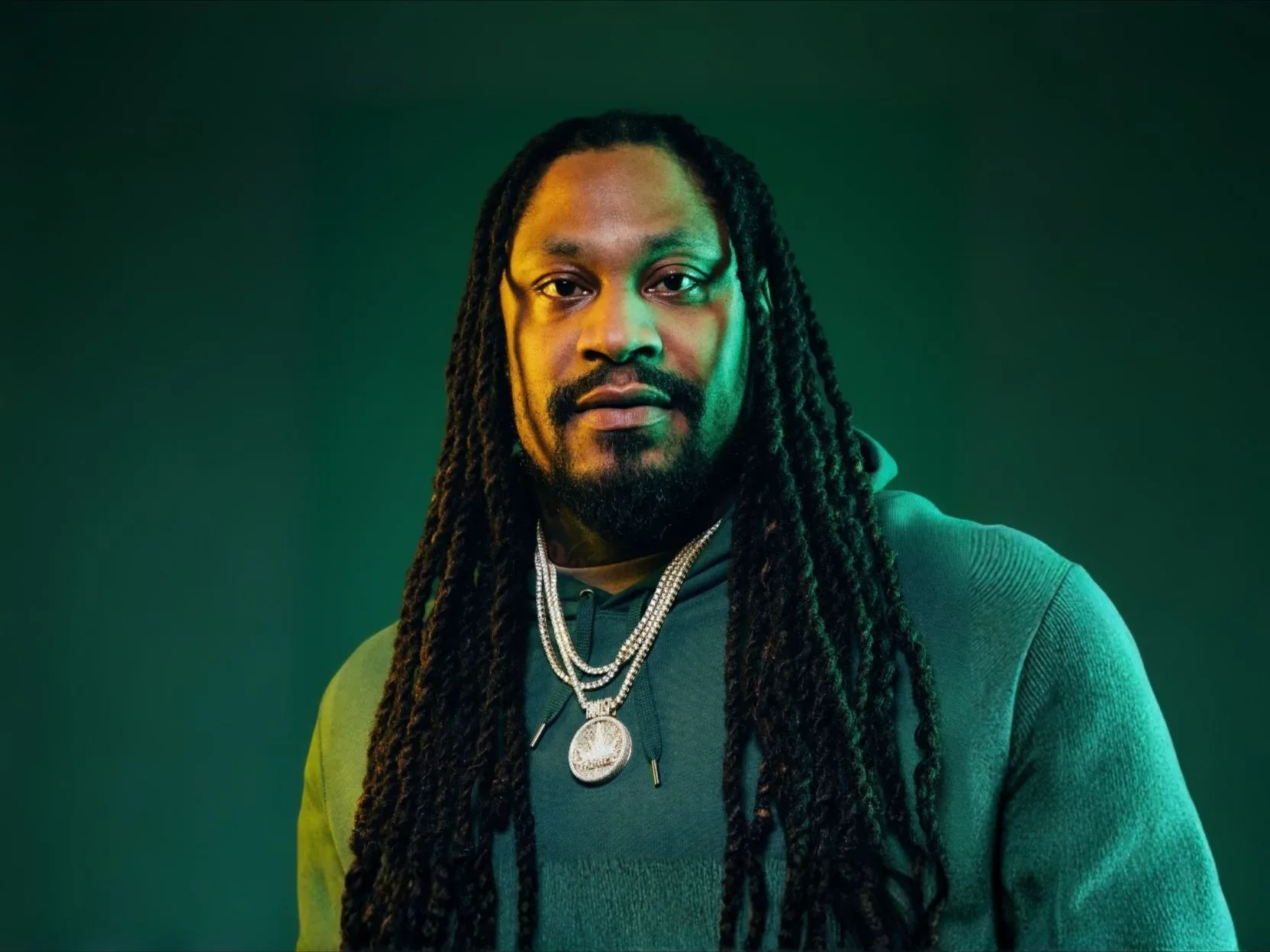
Marshawn Lynch has become a co-owner and equity partner in Black Pharo Cognac, putting the retired NFL running back and Super Bowl champion behind the French spirits brand’s effort to grow its U.S. footprint. The investment was made recently and disclosed publicly in late October; neither the percentage of Lynch’s stake nor its value has been released.
That missing number matters for financial detail, but the structure of the relationship is the larger point. An equity partner owns part of a business, meaning the upside and risk are tied to the company’s performance. That is materially different from a standard celebrity endorsement, in which a recognizable name is generally paid to market a product without necessarily holding an ownership interest.
For Black Pharo, Lynch’s participation arrives while its distribution remains concentrated in Texas and Georgia. The company has identified Nevada and Washington as its next priorities, with California also an immediate expansion target. In Texas, its retail presence includes Spec’s Wine, Spirits & Finer Foods and Total Wine & More. Its stated strategy is to build retailer and distributor relationships before moving into wider consumer marketing.
An ownership role rather than a label cameo
Lynch framed the decision as a response to the liquid itself as well as the people and longer-term ambition behind it. He said he initially liked the cognac, then took time to learn more about its product, team, vision and the history of cognac. He also characterized the project as a chance to help build a durable business from an early stage.
“I’m always looking for new ways to build, give back, bring people together,” Lynch said. “Black Pharo is something I believe in for hella reasons, and this is an opportunity to be part of something from the ground floor.”
That language is consistent with the company’s account of the arrangement: Black Pharo presents Lynch as a believer in the brand rather than merely a public-facing promoter. Co-founder Patrick Charpentier said Lynch’s connection extended to the quality of the cognac and the brand’s story, while describing the goal as building cultural and commercial relevance in an established spirits category.
There is an important practical distinction here. Name recognition can help a younger product earn attention, especially as it seeks shelf placement in new markets. But it does not by itself create a distribution network. Black Pharo’s plan to prioritize retail and distributor ties first suggests that the company sees market infrastructure—not simply marketing awareness—as the immediate job.
What distribution expansion actually means
In spirits, distribution is the route that gets a product from producer to stores, bars, restaurants and, ultimately, consumers. Retail listings are the visible result, but they normally depend on relationships with the distributors and retail buyers operating in a given state. For a brand with current placement in only two states, expansion into Nevada, Washington and California is not just a matter of announcing intent; it requires building access market by market.
Related coverage includes Marshawn Lynch Joins Black Pharo Cognac as Co-Owner During U.S. Expansion.
Black Pharo’s sequence—distribution and retail relationships first, broader consumer outreach afterward—has a straightforward business logic. Marketing can create demand, but that demand is less useful if potential customers cannot find the product nearby. Establishing availability creates a base for any later campaign, and an owner with Lynch’s profile may be better positioned to amplify a launch once that base exists.
It also keeps expectations in proportion. Nevada, Washington and California are described as priority or immediate target markets, not as places where the company has confirmed that bottles are already on shelves. Likewise, the available information does not put a timeline on those moves, disclose a pricing plan, identify new distributors or promise a nationwide rollout.
The cautious order of operations is notable because celebrity-backed products can invite a rush toward visibility. Black Pharo is signaling a more foundational approach: secure the commercial routes, then speak more broadly to customers. Whether that produces meaningful scale remains an open business question, but the immediate roadmap is clear enough.
The product at the center of the partnership
Black Pharo’s flagship offering is a VS cognac bottled at 84 proof and aged for at least two years in French oak. VS, short for “Very Special,” is a cognac designation associated with a minimum aging threshold; Black Pharo says its expression meets that requirement with at least two years in oak. At 84 proof, the bottle is 42% alcohol by volume, since proof is twice the alcohol-by-volume figure in the U.S. system.
French oak is part of the stated production profile, and it is a detail that supports the brand’s attempt to locate itself in the cognac tradition rather than simply use a celebrity association as its whole identity. Black Pharo also says the flagship VS received a 94-point score from The Tasting Panel. That score is the company’s cited recognition, not a substitute for the undisclosed commercial facts surrounding the investment or an indication of future availability in every planned market.
The company’s visual and narrative identity draws from ancient Egypt’s Twenty-fifth Dynasty, also referred to as the Nubian or Black Pharaoh Dynasty. The reference gives the brand a distinct historical inspiration, though the production details supplied here remain focused on the VS release: French oak aging, a minimum two-year age statement and 84 proof.
Experienced spirits leadership behind the label
Black Pharo was founded by Patrick Charpentier and Jerome Hyafil, both of whom bring prior experience in the spirits business. Charpentier previously held a sales and marketing leadership role at Rémy Cointreau and helped create A. de Fussigny and NYAK cognacs. Hyafil previously served as Seagram’s chief manufacturing officer.
Those backgrounds help explain why the company is stressing distribution and product positioning alongside Lynch’s entry. The respective experience cited for the founders spans sales and marketing on one side and manufacturing leadership on the other. Lynch adds a different dimension: public recognition, cultural reach and, now, a disclosed ownership role. The thesis appears to be that these elements work together rather than asking any one of them to carry the brand alone.
Maurice Sapp, Lynch’s brother and a strategic partnerships representative for Beast Mode, helped arrange the deal. That detail places the agreement within Lynch’s existing business network while still leaving key terms private. No ownership percentage, valuation, investment amount or governance arrangement has been made public.
Why the deal has wider pop-culture interest
Athletes moving into ownership is now a familiar point of conversation across entertainment, consumer brands and collecting culture. The appeal is easy to understand: ownership offers a stronger connection to a venture’s long-term outcome than an advertising appearance. Yet it also carries more uncertainty, because the value of a stake rises or falls with the business itself.
For readers who follow sports-connected commerce, this is distinct from the memorabilia market, where a player’s name can affect the demand for cards and collectibles. The business mechanics of equity are different from the market for licensed items, even if both draw on fandom and cultural visibility. For a recent example of the latter world, see our coverage of a LeBron James Exquisite rookie patch auto leading a major week in sports-card sales.
Black Pharo’s move is therefore best understood as a brand-building story, not a product-release story. The known facts are limited but meaningful: Lynch is an equity partner and co-owner; the company is currently distributed in Texas and Georgia; Nevada, Washington and California are part of its expansion focus; and its near-term emphasis is retail and distributor infrastructure before broad consumer marketing.
The unknowns are just as important to preserve. There is no disclosed value for Lynch’s investment, no disclosed size of his ownership stake and no announced schedule for new-state availability. The next measurable signs of progress will be whether the brand turns its stated priority markets into confirmed distribution and whether its retail-first strategy gives Lynch’s ownership role a platform to extend beyond recognition into sustained consumer access.