Spoilers follow for the 600th episode of Law & Order: Special Victims Unit.
A milestone episode can be a tempting excuse to turn the clock back: revive a familiar partnership, summon unresolved feelings and let nostalgia do the heavy lifting. Law & Order: Special Victims Unit instead uses its 600th episode to examine what happens when an old working dynamic returns but the people in it can no longer accept it on its old terms.
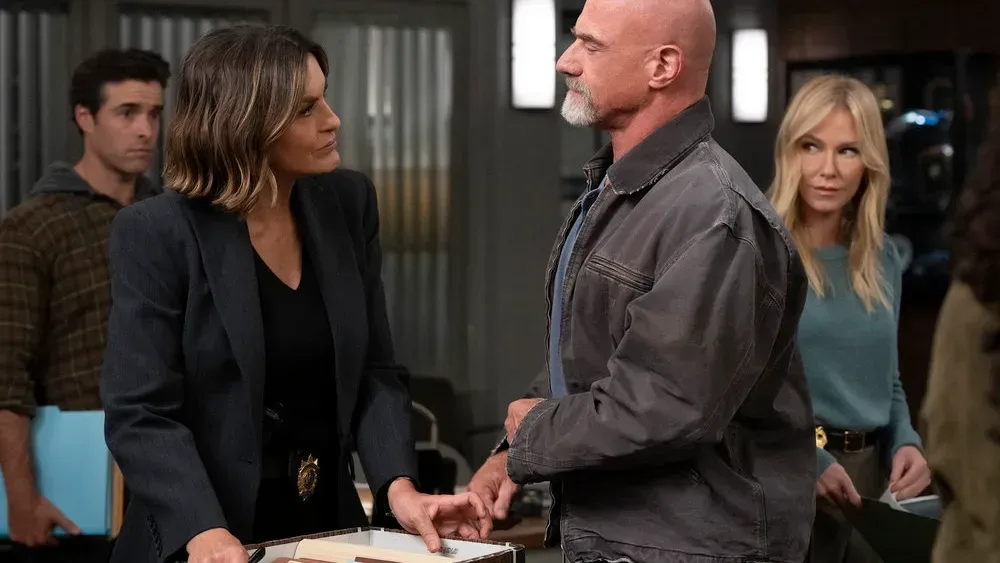
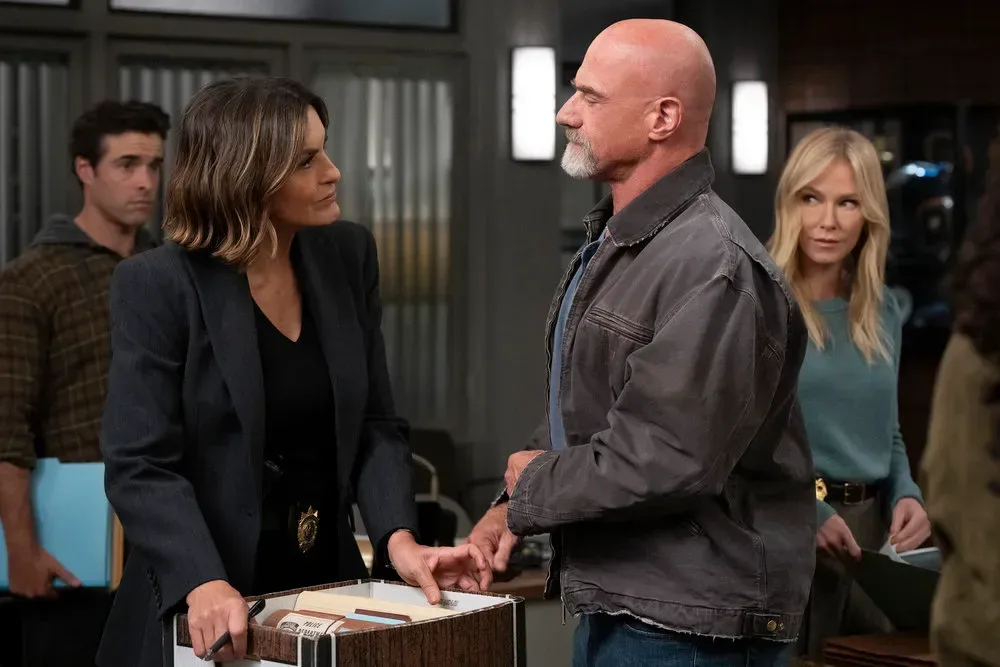
Olivia Benson, played by Mariska Hargitay, is drawn back into a case she handled years earlier with Elliot Stabler, played by Christopher Meloni. The new concern is substantial: the investigation may have resulted in the wrong person being sent to prison. That premise makes Stabler’s involvement narratively necessary, rather than simply a celebratory cameo. He has firsthand history with the case, and the episode’s central question is not merely whether the team can correct a past error. It is whether Benson and Stabler can work together without reenacting the imbalance that once shaped their partnership.
Hargitay’s view is clear: Benson may recognize the bond, the shared history and the trust between the two detectives, but she will not surrender her voice or authority to preserve the comfort of a familiar pattern.
For more context, explore GloRilla Stands by Her Praise as Gospel Collaboration Backlash Continues.
A reopened case brings an old dynamic into focus
In the episode, Benson persuades Stabler to help revisit the investigation. As the case develops, she realizes he had previously excluded her from parts of it and asserted control—a pattern she accepted at the time. The difference now is institutional as well as personal. Benson is the captain, and she refuses to let that prior arrangement simply re-form around them.
That distinction matters because the episode does not frame growth as forgetting the past. Benson cannot erase the influence Stabler had on her early development as a detective. Hargitay describes him as formative in that respect. But professional development can include learning to identify where mentorship, partnership or loyalty became constraining. A person can value what someone taught them while deciding they no longer want that person to make the decisions, set the terms or occupy all the space in the room.
For Benson, that is the emotional engine of the hour. Reopening a case may force a legal and investigative reckoning, but reuniting with Stabler forces a relational one. Their history carries affection, professional faith and the lingering weight of what might have been. None of that automatically cancels the fact that Stabler once took over in a way Benson permitted. The episode places both truths side by side.
Hargitay describes Benson and Stabler’s connection as full of complicated feelings, shared experience and a “ride or die” quality, while pointing to their dedication and trust as key reasons the pairing resonates.
That is a useful way to understand why their scenes can remain charged even when the story is explicitly about boundaries. Boundaries are not proof that a relationship is meaningless. Often, they are proof that the relationship matters enough to be approached honestly. If there were no history to protect, challenge or reassess, there would be no dramatic tension in Benson insisting on a different working relationship.
What Benson’s boundary actually means
“Having her voice,” as Hargitay characterizes Benson’s journey in the episode, is not limited to speaking up in a single disagreement. In this context, it means Benson is able to recognize the old framework and decline to operate within it. She can invite Stabler’s help because it is relevant to the case, then refuse to treat his experience as permission to override her leadership.
The term boundary can get flattened into a simple no. Here it is more precise than that. Benson does not cut Stabler out of the investigation or deny their connection. She establishes a condition for participation: their past cannot dictate the present. That is a tougher and more revealing kind of boundary than total avoidance, because it requires the characters to remain in contact while actively changing their behavior.
It also prevents the episode’s potentially wrongful-conviction story from becoming only a device for a reunion. A realization that the wrong person may be incarcerated demands humility from everyone involved. If the original work was mishandled, the priority must be reassessment, accountability and the facts of the reopened case—not restoring the detectives’ old rhythm because it feels familiar to viewers.
Hargitay has said the goal was to tell a complex, recognizable story rather than rely solely on the audience’s pleasure at seeing the pair together. That approach gives the reunion a sturdier foundation. Stabler is back not just because viewers know the relationship, but because the story reaches a point where his connection to the original case has consequences.
For more on Hargitay’s comments about Benson drawing that line with Stabler, read the related report here.
The invitation is not the answer fans may expect
The episode ends with Stabler asking Benson to use some of her available time off and leave for a few days with him. Earlier dialogue has established that she does have days available, so the invitation is not defeated by a scheduling technicality. Yet Hargitay says accepting was never truly on the table for Benson.
Her reasoning is deliberately broad: there are many reasons Benson would not go, and neither character is in the place where that trip makes sense. That answer preserves uncertainty about the larger relationship while drawing a firm line around this specific moment. A refusal is not necessarily a declaration that the characters feel nothing, nor is it a promise that every future possibility is closed. It is a recognition that feelings alone do not make a choice right.
That restraint is significant in a story built on a long-running bond. Fiction often treats a long-awaited invitation as its own argument: the history is intense, the audience understands the yearning, therefore the next step should happen now. Benson’s response rejects that shortcut. The episode appears to ask a more grounded question: what would it mean for these two people to make a choice that fits who they are now, rather than the story viewers have imagined from their past?
Hargitay’s answer is that this is not that moment. Benson’s decision aligns with the episode’s wider theme. She has just confronted the fact that she once let Stabler take control during an investigation. Going away with him immediately after setting a new boundary could risk blurring the clarity she has fought to establish. Declining the trip lets her choice stand on its own.
Why the reunion has room for conflict
The appeal of Benson and Stabler is not difficult to locate. Their connection contains shared trust, professional knowledge and a history that makes even a small interaction carry accumulated meaning. But those qualities are also why the episode benefits from refusing an easy reset. Trust can coexist with frustration. Devotion can coexist with incompatible timing. A relationship can be deeply important and still need limits.
Hargitay likens the ability to push against each other to family, an idea that captures the episode’s emotional texture. The conflict is not presented as evidence that the connection was false. It is presented as something that can happen in enduring relationships, especially when one person has changed and asks the other to meet them differently.
In practical dramatic terms, that leaves the partnership with more to play than a simple reunion or rejection. Benson can work with Stabler when the case calls for him. Stabler can remain essential to understanding the past. But Benson’s status as captain and her determination to keep her voice mean that any future collaboration must acknowledge the terms have changed.
The 600th episode therefore uses its anniversary-scale return to make a point about evolution. Benson and Stabler’s shared past remains real. Their trust remains real. So does the damage created when Stabler shut Benson out and took charge. The story does not require viewers to choose one version of their relationship over the other. It asks them to hold both—and to understand why Benson chooses not to go back.