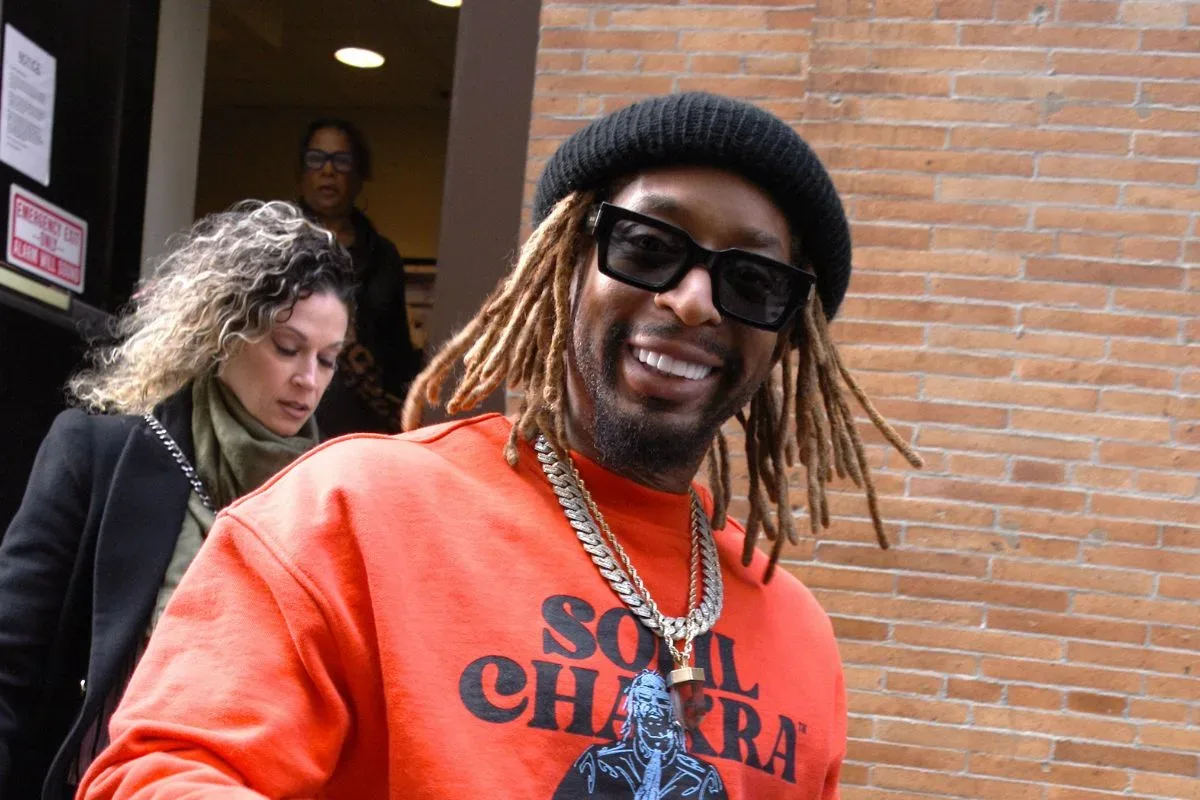
Lil Jon sees no issue with Jay-Z stepping into the Super Bowl halftime spotlight himself. With Jay-Z scheduled to headline the February 14, 2027 performance at SoFi Stadium in Inglewood, California, Lil Jon said he would likely have made the same call in a comparable position.
“I think it’s great for him,” Lil Jon said during an appearance on Andy Cohen Live. He added that, after eventually reaching that point of influence, he would have put himself on the halftime stage too: “I’m not mad at him at all.”
The comment speaks to a distinctive part of Jay-Z’s booking. Roc Nation has worked with the NFL since 2019 and has helped shape the halftime-show platform over that period. Jay-Z will now perform in the event for the first time, after years connected to the process behind selecting the artists who receive one of live music’s biggest television stages.
That does not make the booking a simple coronation. A halftime show is a compressed, unusually demanding kind of performance: a short window in which the headliner has to represent a wide catalog, make individual songs recognizable quickly, keep visual and musical transitions moving, and potentially integrate guests without allowing the show to feel like a disconnected series of cameos.
Lil Jon’s perspective is informed by hands-on experience with those constraints. He served as both musical director and performer for Usher’s 2024 halftime show, following work directing Usher’s Las Vegas residency. His account offers a useful way to view the practical challenge ahead for Jay-Z—not as a question of merely choosing hit records, but of building a tightly coordinated live production.
Why Lil Jon expects Jay-Z guests
Lil Jon expects Jay-Z to use special guests, and pointed to Jay-Z’s concerts this year as a setting in which potential combinations could be explored. Jay-Z performed at SoFi Stadium on October 23 and 24 during that concert run, giving him recent experience in the venue where the 2027 halftime show will take place.
That does not confirm any guest performers for the Super Bowl. No guest lineup is established here, and Jay-Z has not been linked to specific halftime collaborators in the available information. Lil Jon’s expectation is instead based on how Jay-Z has been approaching live shows and on the established value of guest appearances in a halftime format.
For a performer with a long catalog and many high-profile creative relationships, guest selections can accomplish several things at once. They can let the show acknowledge a collaboration associated with a particular song, create a memorable change in energy, or help cover more musical ground in less time. The trade-off is that every guest requires planning. Entrances, exits, song arrangements, camera blocking, rehearsals and timing all need to fit into a performance with almost no room for a slow reset.
In other words, guests are not just surprise additions. In the context of halftime, they are structural decisions. A guest may make an abbreviated song feel complete, but too many appearances can reduce the headliner’s own time and complicate the flow. That balance is likely why Lil Jon described Jay-Z as already figuring out the possibilities through his concerts rather than simply waiting until the game nears.
What a musical director does in a halftime show
Lil Jon’s role with Usher went beyond joining the show for a song. He said he was musical director as well as a performer. In a live production, the musical director is responsible for helping turn a group of songs, musicians and featured voices into a coherent performance. That can include the musical arrangements, the pacing from one section to another and preparation that ensures the people onstage are operating from the same plan.
The title matters because halftime performances are built under constraints that conventional concerts often do not have. A tour or residency can let an artist play a fuller set and settle into a song over several minutes. A Super Bowl slot instead requires choices about what to condense, combine or omit. The core challenge is not only making a set exciting; it is deciding what can be removed without making the performer’s career story feel incomplete.
Lil Jon called the 2024 experience “awesome,” noting that few people can say they have been both a Super Bowl halftime musical director and a performer. He also credited Usher for finding room for “Turn Down For What,” while acknowledging that Usher could have allocated that time to more of his own material.
That is a revealing detail. Featuring a collaborator can strengthen the pace and broaden the show’s appeal, but it comes at an opportunity cost. Every minute given to a guest is a minute that cannot go to another song, another transition or another part of the headliner’s catalog. The decision is creative, but it is also a production calculation.
For further music-business context, Jay-Z’s role on the Super Bowl stage arrives after a lengthy period in which Roc Nation has been associated with the league’s entertainment strategy; separately, recent discussion around music publishing payments shows how the industry’s behind-the-scenes work can matter as much as the final public performance.
Usher’s 2024 set shows the guest-management challenge
Usher’s 2024 halftime show provides the clearest reference point in Lil Jon’s comments. Lil Jon appeared with Usher and Ludacris for “Yeah!” The set also included Alicia Keys, H.E.R., will.i.am and Jermaine Dupri, creating several reunion and collaboration moments within one performance.
The result illustrates why a roster of guests can be appealing for a career-spanning show. Each appearance can connect the headliner to a different song, era or creative partnership. For viewers, a well-placed entrance can become one of the lasting images of the broadcast. For the production, however, each one adds another layer of rehearsal and coordination.
Lil Jon also discussed how substantial that commitment can be while explaining why Justin Bieber did not appear in Usher’s set. Bieber had been invited but declined before rehearsals began. Lil Jon characterized the opportunity as one that demands major time, practice and preparation for an enormous audience. Bieber did attend the game in support of Usher.
The distinction is important: being invited is not the same as being ready to execute a halftime role. A guest performer’s contribution needs to work within the show’s music, staging and limited run time. It must also be rehearsed enough to avoid disrupting a production that depends on split-second changes. That makes the guest list less like a wish list and more like an operational plan.
Setlist editing may be the hardest decision
Guest choices are only part of the equation. Lil Jon has said that the hardest aspect of constructing Usher’s halftime set was the setlist itself. Usher continued revising the selections as the team tried to represent his catalog without letting fans feel key material had been missed, and those changes continued very late in the process.
A setlist is simply the planned sequence of songs in a performance, but in a halftime show it acts as the project’s blueprint. It determines the emotional arc, the entrances available to guests, the musical transitions and the amount of time devoted to each period of an artist’s career. A selection that works in isolation may not fit between two other songs. A famous song may be essential for audience recognition but require an abbreviated arrangement to preserve the pace.
This is particularly relevant for Jay-Z’s 2027 appearance. As his first Super Bowl performance, the show will need to introduce or reintroduce his live catalog to a massive mixed audience while meeting the expectations of listeners who will arrive with very different favorite songs and eras. The available information does not identify any confirmed songs or guests, so it would be premature to predict the actual shape of the set. But Lil Jon’s account makes the likely process clearer: heavy preparation, difficult omissions and continued revision are normal parts of getting there.
Recent halftime headliners have included Rihanna, Usher and Kendrick Lamar. Jay-Z’s booking now places him in that recent lineage, while adding the unusual dimension of someone who has been involved in helping shape the platform through Roc Nation’s NFL relationship taking the stage himself.
Lil Jon’s reaction is ultimately supportive rather than speculative. He believes Jay-Z has earned the opportunity, expects the performer to make use of meaningful guest moments, and understands from experience that the apparent ease of a halftime show rests on extensive rehearsal and difficult creative choices.
For viewers, the headline may be Jay-Z’s first Super Bowl performance at SoFi Stadium. For the team building it, the work will be in deciding what belongs in those few minutes—and what has to be left outside them.