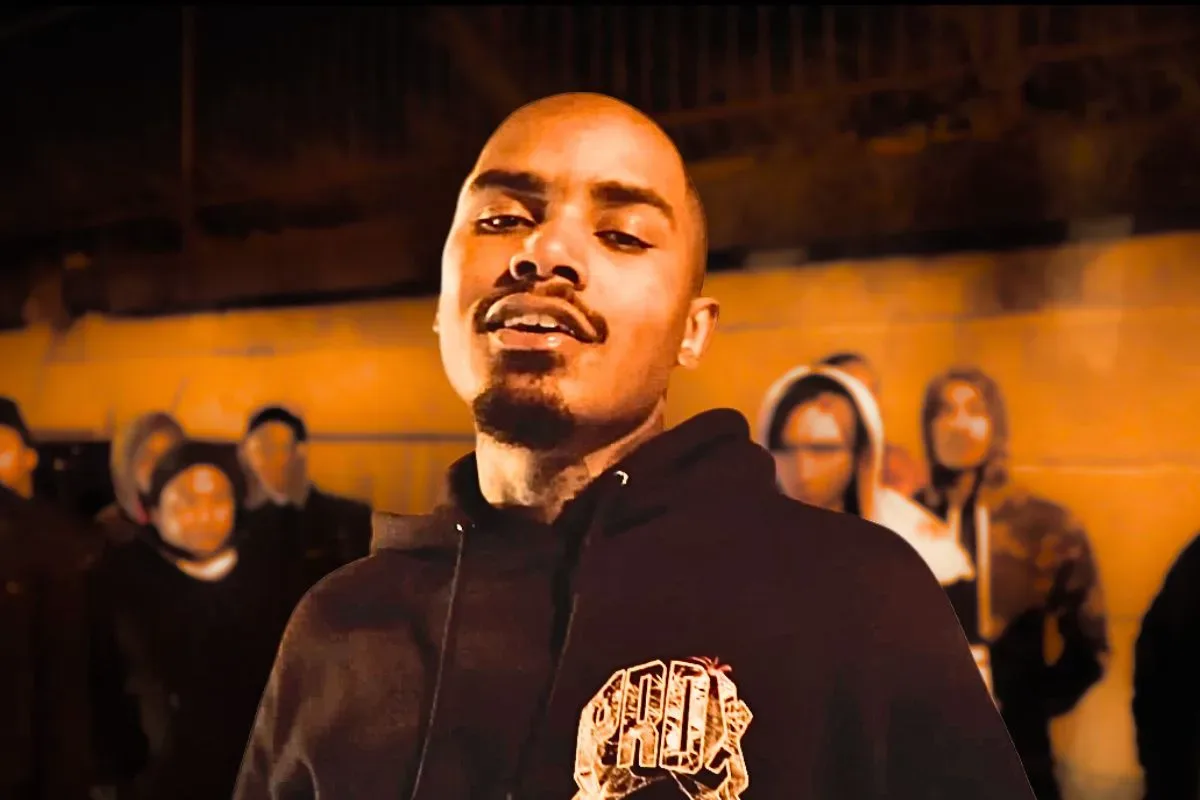
Leaf Ward is looking toward music again. In a recent appearance on Million Dollaz Worth of Game, the West Philadelphia rapper spoke about returning to the studio, reconnecting with fellow artists and the personal reckoning that followed his time in federal custody.
Ward’s message was not that he has to rediscover how to rap. He framed the prospect of recording again as a familiar skill returning to use, comparing it to riding a bike. The more meaningful shift, based on his comments, is the mindset he intends to bring back with him.
That distinction matters. A studio return can mean many things: a new solo release, a single feature, a collaboration that does not materialize, or simply a conversation about making music. Ward did not lay out a release schedule, title, label plan or confirmed project. What is concrete is his stated desire to work with other rappers again and the fact that conversations have already happened.
Meek Mill and G Herbo contacted Ward by FaceTime, and Ward said he and Herbo discussed getting into the studio. Those conversations point to a possible path back into a collaborative rap environment, but they should not be mistaken for an announced song or album. In music reporting, an artist discussing plans to work together is not the same thing as a finished recording, much less a scheduled release.
A return shaped by reflection
The emotional core of Ward’s appearance was not a rollout tease. It was his account of fatherhood during incarceration and how absence changed his perspective. Ward said becoming a father while locked up forced him to reconsider his decisions. He described the pain of missing his children’s birthdays and being unable to do anything for them on those days.
He also discussed revisiting his own older social-media posts and questioning the image and choices he had put into the world. Ward’s assessment of that earlier period was direct: he felt he could have been doing much better.
That kind of reflection does not automatically tell listeners what his next songs will sound like. It does, however, provide context for why a return to recording may carry different weight than a simple career restart. Ward described coming home as a second chance and said conversations with people serving life sentences gave him a changed sense of perspective.
Ward characterized the experience as a second chance, saying that people facing life sentences helped him see his own situation differently.
Related coverage includes Leaf Ward Eyes Studio Return and New Collaborations After Federal Custody.
For an artist whose public identity and catalog have been closely connected to Philadelphia rap, the comments create a clear tension that may shape whatever comes next: returning to the competitive, collaborative world of music while trying to act differently from before. That is analysis of the themes in Ward’s remarks, not a promise of a particular artistic direction.
What is known about the federal case
Leaf Ward’s legal name is Khalif Ward. He was sentenced on January 23, 2025, to 46 months in federal prison after pleading guilty to possession of a machine gun and possession of a firearm by a felon. Judge Joel H. Slomsky also imposed a $25,000 fine.
The same sentence included three years of supervised release. Supervised release is a post-prison period of federal court supervision. It is distinct from the prison term itself and forms part of the sentence described here.
Federal prosecutors tied the case to an August 2023 incident at a restaurant near the King of Prussia Mall. The details in Ward’s interview focus on his outlook and plans following custody; they do not alter the stated terms of the sentence or establish new information about the case.
It is worth keeping the legal record and the creative discussion separate. Ward spoke about wanting to record and about conversations with other artists. He did not announce a completed collaboration, a new project, a release date or any change to the sentence’s supervised-release component.
A catalog already in place
Ward is not approaching the studio as an unknown newcomer. Before the federal case, he had already built a body of solo work and worked with artists beyond Philadelphia. His recent releases include They Forgot: The Album, released in 2022, followed by Certified Member and Rated R in 2023.
That same year, he recorded “Risk Takers” with Millyz and Albee Al. The track is a useful reminder that collaboration has been part of Ward’s output before this new chapter. His comments about recording with others again therefore suggest a continuation of an established part of his career, even if the motivations he discussed have changed.
There is also a hometown dimension to the appearance. Ward returned to a platform and an audience familiar with his work from before the gun case. For artists with a defined local base, that kind of reintroduction can be significant: it provides a public space to articulate intentions before there is necessarily a song, video or project attached.
Philadelphia’s rap community is central to Ward’s story, and it is notable that Meek Mill was among the people who called him. The available information does not establish that the two have recorded new music together. Still, the contact signals that Ward’s return is taking place in an existing network rather than entirely from scratch.
Hip-hop’s community ties can also extend beyond songs and studio sessions. In a separate Philadelphia-linked moment, Busta Rhymes’ visit to his former Brooklyn elementary school highlighted a different form of public reconnection: returning to the communities that shaped an artist. Ward’s situation is plainly different, but his own comments similarly place responsibility, family and personal accountability at the center of a public return.
What to watch for—and what not to assume
Ward has clearly said that he wants to return to the studio, and he identified conversations with G Herbo about doing so. Those are the strongest immediate indicators of new activity. But a careful reading of the available facts leaves several questions open.
- There is no announced title for a new Leaf Ward album, mixtape or single.
- There is no confirmed release date.
- There is no confirmation that a Ward and G Herbo collaboration has been recorded.
- There is no announced Meek Mill collaboration.
- There are no stated details about producers, labels, distribution or touring.
Those boundaries are useful because “back in the studio” is often treated as if it confirms a full campaign. It does not. Recording can be a quick process or a long one; a conversation can become a song, a set of sessions or nothing public at all. The present story is more accurately about intent and personal reflection than a formal music announcement.
The practical meaning of a second chance
Ward’s reference to a second chance is ultimately the central point. He connected it to missed milestones with his children, regret over former choices and the perspective offered by people facing far longer sentences. It is a personal statement, not a marketing slogan.
For listeners, the next meaningful development will be action rather than speculation: a confirmed studio session, a credited feature, a finished track or a formal release announcement. Until then, Ward’s appearance offers an unusually candid snapshot of an artist trying to reconnect with his craft while acknowledging the personal cost of the period behind him.
His past work establishes that he has a catalog and collaborative experience to return to. His interview establishes that he wants that return. The music itself, including its form, timing and collaborators, remains to be announced.