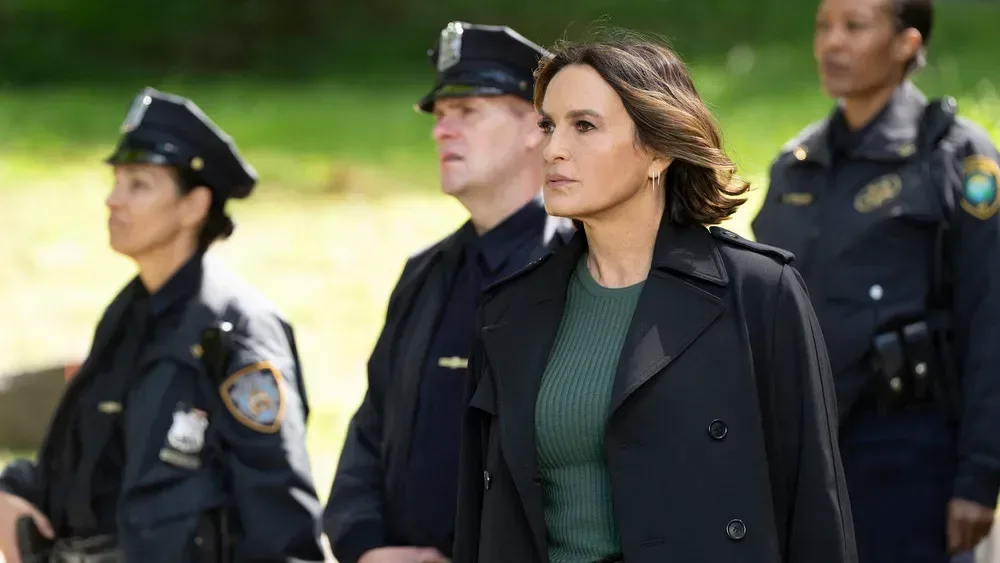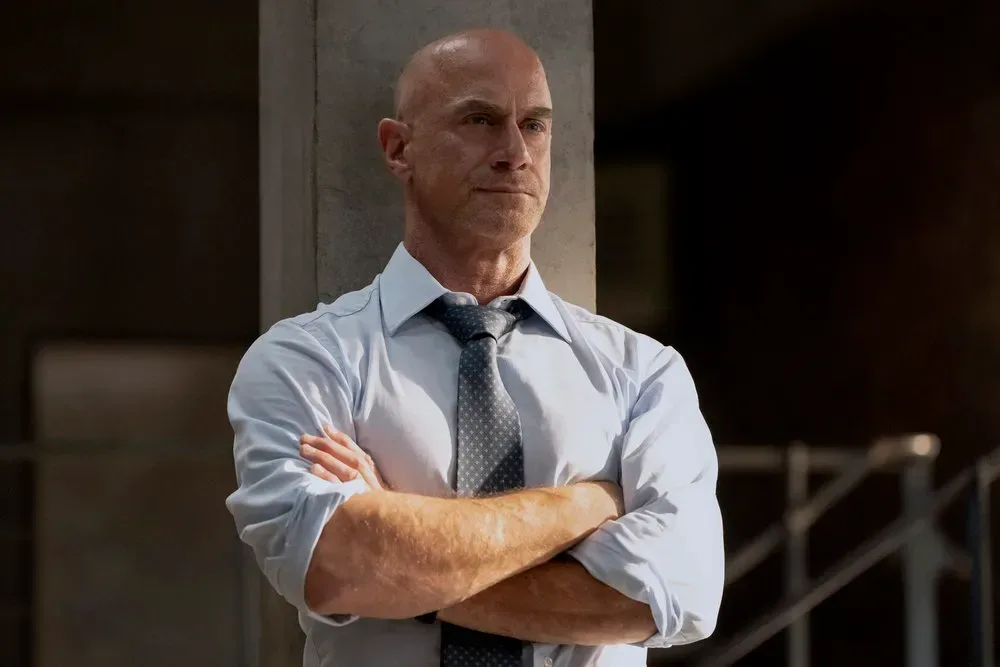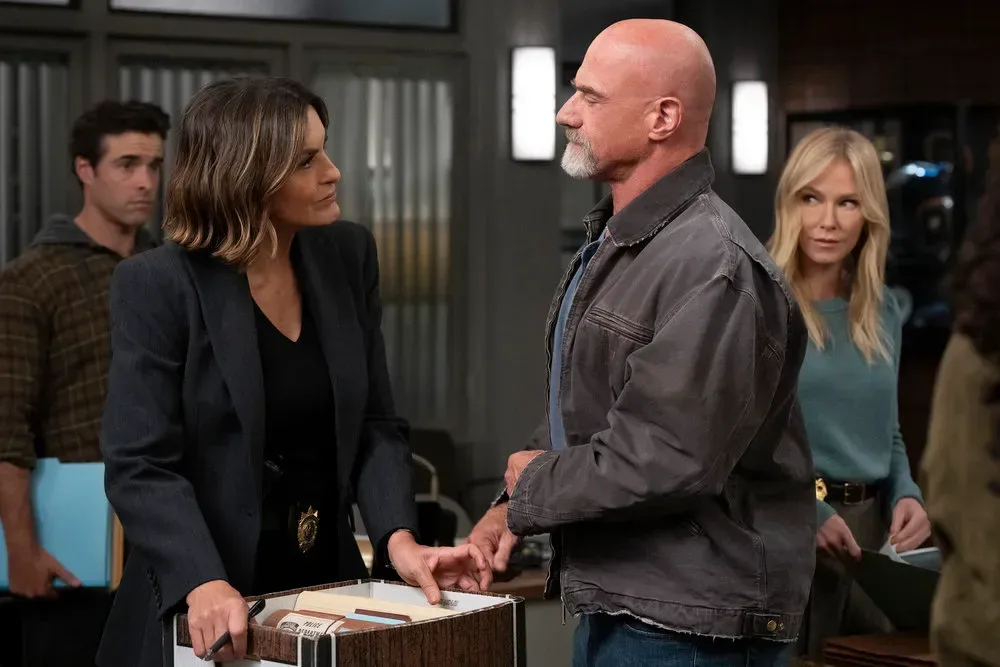
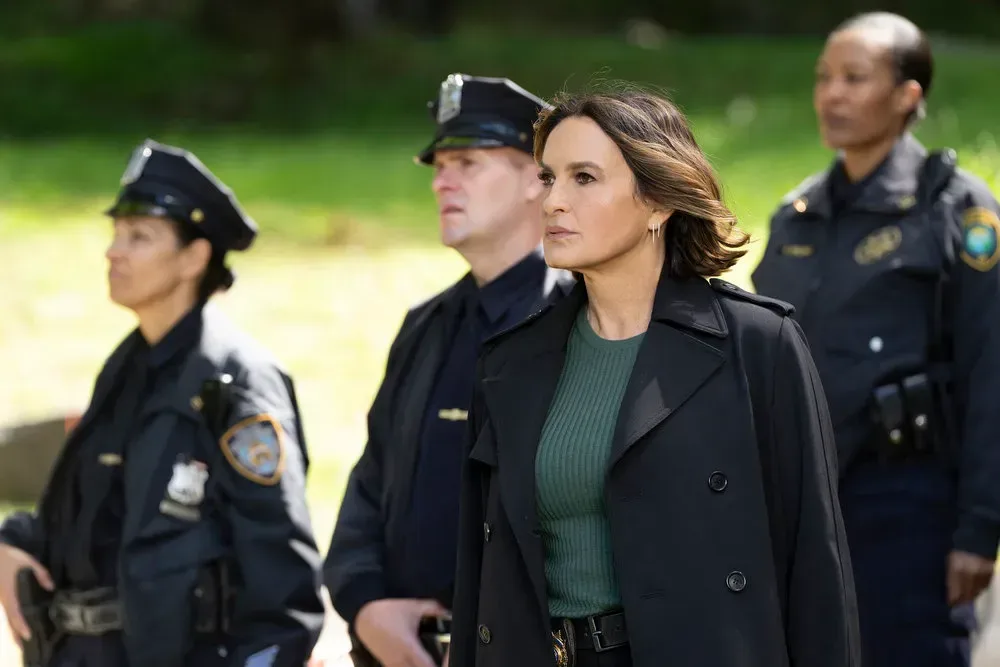
Law & Order: Special Victims Unit has reached its 600th episode with a case built to examine the series’ longest and most consequential relationship: Olivia Benson and Elliot Stabler. The milestone story sends Benson back to a 1998 rape-and-murder investigation, exposes errors made during its original handling, and gives Benson room to confront a dynamic that once shaped her professional life.
It is an apt framework for an episode celebrating endurance without simply treating longevity as its own achievement. A procedural is a television series structured around a case or problem that is generally introduced and resolved within an episode. That format can make a show durable, but it can also make a major landmark feel detached from the characters’ accumulated history. SVU instead uses an old case, an old professional partnership, and changed people to make 600 episodes feel like a story event rather than a number on a title card.
An old case brings Benson and Stabler back together
The episode was written by showrunner Michele Fazekas and directed by Brenna Malloy. A showrunner is the senior creative producer who guides a series’ writing and day-to-day storytelling priorities. Here, Fazekas’ milestone setup begins when jury consultant Gwen Sharpe, played by J. Smith-Cameron, persuades Benson to take another look at a case that resulted in a man being sent to prison for a 1998 rape and murder.
As Benson reopens the investigation, she realizes she worked the original case with Stabler, played by Christopher Meloni. The discovery is not presented as easy nostalgia. Stabler had not pursued leads that might have revealed the truth, and he had excluded Benson from the interrogation. Those professional failures become inseparable from the personal imbalance Benson now recognizes in their past partnership.
Stabler is initially a difficult person for Benson to bring back into the case, even as he wants to join the effort and help identify the real culprit. Captain Renee Curry argues that Benson does not need Stabler’s approval or participation because he is no longer her partner. Fin’s response supplies the episode’s central idea: “Some partnerships don’t end, even when they do.”
That line acknowledges the distinction between a job assignment and a relationship. Benson and Stabler have not worked together in years, but their history still affects how Benson interprets the old case and how she chooses to proceed in the present. The episode’s road-trip investigation gives them time to dig into the evidence, but the larger work is emotional accountability.
Benson gets to name what happened
The key development is not merely that Benson and Stabler have changed. It is that Benson can now say clearly what the earlier version of herself did not. She tells him that she allowed him to shut her out and that she did not follow her own instincts because, as a newer detective, she assumed he knew better.
That admission reframes the partnership without reducing it to either idealized friendship or simple grievance. Stabler’s experience carried authority. Benson’s uncertainty led her to defer to him. The reopened case gives material consequences to that imbalance: missed leads may have prevented the truth from emerging sooner.
Related coverage includes ‘Law & Order: SVU’ Marks 600 Episodes With Benson and Stabler Reopening an Old Case.
For a show with a procedural engine, that is a useful way to turn continuity into drama. Continuity means the ongoing facts, relationships and consequences that carry across episodes. The case does not exist only to revive a familiar pairing; it makes their shared past relevant to what must be solved now. Benson’s willingness to use her voice with Stabler marks a change in her position within the relationship, while also recognizing that neither character is the same person they were when they worked side by side.
The episode’s argument is not that time erases a partnership’s flaws. It is closer to the opposite: time can make it possible to understand those flaws with more honesty. That approach gives the reunion weight beyond fan recognition. It asks what an enduring connection is worth if the people in it cannot revisit the moments when trust went wrong.
Why 600 is more than a round number
Mariska Hargitay has been part of SVU since it debuted in 1999, alongside creator and executive producer Dick Wolf. She described the show’s cast and crew as a genuine family, emphasizing that many people have been there from the beginning and that the sense of affection extends into the working environment.
After production wrapped on the 600th episode, Wolf brought together the current cast and crew for a dinner that also included Wolf’s chief operating officer Peter Jankowski and Meloni. In remarks to the group, Wolf described the achievement as unprecedented and unlikely to be repeated.
Hargitay, meanwhile, used her own remarks to reject the idea that a series lasting this long must automatically be exhausted. She characterized the show as still vital, intelligent and important, and credited the team with carrying forward something Wolf began. Her comments locate the accomplishment in sustained collaboration rather than sheer inertia.
That distinction matters. Episode counts can be a blunt measure: they tell audiences that a production has continued, but not why people kept making it or watching it. The milestone conversation around SVU points to a more specific explanation: a durable central character, a workplace in which longtime collaborators have remained connected, and an ability to use old history as an active storytelling resource.
It also underlines how unusual the number is in the current television landscape. Hargitay noted that reaching 100 episodes is itself a major accomplishment for a show. Six hundred is therefore not just a multiple of that benchmark; it represents an exceptional span of production and a body of stories large enough for a 1998 investigation to return with new meaning.
The work behind a milestone episode
Hargitay said the finished installment ran nearly 12 minutes long, a sign of how much story the creative team was trying to hold. She described an active process of writing, rewriting and exploring possibilities, including filming some scenes before their final form had been fully settled.
That is especially revealing for an episode balancing several difficult goals at once. It has to operate as a crime story involving a wrongful conviction; it has to reconnect Benson and Stabler; and it has to satisfy the pressure that comes with a landmark installment. An episode running long is not proof of quality on its own, but it does suggest the team found more material than a normal runtime could easily contain.
Hargitay’s description of the set also speaks to the practical side of sustaining that kind of work. She said she values an environment where people feel secure enough to take creative risks while remaining aware of the seriousness of the stories being told. That balance is particularly relevant for a show centered on crimes against vulnerable people: a set can encourage play and experimentation in performance without treating the subject matter casually.
Guest performers have apparently responded to that atmosphere over the show’s run, with Hargitay saying visitors regularly remark on it when they arrive and leave. The claim does not explain every reason for SVU’s longevity, but it offers a grounded picture of what the series’ team believes has helped maintain it: mutual respect, room to create, and a shared understanding that the material has stakes.
A television partnership that refuses to become a museum piece
The 600th episode draws a line between honoring a past era and becoming trapped by it. Benson and Stabler’s history is central because it is unfinished, not because it is frozen. The old case makes Benson reckon with a time when she accepted Stabler’s judgment over her own; the present-day investigation allows her to set new terms.
That is the episode’s most useful answer to the question raised by any enormous franchise milestone: how can a long-running series keep moving? Not by pretending the earlier years never happened, and not by treating them as untouchable. It can revisit them critically, let characters identify the cost of old decisions, and make that reflection part of a fresh conflict.
Television milestones often invite audiences to look backward. SVU does that, but it places the retrospective impulse inside Benson’s actual work. The result is a story about evidence, responsibility and the lasting force of partnership—whether that partnership is between two detectives or among the people who have kept the series running since 1999. For another view of how TV figures and public reactions can shape the pop-culture conversation, see this look at Shane Gillis and the response to his SNL monologue.