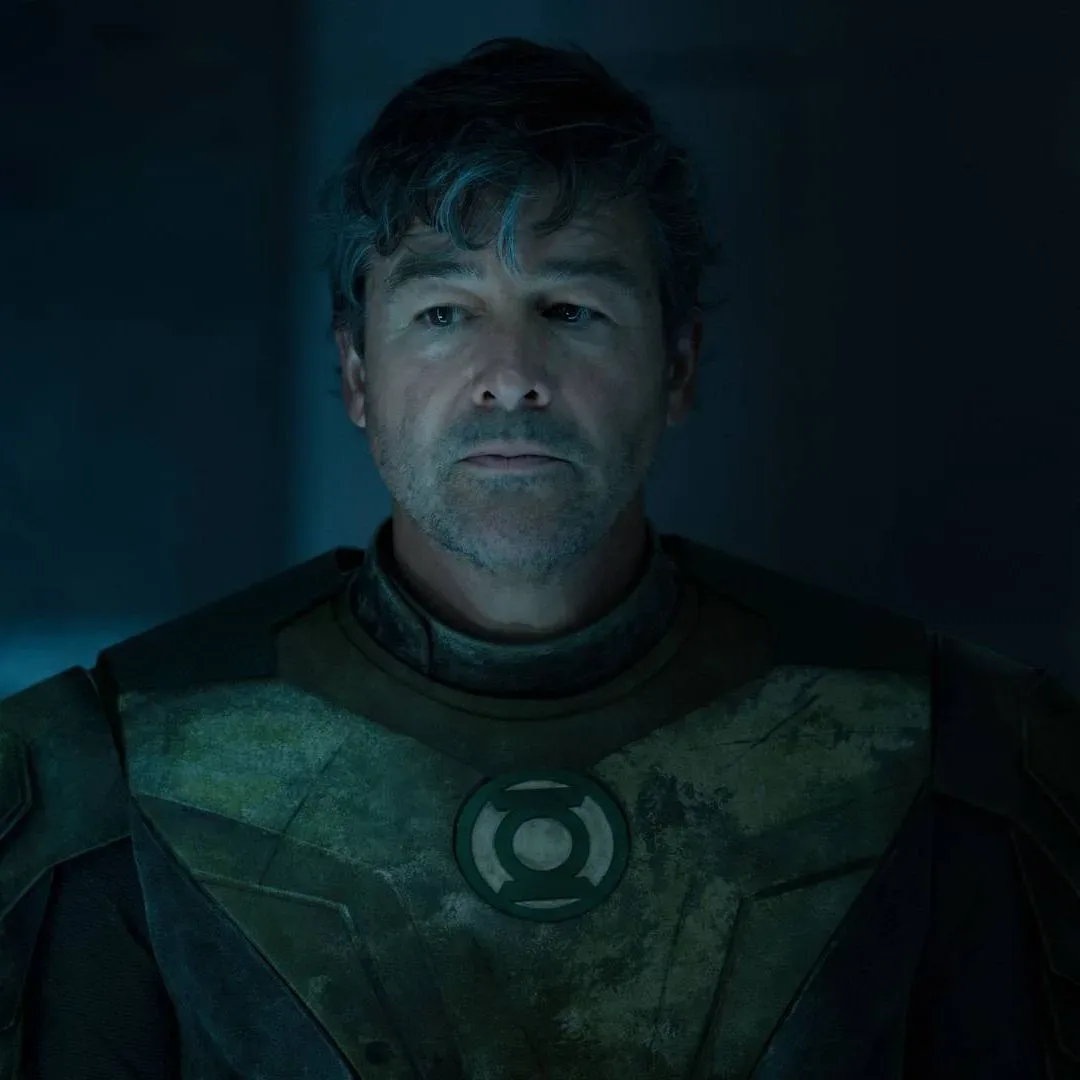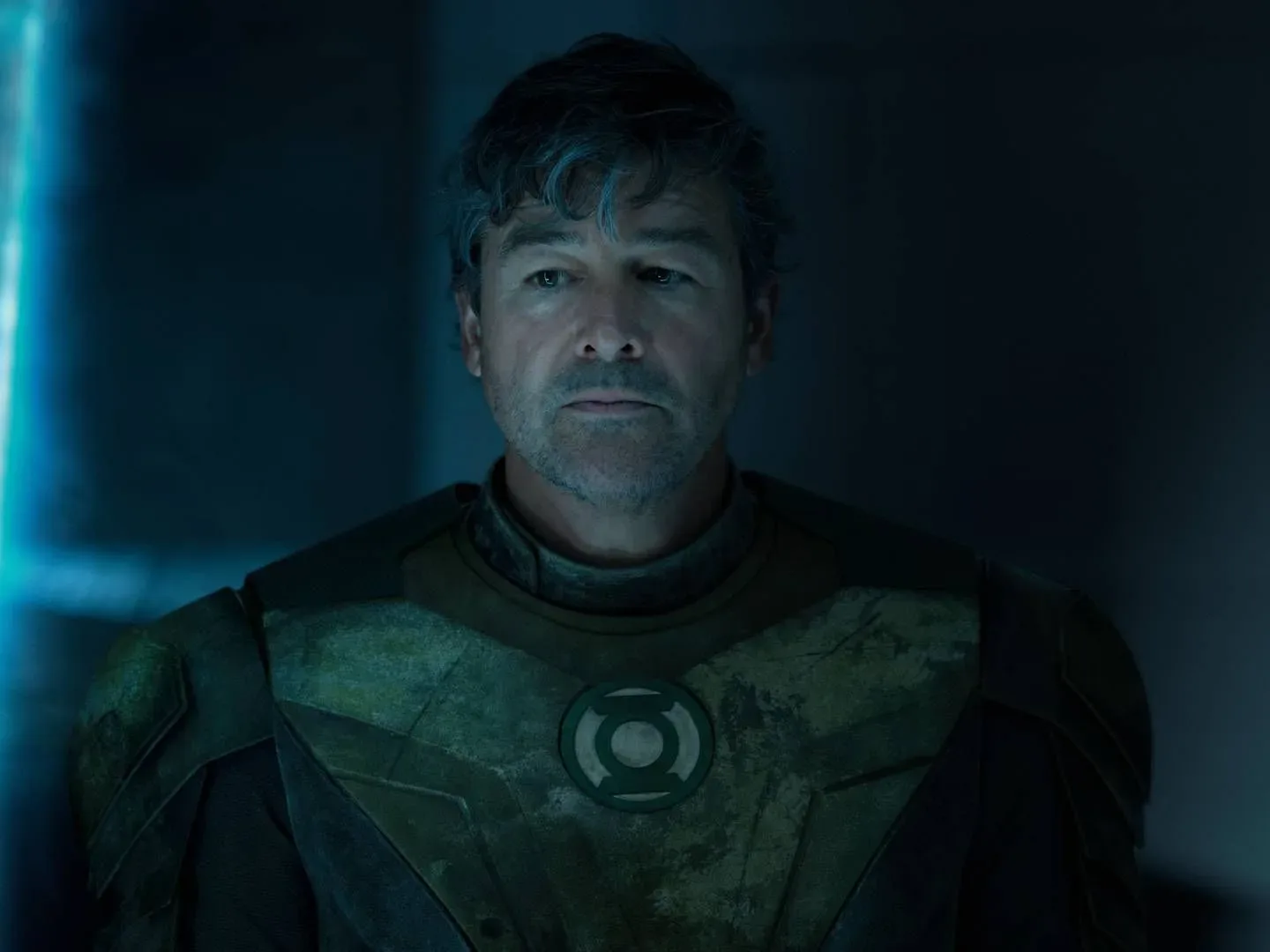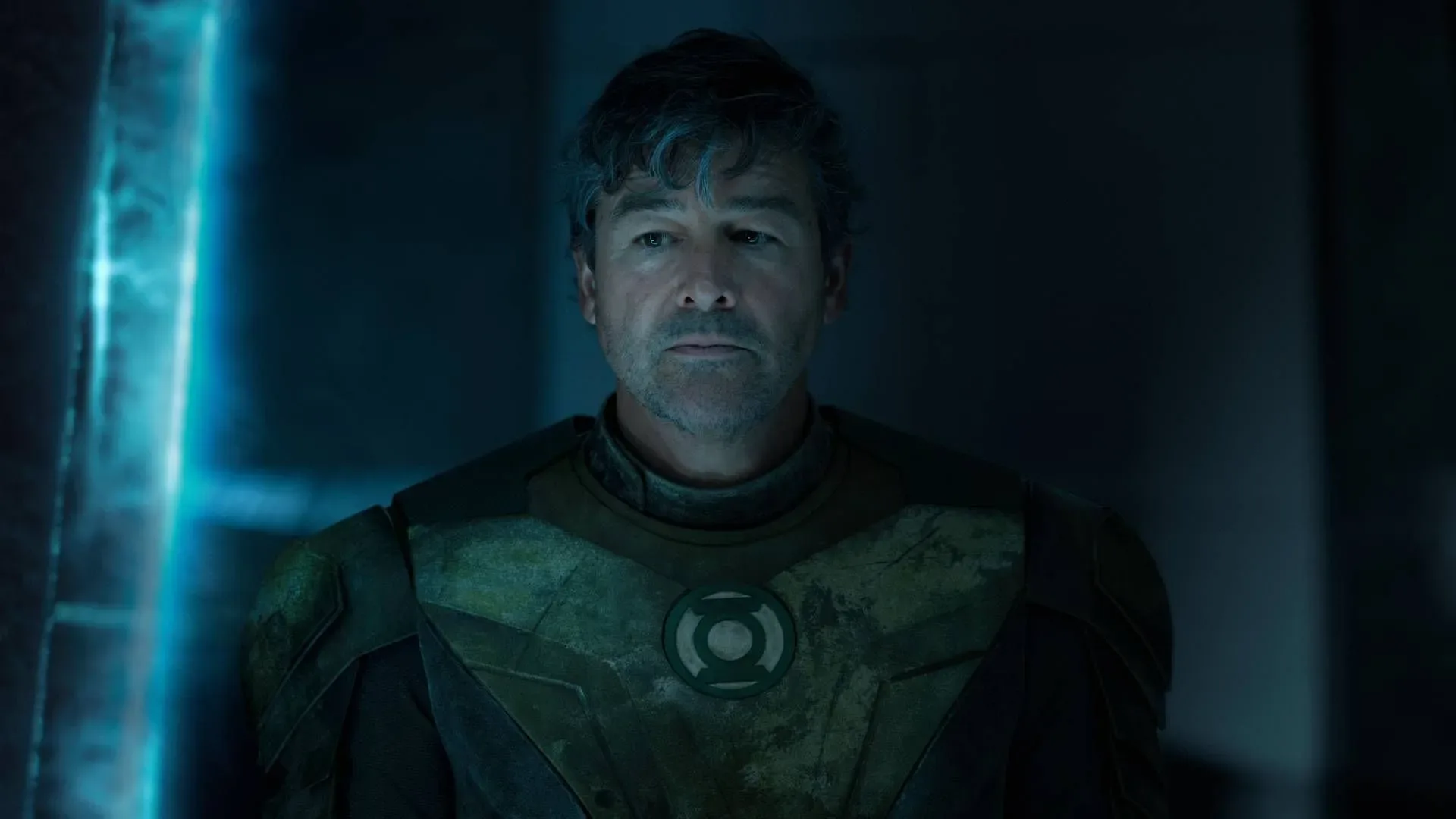
Warning: This article contains major spoilers for Lanterns episode 7.
Lanterns has reached the penultimate episode of its first season by taking one of Hal Jordan’s most familiar pieces of history and making it significantly more troubling. The series does not discard the foundational event: Hal’s father died during a test flight. Instead, episode 7 changes the meaning behind that death, revealing that Hal’s father wanted to die and positioning the tragedy as the beginning of a damaging pattern passed between Jordan men.
That revelation is called the Jordan Boys’ Legacy. The name initially sounds as if it could refer to a classic genre-device mystery object: a MacGuffin, meaning an item or objective that drives a plot forward more than it has meaning of its own. Episode 7 makes the opposite move. The Legacy is not an interstellar prize or a piece of decorative mythology. It is evidence of inherited trauma, and it adds a bleak psychological dimension to both Hal and the story surrounding his death.
For a character with decades of comic-book history, that is a careful line to walk. The people behind the series acknowledge as much. Co-creator Damon Lindelof compared altering canon to handling plutonium: dangerous material that demands caution. Yet he also argued that total caution can leave an adaptation without originality. Showrunner Chris Mundy described the purpose of this particular alteration in character terms, saying it creates additional history, darkness and pathology for Hal.
That is the key distinction in the episode’s approach. Lanterns is not simply swapping a famous fact for a new one. It retains the broad landmark of Hal Jordan losing his father in a flight accident, while reinterpreting the emotional reality of that moment. The result is less a replacement of the backstory than a reframing of it—and one that makes the show’s remaining mystery more complicated.
What episode 7 changes about Hal Jordan
Hal’s father’s fatal test flight has long been one of the defining incidents associated with the character. In broad dramatic terms, it connects aviation, danger and loss to Hal’s identity. Lanterns leaves that event in place, which matters because recognizable fixed points help an adaptation remain legible to viewers who know the comics.
The show’s new element is intent. Hal’s father did not merely die in the test flight; episode 7 reveals that he wanted to die. That disclosure recasts the father’s death from a devastating external accident into something with an additional, agonizing layer. It also reframes Hal’s own behavior and mental-health struggles as part of a family pattern rather than isolated traits.
The episode communicates that connection through the Halogram, Hal’s AI backup. The Halogram puts its version of Hal’s self-understanding in stark terms: “I’m not fearless because I’m brave; I’m fearless because I’m broken.” The line takes a quality often celebrated in adventure fiction—fearlessness—and asks the audience to view it differently. Fearlessness can come from courage, certainly, but the series suggests it may also be connected to pain, recklessness or an impaired sense of self-preservation.
That does not make a diagnosis for Hal, and the episode’s information should not be reduced to one. What it does establish is a dramatic framework: the Jordan Boys’ Legacy is generational trauma. In this context, that phrase refers to emotional harm and destructive patterns moving through a family over time. The narrative implication is that a father’s anguish and death have affected Hal deeply, and that Hal’s unresolved damage may shape what comes next.
It also makes the Halogram more than a convenient technological stand-in. An AI backup can preserve information or imitate a person, but episode 7 uses this one to expose a version of Hal’s inner life. Its statement is concise, but it adds tension to every apparently bold or unflinching quality the audience has associated with him. A character can look heroic while still being profoundly unwell; the show is interested in the uneasy overlap.
Why the canon change is more measured than it first sounds
“Canon” is the body of established events, character traits and rules associated with a fictional universe. It is especially important in long-running superhero stories because different readers, creators and eras can place different weight on different parts of that history. Adaptations have another challenge: they must work for a new audience without treating established fans as though recognition has no value.
Lindelof’s plutonium comparison captures the pressure of that job. A writer who changes familiar material without purpose can make a character feel disconnected from the qualities that made them endure. A writer who refuses to reinterpret anything can end up treating continuity as a museum exhibit rather than a foundation for a new story.
Lanterns chooses an intermediate path. Its episode 7 reveal preserves the external event—the fatal flight—but changes its private meaning. That is consequential because the emotional truth of an origin story often matters as much as the event itself. Hal did lose his father. What he learns now is that he may not have understood why, and that missing understanding has been shaping him for years.
This kind of change can be more disruptive than a simple detail alteration precisely because it affects interpretation. It encourages viewers to revisit Hal’s decisions, his apparent bravery and his relationship to danger. It also gives Kyle Chandler’s performance as Hal a newly darker context without requiring the series to erase the recognizable outline of the character’s past.
Mundy’s explanation points to the intended payoff: more history, more darkness and a richer pathology. Here, “pathology” does not need to mean a clinical label. In storytelling, it often describes the damaging internal forces that influence a character’s actions. The show appears to be using the revised backstory to deepen cause and effect: Hal’s wounds are not ornamental tragedy, but part of the machinery of the present-day plot.
The reveal raises the stakes around Hal Jordan’s death
Episode 7 does not answer the season’s central question of who killed Hal Jordan. Instead, it changes the shape of that question. If Hal was carrying a legacy of pain and struggling with his mental health, the final investigation must contend with a fuller, more difficult portrait of him. His death remains a murder mystery, but the Jordan Boys’ Legacy gives the mystery a deeper personal history.
That is an important difference. A mystery can use backstory as a list of clues, but the new information here appears designed to affect how viewers understand the victim. Hal is not only someone whose killer must be identified. He is also someone whose life, choices and vulnerabilities need to be re-examined.
Aaron Pierre’s John Stewart learns of the Legacy alongside the audience, placing him at the center of that reassessment. The disclosure gives John new context as he heads toward the finale, but it does not supply a neat solution. The final episode is still expected to address the question of Hal’s killer, while the emotional consequences of the Legacy are likely to remain part of whatever answer emerges.
That uncertainty is useful for the season’s closing tension. The show has supplied an explanation for a piece of Hal’s character without pretending that explanation resolves the larger crime. In fact, it makes a simple answer harder to imagine. The deeper the personal history becomes, the more every relationship and every act surrounding Hal’s death can take on new significance.
A TV adaptation can honor recognition without becoming trapped by it
The episode 7 twist illustrates a broader adaptation challenge. Faithfulness is not just a matter of reproducing every detail from previous versions. It can also mean understanding why a detail matters, then finding a way to make it serve the story being told now. Here, the death of Hal’s father remains meaningful because the show preserves it, but it becomes newly relevant because the series asks different questions about grief, damage and fearlessness.
That approach will not erase the risk Lindelof identified. Canon changes invite scrutiny because they can alter characters audiences already feel they know. But the alternative he describes—never iterating—can leave little room for a distinct version of the story. Lanterns is making its case through consequences: the change is tied to Hal’s characterization, the Halogram’s revealing perspective and the season-long murder investigation.
It is also a reminder that serialized television often delivers an origin not in one flashback, but in stages. Episode 7 gives viewers an important piece late in the season, when its relevance to the present plot can be felt immediately. Other serialized genre shows likewise have to balance episode-to-episode momentum with long-term planning, as reflected in the changing production model for another major TV adaptation.
For Lanterns, the immediate issue is narrower and more urgent: whether the finale can solve Hal Jordan’s murder while paying off the darker understanding of Hal established in episode 7. The Jordan Boys’ Legacy has turned a familiar tragedy into an active pressure point. Whatever the final answer is, Hal’s past is no longer background detail. It is part of the mystery’s core.
Where to watch Lanterns
Lanterns is airing on HBO and HBO Max in the United States. In the United Kingdom, it is available through NOW TV and HBO Max.