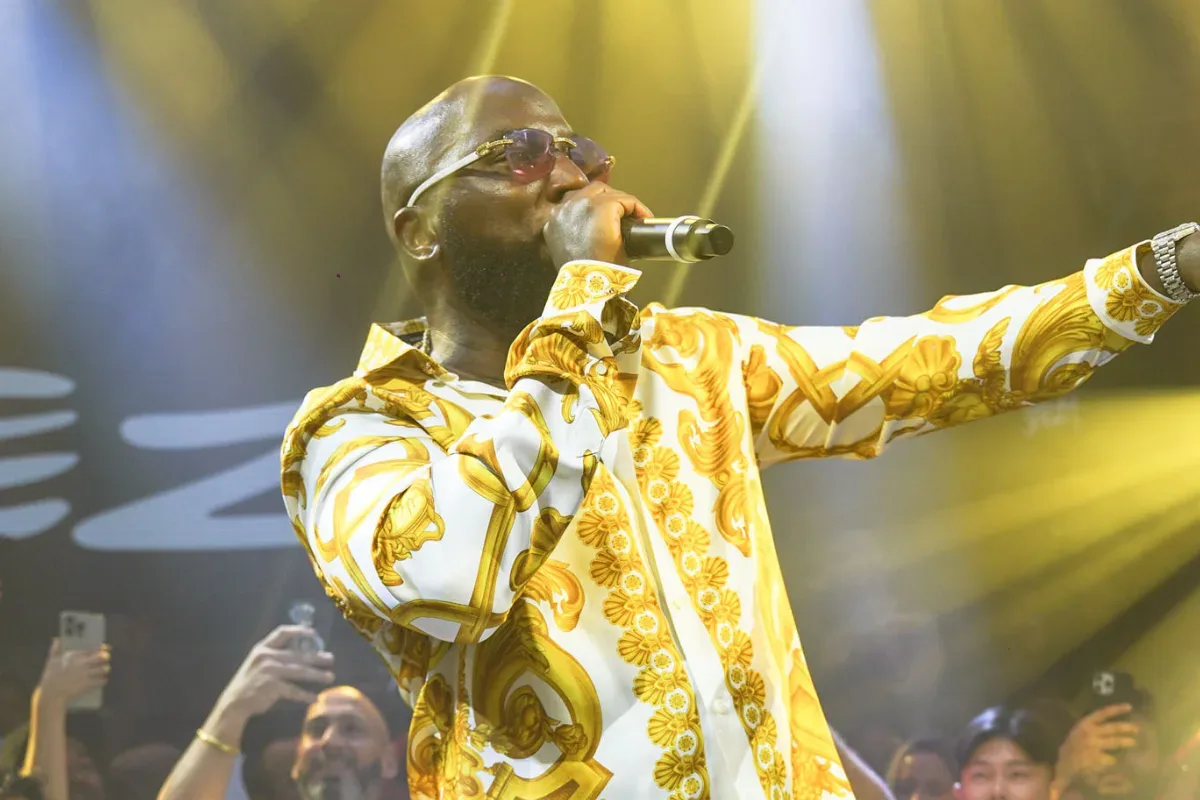
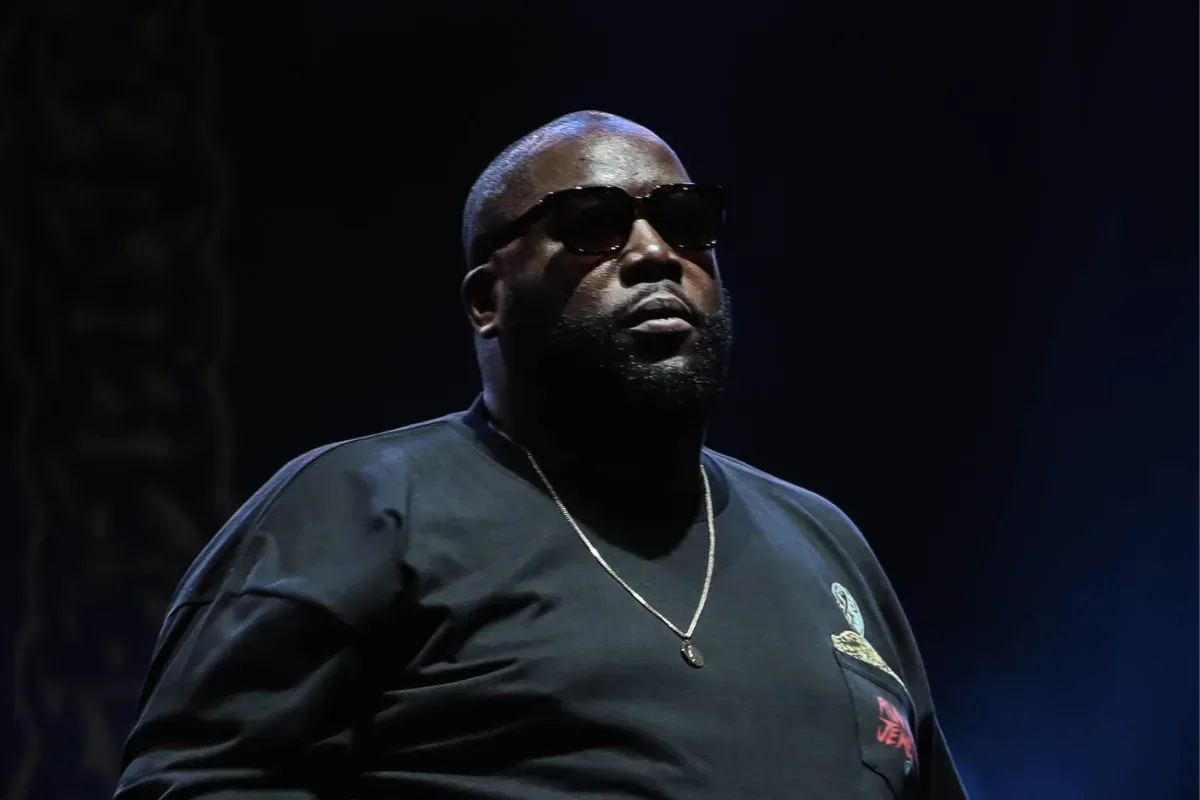
Killer Mike’s appearance at Keisha Lance Bottoms’ Georgia gubernatorial victory celebration was short, but its purpose was larger than a typical celebrity cameo. The Atlanta rapper and longtime civic advocate took the stage after Bottoms’ reported victory over Republican businessman Rick Jackson, using the moment to stress that a breakthrough election result is not an endpoint.
“They said it was impossible,” Killer Mike said. “Next election show them it’s possible again.”
That message placed the night’s celebration in a familiar frame for the Run The Jewels member: political participation is work that continues after the votes are counted. His public profile has long extended beyond music into arguments about voting, local ownership, economic power and the importance of people acting in their own communities. On this occasion, those ideas were tied to a result with substantial historical weight.
Bottoms, the former mayor of Atlanta, was reported to have won roughly 54 percent of the vote. The victory would make her Georgia’s 84th governor, the first Black woman elected governor anywhere in the United States, and the first Democrat to win Georgia’s top statewide office since 1998. She is set to succeed term-limited Governor Brian Kemp.
For an Atlanta artist whose public advocacy is closely linked to his home city, Killer Mike’s presence also made the hometown dimension impossible to miss. The celebration connected a statewide win to a larger political story about metro Atlanta’s influence, Black political leadership and the place of Hip-Hop figures within modern campaign coalitions.
A milestone with a longer Georgia context
Bottoms’ result does not emerge in isolation. The campaign followed two gubernatorial runs by Stacey Abrams, who became the first Black woman to win a major-party nomination for governor. Bottoms’ reported win would carry that history into new territory: not merely a nomination, but a statewide general-election victory.
It is important to distinguish those milestones. A major-party nomination is a party’s selection of its candidate for the general election. Winning a governorship means prevailing in that statewide general election and taking the executive office itself. The earlier campaigns expanded the sense of what was possible; Bottoms’ victory, as described, would create a separate national first.
The reported margin matters, too. A result of about 54 percent is more than a razor-thin outcome, though it does not remove the political constraints that can follow an election. Jackson reportedly invested more than $200 million of his own fortune in the contest, making Bottoms’ victory a notable one against a major personal spending advantage.
Related coverage includes Killer Mike Joins Keisha Lance Bottoms’ Historic Georgia Victory Celebration.
That does not mean campaign spending is irrelevant or that a single result settles the future of Georgia politics. It does mean that money alone did not determine the reported outcome. The campaign’s success is being presented as an example of a coalition overcoming a severe resource imbalance rather than a simple contest of who could spend the most.
Why Killer Mike fit the moment
Killer Mike was not presented as a detached entertainer dropping in for an election-night photo opportunity. He had campaigned for prominent Georgia Democrats during the midterm campaign, and he has repeatedly connected artistic visibility with civic participation. Georgia lawmakers also honored him at the state Capitol in 2025 for his music, civic work and economic impact in Atlanta.
His role at the event matters because celebrity participation can mean very different things. A famous person can amplify attention without doing much else. In this case, the supplied account ties Killer Mike directly to campaigning and to a longstanding public focus on political and economic agency. That background lends particular meaning to a statement focused on repeating success rather than simply celebrating it.
There is also a cultural point here. Hip-Hop is often discussed as a broad influence on youth culture, fashion, business and entertainment. This celebration showed a more specific use of that cultural reach: an Atlanta artist appearing in a civic space, reinforcing an argument that voters and organizers should remain engaged after a landmark win.
It is not a claim that one musician delivered an election. The available information does not support reducing the result to any single surrogate, endorsement or rally speech. Rather, Killer Mike’s presence illustrates how artists can become visible participants in political movements that are built by candidates, volunteers, voters and local organizations over a much longer period.
The broader music-world context is also relevant to why the appearance reads as more than a one-night event. Artists connected to regional scenes routinely carry relationships and perspectives beyond recorded music. For another example of the way Hip-Hop’s business and community ties can surface in public conversations, see Mia X’s account of Birdman’s role in securing Verzuz pay. The details are different, but both stories point to artists operating within networks of influence rather than solely as performers.
What Bottoms said she wants to pursue
Bottoms’ campaign platform included expanding Medicaid, raising Georgia’s minimum wage and increasing pay for teachers and other public employees. She also promised to challenge policies advanced by President Donald Trump’s administration.
Those commitments cover several distinct parts of government. Medicaid expansion, in this context, refers to broadening health-care coverage through the public insurance program. A proposal to raise the minimum wage concerns the legal wage floor for covered workers. Higher pay for teachers and public employees involves compensation policy for people working in state-supported roles. Each may share a campaign message about affordability and public investment, but each can require different legislation, funding choices and administrative steps.
The key practical limitation is that an election for governor does not automatically provide the votes needed to enact a full agenda. Republicans may retain control of at least one chamber of the Georgia legislature. If that occurs, Bottoms would need to navigate a divided-power environment: the governor leads the executive branch, while the legislature plays a central role in passing laws and shaping budgets.
That is why the language around these goals should remain precise. They are campaign pledges and proposed priorities, not accomplishments already delivered. The reported victory establishes the opportunity to pursue them; it does not establish how much of the agenda can become law, how quickly it could happen, or what compromises might be required.
What divided control can mean in practice
- Negotiation becomes central: Proposals may need support from lawmakers outside the governor’s party, particularly where legislation or appropriations are required.
- Priorities can move at different speeds: A governor may be able to emphasize some administrative goals more quickly, while major changes to wages, spending or eligibility can require a legislative process.
- Campaign promises meet budget choices: Raising public-employee compensation or expanding programs requires decisions about funding as well as policy intent.
- Public pressure remains relevant: The organizing message embedded in Killer Mike’s remarks applies after Election Day, when supporters may seek to influence the legislative process.
None of that diminishes the significance of the reported win. It clarifies the next phase. A historic election result changes who occupies an office and can change which ideas have an advocate at the center of state government. It does not erase institutional disagreement or the need to build support for specific measures.
Atlanta’s role in the statewide picture
The event also underscored a political dynamic identified in the campaign: metro Atlanta has become increasingly important to Georgia’s statewide map. Bottoms comes from Atlanta City Hall, Killer Mike is one of the city’s most visible artists, and the victory gathering brought those identities together in public.
Calling this a metro Atlanta story should not imply that the rest of Georgia is incidental. Statewide elections are decided through voters across the state. But the account of the campaign explicitly links the celebration to changing political power in the Atlanta area, and the city’s cultural reach helped give the event a national resonance.
That resonance rests on several overlapping facts: Bottoms’ prior role as Atlanta mayor, her reported statewide milestone, Killer Mike’s Atlanta roots, and the long-running connection between local civic identity and Hip-Hop. The result is a political image with cultural weight—an artist known for speaking about power and ownership standing beside a governor-elect whose win is being framed as a historic expansion of political possibility.
A call aimed past election night
Killer Mike’s comment was effective because it did not try to explain every policy fight or retell every part of the campaign. It concentrated the night’s meaning into a simple challenge: when people describe a victory as impossible, the response is to organize for the next one.
That is both celebratory and demanding. It honors Bottoms’ reported achievement while rejecting the idea that a breakthrough should be treated as self-sustaining. The next tests will be less theatrical than an election-night stage appearance: governing, legislative negotiation, public accountability and whether the coalition behind the campaign stays involved.
For Bottoms, the victory represents a move from Atlanta municipal leadership to the governor’s office, with national historical significance attached. For Killer Mike, it was another visible moment in a public life where music and civic participation regularly overlap. And for supporters in the room, the message was not simply that something unprecedented had happened. It was that the work required to make it happen again was already beginning.