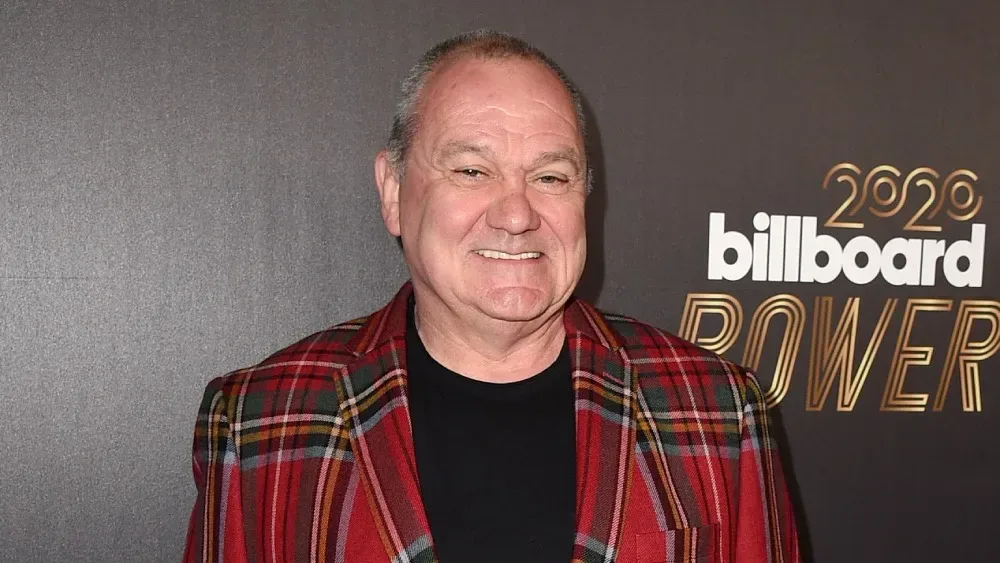
Kenny MacPherson, the music publishing executive, artist manager and co-founder of Big Deal Music Group, has died in Los Angeles at the age of 71. No cause of death was announced.
MacPherson’s career traveled from Glasgow’s Apollo Theatre to London promotion work, artist management in Los Angeles, major music publishing companies and independent publishing. Along the way, he was associated with a wide range of artists, including Supertramp, Radiohead, Underworld, the Blue Nile, Outkast, Ray LaMontagne, My Morning Jacket, the Yeah Yeah Yeahs, St. Vincent, Thom Yorke and TV on the Radio.
That scope is central to understanding his place in the business. MacPherson was not identified only with one band, genre or era. His work spanned live venues, management and the ownership-and-administration side of songwriting, a part of the music industry that can be less visible to listeners but is consequential to how songs are represented commercially over time.
From Glasgow’s Apollo Theatre to Los Angeles
A native of Scotland, MacPherson began his professional path at Glasgow’s Apollo Theatre, eventually becoming its manager. Venue management is fundamentally different from representing an artist or operating a music publisher: it puts an executive in the practical center of live music, where performers, promoters, crews and audiences converge. The available record does not detail individual Apollo engagements during his tenure, but it establishes the theatre as the starting point for a career that would subsequently cross several sides of the industry.
His Apollo work led to a job in London with Harvey Goldsmith Entertainment. The Manhattan Transfer, one of the promoter’s acts, later hired MacPherson and brought him to Los Angeles. He subsequently managed Supertramp before moving into music publishing.
Artist management generally concerns guiding and advocating for a performer’s professional career. Music publishing, in contrast, centers on songs and their writers: the underlying musical works, rather than a specific recorded performance. A publisher may work with songwriters, administer rights, seek placements and help make sure compositions are properly represented. The distinction matters because a song can have a life through multiple recordings, performances and uses. MacPherson’s move from management to publishing therefore marked a move from working directly around an act’s career to working in the business built around musical compositions and their creators.
Long-running relationships in publishing
MacPherson joined Warner/Chappell in 1989. During the following decade-plus, he signed or worked closely with Radiohead, Underworld, Paul Westerberg, Afghan Whigs and the Blue Nile, among many others. The supplied account does not specify the individual terms or structures of those relationships, and it would be inaccurate to assume every artist had the same agreement. What it does show is a sustained role in a period that included influential alternative, electronic and songwriter-led acts.
Radiohead’s appearance in that list is especially indicative of the range associated with MacPherson’s work, alongside Underworld’s electronic music, Paul Westerberg’s songwriting career, Afghan Whigs’ rock catalog and the Blue Nile’s distinctive body of work. The common thread is not a single sound. Rather, the record points to publishing relationships across artists whose music reached audiences through very different scenes and formats.
For fans, publishing credits can sometimes seem removed from the music itself. Yet they are part of the framework that accompanies a song beyond the original recording session. They can affect how a composition is administered as it moves through releases, performances and other commercial uses. MacPherson’s career was rooted in that behind-the-scenes layer while still retaining a direct connection to artists and managers.
Chrysalis, BMG and the creation of Big Deal
In 2002, MacPherson became president of Chrysalis’ North American operation. In that role, he worked closely with Outkast, Ray LaMontagne, My Morning Jacket, the Yeah Yeah Yeahs, St. Vincent, Thom Yorke and TV on the Radio, among others.
The breadth of the roster again stands out. It includes major hip-hop artists, singer-songwriters, indie-rock bands and solo performers. The record does not place MacPherson’s work in a single creative lane; it instead describes an executive whose professional relationships reached across the shifting boundaries of popular music.
After BMG acquired Chrysalis in 2010, MacPherson moved to BMG. Two years later, he co-founded Big Deal Music, bringing many of the artists previously named with him. The step was significant in a practical sense: it placed MacPherson in a new independent publishing enterprise while maintaining relationships developed over earlier phases of his career.
Big Deal was acquired and effectively merged with Hipgnosis Songs Group in 2020, and MacPherson was named chief executive officer of Hipgnosis Songs Group. Sony Music acquired that company in 2025. Those transitions trace a changing corporate path for the business, from Big Deal’s founding through its incorporation into Hipgnosis Songs Group and then Sony Music’s acquisition.
MacPherson also launched Oh Aye Music in 2021. Its name nodded to his Scottish roots, linking a late-career venture to the country where his path began. Music-industry careers often unfold across specialist roles that audiences rarely see; MacPherson’s was unusually legible as a chain of such roles: venue manager, promoter-side employee, artist manager, publisher, company co-founder and chief executive.
Why the publishing role matters
Music publishing is often confused with a record label, but the two terms refer to different parts of the business. A record label is generally connected to recorded music, while a music publisher works with the composition—the lyrics and music as a written work—and the people who create it. One song may be recorded by multiple performers, while publishing concerns remain tied to the composition itself.
This is why publishing executives can have influence across an artist’s career without being the public-facing figure in an album campaign or a tour. Their work may involve long-term writer relationships and catalogs, the collective body of songs whose rights are administered. MacPherson’s professional history, which includes both management and publishing, placed him on either side of that distinction.
His move from a venue in Glasgow through Los Angeles management and then into publishing also illustrates how connected the industry’s jobs can be. Knowledge of artists’ careers and live performance environments can inform publishing relationships, while publishing work can remain connected to the creative and professional direction of artists over many years. The available account establishes those career changes, even if it does not spell out the decisions or negotiations behind them.
Music remains part of a broader entertainment conversation at Joking Joystick as well, from industry figures to major live events such as Ye’s first Indonesia concert.
2023 lawsuit
MacPherson’s career was also marked by a 2023 lawsuit filed by a former Chrysalis employee alleging sexual misconduct. A mediation had been scheduled for the following month. The supplied information does not state an outcome or resolution, and the allegation should not be represented as an established finding.
MacPherson’s death closes a decades-long career that began in a storied Glasgow venue and later touched management, global publishing companies, an independent publisher and a corporate leadership role. His professional associations encompassed a large and stylistically varied group of artists, while the later legal allegation remains an important part of the public record described here, with no result provided.