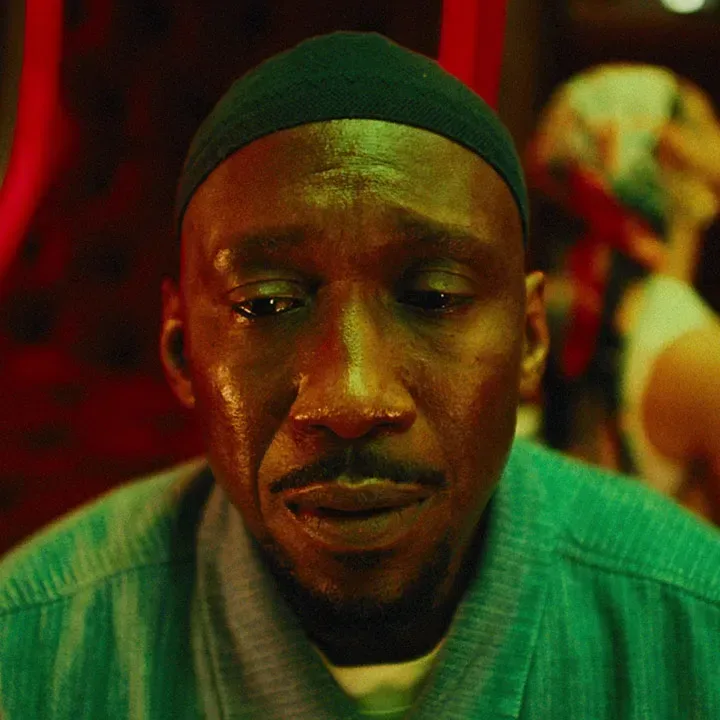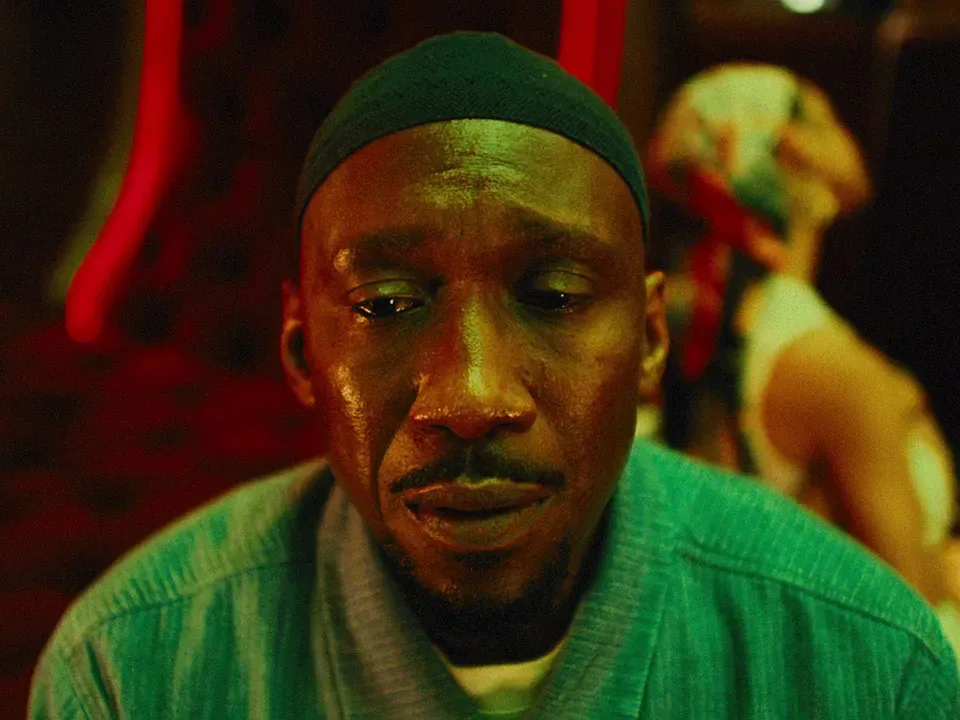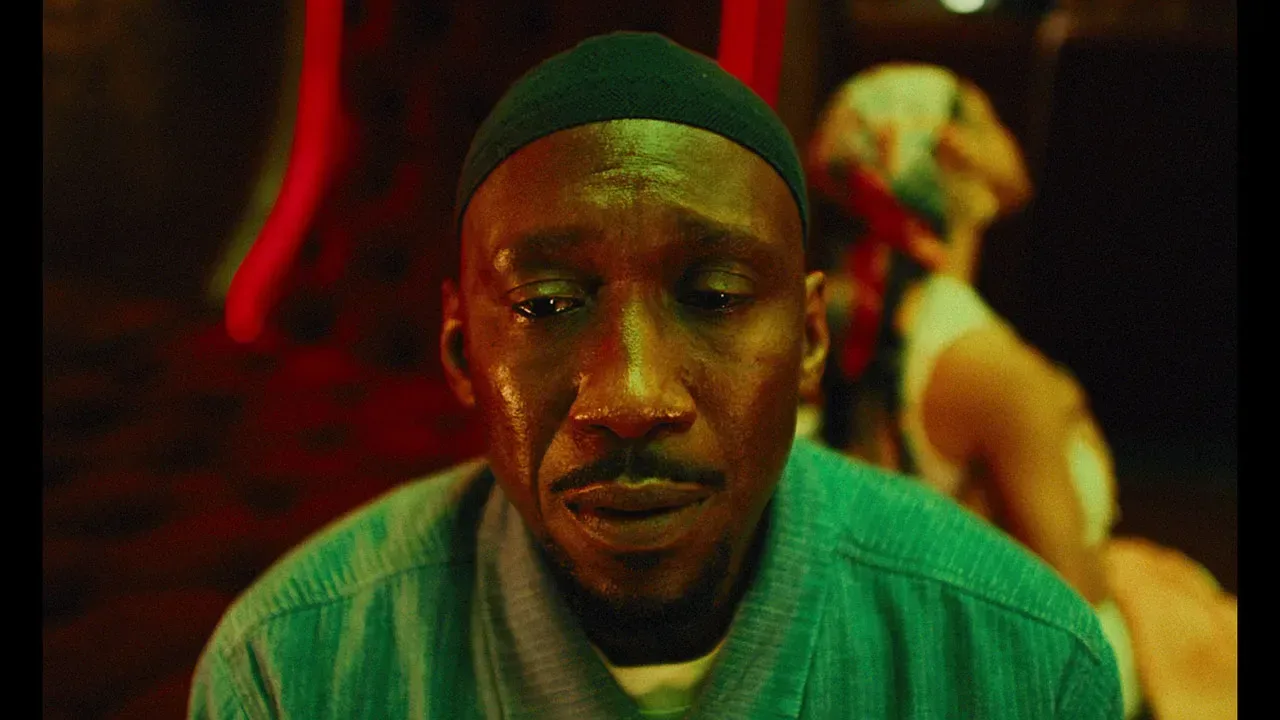
Your Mother Your Mother Your Mother places private grief inside a story built around pressure, family responsibility and faith. Mahershala Ali plays Latif, a hitman facing the death of his wife while trying to care for his family and reckon with his beliefs. Around him are two characters who approach that turmoil from very different directions: a pastor played by John Cho, positioned as an antagonist despite ostensibly good intentions, and Latif’s daughter Fatiha, played by Adia, who is grieving while trying to support both her father and brother.
New comments from Cho and Adia offer a useful look at two very different forms of performance preparation. Cho describes discovering his character from the outside in: working with costume designer Deirdra Elizabeth Govan to find a visual identity that eventually included cowboy boots, a hat, a memorial shirt and gold grills. Adia, meanwhile, developed Fatiha’s inner life through a written timeline and journal entries in the character’s voice before deliberately putting that preparation aside once filming began.
Neither approach is a magic trick, and the two methods are not opposites. Together, they show how actors can turn broad material on the page into people with history: one through clothes and physical transformation, the other through imagined memory and emotional continuity.
Cho’s pastor was not fully defined on the page
Cho’s pastor is described as a complicated antagonist: someone whose intentions may be good but whose methods become extremist. That kind of character can be difficult precisely because it cannot simply be played as an obvious villain. The performance needs a coherent person underneath the threat, not merely a collection of ominous gestures.
Cho said much of the character was initially undecided. His voice, possible accent and appearance were all open questions as the work began. Rather than treating that uncertainty as a gap to be quickly filled, the production appears to have used collaboration to find the pastor’s identity. Cho recalled being unsure of some of Govan’s early suggestions, even as the pieces eventually formed a clear whole.
“I didn’t know what he looked like or sounded like. Should he have an accent? Should he not? All of those things were undecided for me, and we just came in and started working.”
That is an important distinction. A costume is often discussed as decoration, but for an actor it can be a practical storytelling tool. A hat or pair of boots changes posture, movement and how a character occupies a room. A more personal garment can suggest the life someone lived before the scene begins. The material details do not answer every question about motive, but they can give a performer something specific to react to every time the camera rolls.
In Cho’s case, the final combination is deliberately striking: cowboy styling alongside gold grills. The central pieces, however, were not only about looking unusual. He singled out a shirt commemorating the pastor’s mother’s death and the grills as the elements that anchored him most firmly in the role.
“It was the shirt that commemorated his mother’s passing… it was like my superhero outfit,” Cho said. Of the grills, he added that looking in the mirror made the separation immediate: “That’s not me. That’s definitely not me.”
Why the grills and memorial shirt matter
In this context, the grills are more than a flashy flourish. Cho described them as giving him a piece of the pastor’s history and helping move him out of his own head. That is the practical value of a transformative detail: it creates distance between performer and character while supplying a tangible prompt for behavior.
The memorial shirt works differently. If the shirt marks the death of the pastor’s mother, it gives the costume an emotional association rather than merely a fashion one. The film’s central family is also dealing with a mother’s death, so the detail may create a thematic echo between antagonist and protagonist. That connection is an interpretation of the provided character details, not confirmation that the film explicitly draws a line between their losses. Still, it helps explain why Cho calls the shirt his “superhero outfit.” It offers an intimate cue beneath an outwardly bold presentation.
There is also a revealing tension in the pastor’s design. Cowboy boots, a hat and gold grills could have become a surface-level visual gag in another kind of movie. Here, Cho’s account frames them as parts of a process to find a man whose faith, grief and extremism coexist. The clothing is unusual because the character is not designed to be generic.
Costume design can be especially valuable in a role like this because an antagonist needs readable conviction. The audience may reject what a character does, but the character cannot experience himself as a random obstacle. A coherent look does not excuse extremist methods; it can instead make the figure more unsettling, because it signals self-definition and certainty.
Adia built Fatiha’s life beyond the scenes
Adia’s preparation began from the inside. Fatiha is navigating the loss of her mother while attempting to be there for her father and brother. Adia said she first made a timeline for the character, then kept a journal and wrote in Fatiha’s voice.
A character timeline is exactly what it sounds like: a performer’s working chronology of events that shape a fictional person before, during and potentially after the story. It is not necessarily something viewers will ever see or something the script directly spells out. Its purpose is to establish continuity. When a character is grieving, for example, the actor can consider how long the loss has been present in that person’s daily life, what changed around it and which pressures are happening at the same time.
For Fatiha, those pressures include puberty and hormones as well as bereavement. Adia’s point is not that a journal can reduce those experiences to a checklist. Instead, writing through them gives the performer room to consider what may be happening in the character’s head during periods outside the film’s immediate scenes.
“I did a lot of journaling in her voice to pull out what some of her thoughts might be in that moment in time that we are finding her, but even the times before we meet her in the film and after,” Adia said.
That method can help an actor avoid treating each scene as an isolated emotional assignment. If Fatiha is angry, quiet or supportive at a particular moment, the timeline gives that choice a surrounding context. The emotional state can feel like a stage in an ongoing life rather than a switch flipped for a single scene.
Just as importantly, Adia explained that preparation had to be released during shooting. She needed to trust that the research and writing would remain underneath the performance, then focus on what the day’s scene actually required.
“I really had to work on letting go of all of that and trusting that my prep work would have a beautiful undercurrent to whatever I was presenting in the moment,” Adia said.
That balance is crucial. Too much visible preparation can make a performance feel calculated; too little can leave it without a stable emotional foundation. Adia’s description suggests a two-stage process: build the character’s unseen past, then remain responsive to the people and circumstances present on set.
Two routes to the same goal: presence
Cho and Adia’s processes differ in emphasis, but both lead toward presence. Cho found a way into his pastor through external pieces that made the reflection unfamiliar. Adia used private writing to map Fatiha’s unseen emotional life, then set the map down so she could react naturally in the moment.
For viewers, the takeaway is not that costumes matter more than scripts or that journaling is the key to every dramatic role. These tools work because they address particular problems. Cho was playing a character whose sound and silhouette were still emerging. Adia was playing a daughter carrying many layers of family responsibility and loss, much of which needed to be felt even when it was not spoken.
The result should also sharpen expectations for the relationships at the story’s center. Latif is struggling to parent after his wife’s death while facing an antagonist shaped by his own apparent relationship to loss. Fatiha is not simply there to reflect her father’s pain; Adia’s preparation points to a character with her own development, concerns and interior voice. In a movie defined by grief and faith, that independent perspective matters.
Your Mother Your Mother Your Mother is currently in US theaters. For more on performers bringing conflicted figures to the screen, see our coverage of Jeremy Renner’s comments on Hawkeye and Avengers: Doomsday.