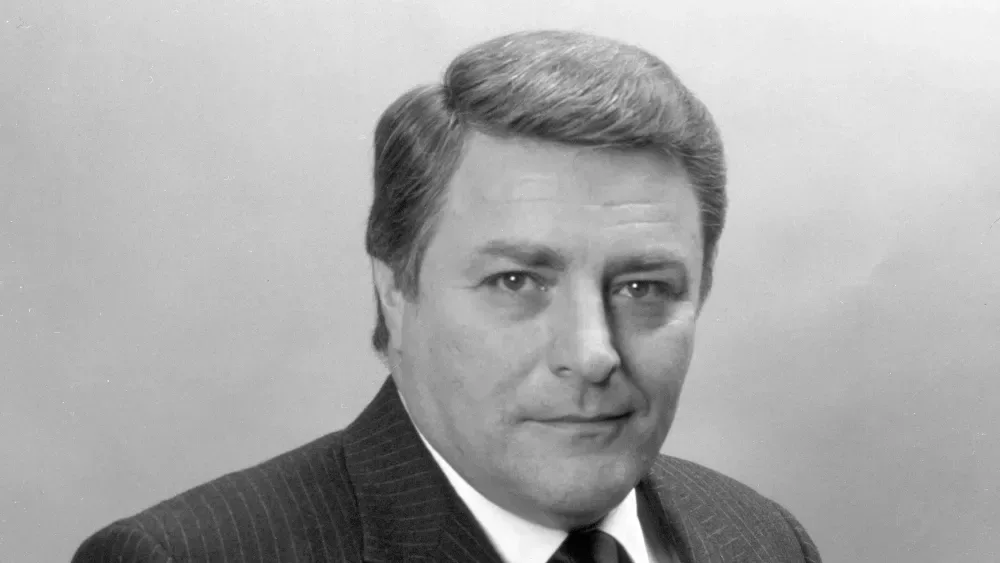
James H. Rosenfield Sr., a longtime television executive whose career at CBS spanned two decades of pivotal network programming, died Sept. 26 at age 97.
Rosenfield rose from television network sales work in the 1960s to become president of the CBS Television Network. He later served as executive vice president of the CBS Broadcast Group, a role that put him in charge of major operating divisions including CBS Television Network, CBS News, CBS Entertainment and CBS Sports.
His years at the company overlapped with an era that produced enduring American television fixtures including All in the Family, M*A*S*H and 60 Minutes. While Rosenfield was an executive rather than an on-screen creative figure, the scope of his portfolio illustrates how much behind-the-scenes leadership is required to operate a broadcast network: sales, programming, news and sports all have different goals, but they must function as parts of the same business.
A career from radio to network leadership
Born in Boston on July 18, 1929, Rosenfield attended Roxbury Latin School and later served as an alumni trustee. He graduated from Dartmouth College in 1952. At Dartmouth, he hosted a student radio program called Rhodes Record Rack, an early connection to the medium that would define much of his professional life.
His later work came at a moment when broadcast television had an unusually central place in U.S. popular culture. A national network did not simply schedule shows. It needed to attract advertisers, maintain relationships with affiliated stations, build a coherent lineup and support distinct editorial and production operations. Rosenfield’s progression through CBS placed him close to several of those interconnected responsibilities.
He began as an account executive in television network sales. In this context, network sales means selling advertising access around programming to marketers and agencies. That work is more consequential than the job title can suggest: advertising revenue supports the programming operation, while the size and makeup of an audience influence what advertisers are willing to buy. Sales leadership therefore sits at the meeting point of commercial strategy and the content viewers ultimately receive.
William S. Paley, CBS founder and chairman, became an important mentor to Rosenfield. One of Rosenfield’s early major assignments was handling CBS’s sales relationship with Grey Advertising. The responsibility offers a clear example of the trust placed in an executive working within an advertising-supported network model. A relationship with an advertising agency was not merely a transaction around one program; it could shape the broader connection between a network and major clients seeking nationwide audiences.
Responsibility across the CBS operation
Rosenfield ultimately became president of the CBS Television Network and then executive vice president of the CBS Broadcast Group. The latter title matters because it represented oversight of multiple divisions, not a single genre or program slate.
Related coverage includes James H. Rosenfield Sr., Former CBS Executive, Dies at 97.
- CBS Television Network was the core broadcast-network operation.
- CBS News covered journalism and news programming.
- CBS Entertainment encompassed the entertainment side of the network’s operations.
- CBS Sports handled sports broadcasting.
Those divisions serve different audiences and work on different schedules, but a broadcast group executive must consider their shared demands on resources, branding and advertising strategy. News can carry a public-service purpose and a distinct editorial identity; sports requires event-based planning; entertainment depends on developing and scheduling programs that can hold viewers’ attention. The practical challenge is coordination without treating every division as though it has the same purpose.
Rosenfield’s tenure is associated with the period in which CBS carried landmark programming such as All in the Family, M*A*S*H and 60 Minutes. It would be too simple to assign the success of these major productions to one executive, especially without a detailed record of his involvement in each. What can be said is that Rosenfield held senior positions within the organization that supported and distributed them, and that his portfolio covered the network’s essential operating arms during an influential period in television.
The lasting visibility of those shows also demonstrates why broadcast executives can leave an imprint on culture without becoming household names themselves. Viewers tend to remember characters, anchors, reporters, athletes and producers. Network leadership determines much of the institutional framework that lets programming reach a large public in the first place.
Work after CBS
Rosenfield retired from CBS in 1985, but he remained active in communications and media. He became chairman and chief executive officer of John Blair Communications, Inc. He later founded JHR & Associates, a consulting firm that worked with traditional and new-media companies.
That transition from a major broadcast network to consulting across traditional and newer media reflects the range of experience he brought from his CBS years. “Traditional media” generally refers to established formats such as television and radio, while “new media” is a broad term for emerging media businesses and distribution models. The available record does not specify JHR & Associates’ clients or projects, but its stated focus indicates that Rosenfield continued to apply his experience as the wider media field evolved.
His involvement also extended to professional and nonprofit organizations. Rosenfield served as president of the International Radio & Television Society, as chairman and board member of the Advertising Council, and on the boards of Internews International and Salon Media. He was a lifetime fellow of the International Council of the Television Academy and received an honorary doctorate from St. John’s University.
These roles show a career that reached beyond one company. Industry associations create forums for professionals working across broadcasting and advertising, while board service can help organizations draw upon business experience and governance. The Advertising Council role is especially consistent with Rosenfield’s longtime expertise in the relationship between media platforms, audiences and public-facing messaging.
Philanthropy and family
Rosenfield was also a founding board member of Reisenbach Philanthropies and later its chairman emeritus. The organization was founded in memory of John Reisenbach, the son of Rosenfield’s friend Sanford Reisenbach. “Chairman emeritus” is an honorary designation generally given to a former chair, recognizing an ongoing association with the organization without implying that the person is still handling its day-to-day leadership.
He is survived by his partner, Charlotte Rosenblatt; his children, Laurie Rosenfield and Jim Rosenfield Jr.; five grandchildren; and five great-grandchildren. Donations may be made to Reisenbach Philanthropies.
Rosenfield’s career covered radio, broadcast-network sales, executive leadership, communications management and media consulting. Its clearest throughline is an understanding that television is both a cultural medium and a complex institution—one dependent on programming, journalism, live events, advertising relationships and the people coordinating all of them. His death follows the recent loss of other notable broadcasting voices, including radio and television host Angela Stribling, and is a reminder that the history of American media was shaped not only by familiar performers but by the executives who built the systems behind the screen.