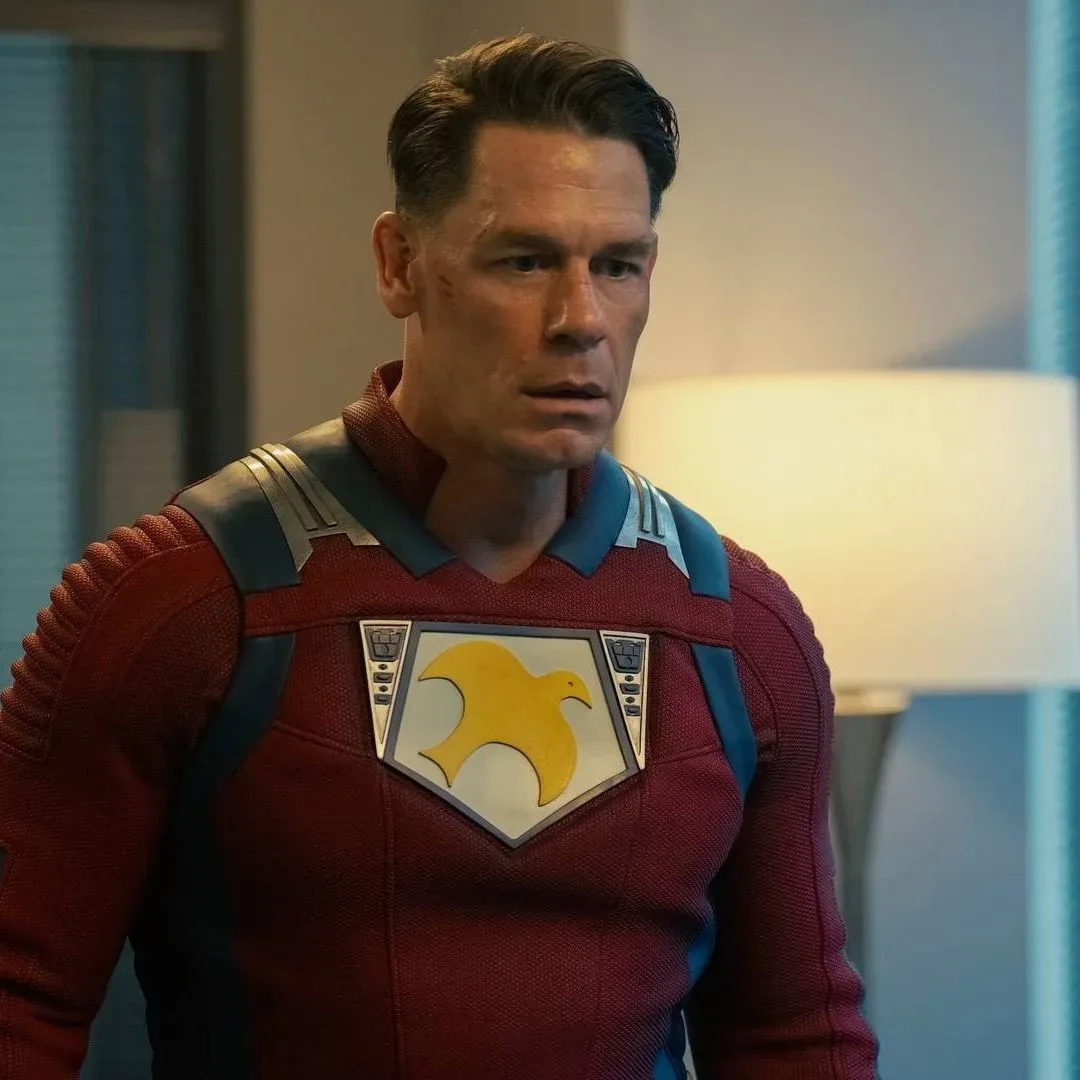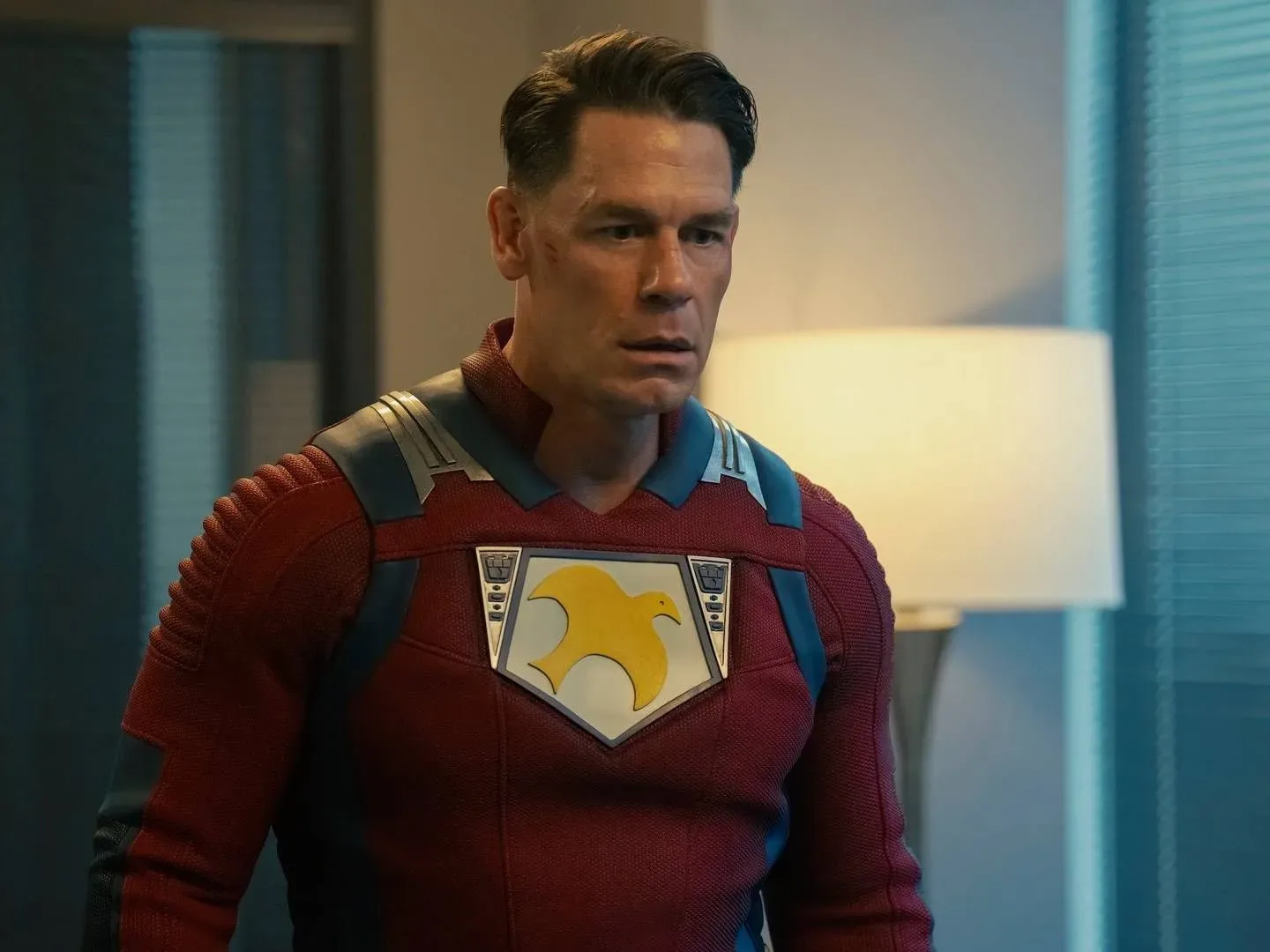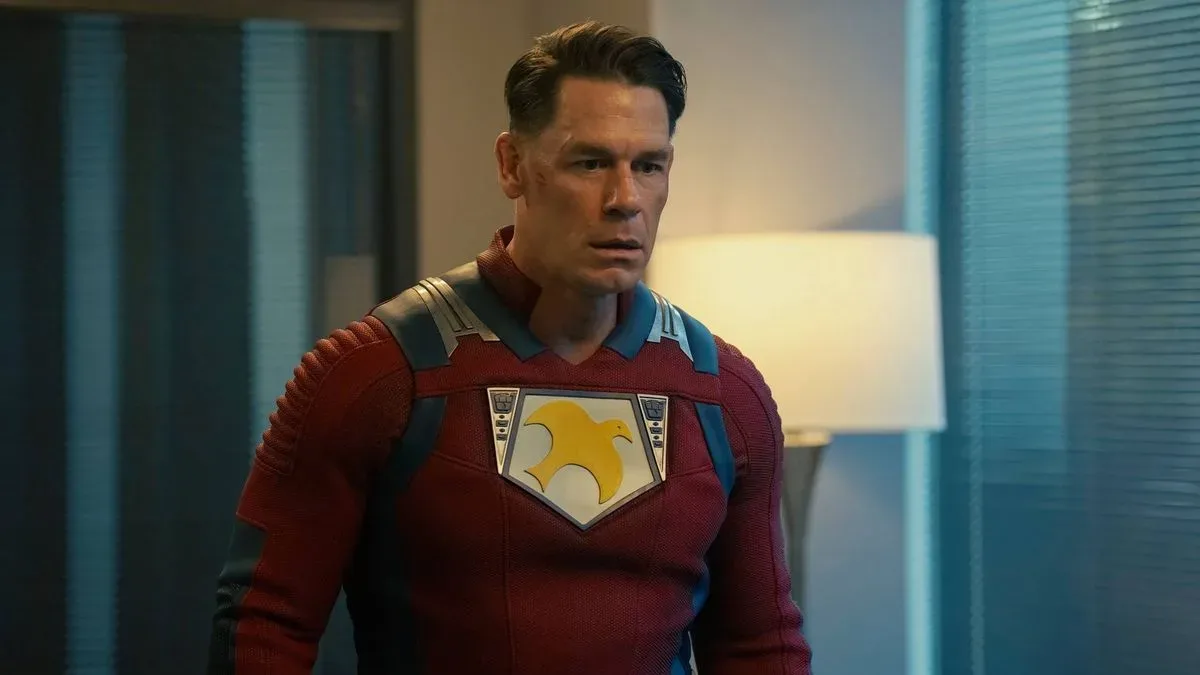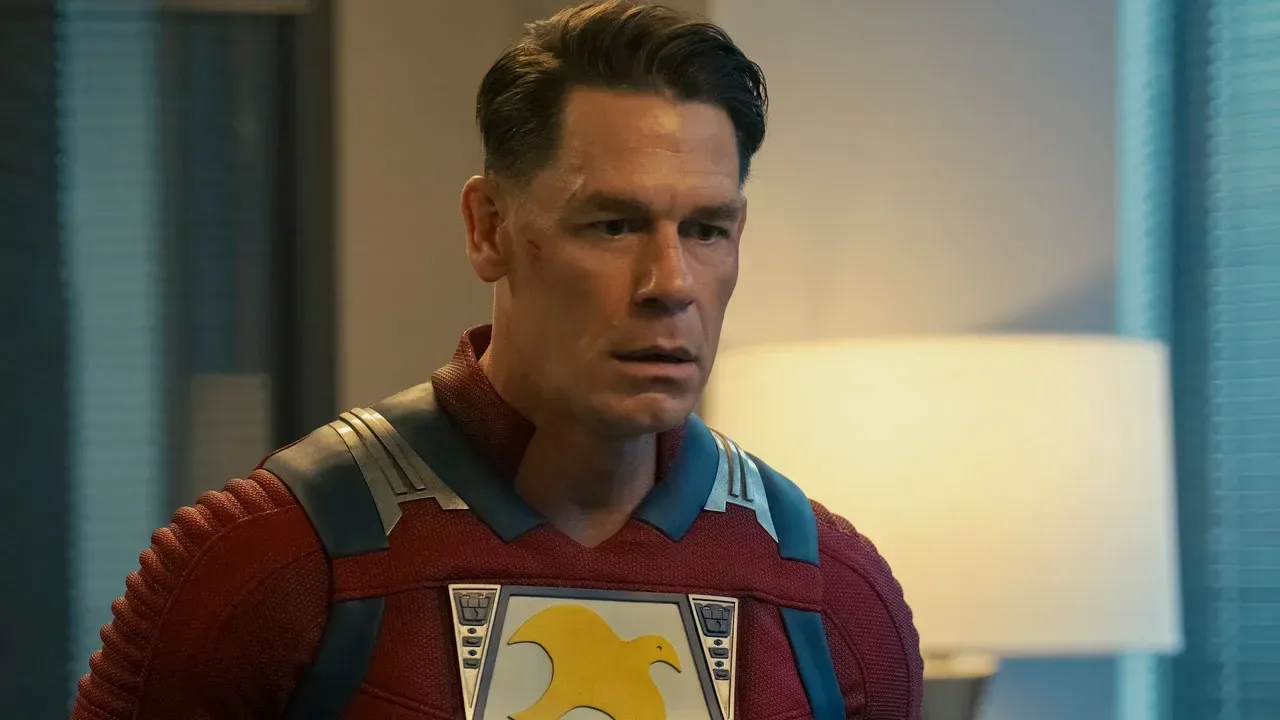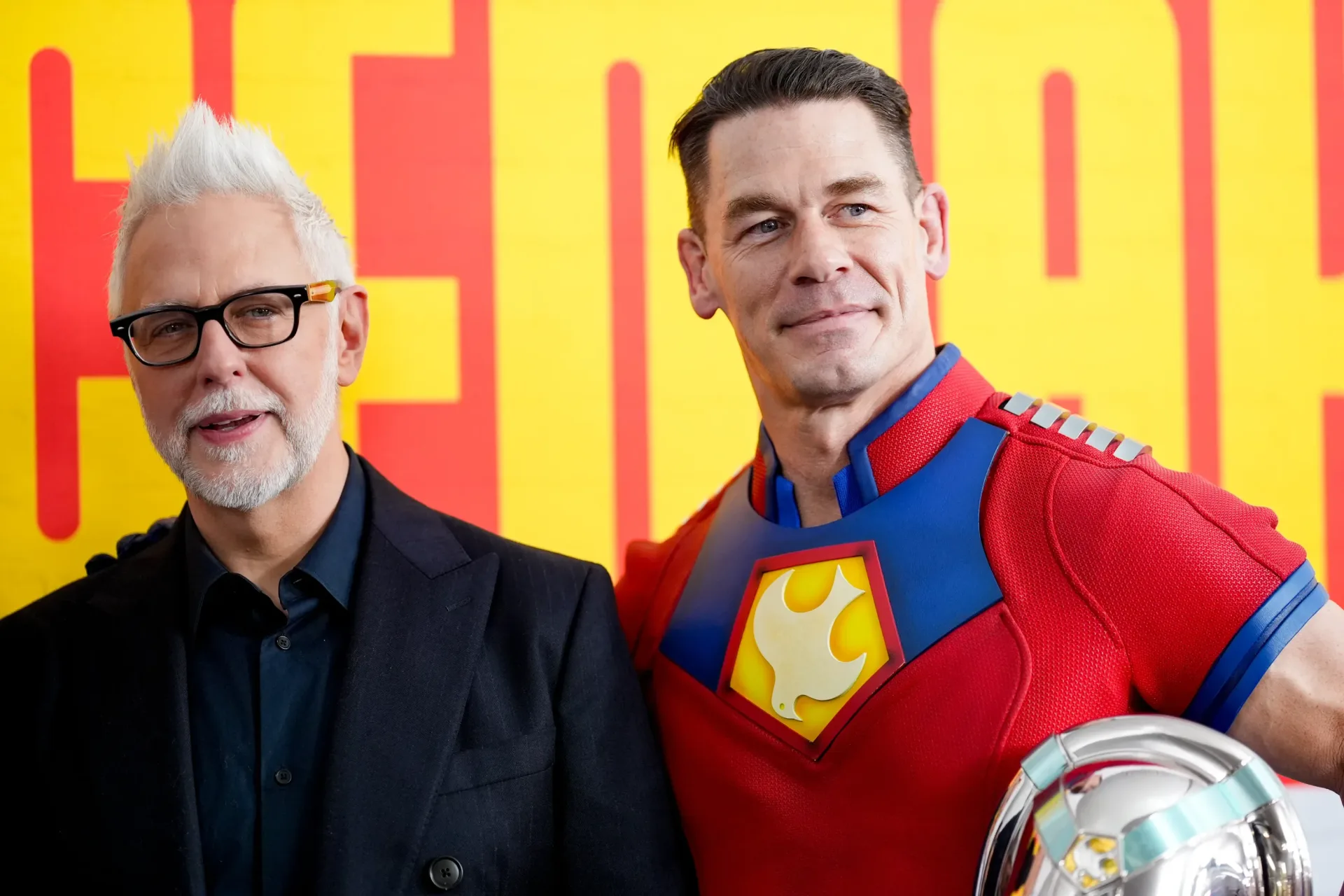
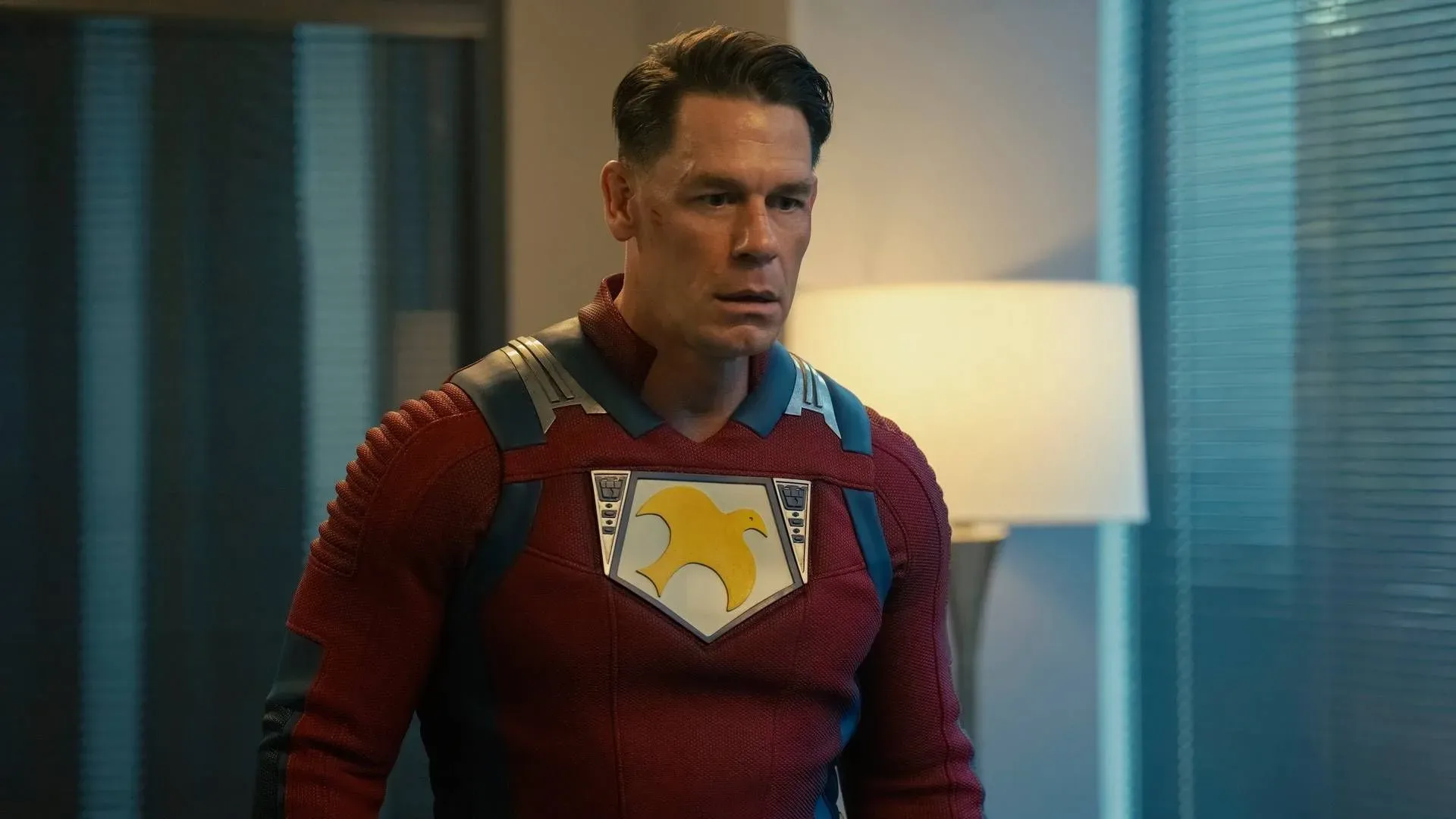
A single Instagram like is not a casting announcement, cancellation notice, or formal studio roadmap. Still, James Gunn’s reaction to a fan comment claiming, “We’re never going to see Peacemaker again,” has landed at a moment when even small signals carry outsized weight for DC audiences.
Gunn did not reply to the commenter or explicitly state that John Cena’s Peacemaker is finished. But the like has been read as a potentially meaningful indication that the character’s future is in jeopardy. The timing matters: Gunn and Peter Safran are stepping down as DC Studios co-CEOs, with former Marvel Studios executive Jeremy Latcham set to take over on December 1, 2026.
That change follows Skydance’s acquisition of Warner Bros. earlier in 2026. The new ownership has not laid out a full public plan for the DCU, but reporting has suggested that Gunn’s Chapter One slate could be dismantled. That possibility puts a large asterisk beside characters and projects closely tied to the outgoing leadership team—especially a hero as directly associated with Gunn as Peacemaker.
What Gunn’s Like Does—and Does Not—Confirm
There is a crucial distinction between an implication and an official confirmation. Gunn liking a comment is a public action, but it does not establish whether Peacemaker is permanently gone, temporarily paused, recast, moved into a different continuity, or simply not part of an immediate production plan.
In practical terms, fans should treat the interaction as a warning sign rather than a definitive announcement. It suggests Gunn may share the commenter’s pessimism, or at minimum does not object to the idea being associated with the current upheaval. It does not provide a timeframe, a reason, or confirmation of a decision by Skydance or the incoming DC Studios leadership.
That nuance is particularly important in franchise coverage, where “never again” can mean several different things. A character might disappear because a planned continuity is replaced. They might return years later in a new project. Or the performer and creative team might move on while the character remains available for a future reinterpretation. None of those outcomes can be settled from a social-media like alone.
What can be said is that Peacemaker now looks less secure than he did when Gunn and Safran were still steering DC Studios. A character’s odds are inevitably affected when the executive structure behind a shared universe changes, particularly when that character was built around one filmmaker’s sensibility.
Why Peacemaker Is Especially Exposed
Peacemaker’s modern screen identity is unusually intertwined with Gunn. John Cena first played Christopher Smith in Gunn’s 2021 film The Suicide Squad, then carried the role into an HBO series centered on the loud, violent, emotionally damaged antihero.
That makes Peacemaker different from a character who has existed across several recent films, multiple performers, or self-contained creative teams. Gunn did not merely inherit the character as part of a broader corporate universe; he helped define the specific version audiences know. If a new studio strategy aims to move away from the outgoing era, a Gunn-created focal point naturally becomes vulnerable.
The reported possibility of dismantling Chapter One also raises a broader continuity question. Continuity is the connected sequence of stories, characters, and events that a franchise treats as part of the same fictional history. Reworking it can range from selective changes to a full reset, often called a reboot. A reboot can retain familiar names while replacing actors, tone, backstory, or prior plot connections.
For Peacemaker, the issue is not only whether another season or appearance happens. It is whether the version played by Cena, with its direct links to The Suicide Squad and Gunn’s DC storytelling, remains part of the company’s preferred on-screen future.
The available information does not establish that every Chapter One character will be erased. But Peacemaker’s close relationship to Gunn means the Instagram moment has been taken as a more pointed signal than it would be for a less personally connected DC figure.
The DCU Is Not Necessarily Being Wiped Clean
There is also reason not to interpret the leadership transition as proof that every existing plan will vanish. In his statement about departing the co-CEO role, Gunn said he was relieved to return to “pure filmmaking.” He also said that he and Safran were not immediately done with DC or superhero work, while adding that “the characters we set up will live on.”
That language is broad, but it is materially more hopeful than a declaration that the entire initiative is ending. Characters can “live on” in many ways: in projects already far enough along to proceed, in revised productions, under different creative leadership, or through stories that preserve parts of what came before.
Two projects described as deep in development, Man of Tomorrow and The People v. Gorilla Grodd, are still moving ahead. Their status demonstrates that the transition is not automatically an all-stop order for everything associated with the previous leadership.
However, development is not the same thing as release, and a project’s advanced state does not answer what the wider DCU will look like afterward. It simply means there are at least some productions with enough momentum to remain in play. That is a meaningful distinction for fans trying to separate known information from the most dramatic version of the rumor.
Superman, Supergirl, and the Cost of a Reset
The uncertainty extends beyond Peacemaker. David Corenswet’s Superman and Milly Alcock’s Supergirl are among the DCU faces potentially affected if Skydance opts to replace the current Chapter One approach. The situation recalls the prior shift from the DCEU—the earlier DC film universe—to the current DCU framework, when familiar characters and actors were not all carried forward.
A large-scale reset has obvious appeal for a new leadership team: it can simplify planning, establish a unified strategy, and place a clear stamp on the next era. Yet it also brings trade-offs. Audiences who have already invested in particular performers and story threads may be asked to start again. Projects in development can become harder to position if the overarching continuity is in flux. And characters with distinctive creative origins, such as Peacemaker, can become early casualties because they are so clearly identified with the previous regime.
There is no confirmed public blueprint saying that Cena, Corenswet, Alcock, or other performers will be replaced. The reporting and social-media activity point to uncertainty, not settled casting decisions. But a leadership handover on this scale understandably changes how viewers assess every character’s prospects.
For a franchise designed as an interconnected universe, confidence is part of the product. Viewers need not know every future title, but they generally need a sense that a current story has somewhere to go. When the studio’s leadership and long-term structure are both changing, even a minor interaction online can feel like a clue to a larger unfinished puzzle.
Lanterns Shows the Uncertainty Is Wider Than One Character
Peacemaker is not the only DC property facing unanswered questions. Lanterns, despite becoming one of HBO’s most successful new shows, has not yet received a second-season renewal. Showrunner Chris Mundy has characterized the odds of another season as a 50/50 proposition.
Reporting has also indicated that Skydance does not believe the series is capturing the zeitgeist. In entertainment terms, the zeitgeist is the wider cultural momentum around a work—the sense that it has become a shared subject of conversation beyond its core viewers. It is not a precise metric like an episode count or a renewal order. It is an assessment of relevance, visibility, and sustained public attention.
That makes Lanterns a useful comparison point, even if its circumstances are not identical to Peacemaker’s. Strong performance alone may not settle a project’s future during a restructuring. Corporate strategy, brand direction, perceived cultural impact, and the preferences of incoming executives can all shape what survives.
The key difference is that Lanterns has an explicit 50/50 assessment from its showrunner, while Peacemaker’s immediate uncertainty stems from Gunn’s ambiguous Instagram activity and the broader possibility of a DCU overhaul. Neither situation currently amounts to a definitive public cancellation announcement.
What Fans Should Watch for Next
The most informative developments will not be another round of interpretation over likes or comments. They will be formal decisions: a new DC Studios slate, renewals or non-renewals, casting announcements, production updates, and statements from the incoming leadership about which existing projects and performers remain central to the company’s plans.
Until then, there are three reasonable takeaways. First, Peacemaker’s future appears genuinely uncertain, and Gunn’s like has intensified the concern. Second, uncertainty is not confirmation that the character is gone forever. Third, the DCU is in a transition where individual projects may be judged on more than popularity or creative momentum alone.
For now, the apparent contradiction is the story: titles such as Man of Tomorrow and The People v. Gorilla Grodd are still proceeding, Gunn has said the characters introduced under his and Safran’s tenure will live on, and yet a Gunn-backed character may be heading for the exit. Whether that is evidence of a selective reshaping of the DCU or the first sign of a deeper reset remains unresolved.
DC viewers can also see how another high-profile franchise season is being received in coverage of The Rings of Power Season 3’s opening Rotten Tomatoes score.