
J Noa has won her first Latin Grammy, sharing the Best Rap/Hip Hop Song award with Trooko for “Antisistema.” The win, announced November 12 in Las Vegas, ends a four-year run of consecutive nominations for the Dominican rapper and marks a significant songwriting recognition for a track framed around artistic independence.
“Antisistema” was released in May, ahead of the ceremony. Its central idea is resistance to prescribed industry formulas: the pressure to make work that fits a commercial template, rather than allowing an artist’s own voice and development to set the terms. That makes the award’s category important. Best Rap/Hip Hop Song recognizes songwriting, putting the focus on the composition behind the record as credited to J Noa and Trooko.
A first win after four years of nominations
J Noa’s nomination streak began with “Autodidacta” in 2023. It continued with “Cabecear” in 2024, then “Sudor y Tinta,” alongside Vakero, in 2025. “Antisistema” now becomes the song that converted that extended run of recognition into a first trophy.
Four consecutive years of nominations does not by itself explain an artist’s whole trajectory, but it does show that this result was not an isolated appearance in the awards field. In this case, the win follows several projects and several songwriting credits rather than arriving without prior recognition.
The category’s other nominated songs were “El Pana Deiby,” “Gohan y Goku,” “Mono” and “Poder.” Together, that lineup placed “Antisistema” in a competitive Spanish-language rap field with distinct approaches and artists. The final result gives J Noa and Trooko a shared win in a category specifically focused on the song.
What “Antisistema” represents
The title “Antisistema” signals the track’s opposition to a system, and the surrounding description makes that idea more specific: it challenges music-business expectations and commercial templates. In practical terms, a commercial template can mean pressure to follow a marketable sound, format, image or career path. The supplied context does not establish every lyrical detail of the song, but it does establish the larger position attached to it: J Noa wants room to grow without giving up her identity.
That is a notable fit for a songwriting award. A rap song is often discussed through performance, delivery, production or public impact, but the writing itself carries the record’s argument. Here, the song’s anti-formula stance is part of why this specific recognition has added weight. The award honors work presented as refusing the idea that artistic success must require conformity.
It also gives the word “first” a little more texture. A first major award can be treated as a simple career checkpoint. Yet the available context makes this one more closely connected to the principle behind the song: acknowledgement arrived for a record whose stated purpose was to resist being shaped into someone else’s preferred version of an artist.
Independence as a continuing theme
J Noa had articulated related ideas before “Antisistema.” While discussing her debut EP in 2023, she rejected the notion that rap was a space reserved for men. She also spoke directly to Black listeners about not allowing prejudice to cut off their ambitions.
“I also want them to understand that being Black is not a reason to stop a dream,” J Noa said.
That statement supplies meaningful context for the newer award. It links her view of artistic work with a broader insistence that exclusionary assumptions should not determine who gets to pursue rap, write songs or see a future in the field. The Latin Grammy does not resolve the barriers she described, and it should not be overstated as proof that those barriers have disappeared. But it is a concrete recognition for an artist who has consistently voiced that refusal to be limited.
Her comments about the debut EP also described songwriting as a test. The process helped her see possibilities beyond the obstacles in front of her. That language matters because it frames writing as more than a means to finish tracks. It is also a way of working through doubts, expectations and constraints—an especially relevant background for a win in a songwriting category.
From neighborhood freestyles to the awards stage
J Noa’s account of getting into rap is grounded in a local experience rather than a single celebrity influence. She has credited freestylers who performed outside her home in the neighborhood with sparking her interest. That detail places spontaneous, nearby rap activity at the beginning of her story.
Freestyle can refer to improvised rapping, a practice that emphasizes quick thinking, rhythm, phrasing and response. The available account does not claim that every neighborhood performance was wholly improvised or that it directly shaped a particular song. Still, those rappers provided the initial spark J Noa identifies, making the path to a major award feel connected to a community-level encounter with the form.
She has likewise described a writing habit built around catching ideas when they arrive instead of adhering to a rigid timetable. If a line comes to her, she stops what she is doing to write it down. For readers interested in the craft behind a songwriting prize, that is the useful takeaway: a process does not have to look like a scheduled session to be disciplined. In J Noa’s case, discipline appears in the readiness to preserve an idea before it disappears.
That approach also suits the message associated with “Antisistema.” A strict industry formula implies that creativity should move through prescribed checkpoints. J Noa’s stated routine is more responsive. Inspiration sets the immediate task; the writing gets captured in the moment. It is not evidence that there is one correct way to create rap, but it does illustrate how her public description of the process aligns with the independence attached to the winning song.
Success beyond the trophy
When asked what success meant to her, J Noa gave an answer that did not reduce it to awards or visibility: feeling good about her work, making her family happy and being mentally well. That definition is especially worth keeping alongside a Latin Grammy milestone.
A trophy is an obvious public marker. It can introduce an artist to listeners who did not know her work, put a spotlight on collaborators and affirm the importance of a particular song. But J Noa’s own definition adds internal and personal measures: satisfaction with the work, family and mental well-being. The result is a more complete picture of what the achievement may mean without assuming a single award is the final measure of a career.
For Trooko, the shared credit is also central. The official results list the pair as winners, and the honor belongs to both songwriters. It is easy for coverage of a first-time winner to center one artist’s biography, but the category result recognizes the collaboration behind “Antisistema.”
A Latin urban music milestone in a larger ceremony
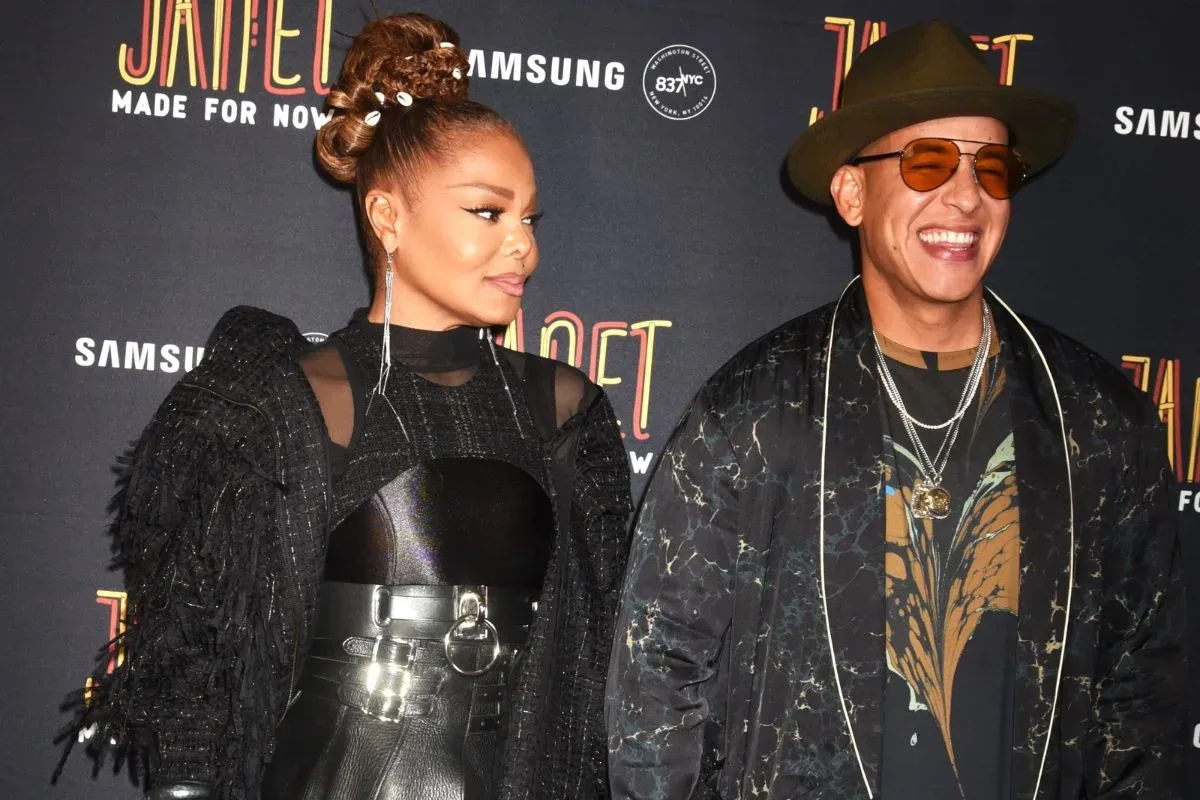
The ceremony’s week also included Janet Jackson presenting an honor to Daddy Yankee, connecting the event to another major figure in Latin urban music. J Noa and Trooko’s songwriting win sits in that wider celebratory setting, while remaining a distinct milestone: a first Latin Grammy for an artist whose work has emphasized identity, authorship and independence.
The Latin Recording Academy has also published an acceptance video for J Noa and Trooko. For followers discovering J Noa through the award, “Antisistema” is now the clearest starting point, while the nomination history offers a useful map of the work that led there: “Autodidacta,” “Cabecear,” “Sudor y Tinta” with Vakero, and finally the winning collaboration with Trooko.
The result is also a reminder that hip-hop remains part of the broader cultural vocabulary around games, screens and digital worlds. For a separate look at how rap is being positioned in a major gaming release, see the confirmed hip-hop music connected to GTA VI. J Noa’s award, however, stands on its own terms: a songwriting victory for a track built around not surrendering those terms in the first place.