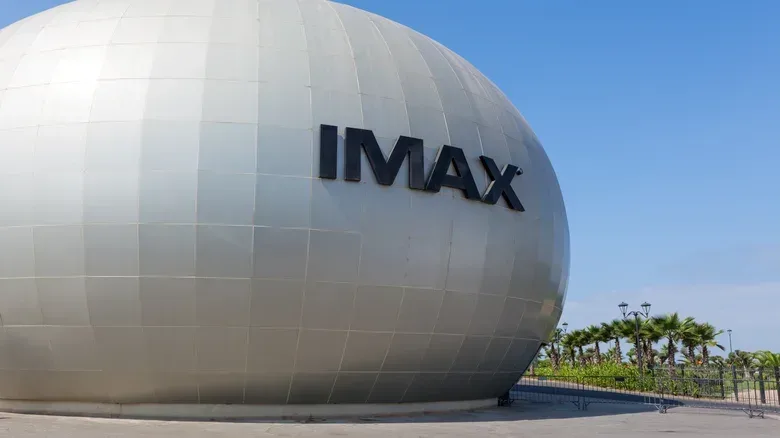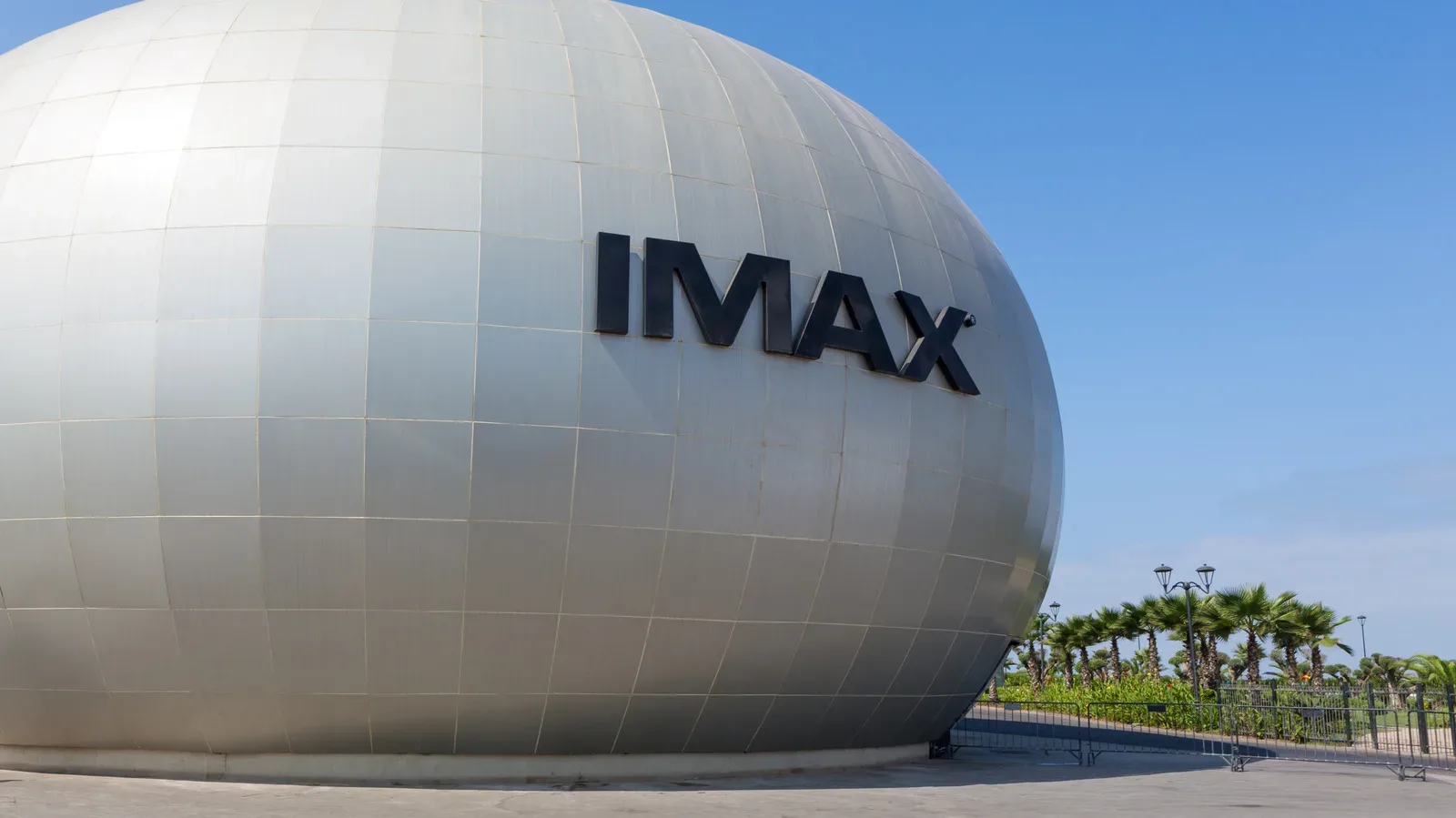
“IMAX” can describe several very different moviegoing setups. That matters whenever a film is promoted as playing in IMAX, because the logo alone does not tell audiences whether they will see a 70mm film print, a dual-laser presentation, a single-laser screen, an older digital system, or the unusual wraparound environment of an IMAX Dome.
IMAX Dome is the format that many museum visitors remember under its older name: OMNIMAX. It is not simply a conventional cinema with an especially huge screen. Its defining feature is a projection surface that forms a dome above the audience, paired with fisheye photography designed to fill an extremely broad field of view. The result can feel less like watching a rectangular image at the front of a theater and more like sitting within it.
That distinction is important for anyone trying to decide whether a particular screening is worth a trip. Dome venues can deliver a remarkable sense of scale, but they are comparatively uncommon and often operate at science museums or educational institutions. Their programming has historically leaned toward nature, science and short-form documentary work—not a nonstop menu of new Hollywood releases.
What makes IMAX Dome different?
A conventional IMAX screen is flat and vertical. It is commonly around 52 by 72 feet, creating a large, tall canvas in front of the seats. A Dome installation instead extends imagery over a curved ceiling-like surface that can approach 100 feet in diameter. The viewing geometry changes alongside the screen: the picture reaches far beyond the usual forward-facing frame.
Dome films are made with a fisheye lens, an ultra-wide lens that intentionally bends straight lines near the edge of an image. In ordinary filmmaking, that visible curvature may be an artistic choice or an effect to correct later. In a dome system, it is fundamental to how the material is mapped across the curved screen. The aim is a visual field of roughly 180 degrees.
That is why a Dome presentation should not be judged as though it were a standard flat-screen IMAX showing. Its technical purpose is not only to make the projected image bigger. It is to place imagery above and around the viewer’s forward vision. For subjects such as ocean environments, volcanoes, landscapes and space-oriented educational films, that broad enclosure is a natural fit.
The trade-off is that this is a specialized format. A film needs to be suited to dome projection, and the venue needs the particular projection setup and screen architecture. Not every IMAX title—or every movie playing on an IMAX-branded screen—will be available in that form.
OMNIMAX and IMAX Dome are two names for the same lineage
Older visitors may know the format as OMNIMAX, particularly if their experience came from a school trip to a science center. The system was renamed IMAX Dome in the 1990s, although OMNIMAX remains in use at some institutions, including the Saint Louis Science Center.
The name change can make searches unnecessarily confusing. Someone looking for a childhood OMNIMAX theater may be looking for what a venue now calls IMAX Dome, while another venue may preserve the older branding. In practical terms, the useful questions are about the screen and the program: Is it a dome theater, and is the specific film being shown in a Dome-compatible presentation?
How Dome fits among the other IMAX formats
There is no single IMAX experience. The company’s formats differ by capture method, projector technology, screen shape and aspect ratio. Aspect ratio means the proportional relationship between an image’s width and height. It is one reason an IMAX presentation can look dramatically taller than a typical wide theatrical image.
IMAX 70mm
IMAX 70mm is the format many large-format enthusiasts consider the peak presentation. In this setup, a movie is photographed on IMAX 70mm film and shown from an IMAX 70mm film print. The format’s reputation comes from that film-based capture-and-projection chain, though access to it depends on a theater having the necessary equipment and receiving the relevant print.
IMAX GT Laser
IMAX GT Laser uses a dual-laser projection system with 4K resolution. It is designed for the tall 1.43:1 screen shape associated with the biggest full-height IMAX installations. The number 1.43:1 means the image is 1.43 units wide for every one unit high, making it substantially taller in proportion than the 1.90:1 format below.
IMAX with Laser
IMAX with Laser uses one laser projector and is optimized for wider 1.90:1 screens. It remains a laser-based IMAX presentation, but its screen target and projection arrangement are distinct from the dual-laser GT system. Audiences who care about the full vertical image should therefore look beyond the general laser label and check the theater’s screen format.
IMAX Digital Xenon
The first generation of digital IMAX installations uses two 2K projectors with xenon bulbs. These systems are often associated with smaller auditoriums. Some movie fans use the informal and critical nickname “LieMAX” for such locations, but that label is not an official format name and is too imprecise to describe every theater’s actual presentation. The more useful approach is to identify the projector system, screen dimensions and aspect ratio when those details are available.
IMAX Dome with Laser
IMAX Dome with Laser is the uncommon dome-focused branch of this wider family. Its scarcity applies both to venues and to material created specifically for the format. The immersive promise here comes from the combination of a giant curved projection surface and dome-oriented imagery, rather than from a flat screen’s sheer height.
A 1.43:1 image does not make every venue identical
Most Dome theaters can project at the full-height 1.43:1 IMAX aspect ratio, the same shape associated with IMAX 70mm venues. That shared ratio is significant, especially for films that use tall IMAX footage. It does not, however, turn a dome into a conventional 70mm theater—or make two screenings interchangeable.
Screen curvature, audience sightlines and the footage’s intended presentation all affect what viewers see. A flat 1.43:1 screen emphasizes towering vertical scale directly ahead. A dome shifts the experience toward peripheral vision and an enveloping ceiling surface. One is not automatically superior in every circumstance; they are designed for different kinds of immersion.
That is also why marketing shorthand can be frustrating. “Shot for IMAX,” “presented in IMAX,” “laser” and “1.43:1” each communicate a real but incomplete piece of information. A prospective visitor should treat them as prompts to investigate further, not as a complete technical specification.
What typically plays in a Dome theater?
Dome theaters are commonly attached to museums and educational centers, and their programming reflects that setting. The first film made specifically for OMNIMAX/IMAX Dome was the 1973 short documentary Garden Isle. Since then, many Dome-optimized productions have continued in that documentary-oriented direction, including titles such as Secrets of the Sea and Volcanoes: Fires of Creation.
This background helps set expectations. A Dome venue may be an extraordinary destination for an educational large-format feature, yet it may not be the place to find the newest major studio release. Anyone planning a special trip should check the venue’s current schedule rather than assume a blockbuster is playing merely because the theater carries IMAX branding.
There are exceptions. Christopher Nolan films including Oppenheimer and The Odyssey have been shown at IMAX Dome locations around the world. For a production centered on vast environments and conflict on an epic scale, the prospect of a 180-degree presentation is easy to understand. But such screenings should be considered special programming rather than the normal operating pattern for every dome.
For more movie-and-format context, see our coverage of the theatrical and digital path of Coyote vs. Acme.
Where IMAX Dome venues can be found
IMAX Dome locations exist in several countries, though the format is much less widespread than conventional IMAX screens. Examples include La Géode in France, the Speyer Technik Museum in Germany, the Swedish Museum of Natural History, the China Science & Technology Museum and the Ontario Science Centre in Toronto.
In the United States, examples include the Museum of Science and Industry in Chicago, the Cincinnati Museum Center and the Saint Louis Science Center. Because theater formats, names and schedules can vary by venue, checking a location’s own listing remains the sensible final step before traveling.
How to choose the right screening
- Start with the title’s presentation details. Determine whether the film was made for a tall IMAX frame, dome projection, or a more conventional wide screen.
- Identify the exact theater system. “IMAX” alone is broad; look for 70mm, GT Laser, IMAX with Laser, Digital Xenon or Dome terminology.
- Check the screen shape. A 1.43:1 screen and a 1.90:1 screen can show different amounts of a film’s tall-format imagery.
- Confirm the schedule. Dome venues often prioritize educational programming, so a sought-after feature screening cannot be presumed.
- Match the format to the desired experience. Choose a flat full-height screen for a monumental front-facing image, or a dome for a distinctive 180-degree field of view when the movie and venue support it.
The useful takeaway is not that every IMAX label promises the same result. It is that each format has its own strengths. IMAX Dome remains one of the most visually unusual options: a specialized, museum-rooted way to see imagery spill from the front of the room to the edges of a viewer’s vision.