Potential plot details for NCIS: Origins follow.
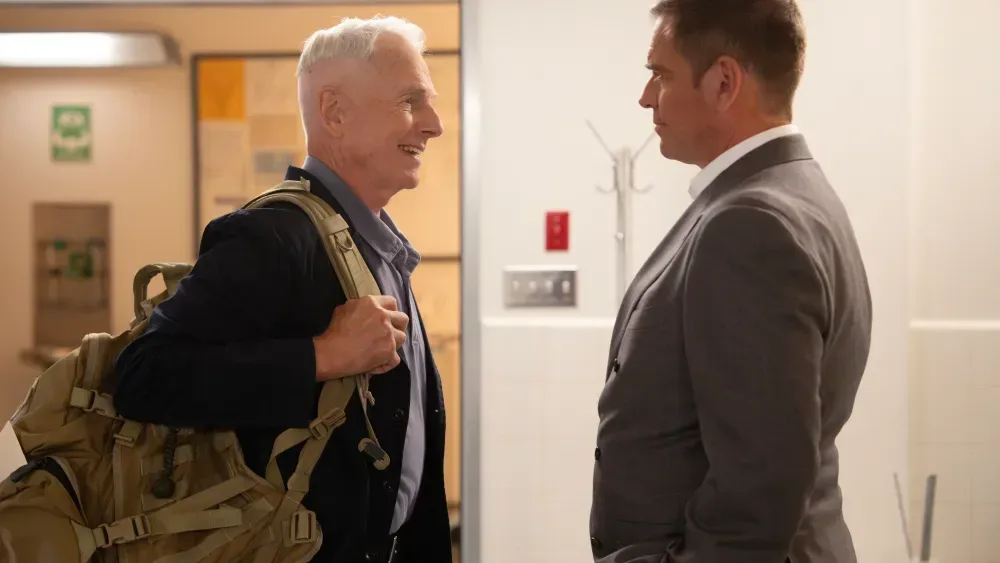
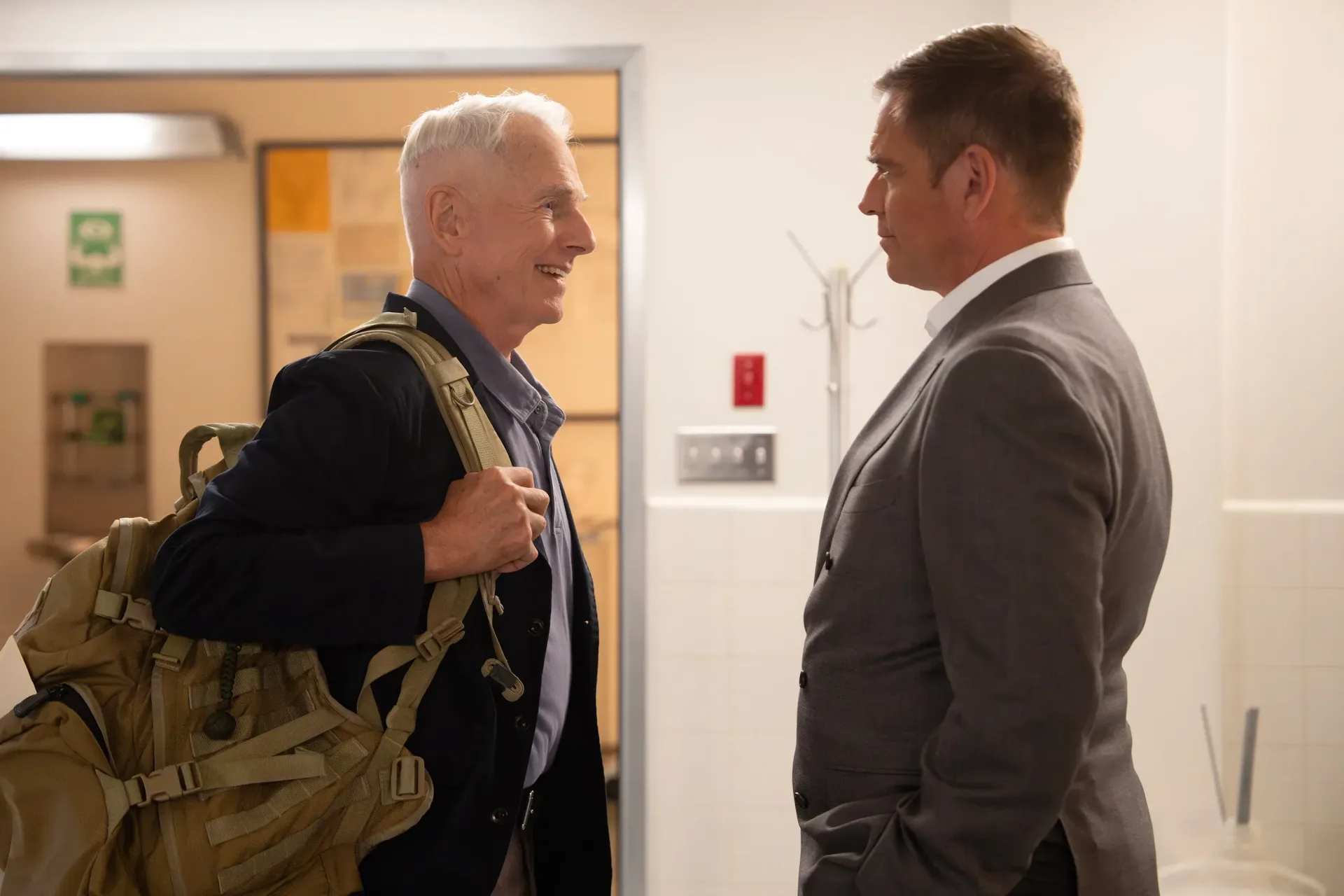
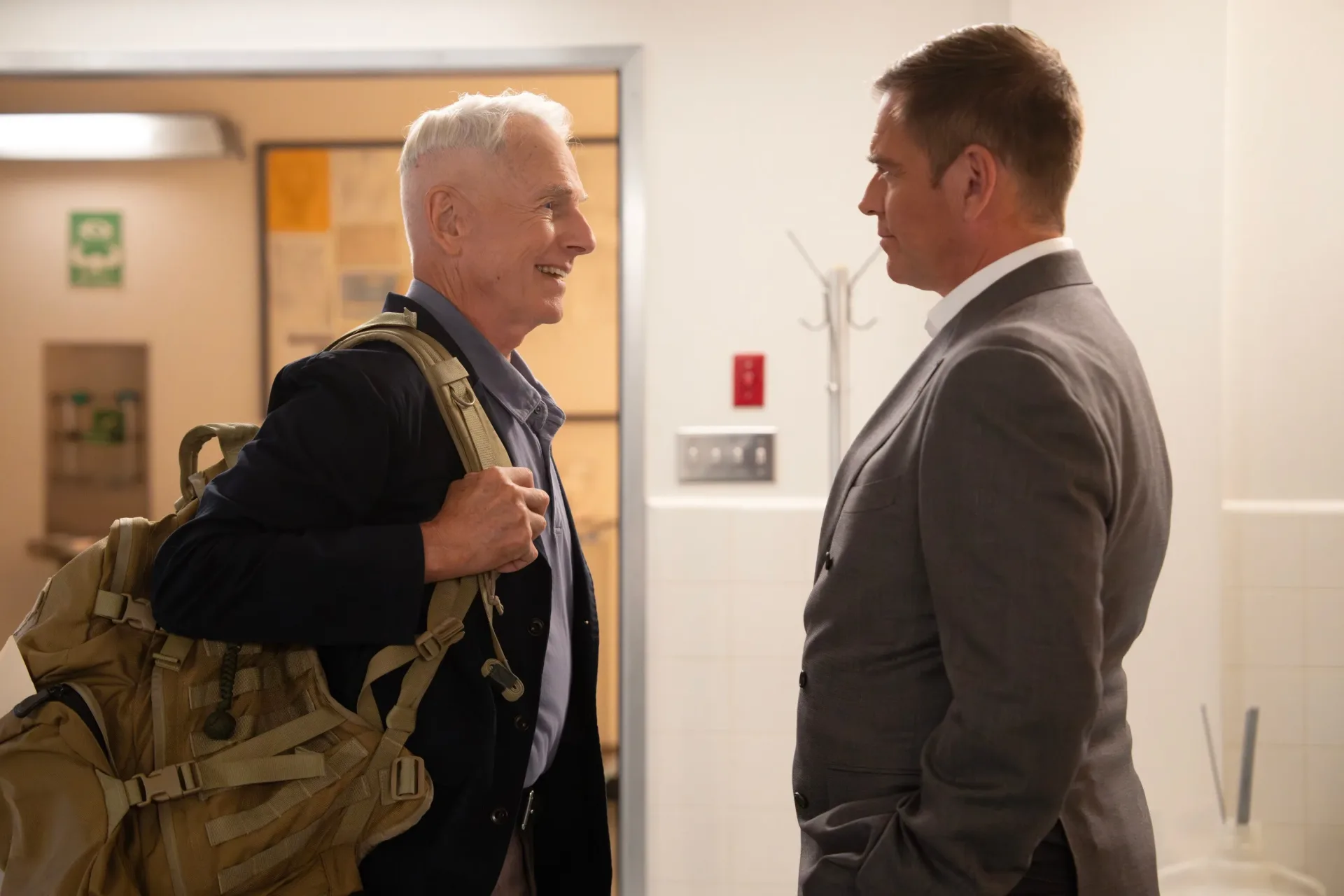
For a franchise built on case files, team chemistry and an unusually durable sense of family, the return of Leroy Jethro Gibbs and Tony DiNozzo to the same scene carries obvious weight. NCIS: Origins brings Mark Harmon and Michael Weatherly back together as their long-running characters in its Oct. 20 episode, “Return of the Mack,” marking the first Gibbs-DiNozzo reunion in roughly a decade.
The encounter is deliberately modest rather than a giant crossover takeover. Gibbs and DiNozzo appear in the present-day material that opens and closes an episode otherwise centered on the early-1990s timeline. But that restraint looks purposeful. The series is not merely putting two familiar faces in a room to activate nostalgia; it is using their contrast to establish where both characters stand now.
DiNozzo, now the director of the agency in the current continuity, has plenty to say when the two catch up. Gibbs, retired and living in Alaska, is characteristically more economical. It is a simple dynamic, but it is also the one that defined their relationship for many viewers: Tony talks, jokes and fills the silence; Gibbs measures his words. The reunion reportedly leaves out one of Gibbs’ best-known disciplinary habits, the head slap, suggesting the moment is interested in the characters’ changed circumstances rather than recreating every old beat.
For more context, explore Yung Miami’s ‘Watch Dis’ Tracklist Sets Up a 21-Song Solo Debut With Major Guest Spots.
Why the reunion is happening in Origins
NCIS: Origins began as a prequel, with Austin Stowell playing a younger Gibbs working in 1993. Harmon’s presence was initially primarily behind the camera as an executive producer and in the show’s narration. That changed when the series added a present-day flash-forward thread for season 3, allowing Harmon to return on screen as the older Gibbs and giving the prequel a second timeline with its own active mystery.
That structural decision is what makes the Weatherly appearance fit the show’s premise. A flash-forward is a storytelling jump ahead from the principal time period. In this case, it does more than provide a recognizable face at the beginning or end of an episode. The show’s creative team says the serialized events unfolding in 1993 directly inform the dangers and decisions confronting present-day Gibbs.
A serialized storyline is one whose plot develops across multiple episodes; it differs from a closed-ended case, where the central investigation is substantially resolved within the hour. Season 3 is expected to keep the 1993 procedural stories as its main focus while using the modern-day scenes to reveal why old events still matter. In practical terms, viewers should not expect the format to suddenly become a full present-day Gibbs series. Most of each episode remains with the younger ensemble and its period-set investigations.
Related coverage includes Gibbs and DiNozzo Reunite in ‘NCIS: Origins’ as Season 3 Expands Its Present-Day Story.
That balance matters. A prequel has to honor what longtime viewers know without making new characters feel like placeholders for future cameos. The current design offers a bridge instead: the past supplies the cause, and the present supplies the consequence. Gibbs’ case in Alaska is therefore not an unrelated excuse for a reunion. It is part of the season’s larger question about what can return to haunt someone after decades.
A short scene with a long franchise history
Harmon and Weatherly played Gibbs and DiNozzo through a relationship that was at once professional, paternal, combative and affectionate. Their reunion has extra narrative context because DiNozzo has not been frozen in time. The character has recently had further story developments in the one-season Tony and Ziva series, while Gibbs has spent his retirement in Alaska. Their differing experiences create room for a catch-up scene without pretending neither man has changed.
The point is not that the pair will become strangers, but that their old rhythms can contain new information. DiNozzo’s verbal overflow and Gibbs’ silence are recognizable personality traits; now they also convey the unequal amount of life each character is willing to unpack. That is a more useful reunion engine than simply recycling a familiar exchange.
There is a production-side significance as well. The show’s team describes getting Harmon and Weatherly together again as an ambitious prospect that emerged after the present-day story took shape following season 2. Their on-set reunion reportedly felt easy despite the long time between shared scenes. For audiences, however, the meaningful result is what makes it into the episode: a chance to see two characters whose bond helped define the wider franchise address the passage of time without erasing it.
Young Ducky gives the episode another connection point
“Return of the Mack” is not relying on Gibbs and DiNozzo alone. Adam Campbell returns as a younger Dr. Donald “Ducky” Mallard, adding another familiar link between Origins and the original series. Campbell previously played the character in flashback material, and the episode explores an early stage of the friendship between 1990s Gibbs and Ducky.
That friendship is especially important because the present-day framing includes Gibbs reflecting on his regret that he did not reconnect with Ducky before Ducky died. The moment acknowledges both an in-universe loss and the real absence of David McCallum, who played Ducky for many years. It is not presented as a huge mythology revelation. Instead, it gives the present-day Gibbs storyline an emotional texture that a procedural can sometimes skip: even deeply important friendships can suffer from distance, and the chance to close that distance may disappear.
The younger Ducky material also makes the episode more welcoming for viewers who return specifically for Harmon and Weatherly. A character from Gibbs’ foundational circle helps establish that this is not just a DiNozzo cameo stapled onto a prequel. It is an episode about relationships at several stages: Gibbs and Ducky at the beginning of a bond, Gibbs and DiNozzo after years apart, and Gibbs remembering a friend he misses.
Lala and the question Origins is choosing not to dodge
The 1993 storyline remains vital beyond familiar-character appearances. Special Agent Lala Dominguez, played by Mariel Molino, is positioned as a major love interest for young Gibbs. The series has described her as the great love who got away, and season 3 is expected to move their relationship forward quickly rather than prolonging a conventional “will they or won’t they?” arc.
That setup naturally creates suspense because Lala is not a character viewers heard about in the earlier-set franchise chronology. Absence from previously told stories does not automatically establish a character’s fate, and the series has not revealed its ultimate answer. What has been indicated is that the season will provide many answers, while keeping the actual outcome ahead of audience predictions.
That uncertainty is worth preserving. A prequel’s tension is often misunderstood as a puzzle with only one possible result: the audience knows where the lead character ends up, so nothing can surprise them. But a good prequel can shift the question. The destination may be known, while the emotional cost, the relationships and the reasons behind that destination are not. Lala’s arc appears designed to work in that space, with the present-day Gibbs story supplying an additional hint that unresolved history is not abstract to him.
More returning faces are planned, but not at the expense of the premise
Weatherly’s appearance is not intended to be the season’s only franchise connection. Emily Wickersham is set to reprise her role as Ellie Bishop in several NCIS: Origins episodes beginning Oct. 27. The production has also signaled additional special guest stars.
There is an obvious temptation with a shared television universe to turn each week into a roll call of returning characters. Yet the show’s present-day structure provides a more coherent reason for selective crossovers than a pure cameo parade would. If earlier events are truly reshaping Gibbs’ present, then former colleagues can enter when their ties to that story justify it. The value is not simply recognition; it is the possibility that a known relationship exposes a new side of Gibbs or clarifies the stakes of the current mystery.
For fans following the broader franchise, the best approach may be to treat season 3 as two connected modes rather than choose one over the other. The 1993 cases and the younger ensemble remain the show’s core. The current-day scenes with Harmon add consequence. And the Gibbs-DiNozzo reunion offers a carefully placed reward for viewers with a long memory.
That combination is what gives “Return of the Mack” its appeal. It is not trying to declare that the past was better, nor is it treating established history as a burden. Instead, it uses the history of Gibbs, DiNozzo and Ducky to sharpen a story about what remains after time, distance and unfinished conversations. For a franchise whose agents are always digging through evidence, that is a fitting way to make old connections matter again.