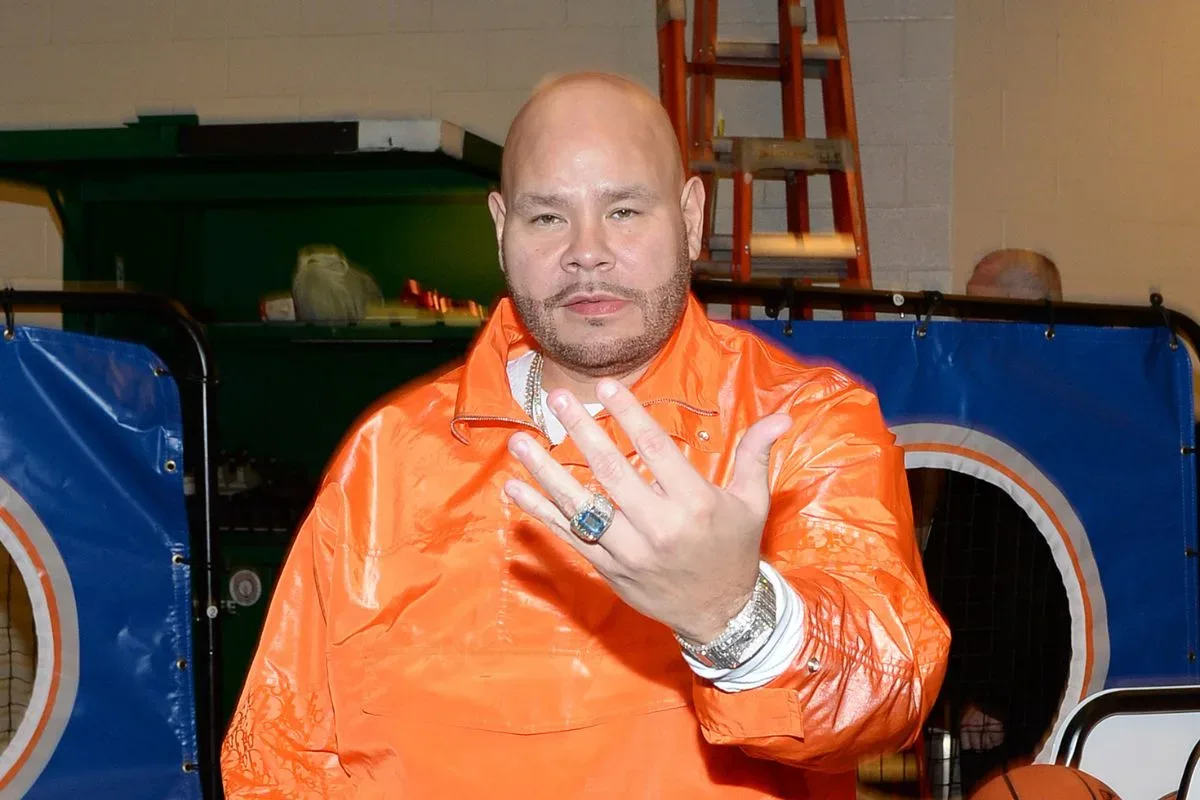
Fat Joe has put a blunt name to a problem that can sit behind the long gaps between albums from veteran rap artists: fear of the opening-week number.
Speaking with D-Stroy on SiriusXM’s Shade 45 while promoting Organized Rhyme, Joe argued that some of hip-hop’s most accomplished performers are not being held back by a lack of ability. In his view, they are reluctant to release because a public sales result can be interpreted as failure, regardless of the quality of the music or the breadth of the artist’s career.
“A lot of artists got caught up in ego. A lot of artists got caught up in first-week sales, and some of your legends of all time that are still great, that can make some incredible music, refuse to make it because they’re scared of failure, they’re scared of sales,” Joe said.
It is a familiar tension in an industry where the first week after release has become a tidy, highly visible verdict. An opening figure is easy to share, compare and weaponize. It can reduce the complicated work of making an album—and the equally complicated ways people live with an album—to one competitive statistic.
Joe’s point is not that sales have no commercial importance. Rather, he draws a line between acknowledging business and allowing a short reporting window to dictate whether an established artist creates at all. For a musician with a lengthy catalogue, a reputation, a fan base and work outside a new release cycle, he suggests the incentive should be different: make the record because there is something worth saying and because hip-hop listeners may value hearing it.
What “first-week sales” represents
First-week sales refers to the commercial performance recorded during an album’s opening week. In casual music conversation, the phrase is often used as a shorthand for demand, status and momentum. That shorthand is powerful precisely because it offers a simple answer to a question that is not simple: did the release matter?
But the answer depends on what someone means by “matter.” A first-week result is a snapshot of a particular measurement period. It does not automatically describe artistic quality, long-term listening, influence on other artists, the strength of a live audience, or an album’s gradual discovery by listeners. Nor does it erase the work an artist made before that week.
That distinction is central to Joe’s criticism. He is describing a mindset where the anticipated scoreboard is so intimidating that an artist may choose not to put new work into the world. The fear, as he frames it, is not merely of a lower number; it is of the story others may attach to that number.
For artists whose earlier releases arrived under different market conditions or whose names carry enormous expectations, comparison can be especially unforgiving. A modest debut can become the headline even when the record reaches the people it was made for. Joe’s argument is that a veteran should not have to treat that possibility as a reason to remain silent.
Joe’s case for returning to the original impulse
Joe connected the issue to the reasons many artists began rapping in the first place. He said performers who have built a financial portfolio and make money through multiple avenues should be less beholden to the commercial anxiety surrounding a new project.
“At this point, if you done built a portfolio of money and you making money from how many other different ways, you shouldn’t care,” Joe said. “You should remember about when we got on freestyling, when we got on just to represent Hip-Hop, to represent your hood.”
The key word there is remember. Joe is not proposing that artists abandon standards, audiences or professional ambitions. He is asking them to recover an earlier creative motivation: rapping, freestyling and representing where they are from because the work itself carries meaning.
That perspective makes room for a new album to be a statement instead of a referendum. It can document where an artist is now, add another chapter to a catalogue, collaborate across generations, or simply give committed listeners a project they can spend time with. None of those outcomes requires an opening-week total to resemble the commercial peak of a previous era.
It also pushes back on a narrow notion of relevance. In hip-hop, as in other culture industries, visibility can be treated as a constant race. Joe’s comments suggest a different standard for artists who have already made their mark: relevance can also mean continuing to participate, continuing to sharpen a voice and continuing to make music that satisfies the people who actually want to hear it.
Why the pressure can outlast the need for it
Ego is often used as an insult, but Joe uses it to describe a practical obstacle. A revered artist has something substantial to protect: a public legacy. Once an audience has decided that someone is a legend, every new release can seem to carry the burden of proving that the label remains deserved.
That burden can create a trap. If an artist releases nothing, listeners may preserve an idealized memory of the catalogue. If the artist releases a record that is received unevenly or posts a less spectacular opening number, critics can frame the result as decline. The prospect of that framing can make non-release feel safer than creative risk.
Joe rejects that calculation. His comments imply that a legacy should be durable enough to contain a new project that is personal, experimental, imperfect, niche or simply not built for a commercial contest. An artist’s career is a body of work, not a single weekly result.
There is also a difference between making music for broad market conquest and making music for an existing community. A listener who follows an artist over decades may not need a release to dominate a public conversation to find value in it. They may want perspective, technique, familiar chemistry or evidence that an artist is still engaged with the craft. Joe’s framing gives that relationship priority over the spectacle around a debut.
“I couldn’t even tell you what we sold”
Joe made his own position unusually direct when asked about the figures surrounding his current work. He said he could not say what the album sold, then explained that the response from hip-hop listeners mattered more to him than the number.
“I couldn’t even tell you what we sold. I really don’t give a fuck. I’m just glad you liked it. I’m glad, whoever loves Hip-Hop heard it and said, ‘Damn, Joe, you put it out the park.’ That’s what it’s all about.”
The statement is not an argument that commerce is imaginary. Making and releasing music involves business decisions, and sales can affect what gets funded, promoted and distributed. Joe’s emphasis is on proportion. A commercial metric can be information without becoming an artist’s only reason to work—or the reason not to work.
His personal test is audience response from people who care about hip-hop. That is a more qualitative measure. It is harder to condense into a chart-ready number, but it speaks to the lived experience of a record: whether listeners feel the artist delivered, whether the music rewards attention and whether it adds something meaningful to the culture.
For fans, the immediate implication is equally straightforward. Demanding new work while treating every release as a sales tournament sends conflicting signals. If listeners want established artists to take chances, the reception has to leave room for projects that are not designed around an opening-week victory lap.
A broader creative lesson
Joe’s comments land beyond one album cycle because they address the separation between a creative act and the public data attached to it. Metrics can be useful; they can show reach and help describe a release’s market moment. They become limiting when they are mistaken for the work’s entire value.
For an artist with an established career, refusing to let fear make the decision may be the more meaningful win. That does not guarantee universal praise or massive numbers. It does preserve the possibility of another record, another verse and another connection with listeners.
The music business continues to generate numbers, rankings and comparisons. Joe’s message is that artists who have already built a foundation do not need to let that system define their willingness to create. In his telling, the better measure is closer to the one that existed before the scoreboard: make the music, represent honestly and let the people who love hip-hop decide whether it connected.
That debate over music’s value also sits alongside broader industry questions, including disputes over how new technology is trained and deployed; recent legal action involving AI music tools is one example of the business pressures surrounding creative work. Joe’s focus, however, is more personal: veteran artists should not let the fear of a publicly judged sales result stop them from making the records they are still capable of making.