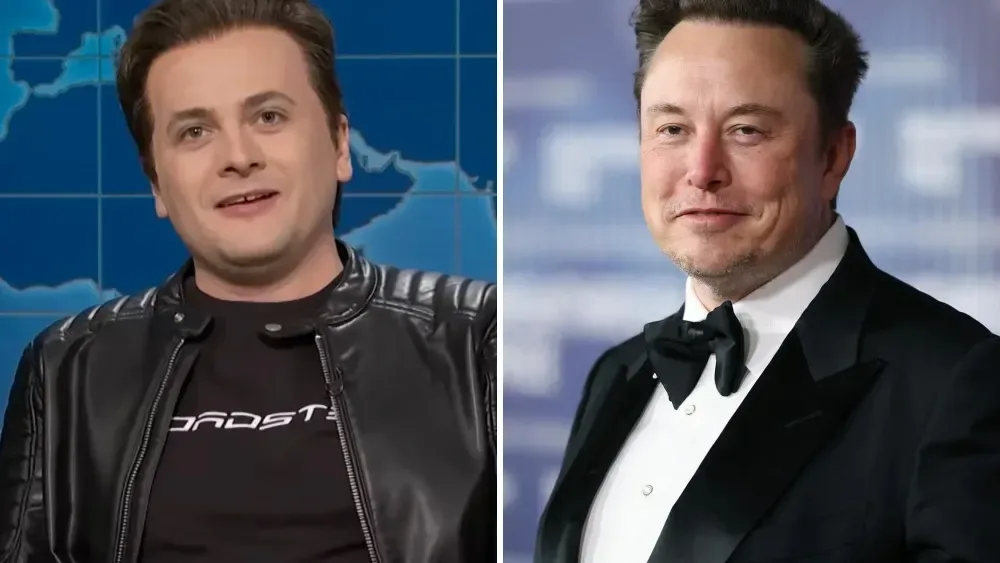
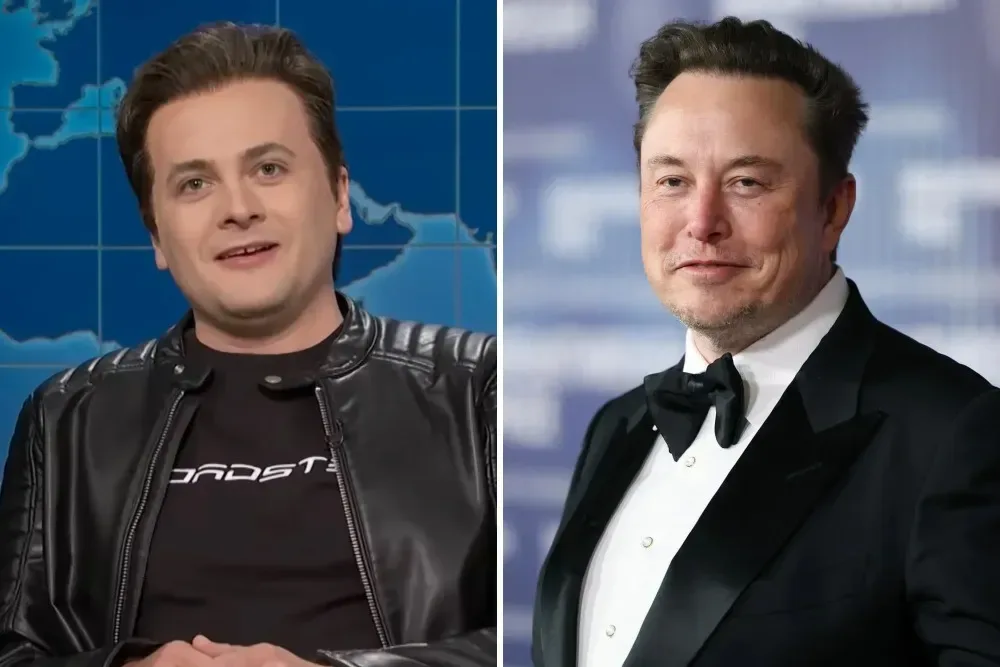
Elon Musk has offered a sharply concise review of Jeremy Culhane’s recent Saturday Night Live impression: a 5 out of 10, with an instruction to “try harder.”
Musk made the remark on X while responding to a user who had rated Culhane’s portrayal a 7/10. He followed that response with a Venn diagram: one circle labeled “Humor,” the other “SNL,” and a notably small shared space reserved for “the good sketches.” It is an unusually direct response from a public figure to an impersonation, though it is also a reminder of the peculiar feedback loop at the heart of modern political and celebrity satire. A sketch makes a public figure into a comic character; the subject replies on a social platform; that reply can become part of the entertainment around the impression itself.
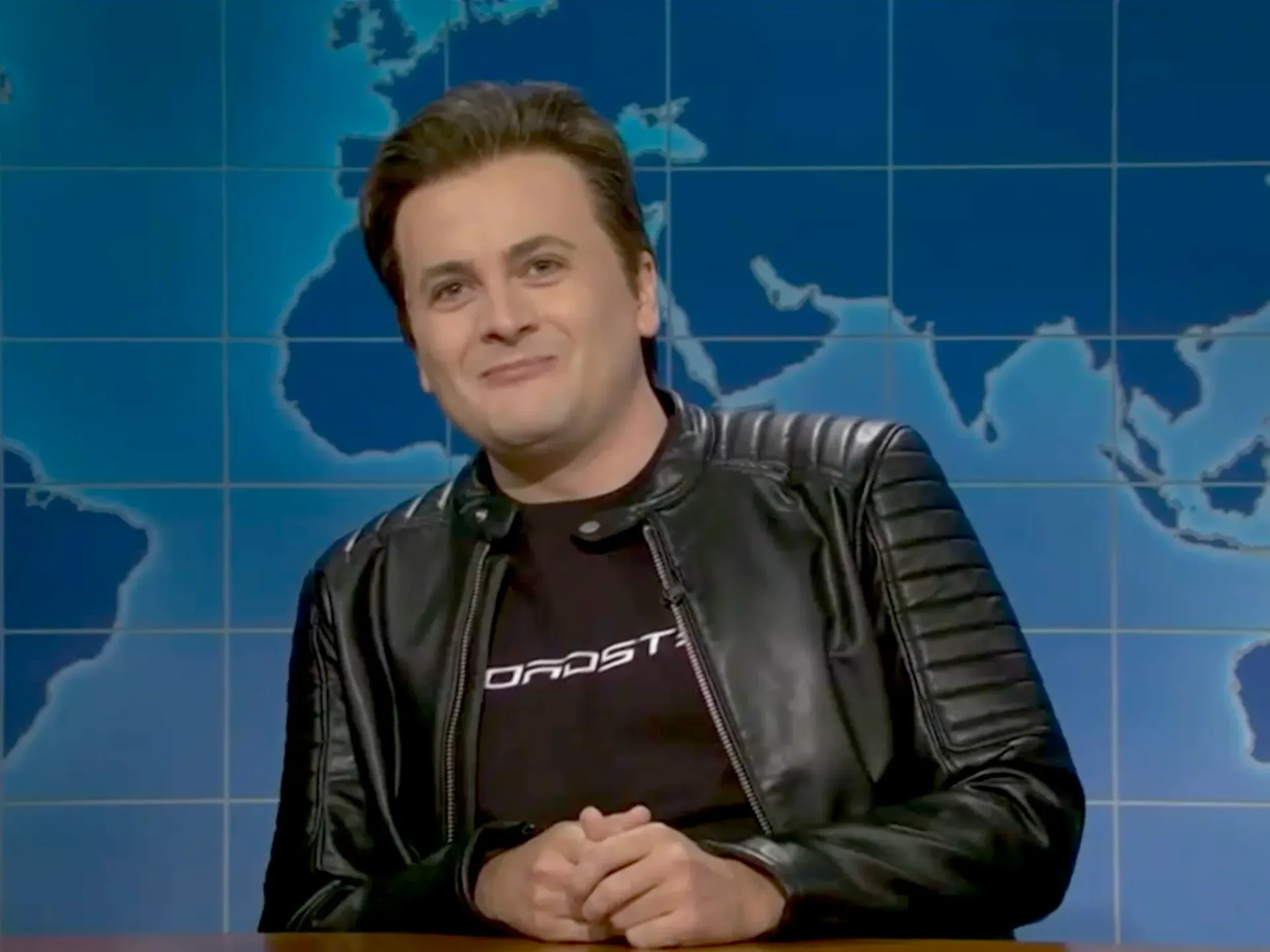
For Culhane, the attention arrives after two consecutive episodes in which he played Musk. The cast member joined SNL in 2025 and first brought the character to “Weekend Update.” He returned in a cold open centered on tech billionaires receiving a CIA briefing about honey traps.
That second sketch grouped Culhane’s Musk with a lineup of other recognizable technology figures: Andrew Dismukes as Mark Zuckerberg, Jane Wickline as Dario Amodei, Ben Marshall as Sam Altman, James Austin Johnson as Peter Thiel, and Bowen Yang as Jensen Huang. The structure matters because it frames Musk not as an isolated target, but as one member of a larger comic category: extremely powerful technology executives whose public images, wealth, influence, and online personas make them useful raw material for broad live-TV satire.
What Culhane’s version of Musk is trying to capture
Culhane’s characterization is not presented as a literal recreation. It is a heightened caricature: a leather-jacketed, approval-seeking man-child who wants very badly to land a joke. The character reaches for phrases including “epic roast” and “hold my beer,” supplies his own explosion noises, and repeatedly turns the focus back toward a sense of performative coolness.
In the CIA sketch, the impersonation delivers a line about having “all” the wealth and power before striking a meme-style pose. That is the central comic mechanism. Rather than treating Musk’s public profile as a collection of biographical facts to duplicate, the performance compresses a perceived online sensibility into visible habits: forced punchlines, internet language, self-conscious posing, and an eagerness to be seen as funny.
That distinction is useful when discussing celebrity impressions. A successful impression is rarely judged only on whether it is accurate in a documentary sense. Voice, posture, rhythm, wardrobe, writing, and the performer’s chosen comic angle all matter. A sketch performer may reproduce a recognizable cadence while deliberately exaggerating personality traits because exaggeration creates a clearer comic target for a live audience. In other words, “accuracy” and “satirical usefulness” are related, but they are not identical measurements.
Musk’s 5/10 rating therefore does not settle whether the impression works for viewers; it states that its subject does not think the portrayal has captured him well enough, or amusingly enough. His Venn diagram makes the broader complaint more explicit: he was not merely debating the details of Culhane’s performance, but questioning the show’s comedy more generally.
Related coverage includes Elon Musk Rates Jeremy Culhane’s ‘SNL’ Impression 5 Out of 10.
Why a second appearance is significant
Two consecutive appearances do not guarantee that a character will become a recurring feature, but they do establish a pattern. On a fast-moving weekly comedy show, repetition is one of the clearest signals that writers and performers see continued value in a persona. A recurring impression gives the audience a shorthand: once viewers understand the version of the character being offered, later sketches can spend less time explaining the premise and more time placing that character into new situations.
The CIA cold open demonstrates that approach. The sketch did not need to build an entire scene solely around Musk. Instead, it used several prominent tech leaders as an ensemble and gave each an exaggerated comic identity. That format can be flexible, particularly when the show wants to satirize technology-industry power as a group rather than focus on one company or one news cycle.
Culhane has also developed a highly quotable Tucker Carlson impression on “Weekend Update,” showing that Musk is not his only recognizable public-figure role. Still, a performer gaining a high-profile impression can matter within the cast: it creates a repeatable part, and it gives viewers a reason to associate that performer with the cultural conversations the show chooses to lampoon.
The larger analytical point is that recurring impressions are built around durable public images, not just current events. The performers need a simple, legible set of traits that can survive changing headlines. Culhane’s Musk has a clear template already: a powerful billionaire interpreted through a deliberately immature, terminally-online comic persona. Whether the show keeps using it will depend on its future sketch choices, not on Musk’s rating alone.
A long-running show, a new interpretation
Culhane is not the first SNL performer to play Musk. Before Culhane joined the cast, Mike Myers debuted his own Musk portrayal in 2025. The real Musk also hosted the program in 2021, appearing in multiple roles, including Wario in a courtroom sketch.
That history underlines another feature of sketch comedy: an impression belongs to neither its subject nor to one permanent interpretation. Different performers can choose different defining details, and the show can change its approach depending on who is in the cast and what kind of scene it wants to build. A host playing Wario is an absurdist character role; a cast member playing Musk in a tech-billionaire ensemble is political and cultural satire. The shared name does not mean the comic purpose is the same.
There is also a gaming-adjacent irony in Musk’s prior Wario appearance. Wario is an intentionally outsized Nintendo character whose comedy is rooted in greed, boorishness, and exaggerated physicality. Culhane’s Musk is also intentionally outsized, but in a different register: internet-posturing bravado, power, and the constant desire to deliver a winning line. Both are examples of broad comedy, though one is a fictional game character and the other is a satirical version of a real person.
That crossover between celebrity, games, internet language, and late-night television is increasingly familiar cultural territory. It is also why an impression can travel beyond its original broadcast. A line, reaction shot, pose, or criticism from the person being portrayed can become its own shareable artifact. For more entertainment coverage beyond the weekly-sketch conversation, see the Tribeca Festival Lisboa 2026 lineup.
The practical question: what does Musk’s response change?
In immediate practical terms, Musk’s post does not alter anything confirmed about Culhane’s role or future sketches. There is no indication that the performer, the show, or Musk has announced any direct response beyond Musk’s posts. The useful takeaway is narrower: the subject of the parody has publicly made clear that he finds the current interpretation lacking.
For viewers, that response may make the next appearance more interesting, because celebrity reactions can affect how an audience reads a recurring bit. Some may see the criticism as evidence that the satire found a nerve. Others may agree that the impersonation has room to sharpen its voice, physical choices, or writing. Neither reaction changes the basic nature of the sketch: Culhane is playing an intentionally distorted comic version of Musk, not attempting an official or definitive portrait.
For the show, the strongest response is likely the one sketch comedy usually gives: make another sketch only if there is a worthwhile comic premise. A reply post is not itself a punchline. But a public dispute over whether a powerful, highly online figure is funny—or whether an impression has captured his particular style of humor—certainly supplies material that writers may recognize.
For now, the scorecard is simple. Musk has given Culhane’s portrayal a 5/10. Culhane has played him in two straight episodes. And the next meaningful development will not be another number in a comment thread, but whether the leather-jacketed, self-amused version of Musk returns to the stage.