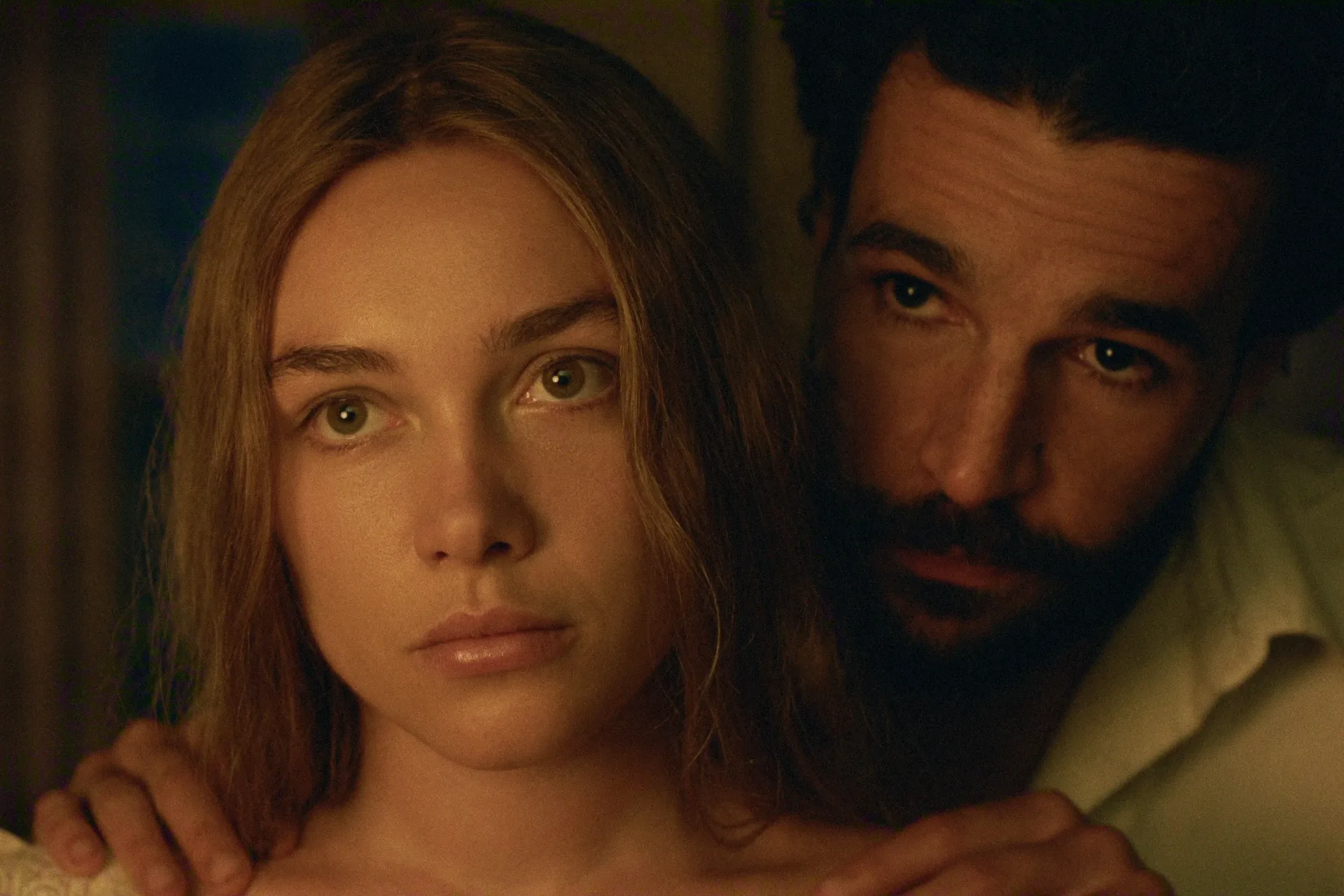
East of Eden has opened at No. 1 on Netflix’s weekly TV rankings, collecting 6.5 million views in its first four days on the service. The adaptation of John Steinbeck’s 1953 novel was created by Zoe Kazan and stars Florence Pugh.
That is a sharp early result for a literary adaptation, and it arrives alongside a measurable revival of interest in Steinbeck’s book. Penguin Classics has recorded a 200% rise in sales of the novel since Netflix greenlit the project. The streaming performance and the sales figure describe different audiences and different forms of engagement, but together they show how an adaptation can put an older title back into active cultural circulation.
What the Netflix ranking actually says
East of Eden led Netflix’s TV chart for the week of September 28 through October 4. Its 6.5 million views came from only four days of availability, an important qualification when comparing the number with titles that may have had a full week to build an audience.
A weekly chart position is a snapshot, not a final measure of a production’s reach. It shows that, during the tracked period, the title had the largest reported audience among Netflix’s TV offerings. The 6.5 million figure is therefore an opening-week indicator: a sign of immediate interest rather than a complete verdict on how long the show will remain in the conversation.
Netflix’s use of views is also worth separating from a simple count of individual people. In streaming-chart language, views are the platform’s standardized audience metric. The supplied figures establish how titles rank against one another on the service, but they do not identify every viewer, how many watched together, or what portion of each title each household completed. The useful takeaway is straightforward: East of Eden started strongly enough to lead television on the platform during its opening frame.
A classic novel gets a new audience
Steinbeck’s East of Eden was published in 1953. Its current sales lift demonstrates one of the clearest practical effects a high-profile screen adaptation can have: it can make a decades-old novel newly visible to readers who may not have encountered it in school, on a bookstore table, or through past adaptations.
The 200% increase in Penguin Classics sales dates back to the Netflix greenlight, rather than solely to the premiere. That distinction matters. It suggests the renewed attention began when the project became a public prospect, then had additional opportunity to grow as the adaptation reached viewers. A greenlight is the formal decision to move a production ahead; in this case, it appears to have functioned as an early signal that Steinbeck’s story would soon return to the screen.
For readers, an adaptation can work in two directions. Some may choose the novel before watching in order to meet the original work on its own terms. Others may arrive after watching, interested in the text behind the new production. Neither route makes the book and the screen version interchangeable. A novel and its adaptation use different tools, run at different lengths, and make their own creative choices. But a prominent adaptation can provide the occasion for readers to seek out the original work.
Related coverage includes ‘East of Eden’ Opens at No. 1 on Netflix TV Chart With 6.5 Million Views.
That renewed interest is notable in a media landscape where a current release often competes for attention with a seemingly endless library. The book’s age is not a barrier when a new production offers a familiar entry point: Florence Pugh’s involvement, Zoe Kazan’s role as creator, Netflix’s global platform, and the recognizable title each give potential audiences a reason to look twice.
For more entertainment casting news, see Jessica Biel joining Lily-Rose Depp and Bill Pullman in Playmates.
The wider week: movies held the overall lead
While East of Eden was Netflix’s biggest TV title for the week, it was not the platform’s most-watched release across all chart categories. That distinction went to Unabomber, starring Jacob Tremblay, which logged 24.9 million views in its second week of streaming.
Two other films also exceeded the top TV title’s audience during the same period. The Widower: ’Til Death Do Us Part reached 11.6 million views, and Tyler Perry’s Doing Life reached 9.3 million. These figures are not a like-for-like comparison of TV and film viewing habits; they are a reminder that Netflix’s television and movie rankings are separate charts. A No. 1 position on the TV list means leadership within that category, while the all-platform picture includes both categories.
The next title on the TV chart was Monster: The Lizzie Borden Story, which posted 5.7 million views in its third week of streaming. The gap between 6.5 million and 5.7 million gives East of Eden a clear but not overwhelming lead within the television rankings. Its opening performance put it ahead of an established title still drawing a substantial audience in its third week.
Why the opening matters without settling the whole story
An immediate No. 1 placement tells us that the adaptation successfully broke through at launch. It does not by itself establish staying power, completion rates, future awards attention, or the long-term scale of its impact on the novel’s readership. Those are separate questions, and the currently reported numbers do not answer them.
Still, the opening provides a meaningful early signal. The project has already achieved two outcomes that are often difficult to secure at once: a high placement in streaming’s crowded weekly rankings and a renewed commercial profile for the book that inspired it. The latter is especially significant because it reaches beyond the platform’s own ecosystem. A person buying a copy of Steinbeck’s novel is not merely adding another stream to a chart; they are engaging with the underlying text in a different format.
There is also a useful lesson here for audiences approaching adaptations. The screen version can be enjoyed as its own production, while the 1953 novel remains available as the source text that sparked this new wave of attention. Readers and viewers do not need to treat the two as competitors. The adaptation has created an accessible moment to revisit Steinbeck’s work, and the early Netflix figures show that many people were ready to begin with the new release.
For now, the firm numbers are these: 6.5 million views over four days, first place on Netflix’s TV chart, and a 200% sales increase for Penguin Classics’ edition since the greenlight. That is a substantial opening for East of Eden—and a strong demonstration of how a contemporary streaming release can give a landmark novel another turn in the spotlight.