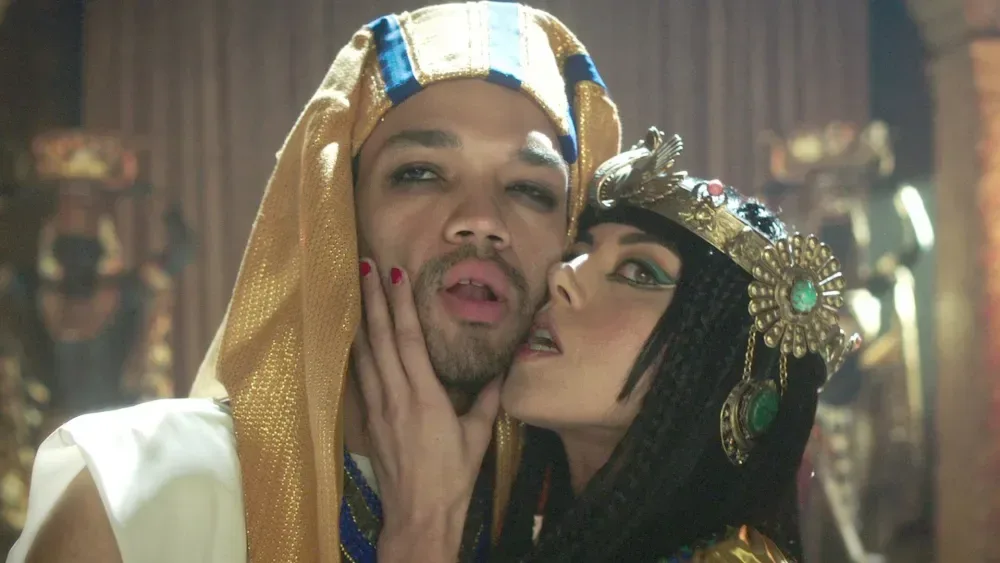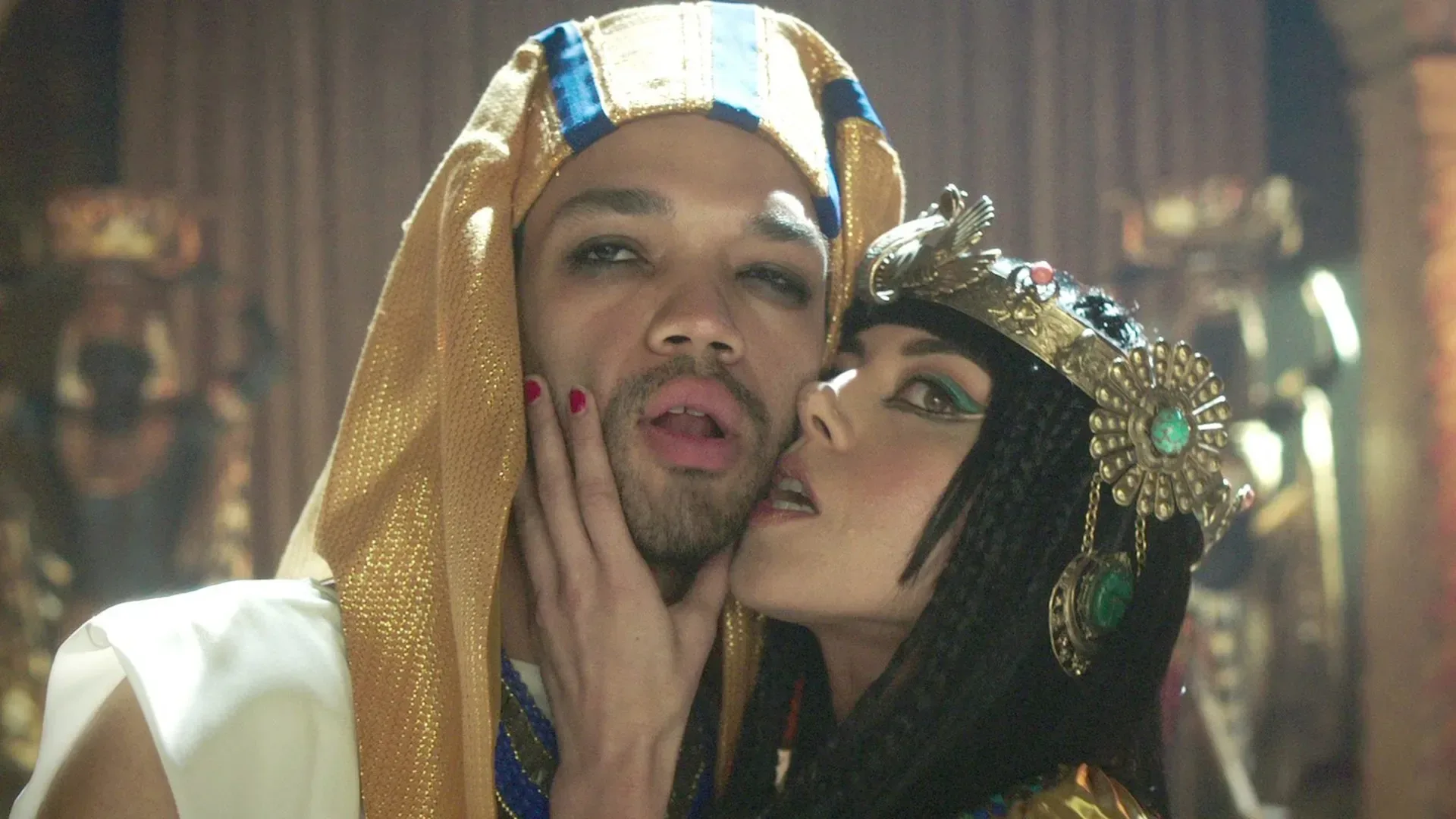
Drunk History is coming back after an unusually lengthy blackout period, and its first new subject is built for extravagant reenactment. The Emmy-winning comedy series will return with three short-form episodes, seven years after its last original run on Comedy Central. The first installment is scheduled to arrive September 15 on Comedy Central’s YouTube channel, with Meghan Trainor portraying Madonna during the pop star’s landmark appearance at the inaugural MTV Video Music Awards.
Created by Derek Waters and Jeremy Konner, Drunk History has always treated the past as a place where carefully researched events collide with delightfully unreliable narration. Its basic formula remains wonderfully strange: an inebriated storyteller recounts a real historical episode, actors perform the account as it is told, and the result lets factual history and loose, unscripted phrasing share the same chaotic stage. Dates, people, and big-picture events are grounded in history; the detours in dialogue are very much part of the joke.
That format helped the show stand apart from both conventional history programming and conventional sketch comedy. Rather than asking viewers to choose between a documentary lesson and a celebrity-filled absurdist bit, it made the friction between the two the whole point. A significant cultural moment can receive genuine context one second, then be interrupted by a narrator trying to find the name of a person, place, or century the next.
A Madonna story opens the new run
The September 15 episode puts Trainor in the role of Madonna and centers on the singer’s famous performance at the first VMAs. It is a suitable opening subject for a show that understands costumes, iconic imagery, behind-the-scenes chaos, and cultural mythology as inseparable ingredients. Madonna’s early VMA history offers all of those ingredients, while also providing a moment that has long invited retellings, imitations, and arguments about what pop stardom looked like at the time.
The return will not be limited to music history. The two other announced stories shift the series into very different corners of the historical record. One concerns Frances Perkins, the figure described as a crucial, too-often-overlooked architect of President Franklin D. Roosevelt’s New Deal. Another follows two men whose enduring rivalry revolved around an eccentric but determined goal: constructing the world’s largest ball of twine.
That is an especially familiar Drunk History mix. The show can use its structure to spotlight an influential public servant such as Perkins without turning the episode into a dry lecture, then jump to the sustained weirdness of competitive twine-making. Neither kind of story is treated as inherently too lofty or too peculiar for the format. The people involved, and the stakes they attached to their efforts, are what make the comedy possible.
Who is involved in the three episodes?
Alongside Trainor, the announced cast includes Steve Agee, Tim Baltz, Seth Green, Colin Hanks, Jack McBrayer, Chris Parnell, Johnny Pemberton, Daryl Sabara, Mae Whitman, and “Weird Al” Yankovic. Lisa Gilroy, Patton Oswalt, and Marisha Ray are among the narrators named for the new episodes. The full lineup makes clear that the return is maintaining one of the show’s longtime strengths: casting performers who can commit completely to historical-pageant silliness without playing it as though they are above the material.
There is an important distinction in the premise. The celebrity actors are not necessarily delivering sober historical recreation, and the narrators are not polished lecturers reading from a script. The actors must interpret the rhythm, gaps, and sudden tangents of the storytelling in front of them. That extra layer of translation is why an episode can feel like a theatrical reenactment, a confused oral history, and a sketch all at once.
Related coverage includes ‘Drunk History’ Returns With Three Short-Form Episodes After Seven-Year Gap.
Waters said he was excited to make Drunk History again and suggested there is plenty of lost time to make up. Comedy Central’s original-content leadership likewise framed the three new entries as part of an effort to bring the network’s comedy franchises to viewers across additional platforms. The YouTube rollout is therefore central to this particular return, not merely an afterthought attached to a traditional television schedule.
From web experiment to six-season TV favorite
The new episodes arrive after a winding history of their own. Drunk History began as a web series in 2007 before moving to Comedy Central, where it ran for six seasons between 2013 and 2019. The network renewed the series for a seventh season in 2019, but that decision was reversed in 2020 after production stopped during the pandemic. With no new episode since then, the forthcoming trio ends a seven-year gap.
Its move from web video to cable television was unusually natural because the premise was already compact, visual, and easily understood. A viewer could encounter an episode with no prior knowledge and immediately recognize the mechanism: someone tells history while drunk; a striking cast acts it out; the mismatch between grand events and uncontrolled narration creates the laughs. But the show lasted because the formula could support an enormous range of topics, from political history to entertainment, invention, warfare, crime, science, regional oddities, and stories that seemed too strange to have happened.
The guest-star history is equally broad. Previous installments featured performers including Jack Black, Will Ferrell, Bill Hader, Kristen Wiig, Lin-Manuel Miranda, and Bob Odenkirk. That established record matters because the show’s casting is not simply a parade of recognizable faces. The right guest can make a brief appearance memorable by treating an absurdly phrased line of narration as the most serious declaration imaginable.
Why the short-form format fits
Only three episodes have been announced, and they are described as short-form, so viewers should not assume this is a conventional full-season revival. Still, the format makes sense for the series. Drunk History was born online and has always worked in pieces: one tale, one narrator, several performers, a distinct visual identity, and an immediately understandable comic engine. Releasing the episodes through Comedy Central’s YouTube channel connects the series to that earlier web-first origin while giving it a current route to audiences who now find comedy in clips, channels, and on-demand feeds.
It also leaves the creative focus on the actual stories. Frances Perkins’ work within the New Deal, Madonna’s VMA moment, and the pursuit of a world-record-sized ball of twine have little in common on paper. In the show’s hands, that difference is an advantage. Each is a self-contained invitation to learn something real, watch committed performers behave outrageously, and appreciate the bizarre ways public memory gets assembled.
For viewers planning a living-room watch rather than a phone-screen scroll, device choice can affect how easily a YouTube-first release fits into the routine. Our look at the Roku Select 40-inch Smart TV and its budget streaming setup covers one example of how an inexpensive display can handle casual video viewing alongside light gaming.
What is confirmed—and what is not
The confirmed plan is straightforward: three new short-form Drunk History episodes are on the way, with the first launching September 15 on Comedy Central’s YouTube channel. Trainor’s Madonna appearance is attached to that opening episode. The announced material also includes stories about Perkins and the duel to create the world’s largest ball of twine, plus the sizable list of performers and narrators.
What has not been established is a larger seventh-season replacement, a continuing upload cadence beyond these three installments, or any broader renewal plan. The return is meaningful precisely because the series was absent for so long, but it should currently be viewed as a three-episode short-form comeback rather than confirmation that a full traditional season has been restored.
Even at that scale, the premise has lost none of its appeal. Drunk History remains one of those rare comedy concepts where the limitations are its superpower: the narrator cannot fully control the tale, the actors cannot fully rely on a normal script, and the audience gets a history lesson that may be messy in delivery but is built around real people and events. Seven years later, it is returning with pop royalty, New Deal policy, and aggressively oversized twine—an appropriately unpredictable syllabus.