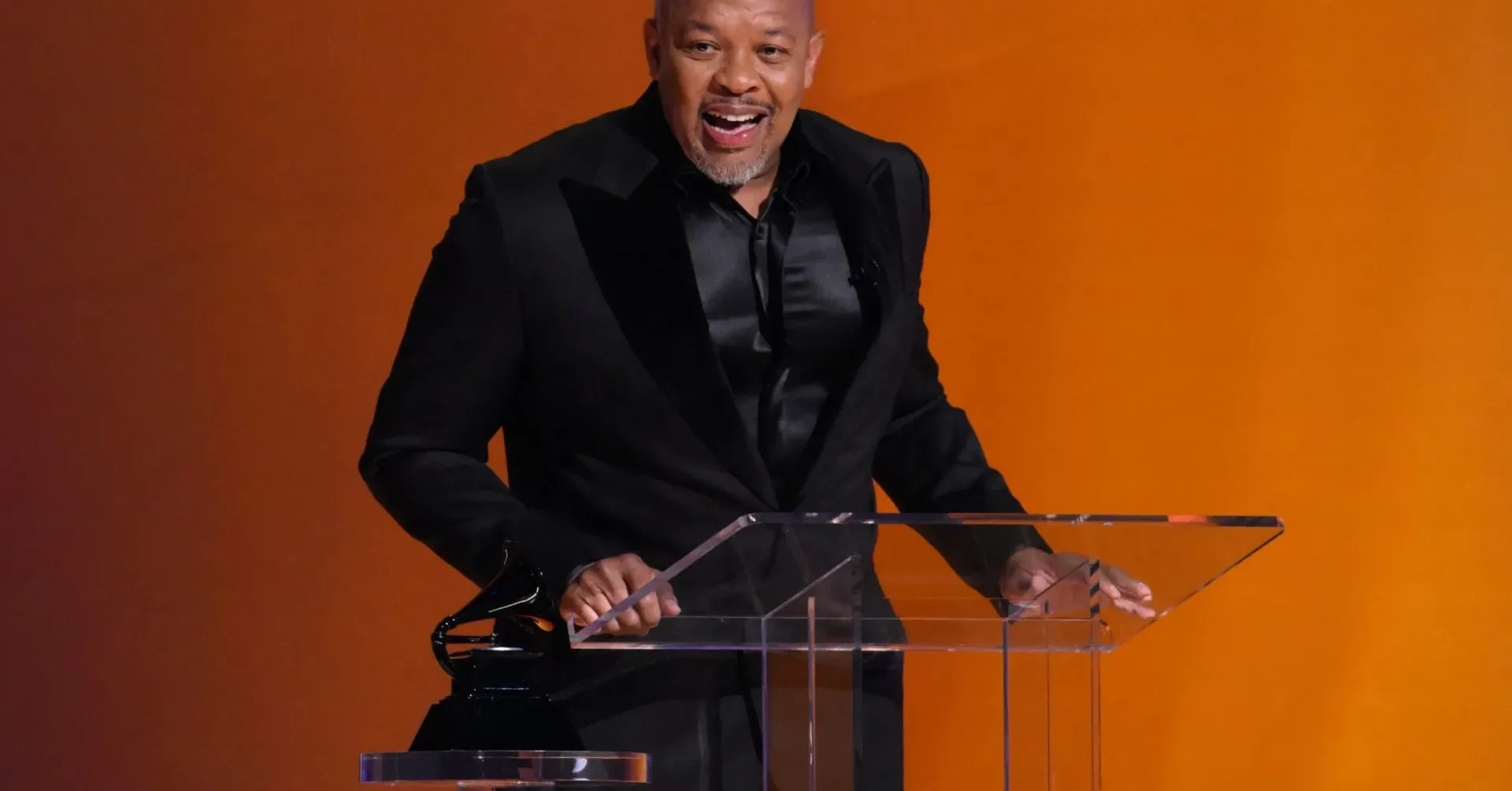
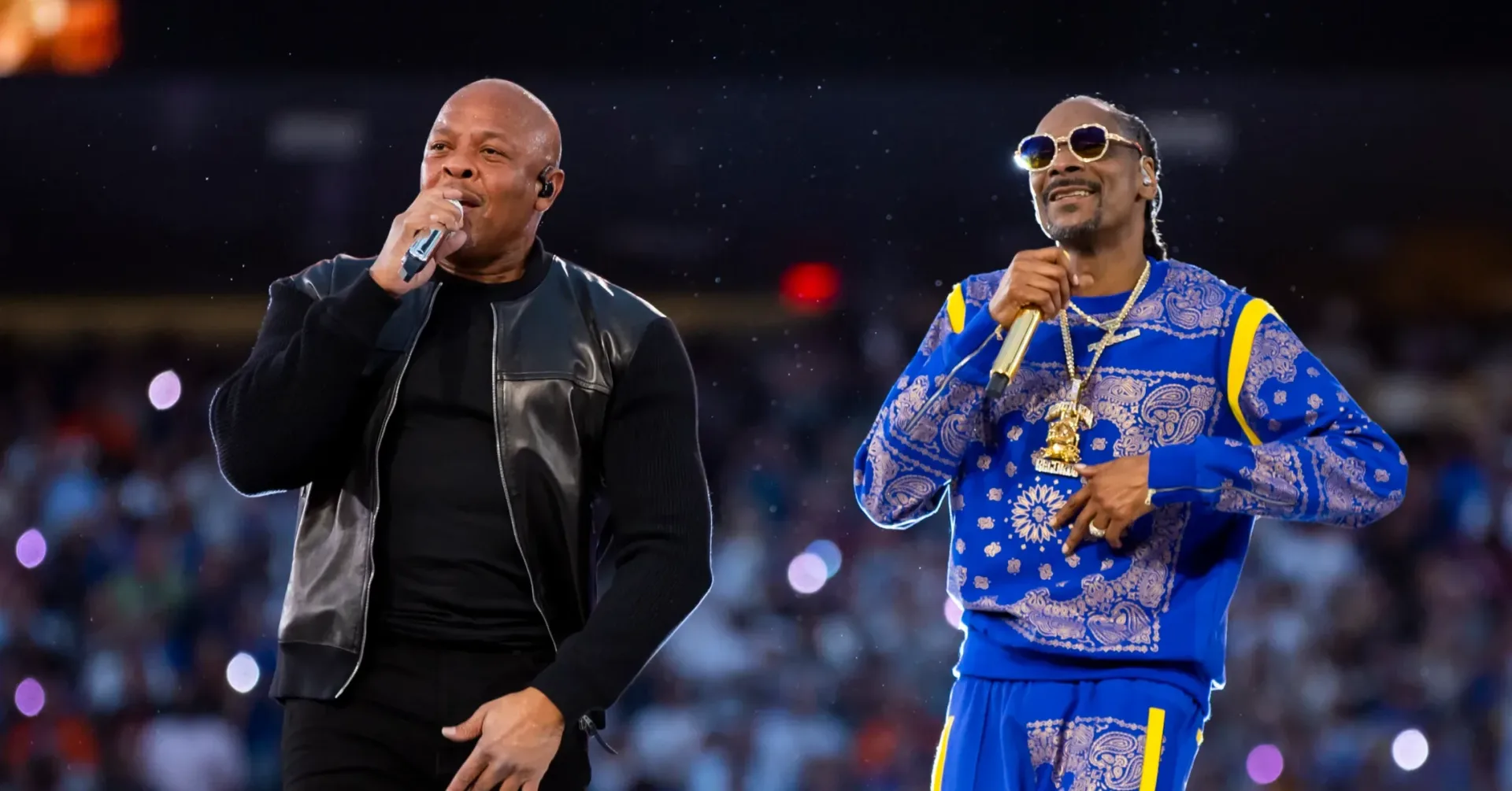
Dr. Dre says he is considering something unfamiliar after decades spent making, shaping and thinking about music: a real break.
During an appearance on Listen And Laugh with Ice Cube and Mike Epps, Dre said he wants to step away from the constant pull of music for “a year or two,” then return. He framed the idea as a first for his adult career rather than a declaration that he is retiring permanently.
“For the first time in my entire adult career, I’m going to take a break from that,” Dre said. “I’m going to go away, and I’m going to get off the grid for a year or two and come back.”
That wording matters. The stated plan is a hiatus—an intentional pause—not a firm endpoint to recording, producing or creative work. There is no detail yet on when the time away would begin, where he would go, what projects may be affected, or what a return would look like. The clearest takeaway is simply that Dre wants distance from a creative mode he describes as difficult to switch off.
Music, for Dre, is not confined to the studio
Dre’s explanation was less about a single project or business decision than the mental persistence of an artistic practice. He described encountering ideas while away from formal recording sessions: everyday things such as storefronts and bumper stickers can become prompts for music later. In his account, leaving the studio does not necessarily mean leaving the work behind.
That is an important distinction between making music and being mentally available to music. A studio session is a defined activity. It starts, ends and can appear on a calendar. Creative attention is less tidy. An observation can become a lyric idea, a sonic direction, a production thought or the seed of a future session. Dre’s comments suggest that this continuing process—not merely the hours spent in a recording room—is what he wants to interrupt for a while.
“You never leave it,” Dre said, explaining that he remains “tethered” to music even outside the studio.
His stated goal is not only rest in the ordinary sense. He also wondered whether something beyond music might offer the same feeling he experienced when first discovering it. That makes the potential hiatus sound exploratory. He is describing a desire to make room for a different kind of discovery, without claiming to know what it will be.
Related coverage includes Dr. Dre Says He Wants to Step Away From Music for a Year or Two.
What “off the grid” means—and what it does not confirm
“Off the grid” is often used loosely to mean a break from normal routines, public visibility or constant connection. Dre did not provide a detailed definition here, so it would be a mistake to turn the phrase into a confirmed list of absences. His comments support an intended break from the unbroken creative tether he associates with music. They do not establish whether he will stop every professional activity, make no appearances, abandon existing commitments or avoid all public communication.
Likewise, the proposed “year or two” is best treated as an aspiration rather than a scheduled timetable. Dre presented it as something he is going to do, but did not attach a start date. Fans looking for certainty around future releases will not find it in these remarks. The practical implication is more modest: new music should not be assumed to be imminent while he contemplates an extended period away.
A pause after a long-running career
Dre began his career in 1984, and he characterized the decades since as an era of continuous work and thought. The scale of that personal timeline is central to why the statement has resonance. A year or two can sound temporary in abstract terms; after roughly four decades of feeling creatively engaged, it represents a meaningful change in rhythm.
There is also a useful difference between hiatus and retirement. A hiatus is a pause with an anticipated return, even if the timing and form of that return remain unclear. Retirement indicates an exit from the work itself. Dre explicitly included the idea of coming back, so reading this as a permanent departure would go beyond what he said.
That uncertainty does not make the remarks insignificant. Quite the opposite: they offer a rare, plainspoken description of what sustained creative attention can feel like. The issue is not portrayed as a lack of ideas. Dre says ideas arrive constantly. The challenge is that the process follows him into ordinary life, leaving little sense of being fully away from it.
The broader point is creative distance, not a promise of a reinvention
It is tempting to treat a public figure’s wish to disconnect as a teaser for a dramatic next phase. Dre’s own comments do not justify that kind of prediction. He did not name a new hobby, career, location or future project. He asked an open question about whether something else could provide a feeling comparable to discovering music. The uncertainty is the point.
In practical terms, a break can create distance from habits, expectations and the reflex to turn every interesting sight or thought into work. For someone who says even a passing visual detail may produce a studio idea, that distance could be more difficult—and more meaningful—than simply declining sessions for a few weeks.
It also puts the focus on the person behind the catalog rather than on audience demand. Cultural conversations about prominent musicians often center on the next release, collaboration or comeback. Dre’s comments redirect that attention toward the cost of always being creatively “on.” His stated interest is in seeing what life feels like when music is no longer the immediate filter through which every detail might become an idea.
What fans can reasonably take from the comments
- He is considering an extended break: Dre said he wants to get away from music for a year or two.
- He described a return, not an exit: His wording points to a hiatus rather than a confirmed retirement.
- No schedule has been provided: There is no announced starting point or detailed plan.
- The motivation appears personal and creative: He spoke about the inability to mentally disengage from music and the hope of finding a fresh sense of discovery.
- Predictions should stay limited: Nothing in the remarks confirms the fate of any particular release, collaboration or business activity.
The most grounded reading is therefore also the simplest. Dre is contemplating time away because music has remained a near-constant presence in his mind throughout his adult life. He wants to test what happens when that tether is deliberately loosened, and he expects to come back afterward.
His remarks arrive amid wider conversations about giving foundational hip-hop figures time and resources beyond the pressure of a nonstop work cycle; recent efforts supporting hip-hop pioneers underline why that space can matter. Dre’s proposed break is his own personal decision, but the underlying sentiment is recognizable: longevity does not erase the need for rest, curiosity and a life not wholly consumed by the next piece of work.
For now, there is no reason to invent a larger story than the one Dre told himself. After a career he says has left him always thinking toward the next musical move, he wants to step away for a while—and find out whether another experience can move him with the force music once did.