Doe Boy helped provide a memorable lift for the East Cleveland Chiefs, turning a request for youth football equipment into a community event at the Martin Luther King Jr. Civic Center.
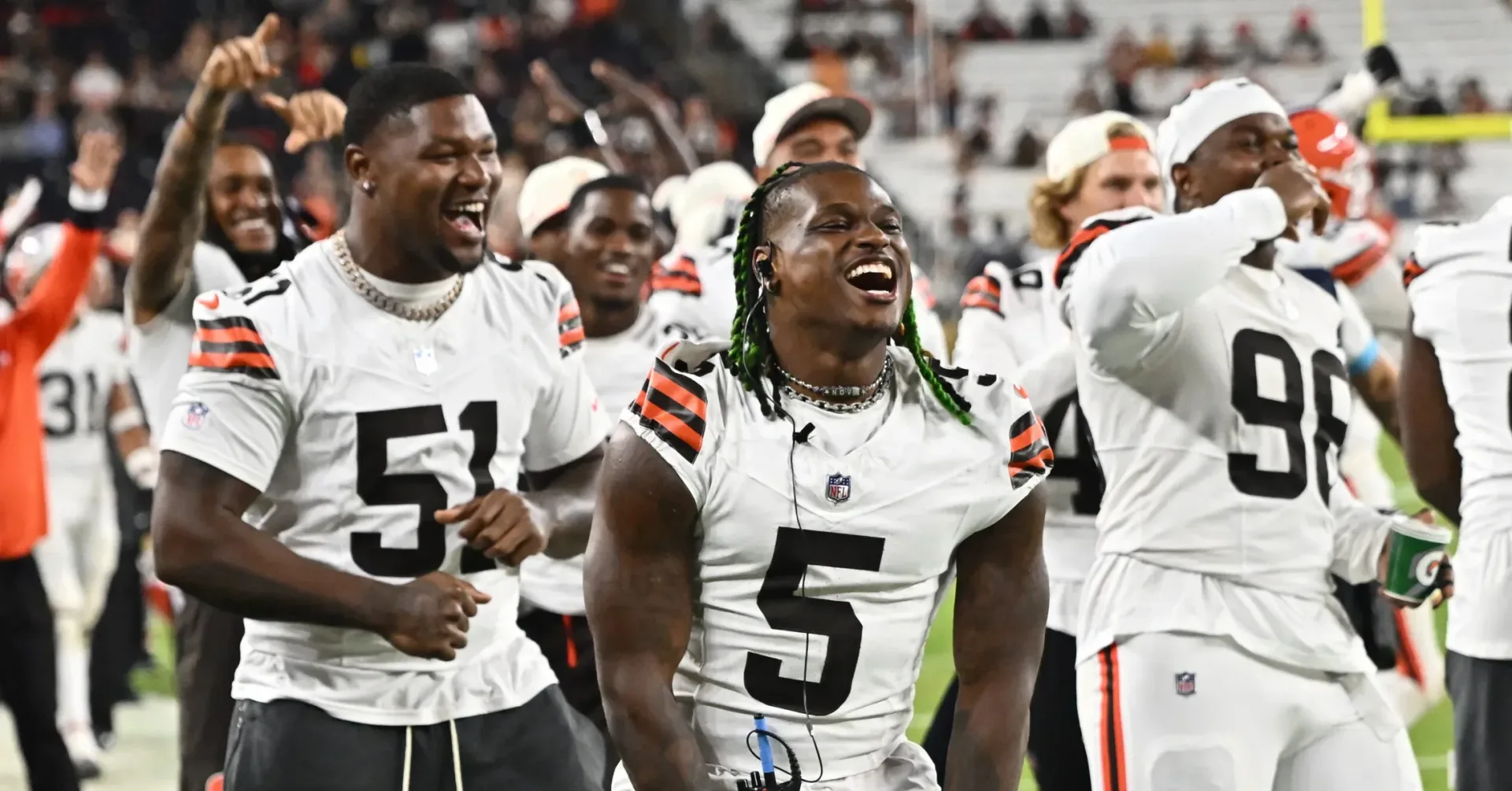
The rapper and songwriter was joined by Cleveland Browns quarterback Deshaun Watson, wide receiver KC Concepcion and defensive end Alex Wright. The players arrived to surprise the Chiefs with new gear and spend time delivering a direct message about persistence, ambition and believing in what is possible.
It is the kind of community story where the practical part and the symbolic part matter equally. New equipment addresses a tangible need for a youth team. The visit from working professional athletes gives the players a chance to see people from their hometown sports scene treating their goals seriously. Doe Boy’s role connected those two sides: organizing help for the program while using his platform to make the moment bigger than a standard delivery.
A request that grew into a larger effort
Poohgutta William Johnson contacted Doe Boy roughly a year and a half before the event to ask whether he could help the Chiefs secure new football equipment. The eventual response was not limited to a cash contribution. Doe Boy brought Hellstar into the effort after presenting the idea to the brand’s founder, Seanie.
“I told him my vision, and he was like I’m going to make sure it happens for you,” Doe Boy said.
That distinction is worth noting. A donation can solve an immediate problem, but coordinating a gear delivery alongside a player appearance also creates an occasion around the support. For the young athletes, the equipment is useful beyond the day of the gathering. The presence of Watson, Concepcion and Wright gives the team an added moment of recognition: their program, their effort and their aspirations were all treated as worthy of attention.
The available details do not specify the exact items included in the shipment, the number of Chiefs players served or the financial value of the contribution. What is clear is that the assistance was framed around outfitting the team, with Hellstar backing Doe Boy’s plan and Browns players on hand for the youth-focused event.
Why gear is more than a backdrop in youth football
In sports coverage, “gear” can sometimes sound like a vague catch-all. In this context, it refers to the equipment a football program relies on to prepare and participate. Its value is not merely visual. Players need functional equipment to practice and compete, while a team’s shared kit is also a visible expression of organization and belonging.
Related coverage includes Doe Boy Helps Equip East Cleveland Chiefs With Browns Players on Hand.
For a youth program, replacing or acquiring equipment can help reduce a barrier between wanting to play and having what is needed to take part. The report does not establish the Chiefs’ prior equipment condition or describe any specific shortfall, so it would be inaccurate to assume the precise problem the contribution resolved. But Johnson’s outreach itself makes the central point plain: the team had a need, and he sought help finding new football equipment.
The event therefore placed a basic program need at the center instead of making the celebrity appearance the whole story. Doe Boy’s connections helped bring visibility, brand support and Browns personnel into one place, but the Chiefs’ gear remained the reason the effort began.
Watson’s message to the Chiefs
Watson’s remarks focused on agency and resilience rather than on football technique. He encouraged the young players to pursue their ambitions and continue working through setbacks.
“I just want to be able to tell these kids that they can dream about and do whatever they want to. You know, you just have to believe and keep pushing forward,” Watson said.
That message is straightforward, but its setting gives it weight. Youth sports are often a place where players begin learning the less visible parts of competition: showing up for teammates, responding to a difficult practice and sustaining effort toward an improvement that may not arrive immediately. “Keep pushing forward” is not a guarantee of any particular athletic outcome. Rather, it is encouragement to keep pursuing a goal despite the uncertainty that comes with it.
Having that idea expressed by active NFL players changes the texture of the moment. Watson, Concepcion and Wright were not described as conducting a clinic, promising future programming or evaluating players. Their contribution, based on the available account, was a surprise appearance and a motivational one. That is an important boundary: the value of the visit lies in encouragement and visibility, while the lasting material contribution is the newly supplied equipment.
Doe Boy’s role: building a bridge, not just making a gesture
The strongest element of the story is the chain of relationships involved. Johnson made the initial request. Doe Boy carried the idea forward. Hellstar and Seanie supported the vision. Browns players then appeared at the civic center to help deliver an experience for the Chiefs.
That sequence shows a practical version of community advocacy. It does not require the artist to be the sole funder or the athletes to be the sole organizers. Instead, it relies on someone willing to take a local request seriously enough to connect people who can help make it happen.
Doe Boy’s involvement also keeps the focus close to East Cleveland rather than abstract. The event was not described as a broad marketing campaign or a product launch. It began with a specific youth team and a direct request for help. The final gathering retained that focus even as it expanded to include recognizable names from the Browns.
For readers following music figures who remain connected to their communities, the story sits alongside the wider cultural conversations that can arise when artists use their reach beyond recording and performance. For a different hip-hop discussion, see Daz Dillinger’s revisit of Cam’ron’s dispute with Suge Knight.
What the East Cleveland event does—and does not—claim
There is a temptation to inflate a positive community gathering into a sweeping solution. The facts here support something more grounded and meaningful: a youth football team received new gear; a local artist helped coordinate support; a clothing brand participated; and three Browns players joined the surprise and offered encouragement.
Nothing in the available information promises an ongoing partnership, a continuing equipment program or future appearances. There is also no stated timetable for another event. Keeping those limits clear does not diminish what happened. It makes the accomplishment more legible. A request made about a year and a half earlier was answered with a concrete delivery and a day designed to make the Chiefs feel seen.
For the team, the most enduring result may be the equipment itself. For the young players present, the memory may be just as significant: a gathering at their civic center where a request for help was met with new resources, NFL guests and a reminder that big ambitions still begin with showing up, practicing and moving forward.