Documentary festivals can be easy to misread as mere stops on an awards itinerary: films screen, industry guests talk, voters attend, then the season moves on. The 12th Doc Stories in San Francisco presented a more substantial case for the format. Its program connected films about Ukraine, Minneapolis and U.S. citizenship to conversations about urgency, audience access and the independence of nonprofit curation.
Sean Penn, Ava DuVernay and Laura Poitras were among the high-profile filmmakers and supporters who attended the event, which concluded Sunday. Their presence naturally raises the festival’s profile, but the more consequential thread is what the films and their makers suggest about documentary’s competing demands: make work carefully, get it seen quickly, and retain enough institutional independence to put difficult stories before audiences.
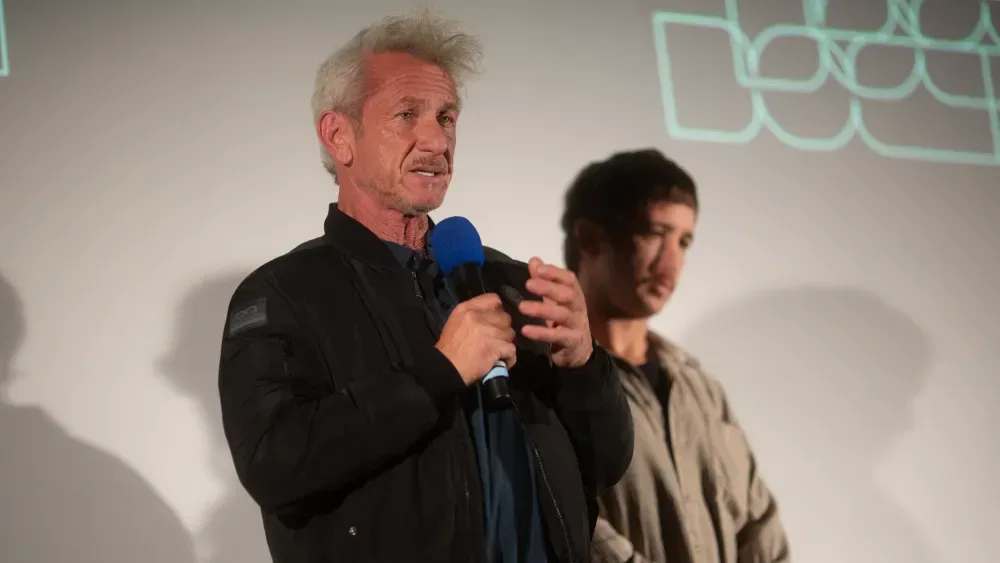
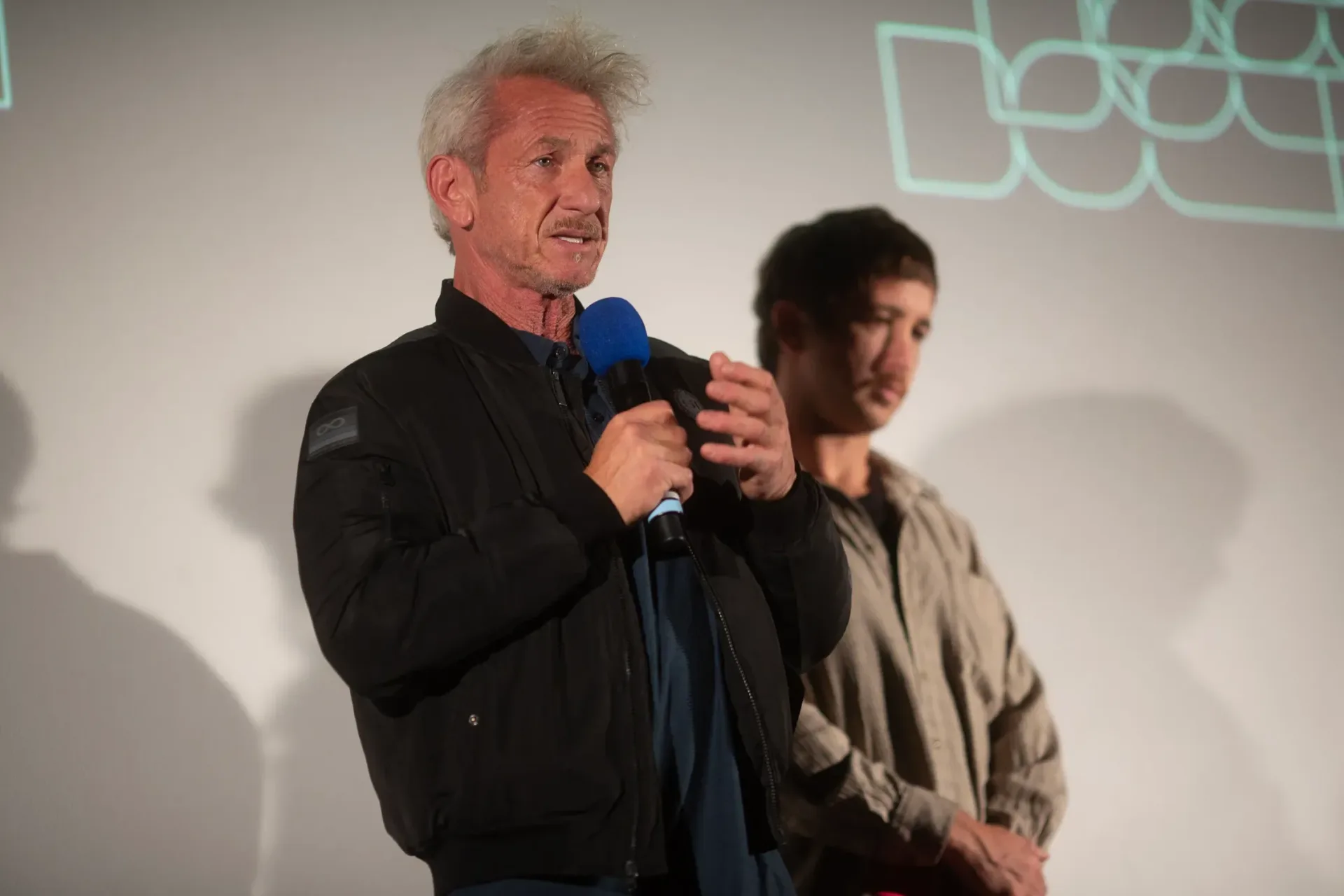
Sean Penn introduces Black Sunflowers
Penn appeared at San Francisco’s Vogue Theatre to introduce James Marcus Haney’s Black Sunflowers. The documentary follows young Ukrainians coming of age under martial law and the demands imposed by a country at war. Penn, who has publicly supported Ukraine and President Volodymyr Zelenskyy, became an executive producer before the film’s September premiere at the Toronto International Film Festival.
Addressing the packed theater, Penn framed the film in personal and musical terms, calling it “the song I dreamed I could sing.” It is an expressive description rather than a plot summary, but it helps explain the role an executive producer can play around a documentary: using their public platform to champion a work and help direct attention toward filmmakers and subjects whose story may not arrive through a mainstream pipeline.
That is particularly relevant to a festival environment. A public introduction cannot substitute for the film itself, nor should celebrity involvement eclipse its director or subjects. But it can bring more people into the room for a work whose concerns are distant from many viewers’ everyday experience.
Why Poitras and Mueller chose the short form
Laura Poitras attended with They’re Here, a short documentary co-directed with Minneapolis-based filmmaker Rachel Lauren Mueller. The film concerns ICE agents’ descent on Minneapolis and was one of 11 documentary shorts in the Doc Stories lineup.
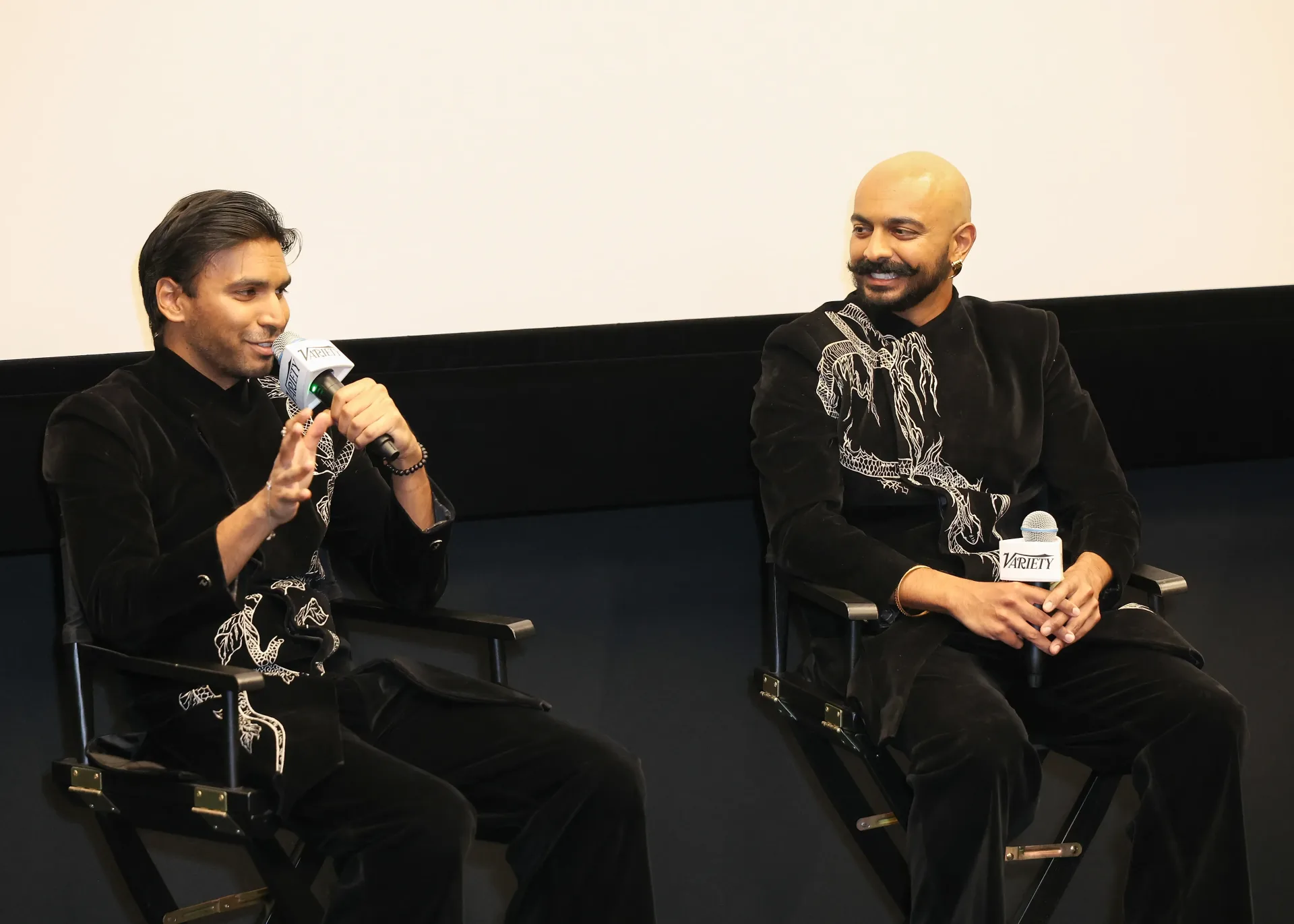
During the festival’s Doc Talks series, Mueller described the project as a “horror documentary.” She said she shot most of it in January and February 2026, while residents were evading and resisting what she characterized as a paramilitary occupation of the city. Mueller described tanks on her street, tear gas and people being taken from nearby street corners; she said the experience was among the most difficult of her life, even apart from filming it.
The filmmakers’ explanation for the movie’s length is central here. Poitras said the severity of the situation encouraged them to make a short rather than wait for a feature documentary’s longer production cycle. In documentary terms, short form means a work made at a shorter runtime than a feature. It is not simply a smaller version of a feature: the format can impose sharper choices about what events, testimony and images are essential. In this case, Poitras emphasized contemporaneity—the ability to release a film closer to the events it depicts.
Related coverage includes Doc Stories Draws Sean Penn, Ava DuVernay and Laura Poitras to San Francisco.
That is a practical editorial trade-off. A feature can offer more reporting, more time with participants and a broader historical frame, but it generally takes longer to finish. A short can enter public conversation sooner, especially when the filmmakers believe delay would blunt the work’s purpose. Neither approach is inherently more serious. The decision turns on the nature of the story and on what the filmmakers believe an audience needs now.
Poitras’ body of work includes Citizenfour, All the Beauty and the Bloodshed and Cover-Up, while Mueller brings local proximity to the new project. The pairing also illustrates why documentaries often depend on complementary perspectives: established experience in documentary practice and on-the-ground familiarity can serve different, equally important functions.
Ava DuVernay on 14th, belonging and systems
They’re Here was among the Oscar-qualified works shown at Doc Stories. Other qualifying films included Sam Pollard’s Tutu, J.M. Harper’s Soul Patrol and Ava DuVernay’s 14th.
DuVernay said a Democratic midterm victory could make 14th—which explores belonging and birthright citizenship—feel especially resonant. Yet she argued that the film reaches beyond a single electoral moment. Her focus was on structural challenges in the United States and on the workings of elections, urging audiences to look beyond a generalized call to vote toward an understanding of how systemic change is made.
Birthright citizenship, in this context, is citizenship connected to being born in a country. The supplied information does not detail the specific arguments or history presented in 14th, so it would be premature to reduce the film to a policy position. DuVernay’s comments do make its broad concern clear: civic belonging is not only a campaign-season subject, but a structural question that outlasts one result or one news cycle.
That distinction is useful for audiences approaching political documentaries. Some films are designed to document an immediate event; others examine the frameworks that shape recurring events. A festival can place both modes beside one another, allowing a rapid-response short such as They’re Here and a wider systemic inquiry such as 14th to speak to different dimensions of public life.
What “Oscar-qualified” means—and what it does not
Oscar-qualified is an important phrase in the documentary world, but it should not be mistaken for a nomination, a shortlist placement or a win. It means a film has met the applicable eligibility requirements to be considered in the Academy Awards process. The films still face later stages of attention and voting.
Doc Stories occupies a notable place in that process because the Bay Area has a substantial concentration of Academy Documentary Branch and guild members. Programming director Jessie Fairbanks said the calendar position of the festival and the presence of films campaigning during the season create a natural overlap. In plain terms, a well-timed screening can give voters and documentary peers an opportunity to encounter work, discuss it and consider it amid an increasingly crowded field.
The festival’s past record gives that setting real weight: more than two dozen Doc Stories selections have received Academy Award nominations, and past winners among its selections include No Other Land and Summer of Soul. That history does not predict an outcome for any current title. It does, however, show why filmmakers view the event as a meaningful place to reach an engaged documentary audience.
For a parallel example of how a film’s present-day reissue can invite viewers to reassess its original context without rewriting its past, see this look at the 4K return of Bong Joon Ho’s The Host. The circumstances are different, but both situations underscore the value of active viewing and discussion around politically alert filmmaking.
The nonprofit model behind the screenings
Doc Stories also staged its annual brunch, where filmmakers, producers, editors, cinematographers and publicists could meet Academy branch members ahead of the Oscar shortlist voting deadline. DuVernay attended, along with Netflix documentary vice president Adam Del Deo, filmmakers behind To Hold a Mountain, and Frontline’s Raney Aronson-Rath, who is campaigning for One in a Million.
Networking matters in awards season, but the festival’s organizers draw a line between facilitating a gathering and selling placement. Doc Stories is a nonprofit and its brunch is smaller than the annual Visionaries Luncheon held by DOC NYC. Fairbanks said the organization does not charge people a fee to participate in its events. Access to the brunch comes through sponsorship, being a filmmaker involved with the organization or being an Academy voter.
That distinction gets at a less glamorous but essential part of cultural programming: how an institution pays for its work affects the choices it can make. Fairbanks said that monetizing sponsorship access allows the organization to maintain independence in what it curates and presents to audiences. This is not a guarantee that every curatorial decision will be universally accepted; no festival’s taste is beyond debate. It is, however, a clearly stated approach to separating financial support from a pay-to-participate model.
Executive director Anne Lai described the larger mission as keeping independent voices alive by supporting filmmakers and helping their work reach viewers. Her argument is pointedly about the margins: as studio consolidation reshapes the entertainment business, organizations that seek distinctive work outside the mainstream can offer a different path between filmmaker and audience.
Why this gathering matters beyond awards chatter
The most compelling part of Doc Stories’ role is not the possibility of a campaign boost. It is the opportunity to put films with different timelines and ambitions into sustained conversation. Black Sunflowers centers young Ukrainians facing wartime conditions. They’re Here seeks speed in responding to events in Minneapolis. 14th considers belonging and citizenship through a longer structural lens.
Those are not interchangeable stories, and their creators are not making identical claims about how documentaries should work. Yet together they demonstrate the range that the form can contain: witness, investigation, public record, argument and urgent intervention. The presence of industry figures may bring extra attention, but the substantive test remains whether audiences encounter work that challenges them to look beyond the usual channels.
For Doc Stories, the answer lies in curation, community and a nonprofit framework designed to protect programming independence. In an awards season often reduced to predictions and prestige, that is a more durable proposition: build a room where independent documentaries can be watched seriously, discussed directly and allowed to matter on their own terms.