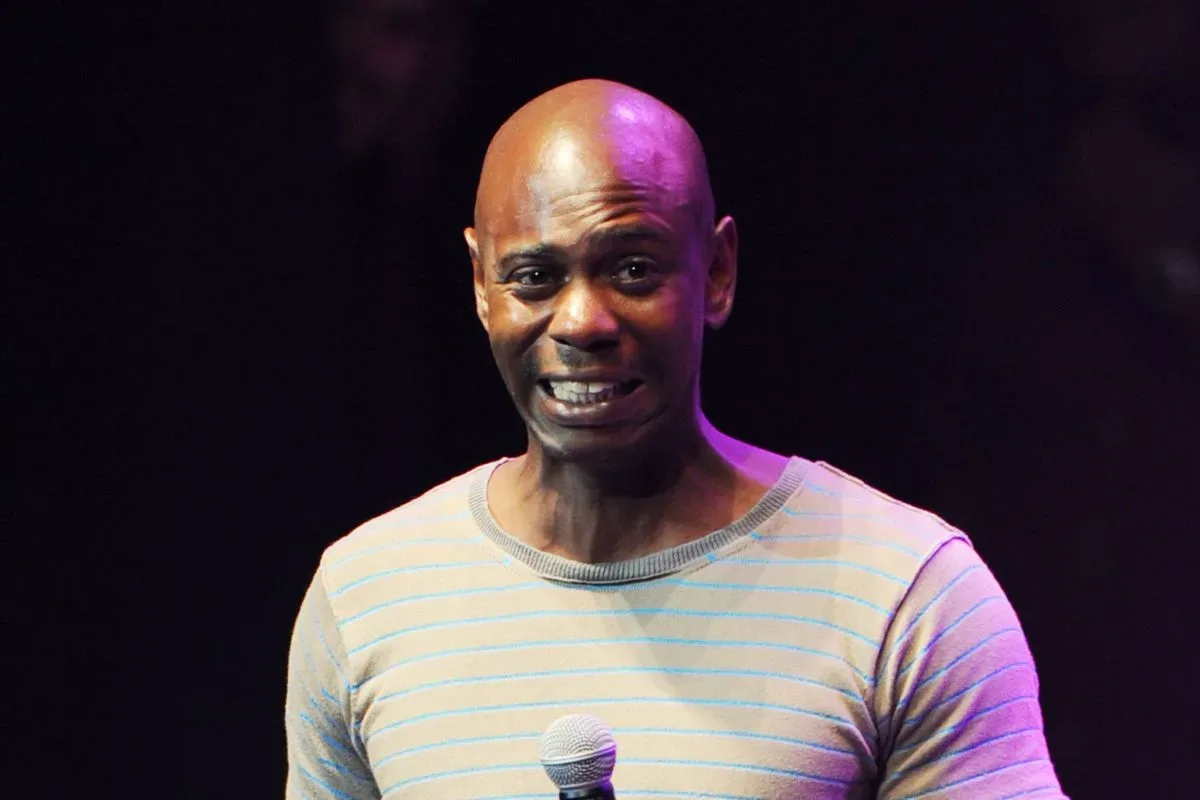
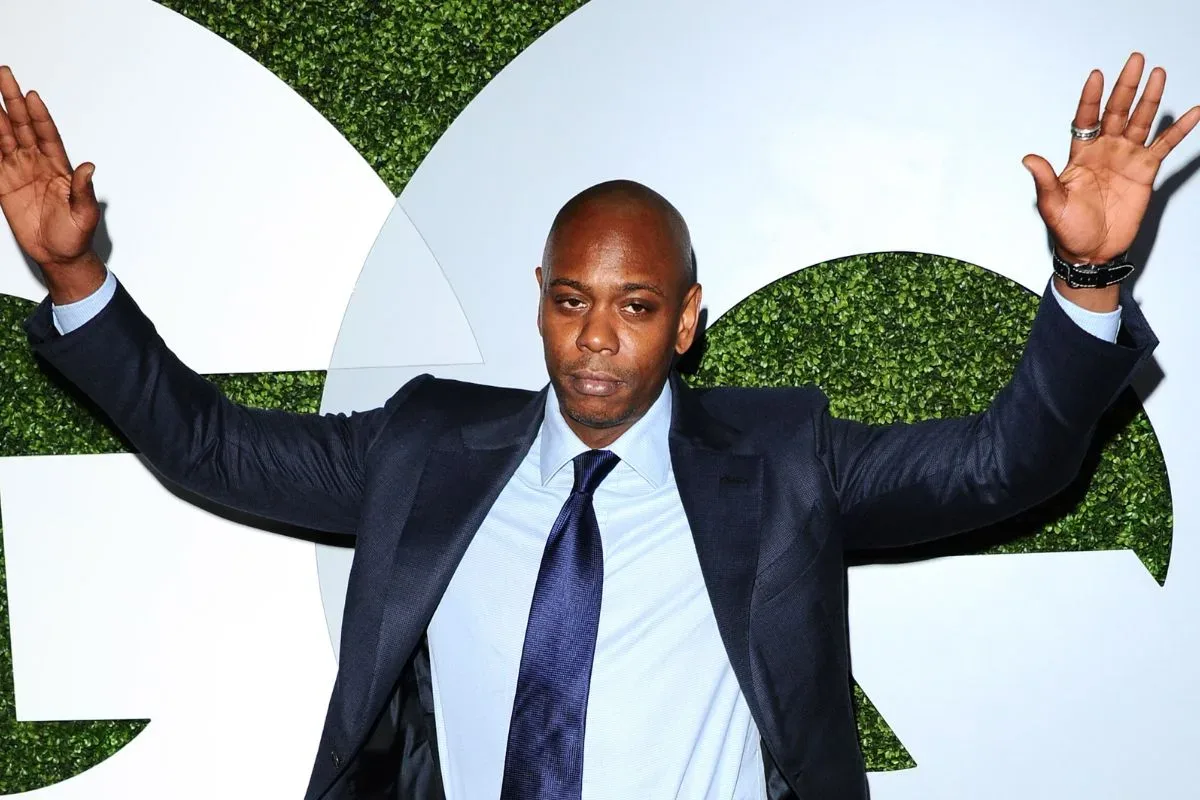
Dave Chappelle has responded to the backlash around video from his Madison Square Garden comedy dates, arguing that viewers who saw a circulating excerpt did not see enough of the performance to judge it fairly. His central objection is not a newly disclosed explanation of the joke, but the route by which it reached the public: a recording from a phone-free show that he described as stolen.
The remarks stem from Chappelle’s two-night Karmageddon run at Madison Square Garden on November 6 and 7, part of the New York Comedy Festival. Audience members were expected to place their phones in locked pouches, a format intended to prevent recording and preserve the live experience. Clips nevertheless emerged from the New York appearances, including material about the death of Charlie Kirk.
When questioned in Washington about the reaction, Chappelle said,
“I think it remains to be seen what I said.”He maintained that recording and posting only part of a show without permission, then criticizing the act without having attended, posed the more meaningful free-speech concern. Asked what context audiences in the room had that clip viewers lacked, he replied:
“I’m just glad you care about context.”
That answer leaves a major point unresolved. Chappelle did not publicly explain what material preceded or followed the joke, so there is no source-supported account of the larger setup, intended point, or audience response beyond the available footage. Context can materially alter how comedy is understood; it cannot simply be presumed to settle the question. In this case, the competing facts are straightforward: an excerpt exists, its performer says it is incomplete and unauthorized, and the missing surrounding material has not been described.
What the circulating clips show
One clip from the Garden set shows Chappelle moving from a discussion of the risks attached to public speaking into a punch line concerning his reaction to Kirk’s death. A second clip contains a separate line: “I’m sure Charlie Kirk is looking up at us right now, laughing so hard he can’t breathe.”
The wording is significant because it echoes a joke Tony Hinchcliffe made about George Floyd during Netflix’s The Roast of Kevin Hart in May. Chappelle replaced Floyd’s name with Kirk’s while retaining the afterlife setup and punch line. That resemblance makes the joke legible as a deliberate callback or inversion, rather than an isolated formulation—though Chappelle has not publicly characterized his intent in the supplied record.
Erika Kirk, Charlie Kirk’s widow, publicly condemned jokes about political assassination. Her response reflects why the clip has generated a different kind of scrutiny from the usual disagreement over an edgy premise. The subject is not merely a public figure or political argument; it is the killing of a person whose death remains at the center of an active criminal prosecution.
The real dispute is over format as well as content
A phone-free performance is a live event in which audience devices are secured or otherwise restricted. The premise is practical: performers can try new material without every line being instantly extracted, reposted, and assessed outside the room. It also gives ticket buyers a version of the show that is less mediated by screens. But the policy does not make a performance immune from public debate if footage escapes. It instead creates tension between a performer’s expectation of a bounded venue and the internet’s ability to turn an excerpt into a mass-distributed artifact.
Chappelle’s comments put that tension at the forefront. He has framed the recording as the violation and the surrounding backlash as a response shaped by partial evidence. Critics, meanwhile, can still evaluate the words that are audible in the clip and the decision to make a joke about a political killing. Both things can be true at once: the recording may have violated venue expectations, and the excerpt may still be consequential because it captures words spoken before a large audience.
This is the difficulty with the word context. In comedy, it can mean the topic that launched a bit, the performer’s premise, a callback to earlier material, the tone of the room, an ironic persona, or the contrast between two consecutive jokes. Those details may change an interpretation. Yet context is not a magic label that reveals content viewers have not heard. Without Chappelle identifying the omitted material, audiences are being asked to recognize an evidentiary gap rather than being given a full alternative reading.
The same distinction matters for the phrase free speech. Chappelle characterized unauthorized recording and judgment by non-attendees as the threat. In everyday discussion, though, free-speech arguments often blend several separate issues: the right to make a joke, a venue’s ability to set phone rules, an audience member’s decision to record, and the public’s right to criticize what becomes public. Those are connected but not identical questions. The available information does not establish legal claims about the recording; it establishes Chappelle’s objection to it and his view of the criticism that followed.
Why the timing makes the material especially fraught
Charlie Kirk was shot and killed on September 10, 2025, while speaking at Utah Valley University during an event organized by Turning Point USA. Utah prosecutors charged Tyler Robinson with aggravated murder and six related offenses. A charge is an allegation brought by prosecutors, not a finding of guilt. Judge Tony Graf scheduled jury selection for June 21, 2028, and reserved 105 days for the trial.
That timeline means Chappelle’s Madison Square Garden material arrived while the case was still moving toward trial. The joke also followed a death that was political in setting and has been publicly understood through the lens of political violence. Comedy has long addressed tragedy, but audiences may disagree intensely over proximity: how soon is too soon, whether the subject’s public profile changes the ethical calculus, and whether the joke is aimed at the deceased, at public reaction, at hypocrisy, or at something else entirely.
None of those interpretive questions can be conclusively answered from the fragments available. That limitation is worth stating plainly, rather than filling in motives for Chappelle or assigning a single reaction to the audience. The clip can show what was said in that moment; it cannot, by itself, document the entire architecture of the performance.
This was not Chappelle’s first reference to Kirk
The Madison Square Garden set was not the first occasion on which Chappelle incorporated Kirk’s killing into his comedy. He also discussed the shooting in Dave Chappelle: The Unstoppable…, his December 2025 Netflix special, and raised Kirk during the Riyadh Comedy Festival earlier that year. The recurrence matters because it suggests the Garden lines were part of an ongoing subject in his material, not a one-off response created solely for the November New York shows.
It does not, however, supply the missing context for the particular leaked clip. A comedian can revisit the same event across venues and specials while using different setups, angles, or levels of detail. Treating a reference in one performance as a complete explanation for another would create its own context problem.
Chappelle’s final broad response to the backlash was blunt:
“People get mad about a lot of things.”It is a familiar observation, but it sidesteps the specific divide at issue. The disagreement is not only that some people were offended. It is whether leaked snippets are a fundamentally unreliable way to assess live comedy, how much explanation a performer owes when invoking missing context, and whether the circumstances of Kirk’s death make the joke uniquely difficult for audiences to separate from the real-world event.
What viewers can responsibly take from the episode
There is a practical media-literacy lesson in this dispute. A short clip is evidence of a specific moment, not automatically evidence of everything a performer meant. Before treating a fragment as a full account, viewers should distinguish between what is plainly audible, what is being claimed about unseen material, and what remains unknown. That is particularly important for stand-up, where sequence, timing, and callbacks are part of the form.
At the same time, uncertainty about broader context should not be used to pretend an excerpt contains no information. People can reasonably react to language they hear, especially when it involves an identifiable victim of a killing. The more careful position is not “the clip tells us everything” or “the clip tells us nothing.” It is that a clip has limits, and those limits should be named honestly.
The larger online-performance question has also appeared in very different settings, including the attention around livestream conflict and streaming spectacle. Live presentation can acquire a radically different meaning once a moment is carved out, reposted, and debated by people who were not in the original room. Chappelle’s case is more complicated because the show was specifically designed to be phone-free, while the subject of the joke involves a real killing and an ongoing prosecution.
For now, the public record supports a narrow conclusion: Chappelle disputes the legitimacy and completeness of the leaked Madison Square Garden footage, but has not provided the wider content he says is needed to understand it. The available clips, Erika Kirk’s condemnation, and Chappelle’s objections will likely keep the debate focused on the uneasy boundary between a comedian’s controlled live setting and the permanent, decontextualized life that a few seconds of video can take on once it reaches the internet.